Entering UT Austin, I had no research lab experience and did not know what to expect as I received notice of acceptance into the Freshman Research Initiative program. During open-houses, I came across the DIY Diagnostics stream. I was intrigued by the innovative projects that were being conducted in the stream, including the Waller Creek Diagnostics and the FRIome Project. I was thrilled to find a stream that allows you to pursue app development even though I had no computer science experience. Even though this stream excited me, I was hesitant in choosing DIY because I had no creative, thoughtful ideas I thought I could contribute to lab. I was definitely afraid I would be lost and would be able to be successful in stream. I took the chance though and became part of the DIY Diagnostics 2016-2017 cohort. Looking back since then, I have had no regrets for choosing this stream. I was able to adjust to the lab work with the help of mentors. Although in the spring, we were focused on learning basic wet lab technique and Javascript coding, Dr. Riedel really encouraged us to think of how we can apply these techniques into the development of a diagnostic.
When Fall semester came around, I again had no clue what I wanted to do for a project. With Dr. Riedel’s assistance, I choose to conduct a LAMP diagnostic for the detection of a specific gene in the gram-negative bacteria, Porphyromonas gingivalis, that has been a strong risk factor for periodontal disease and aspiration pneumonia. This project excited me because I was going to be developing a LAMP test, which uses isothermal conditions and fluorescence for the detection of target nucleic acids. As LAMP (Loop-Mediated Isothermal Amplification Process) has not been the go-to diagnostic for detection of nucleic acids like PCR has been, running LAMP had its challenges. Other students who used LAMP (for a cancer diagnostic and a diagnostic for Aspergillus fumigatus, a dangerous fungus found in cannabis or medical marijuana) had issues with having negative controls for their test amplifying and showing results expected of a target DNA sample (positive control). Although data was collected independently, all students running LAMP worked collaboratively to refine the protocol and to limit contamination of DNA samples. By being involved in this collaborative setting, I felt like was I was a researcher trying to troubleshoot where issues are arising that are negatively influencing the performance of our diagnostic. With hard-work, we have been able to find solutions to issues with LAMP and I am excited where LAMP is heading as a high specific and effective diagnostic test for detection of specific bacterial genes and markers for disease.
Being part of DIY has been by far one of the best experiences I have had since entering UT Austin. The DIY Diagnostic offers a platform for you to really dive into research and design a project ground-up that could offer numerous benefits to the scientific community. Although I worked with LAMP, I was also able to exchange ideas and assist students doing other projects such as the Parkinson’s Keystroke Analytics Project, DIY Electroencephalogram and Pill Identification App. With all students conducting varying projects, I have been able to acquire so much technical knowledge. One of my favorite moments in this stream was when we had a speaker talk about machine learning and predictive analytics. Although my project did not essentially require predictive analytics, I found a new arena of data analytics I would be interested in pursuing. Lastly, I have made many friends, who I share similar goals and interests with. With the DIY Diagnostics family, I have been able to find resources and assistance to succeed overall in all my other coursework. I really believe my experience with DIY has given me the confidence and necessary skills required if I choose to pursue other research and join another lab.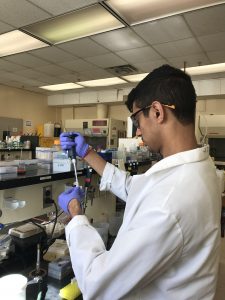
Leave a Reply