Category: 2014

  • Spring 2014

    Spring 2014

    In the Spring 2014 semester, 34 freshmen along with 7 upper-division mentors completed a series of skill development exercises that produced authentic data on a wide range of topics including the diversity of the student’s oral microbiome, the public health of the creek on UT campus, and the diagnostic potential of molecular techniques on saliva.

    LAB-WIDE PROJECTS 2013–2014

    Oral Microbiome Metagenomics

    • Students designed ethics board approved study linking bacterial diversity/abundance in saliva with health and behavior
      • Generated 81 sequence libraries of oral microbiomes
      • Authored online survey with 114 questions to characterize health/behavior
      • Found tentative correlations between bacteria levels and sleep/gum chewing/hand washing

    Molecular Diagnostic Development

    • Successfully implemented a diagnostic PCR for P. gingivalis
    • 32 diagnoses made based on PCR results
    • Adapted P. gingivalis PCR protocol to novel qPCR diagnostic
    • 107 assays run leading to 31 diagnoses

    Public Health Water Quality Assessment

    • Sampled campus creek
      • 28 water samples analyzed
      • 3 different bacteria levels quantified
      • 3 site locations analyzed
    • Surprisingly high bacteria levels found indicating possible sewage leak

    Diagnostic Apps Development

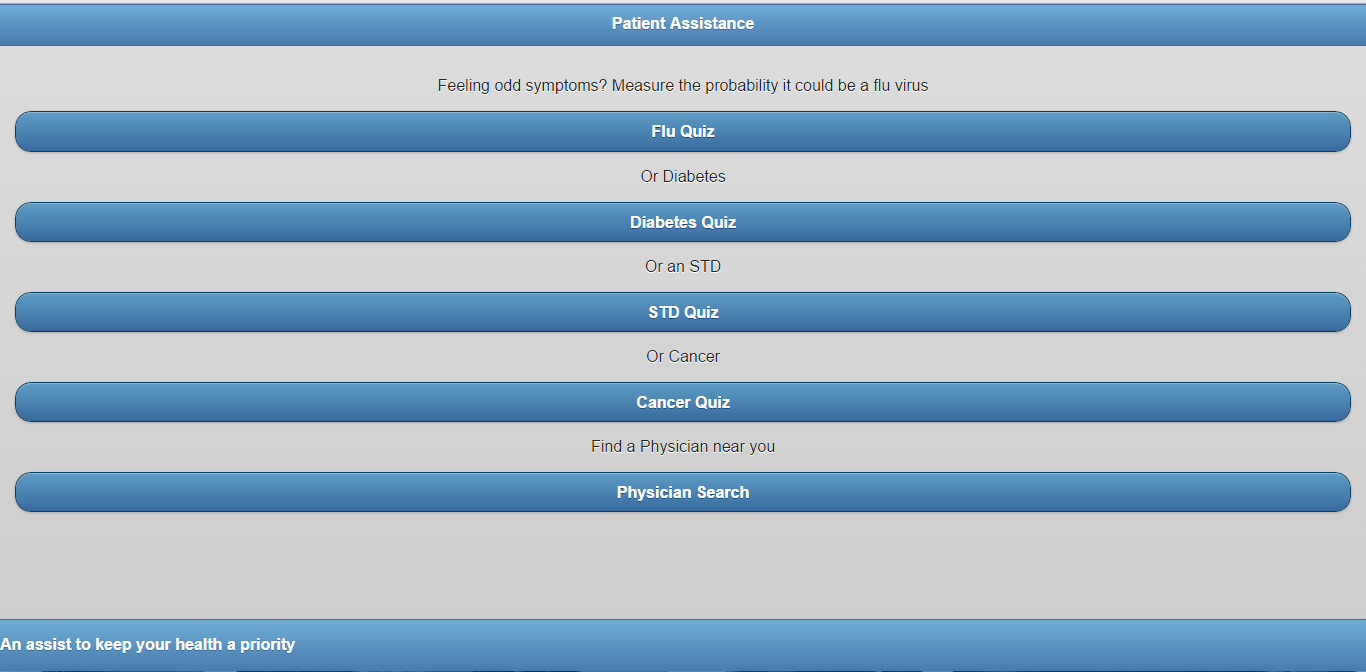
    • Students developed “survey style” apps
    • Brainstormed ideas, developed apps independently
      • Diagnose a wide range of conditions
      • tinyurl.com/diyappgallery

    FOCUSED DIAGNOSTIC PROJECTS SUMMER 2014

    Dehydration saliva diagnostic

    Ear wax (cholesterol) diagnostic

    LAMP PCR development: next-gen tool for diagnostic development

    Frack water diagnostics: Working with industry partner to develop molecular diagnostics to quantify sulfate reducing bacterial contamination in water produced by hydraulic fracturing

    Texas Memorial Museum collaboration: Two summer students received a Joseph Jones Life on Waller Creek fellowship to continue work on creek bacteria

    Diagnostic industry collaboration: Negotiated summer internship with local startup diagnostic company to optimize a patent-pending diagnostic device

    Summer App Development: Students unable to stay in the lab working remotely on diagnostic app projects

    Travel disease risk warnings • Michelle & Katrina • Dallas, TX & Chiang Mai, Thailand

    Food recall tracking • Lindsey • Houston, TX & San Francisco, CA

    Concussion diagnosis  • Jordan • Austin, TX

    Patient-Health Care Assistance • Salvador • Edinburg, TX

    Pill identification • Nicole • McKinney, TX

    Self exam guides and reminders • Lisa & Alyssa • San Antonio & Laredo, TX

    Skin cancer • Rachel • San Diego, CA

    Special diet and food allergy • Aurora • Center Point, TX
  • Riley Welch

    Riley Welch

    My interest in the DIY Diagnostics stream was actually sparked long before my knowledge of the Freshman Research Initiative, and long before my enrollment in UT, and, if we’re being very specific, long before my acceptance to the university at all. As a senior in high school, my AP biology teacher offered us extra credit to attend Hot Science: Cool Talks at UT. The “Cool Talk” I ventured to was hosted by Dr. Andrew Ellington and it was all about self-diagnosis. Or rather, diagnosing yourself at home, made to be as simple as the at home pregnancy test. You do it at home and if you realize you have an illness that needs medical attention you can get to a doctors office. If you just have the common cold, you stay at home and save you and your doctor time. This was really interesting to me and it made lots of sense; finding something that saves time and money – I’m in! I’m also constantly looking for things that interest me, because it seems I have this chronic state of boredom I am trying to shake.

    So, I did my one page write up of this extremely “hot” science, turned it in, got my five points of extra credit and moved on. Over the next however many months I ended up out of high school and at UT in the Freshman Research Initiative and was a few months away from having to apply to streams. As soon as I saw DIY Diagnostics I was reminded of that talk that had so caught my interest. I realized I couldn’t make any of the open houses and scheduled a meeting with the RE, Dr. Tim Riedel. And after that I was pretty sure there wasn’t another stream I wanted be in.

    Being in the DIY Diagnostics lab is like being a real researcher, because you are a real researcher, which feels very hard at first for someone who has never been in a “real” lab before. You do everything on your own, and if you are me, you do it with a serious lack of confidence the first go around. By the end of the year I had mastered skills I didn’t even know existed before this class and was performing tasks that had taken me half an hour in the beginning of the year in half that time. The first time I felt like an actual scientist was during our weekly meetings when we were having a discussion that sounded like science and I understood all of it, and had responses and we were all formulating things together that would have sounded like garble to me three months prior.

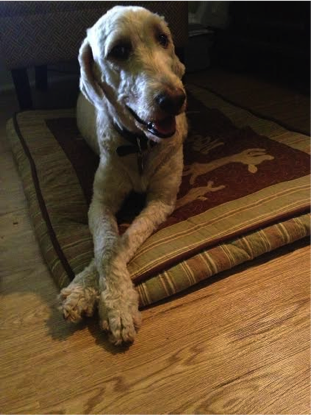
    One of my favorite diagnostics we did was using dog saliva. Now before I get into it, we did not get any valid results from experiment, not one person out of the 35-40 students. But I am starting to learn this is less about being distraught about failure and more about learning what to do differently the next time around. Those of us with dogs had to swab the dog’s mouth, fill out a survey on the dog’s behavior, then extract the DNA in the dogs mouth and see if we could link any of the DNA to behavioral characteristics. Pretty cool, I know, but it didn’t work. This semester I would like to figure out why it didn’t work, or at least how to get it to work. I love this stream because I am able to make my own decisions like that. And I’m sure if I suddenly develop a hatred for dogs and their saliva I have no doubt Tim would help me figure out something else to benefit the stream but also keep me from being totally miserable. DIY is a well-run, very interesting lab. I highly recommend it to anyone who wants to feel like a scientist and really have a integral part of their research experience. I will now refrain from making any puns involving Labrador retrievers and research labs, but I will include a picture of my photogenic dog whose saliva I have and will be testing.


  • Meet Our Student Researchers!

    Meet Our Student Researchers!

    Going to open houses can have an affect similar to that of an approaching avalanche. But don’t panic! Despite the wealth of streams available and all of the information to be absorbed, it’s completely possible to fall in love with a few research topics.

    To help first semester freshmen here at UT with their FRI stream decisions, we’ve asked our Fall 2014 student researchers to write about their time with the DIY Diagnostics stream. Most of our researchers are sophomores, but we have several upperclassmen too, as well as mentors who have already finished their FRI coursework.

    Our researchers have worked to extract bacterial RNA from saliva samples, find sulfur-producing microbes in fracking water, and search out chemical signatures in olive oil using TLC plates. By working to place diagnostic power in the hands of the consumer, we hope to help create more personal and safe health care and industrial diagnostic systems.

    If you like what you read, make sure to stop by the DIY open houses.

  • Andrew Acosta

    Andrew Acosta

    I chose to be in the DIY Diagnostic stream because we have a diverse selection of opportunities available for research and lab experience. There are a variety of group projects available to become a part of, like the FRIome, frack water, and Waller creek projects, but we are also given the opportunity to develop our own research projects. I think it is also really cool that we learn how to code, because without this stream, I’m about 85% positive I would have never learned to code, and I’ve always wondered how it works.

    I think I am most excited about the FRIome project simply because I’m a biology major and this field interests me. I have heard many times over here at UT, that there are more bacteria cells in/on your body than there are your own cells, so I definitely believe that these bacterium have to be affecting humans in some way, and FRIome could possibly help to determine how.

    Being part of the research community at UT has helped me succeed because you get to meet a tone of ridiculously smart and friendly people and you also learn a lot of techniques that can help you in your future research or labs. I actually went into my Chemistry Lab course with a great understanding of techniques, lab protocols, and tools simply because I had a great learning experience in the DIY Diagnostic stream.

    I think the funniest part of the stream was that many of us students would be so completely lost at times and think that everyone else knows what they are doing, but when you talk to students you realize we’re all on the same page. After the first couple of weeks, when all the students were settled in and friends were made, that is when the serious work went down because there was a great sense of community and everyone collaborated to achieve success and spread the skills we had just learned. I think that was a major experience of the stream.

    Compared to other undergrads who have done research outside of this stream, or FRI in general, the DIY Diagnostics stream definitely puts a lot of emphasis on student participation. We are the ones collecting samples, analyzing data, and the results. I think it is very important to be a part of every step in the research and we are given every opportunity to do so. I see diagnostics as moving in the direction of primarily “at-home” diagnostics because they will generally be faster and cheaper, and guess what, this stream is called DIY (do it yourself) Diagnostics, and I see this DIY diagnostic stream as a way to force upon the world a more stringent focus on accessibility to technologies we have to capability to produce and help accelerate the production of “at-home” diagnostics.

  • Lindsey Alter

    Lindsey Alter

    What appealed most to me about the DIY Diagnostics stream was the way it combined biology and chemistry with computer science. I really liked the idea of learning to code and create an app that could actually be useful. When I went to the presentation during open house, Dr. Riedel was the most genuinely enthusiastic of all the research educators I heard speak. After hearing the pregnancy test example as a DIY diagnostic, it got me thinking of the many new diagnostics that would be useful to the public, such as a reliable at home strep test. Plus, I was excited to work in a stream that was just starting.

    The diagnostic ideas I am most excited about is the ones that can come from the FRIome project, in which we are testing saliva samples to find correlative data between various health factors and bacterial abundance. I hope to help enlarge the database of samples so we can a large amount of samples sequenced. Then we can look at abundance of specific bacteria, and develop experiments that can lead to new diagnostics. In my Microbiology class, my professor briefly discussed how there are ongoing studies that are looking at the relationship between subjects’ microbiomes and obesity, autism, and immune response. The more I hear about the significance of the microbiome, the more excited I get for the FRIome project.

    Being part of the research community has helped me with my time management skills in that I had to always get enough hours of lab time in each week. Also doing research has taught me that not getting expected results does not necessarily mean failure, and that I should always keep working to find solutions to problems I encounter.

    I came into this stream with very limited knowledge in coding. The bit of coding we learned during the spring semester has been quite helpful. This summer I started working on an app that helps to speed up the process of which foods specifically are causing widespread food poisoning to hasten the recall process. Most of this app is not completed though.

    My biggest “aha” moment so far was when I used the Qubit correctly. It took me several tries to get the technique right, so I was very excited when I got the machine to properly find the concentration of dsDNA in my samples.


    I’m glad I have been able to start research so early in my undergraduate career.  I hope this opportunity will open doors for me to receive internships in other labs in the next couple of years. Hopefully in 20 years, we will be able to have our entire microbiomes sequenced, which would mean we would quickly be able to diagnose ourselves with things discovered to be  related to or caused by the bacteria that live in us. I hope to be part of this process of discovering how the microbiome affects the health of humans.

  • Salvador Arellano

    Salvador Arellano

    I can support anyone who claims that your first year at a university as a freshman is   new, confusing, and can be very daunting. When I entered my first semester here at UT, I immediately looked for something that I can be a part of so I could fit in somewhere. I knew I wanted to join something that would give me the opportunity to benefit others, to be able to discover new things through research, and use research to develop something that I can call my own. Through the UGS research methods class, I was taking at the time, I was able to learn about the Freshman Research Initiative.

    After finding out about this great opportunity to get into the lab and begin research, I immediately filled out the paperwork needed to join. I then began to look into the many streams I could become a part of, and that is when I came across this brand new stream known as the DIY Diagnostics research stream. As I looked into what the stream was going to offer, such as being able to research new methods for diagnostics that you can develop for society, I just felt that it was the stream for me and I was luckily accepted into it after making it my first choice on my application.


    I don’t regret my choice of stream at all till this day because of all it still has to offer. I’ve learned so much from this stream in just a semester, and much of it will stay with me as I continue on through my life. Perhaps the most important things to me that I’ve learned from this stream are the tools needed to research in a lab and how to code apps. I feel I joined the ranks of other researchers and scientists on campus, even if I don’t have the same amount of experience as some of them. The pride I can take in myself when I explain to others about this stream and the research I do is just incredible. The one part of the stream that I enjoy the most has to be the coding for the applications. In the beginning I didn’t quite like coding, but as soon as I got the hang of it I really started to appreciate it. The feeling of cracking the code and getting the app to work is just a great feeling for me. Continuing on my app work and advancing in my coding skills are the areas of the stream that I look forward to the most. I can completely recommend this stream to anyone who is interested in being in a fun environment while they learn the necessary skills to become a researcher, innovator, scientist, and app designer.

  • Alyssa Benavides

    Alyssa Benavides

    As I visited streams my first semester of college I was pretty intimidated for the most part. Although, DIY Diagnostics caught my attention because it was a new stream and Dr. Riedel seemed very eager to get things going in the lab. It was different from the other streams because we get to work on our own projects and whatever innovative idea we have we could test it out in the lab (of course with Dr. Riedel’s permission that is). If you fail somewhere within your experiment you would not be considered a failure in our laboratory. Dr. Riedel always tells us is go back to your protocol and check what step(s) you may have messed up on or what can you change to get the product you wanted in the first place. I’m extremely excited to keep developing my app with my lab partner Lisa, and hopefully get it to work within this semester. Also aside from that I will continue to either work on Waller Creek or testing for P. Gingivalis. I’m leaning towards the experiment that has less people on our lab working on it, because research needs to keep being done on these super awesome research experiments.

    I talk to my parents all the time about the FRI and how much of a great experience it has all been. Aside from being in one of the best labs of the FRI, I’ve made great friends and study partners for other classes. FRI opens many doors if your research is done correctly. When I explain to people what exactly we do in our lab they say wow you’re so young and here you are doing research. For instance, my cousin who is a dentist, he thought our research on P. Gingivalis was a really interesting idea and he told me to keep researching on it and that he was proud that I was learning about this at such a young age.

    Being in the research lab has been a great experience and I’m actually thinking about being a doctor and maybe doing research on the side because in research there is always something new to be found (random or not). Research needs to continue being done for all sorts of causes. As I stated before meeting great friends in the lab has really pushed me to study with them and do great in school so the research lab has had an impact on my success here at UT. Also, Dr. Riedel is someone who has also helped me be successful here at UT, whatever a student needs in lab he will get to it right away. If you’re dealing with a personal problem in your life Dr. Riedel is there to always talk to us and guide us in anything we need. For instance, after my first year at UT I was thinking of going back home to the university in my hometown because of the cost of attendance at UT. Dr. Riedel right away told me he was going to ask around for scholarship applications and see what he can find out for me. It is educators like this that you look up to and say I want to be just like them and think to yourself that your willing to help people always.

    My experience within the FRI lab has been very memorable especially when trying to make an app. It was a challenge at first, but when I finally completed my first app and coding it was probably the happiest moment of my life. It took me many tries to finally get my app to work, but it was all worth it.


    Diagnostics in 20 years will definitely be a lot bigger than it is right now because research has been evolving so that’s what I think but I could always be wrong. In 20 years I see myself more as a doctor than a researcher but I can always say I once did research in a diagnostics lab. FRI DIY Diagnostics is an experience I will never forget and I really want to stay in the lab as a mentor because the lab feels like my second welcoming home.

  • Jessica Tom

    Jessica Tom

    When I was a first semester freshman, I immediately noticed DIY Diagnostics as a stream completely different than the rest. While reading about the stream on the FRI website I was intrigued by how open-ended and applicable it was—two characteristics that are still true to this day—so I decided to go to the FRI Open House to meet the RE. This might seem trivial, but the most valuable piece of advice that an upperclassman gave me about choosing an FRI stream was to choose one with an approachable and personable RE. FRI students can spend many hours of lab a week and having an RE who actively tries to make lab a positive and fun environment makes the FRI experience a lot more enjoyable. Additionally, because this stream is only about a year old, there are new frontiers and new experiences that we haven’t even begun to explore yet. Some people consider FRI as a stepping stone to other undergraduate or graduate labs, but I see a huge potential in DIY Diagnostics to be more than that. The students in this lab are already working on projects that have never been done before and most of us are just turning 20. DIY Diagnostics is primed for discoveries, publications, and one of the best research learning experiences.

    The ultimate goal of DIY Diagnostics is to develop at-home diagnostics tests to promote health and facilitate the medical process. I’m currently working on a project called FRIome. We are in the process of correlating the concentrations of different kinds of bacteria in saliva samples to health habits of our participants. For example, certain types of bacteria that are found to be major determinants or contributors to heart disease may be found in the saliva of participants with a family history of heart disease. These correlations can help us determine how our everyday health choices can affect our susceptibility to non-communicable diseases. In the future, hopefully we can detect these diseases purely through a simple saliva test and provide the necessary treatment even before the diseases progress. Although we are still in the research phase of this project, I am extremely excited to see where the FRIome may lead us!

    Because of FRI, I feel as if I’ve developed a more research-oriented mind. So much has been done in the last century in the field of science, and we have made great strides in the research community in terms of discovery and invention. However, there are still diseases to eradicate, cancers to cure, and healthy lifestyles to promote. With this growing research background, I feel more empowered to approach and solve these issues in our community today, and now that I have the tools and skills needed to do so, there is nothing in my way.

  • Aurora Brinkman

    Aurora Brinkman

    Multiple factors led to me choosing DIY Diagnostics as my top FRI lab choice. It was the stream that matched up most closely to my interests, public health and medicine. During the DIY open house I could already think of some diagnostics that I wanted to try to develop. The stream was brand new so there would be plenty of ideas to develop and different paths to try. The other streams didn’t fit my interests or personality as well. I completed my stream worksheet and luckily got in to my top pick!

    Currently I’m interested in diagnostics and apps that aid the special needs community. Right now I am trying to develop an app that helps people with special diets and allergies. I am also interested in the DIY FRIome project, which is a diagnostic that examines the bacteria in human saliva. Individuals donate their saliva and fill out an extensive questionnaire. The project then tries to find connections between behavior and the types of bacteria in people’s mouths. It is very public health oriented with some psychology and of course chemistry and biology—all of my interests combined! When my relatives ask about FRI I tell them that it’s one of the unique opportunities at UT. Professor’s teach freshmen basic lab techniques then let them start exploring research topics that really interest them. I usually add that I work in a lab where we develop diagnostics for different diseases and environmental problems like fracking.

    FRI is centered on science and hopes to get more people to enjoy learning about and exploring scientific topics. There are many reasons I love science. It is an incredibly deep subject that is impossible to learn everything about. Science is an endless search where there is always something new to figure out. After being at UT for a year I now truly consider myself a scientist and a budding researcher.

    Being in DIY Diagnostics has helped me to develop important skills like self-dependence and time management. I have also learned to keep moving forward and ask questions when I get stuck. Learning to program mobile apps was an interesting experience for me. I am not very good at programming, but overall it was a good experience. Dr. Riedel helps out a lot by giving some of the beginning code or by providing instructions or resources. The app assignments do get harder and you have to rely on yourself more and more to figure out how to get the app to work. It’s very frustrating when one single character is preventing your app from running and it takes you hours to figure out where the problem is.

    This stream affirmed what my interests are and want I want to do with my undergraduate education. I am definitely interested in pursuing diagnostics and medicine. I had an “aha” moment when I finally took a good picture of my fungi. I was very excited; the picture had fruiting bodies and everything. In this stream I have met some great people and made some awesome friends. One time I was in lab with a friend and his pipette tips kept falling off the pipette into a flask of acetic acid and for whatever reason it was hilarious. I had a good research experience in the spring semester. It wasn’t easy, but I learned a lot and got a lot out of the experience. I have friends who both loved and hated their streams. Research is not for everyone.

    Diagnostics is a rapidly growing division in the sciences. As more people create diagnostics for different diseases it is going to make development a lot easier. Diagnostics that have already been created can be improved upon. In 20 years I see myself helping run clinical trials that make use of diagnostics my peers and I helped develop in this stream.

  • Anjalee Choudhury

    Anjalee Choudhury

    Hello! My name is Angie Choudhury and I am a second year in DIY. I chose DIY because it was new and innovative and it really stood out from the rest of the other streams. Dr. Riedel was really enthusiastic about starting it up, which really appealed to me!

    After becoming familiar with the lab, I got a good feel for the point of the Freshman Research Initiative. In fact, I believe it has a different meaning for everyone who joins, but personally, FRI gave me a first hand experience in lab work and research. This stream is particularly laid-back which made it easy for me to manage my time at UT and also allowed me to grasp the full understanding of doing research. Don’t get me wrong, this was not without it’s dwindles, which can happen quite frequently! I once lit a paper towel on fire by accident! Luckily, after having gone through the proper training and skill developments at the beginning of the semester, I had the lab technique to put out the fire seamlessly.

    I continued research in the lab over the summer, where I start my pet project, LAMP PCR. This is where I felt like I’ve begun to get the most out of FRI. It’s where you get to let your creativity with doing research come alive! What’s more is that, especially as an undergraduate student, the experience is such a valuable thing to have because you learn early on whether research field is something you are or are not suited for.  Additionally, DIY has such a variety of components that all kinds of science majors can find a topic that best fits their interests!