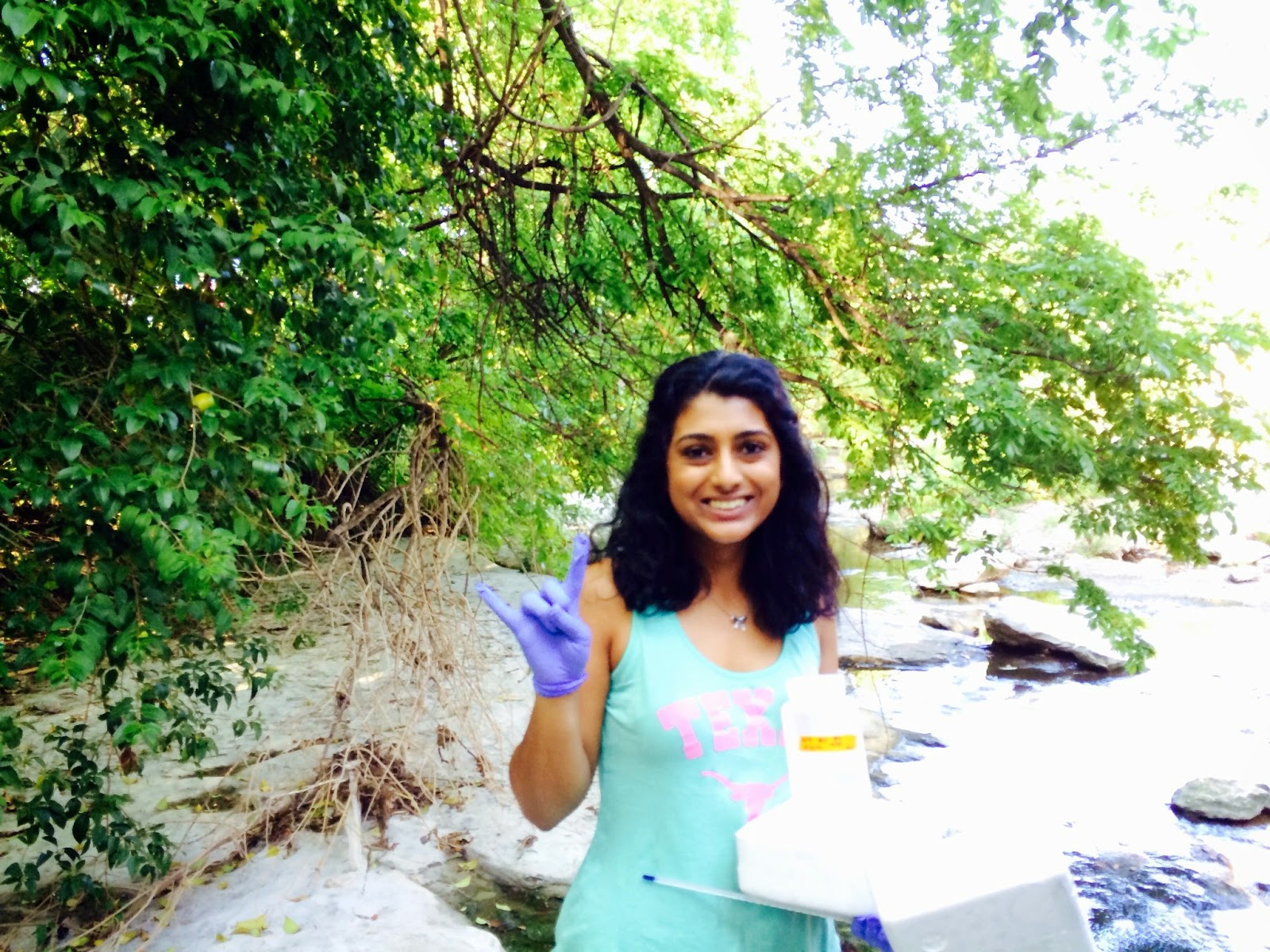
When I was a freshman entering the University of Texas at Austin, all of the different opportunities seem endless and it was overwhelming. Desiring to find a group where I can grow academically while also being able to develop problem-solving and creative thinking skills, I joined the Freshman Research Initiative. Through this program, I was able to learn more about what research was and basic methods of conducting it. Initially, I thought research was geared only towards people who had an extensive knowledge about science and feared the embarrassment of failure. Slowly, I began to realize that research isn’t about making grand discoveries on your first attempt for an experiment. The beauty in research is that growth comes from failure when you can reevaluate what went wrong and what can be done to fix the problem to result in better future outcomes. This new perspective not only helped my scientific findings, but also my outlook on all of the scariness that the first year at college brings. Through the FRI program, I was able to find the Do It Yourself Diagnostic stream that aligned with my career goals of working in the healthcare field as well as the goals of the new generation to work towards more involvement in ones own health. In this stream, not only have my peers inspirited me by the ideas that they have brought, but also I have discovered a new fire within myself to work to a new diagnostic discovery.
Category: 2014
-
Vatsal Shah
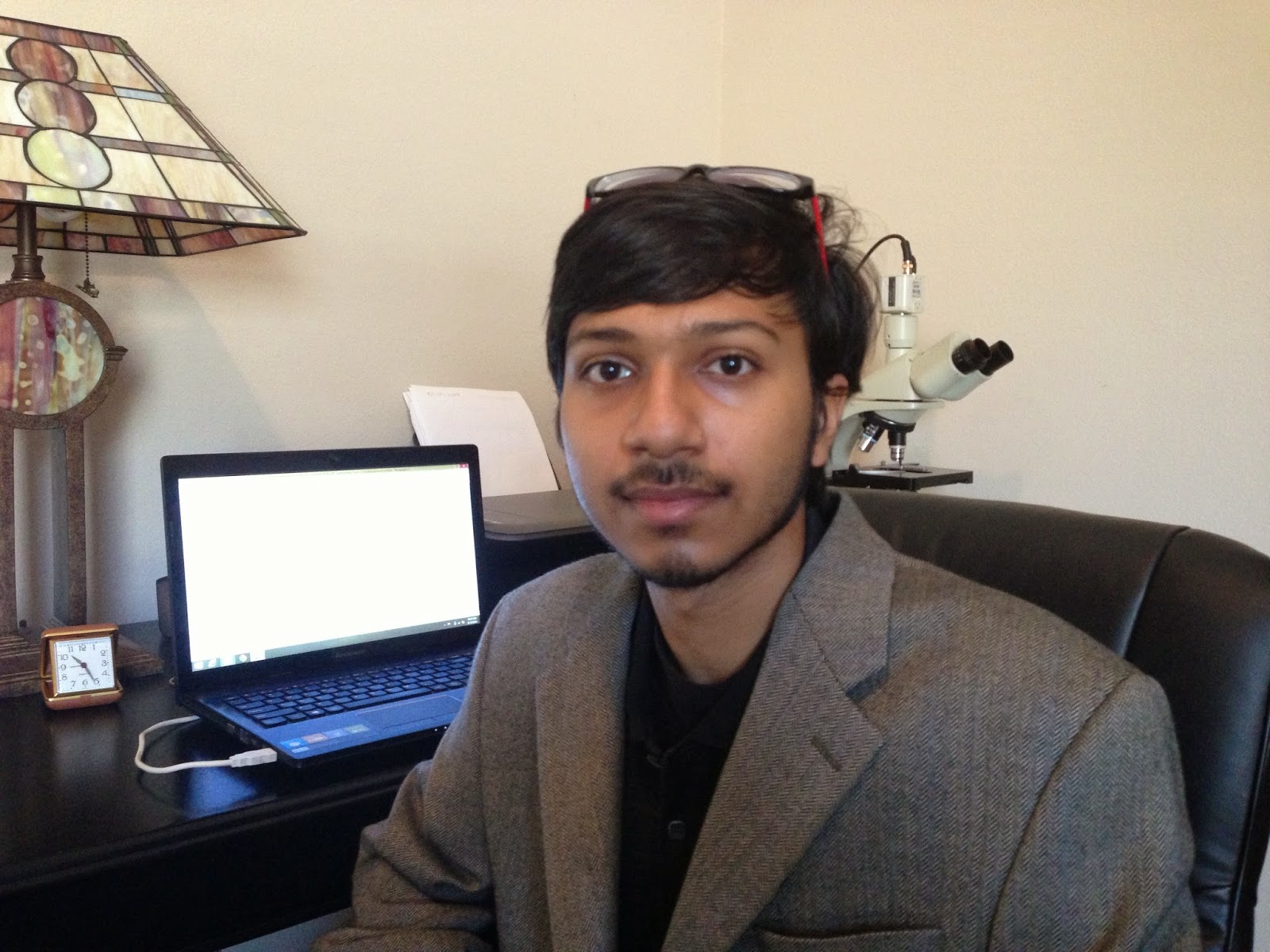
As an undergraduate, I have had a hard time figuring out which major I want to pursue and what type of job I will love to do until I retire. From middle school, I always wanted to do something with computers, but I never knew what. Later in high school my view point changed a little and I wanted to explore Pharmacy. I took a class which prepared student for Pharmacy Tech Certificate Exam, hence I knew the ins and outs of a Pharmacist life through that class. As the class progressed, I did not enjoy what I was doing. But I loved the field of medical science by understanding how it is helping the entire world today. Hence after quitting Pharmacy I decided to do Computer Science after my first year in college. When I started taking computer classes I realized that with the little knowledge I have for medical science, sometimes in future I want to integrate medical science and computer science together.
I laid out my goals for future and decided to move to University of Texas for my Bachelor’s degree. In April 2014, I came to know I was accepted to UT. Additionally, by the end of April, I had received an invitation to join the DIY Diagnostics Stream. I looked at their website, and I knew this is what I would love to do. The Diagnostics Stream had all kind of app ideas/research that they were performing on their site. I thought I could make a difference in the stream by adding my computer knowledge. Moreover, it was a perfect do it yourself stream where I could learn more about medical science and apply that with computers. Moreover, the most important thing I noticed was the DIY stream was focused on helping the community, and making their life simple. I always want to give back to my community, and hence I picked DIY stream.
I am excited about two projects right now:
- Pillbox app – it is an app which will help the community to take a picture of the pill from their smartphone and through image analysis it will scan it through my database and find which pill that might be. This is used for people who have to take a lot of medicines in a day, and if they mix a few medicines and forget which one is which, this app will be a great use to them.
- Saliva Extraction – I am doing the statistical analysis side – and I am looking forward to making algorithms to do so.
So far in my experience with the lab, I think FRI was a great way for me to start doing research. It introduced me to how I can start thinking how a researcher does, and it also taught me on how to work with a team of researchers.
The biggest moment I had in this stream till today is getting us a database and a server from the UT IT department.
Being a transfer student, and as a first semester at UT this Fall semester, working with the DIY stream taught me time management skills in general which I am able to apply to my day to day life today.
-
Joo Hyun (Jenny) Shin
- Why did you pick the DIY Diagnostics stream?
I chose DIY Diagnostics because I was interested in the medicine-related aspect of it. I also liked that we, students, could have the potential to actually develop a new over-the-counter diagnostic test that could be used someday.
What diagnostic ideas are you most excited about?
I’m most excited about mobile apps that people can use to self-diagnose or find answers to any medical questions without going to a medical professional. I think these medical apps will become more popular in the future.
- How do you explain what you are doing to your parents or someone who’s never heard of the FRI.
I just tell them I’m doing research over something that I’m interested in. I tell them that FRI is a program that provides opportunities for undergraduate students to immerse and actually progress in research work, which is often challenging to do as undergrads.
4. Why do you love science? Do you consider yourself a scientist/researcher?
I love science because it explains how things live and work in the world. I think it’s also fascinating how that there is still a myriad of things unknown in science that people have not yet discovered. I don’t consider myself a scientist/researcher because I don’t think I have yet committed enough time and effort in research. However, through DIY Diagnostics and future endeavors in research, I do think that I will one day consider myself a true scientist/researcher.
- How has being a part of the research community helped you succeed at UT in general?
Being a part of the research community has introduced me to a lot of the resources that UT offers to students. I have also gained unique experiences and a community that I think will continue to benefit me even after I graduate.
- How was your experience learning to program mobile apps?
Even though I struggled a lot with coding since I have no experience in computer science, I thought that the results that we got out of them were really cool. I am very proud of the apps that we developed.
- Can you share a big “aha” moment you have had in the stream?
I had a lot of “aha” moments last year we were working on our mobile apps last year. It was always exciting whenever I was able to finally figure out to get my coding to work after spending several hours trying to fix my app.
- Has anything particularly fun or funny happened to you in the stream?
My most fun experience I had during the stream was when I went to Waller Creek to collect water samples. I went with three other FRI students, and even though this task lasted longer than it should have, it was a fun and refreshing experience doing fieldwork outside together with a group of other FRI students.
- How does your research experience compare to someone else you know who has done undergrad research?
I think my research experience differs from that of other undergrads who are involved in research because I have more freedom in what kind of project I want to do. Even when this freedom to do anything sometimes have felt overwhelming to me, I’ve had supportive faculty members and peers who helped guide me in the right directions.
10. Where do you see diagnostics in 20 years and how do you fit in the picture?
I think that do-it-yourself diagnostics will become more prevalent and more advanced in 20 years. Because of the longer life expectancies and the growing senior population, the demand for diagnostics will continue to rise. At that time, I hope that I’ll be continuing research and contributing in the advancements of diagnostics
-
Katrina Spangenberg
The DIY Diagnostic stream stood out to me because of all the possibilities it holds. There are so many directions you can go in research trying to develop diagnostic tools from disease and health, to environmental preservation. The streams’ goal of creating diagnostic tools would be applicable to everyday life and hopefully helpful to many people. All of these factors added up to my decision in picking the DIY Diagnostic research stream.
The DIY stream is a research lab within the Freshmen Research Initiative. It is an opportunity for undergraduate freshmen and sophomores to be a part of research that most students would not dream of doing until they are seniors or even graduate students. A community forms within the research lab that really propels us to go further into research and academics at UT in general because of the competitive, yet nurturing atmosphere. Being in an FRI lab, we gain skill and knowledge that most students at our level have not yet attained, putting us another step ahead.
One of the diagnostic ideas that we are currently working on developing is relevant to water and environmental safety. By researching the stream that runs through UT’s campus, Waller Creek, we hope to gain knowledge on bacteria levels in the creek and possibly develop new ways to test bodies of water for contamination levels. Once we reach the point of knowing what to test for and what levels are acceptable, there is the possibility of developing an at home diagnostic tool for people to use in their everyday life or travels. This tool could be helpful in developing areas to gain insight on whether water sources are actually clean or not. There is nothing quite as exciting as knowing that a potential diagnostic tool could have a global impact!
One of the things I love about science is how much it can uncover about the world we live in. To the common eye, many things go unnoticed, seem of little importance, or appear to be at the point of hopelessness. To a researcher, we get to look at details that are often neglected, ask more questions, and work towards resolving issues that seem far gone. Because of my time in the DIY Diagnostic stream, I now consider myself a scientist and researcher. We are asking more questions about water safety and bacteria levels, studying the water from a stream most students at UT never notice, and potentially developing a tool for the every day person to test water safety levels.
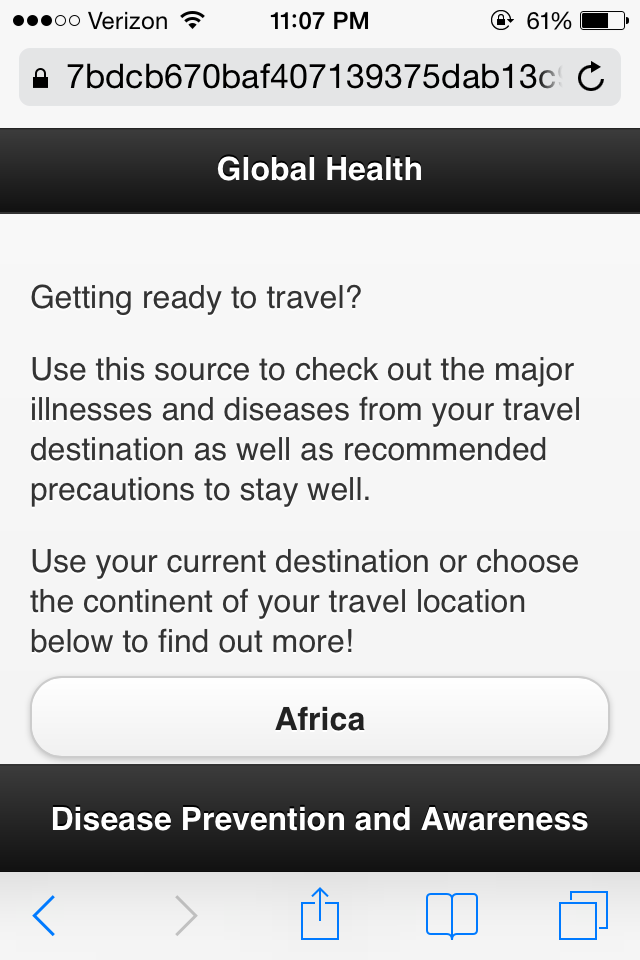
In the DIY Diagnostic stream, we have also learned how to program mobile apps. At first, it seemed frustrating because of how tedious coding an app can be. Thankfully, with every new app we make, the more advanced and useful the apps become. This summer, many of us got to work on developing an app for a “micro-fellowship.” I worked in a team with Michelle Gungstrom, and we developed a Global Disease app. This app can be used as a tool for travelers to gain knowledge of the diseases and precautions to take at a destinations. It works on mobile phones and computers alike.
Any friends that I know doing undergraduate research have not gotten to start until their junior or senior year of college. Thankfully, FRI breaks those barriers. The DIY Diagnostic stream stands out even more compared to other undergraduate research experiences that I have heard of because there are many routes to take within diagnostic research. Most of the time, undergrads are in a lab where their opinions and ideas are not usually heard out as much as they are here in DIY Diagnostics.
Twenty years from now, diagnostics will most likely be at a point beyond anything we can imagine. Diagnostic tools have the potential to completely transform healthcare by having more personalized tools or general health trackers. By that point, we could have tools that would enable us to have greater knowledge and awareness in our everyday environment. Maybe I will be using a diagnostic tool in Kenya to test the local drinking water. Perhaps I will be in a hospital using a diagnostic tool to identify whether a patients tumor is cancerous or not. The possibilities are endless.
-
Student Research: Savanna Wheat
The DIY Diagnostics stream is an amazing opportunity for freshmen. When I attended the FRI open houses, DIY’s was definitely a stand out. I was told about the freedom students would have to conduct their own research. Because the stream was still fairly new, there would be no predetermined paths students would have to follow (after learning basic laboratory techniques). While the work would be rigorous, the aura of the stream would be relaxed, creating an ideal learning environment. As a sophomore starting my second semester in the DIY Diagnostics stream, I can attest that all of the claims are true. In the DIY stream you aren’t given your options and told to find a place to fit in. Instead, you choose the research you want to do and the research educator finds a way to make that fit within the parameters of the stream.
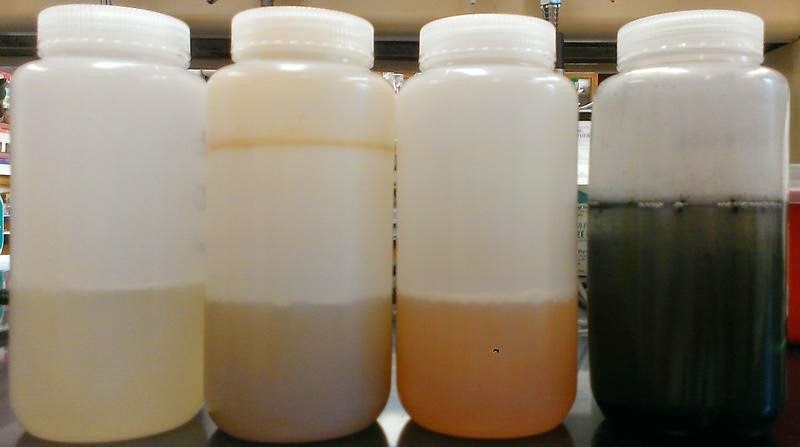
My peers are working on some amazing projects in our lab. One student is working on a diagnostic to test for dehydration. Other students are working on a project to connect the DNA is our saliva to our behavior and habits. Some are even creating apps to test for a variety of things, including cancer! I’m currently working on finding a way to recycle the water byproduct of hydraulic fracturing. A picture of the water my partner and I have been working with is below.
The current process of fracking is extremely wasteful. Most of the water used is stored away because it’s hard to determine what’s in it after pumping it out of the ground. As the picture shows, the water can look (and smell) really questionable, so it generally isn’t used to frack a second time. As a student in the DIY Diagnostics stream I was awarded a fellowship to work in the lab during the summer to work on the fracking project. Not many freshmen get the opportunity to receive payment for doing their own research. This is just one of the many benefits of being part of a group as unique and exciting as the DIY Diagnostics stream.
-
Student Researcher: Kathryn Thackrey
1. Why did you pick the DIY Diagnostics stream?
With DIY it was easy to see how my work would make a direct impact on the health and wellbeing of others. My ultimate goal in any pursuit is leave the world better than I found it, and I think that this stream as obvious and exciting humanitarian leanings.
2. What diagnostic ideas are you most excited about?
Well, I work on an individual project, but one of the coolest things about the DIY stream is that it revolves around the concept of analyzing saliva to see what it can tell us about the state of an individual’s health, and then connecting that information to a phone or computer to get immediate, integrated results. We’ve already started this by making apps and collecting bacterial RNA data through the Oral Microbiome project, and so I’m excited to see what happens in the next couple of years.
3. How do you explain what you are doing to your parents or someone who’s never heard of the FRI.
I’m basically testing resistivity in solutions meant to mimick the salt concentrations found in the average person’s saliva, which will hopefully be able to tell me whether a subject is dehydrated or not. This is because as a person loses more and more of their water weight (body mass in water), the proportion of other stuff in bodily fluids goes up. Knowing this, we can test how much salt is in a solution by running an electric current through a sample and seeing how much of that current is lost (resistance). So, the less resistance there is, the more dehydrated you are.
4. Why do you love science? Do you consider yourself a scientist/researcher?
I admire science and scientists because absolutely every aspect of the natural world is considered fascinating and beautiful. Nothing is shunned or taken for granted and everything is important. I think that’s a great way not only to work, but also to look at the world.
5. How has being a part of the research community helped you succeed at UT in general?
Doing research with people at my own age and level has both helped me to find a place where I belong on this big campus, but also has shown me that everyone needs help in one way or another. One of the bravest things you can do is ask for help.
6. How was your experience learning to program mobile apps?
It was interesting to see how much complex and precise work goes into even the simplest web documents. It makes you appreciate more intricate computer interfaces.
7. Can you share a big “aha” moment you have had in the stream?
I never really had a moment; for me it was like an accumulation of work that showed me that if you try really hard and design your experiments well, good data will come from your labours.
8. Has anything particularly fun or funny happened to you in the stream?
Over the summer a group of researchers went paddleboarding as a send-off for one of us. It was a ton of fun and I’m proud to say that I jumped in and then fell in later.
9. Where do you see diagnostics in 20 years and how do you fit in the picture?
In 20 years I would expect a functioning, marketable dehydration diagnostic that incorporates electronics and can be inserted directly into the mouth. By this time it could feasably used for sports teams, adult care facilities, and youth groups from classrooms to extracurriculars to ensure health.