Category: 2014

  • Rachel Grubbard

    Rachel Grubbard

    When I was deciding which stream to join as the first semester of college was wrapping up, I attended several open houses for different streams, but none captured my attention quite like DIY Diagnostics with Dr. Riedel waving around a pregnancy test and telling us about the million dollar industry that is at-home, or “DIY” tests. I was very interested in the idea of creating tests, normally requiring a trip to the doctor, that could save people countless amounts of time and money. Immediately, I thought of creating a test that could be used to diagnose skin cancer since I have known several people that have panicked at the sight of a mole. Throughout the first semester of DIY, we have started working on the FRIome project, in which we hope to be able to find a correlation between certain physical or psychological traits and the bacteria found in one’s mouth by collecting saliva samples. In addition, I learned how to program mobile apps. I’m definitely no Steve Jobs yet, but this summer, I was given the opportunity to start making my skin cancer diagnostic test a reality by creating an app. I still have a lot of work to do because I still have a lot to learn about programming, but I hope to have an app that will allow the user to take a picture of the suspicious area and find out if it could possibly be cancerous and warrant a trip to the doctor before going for a spot that turned out to be nothing.

    I have learned a great deal by not only working on the computer science part of this stream, but also by working in the lab. I have been trained to use many machines in our laboratory and work on my favorite part: the biological sciences. I love science because no one expects you to be perfect. In fact, it is encouraged to experiment and fail miserably, because important discoveries are made in doing so–you know what doesn’t work! Not all my experiments worked out perfectly each time, but it was a learning experience. I always had the chance to redo labs, fix my mistakes, and get the results I needed. Science isn’t like English, where there are millions of grammar rules that need to be perfected; science gives you the chance to make your own rules and your own discoveries (while following the safety rules, of course!)

    During one experiment, I went down to Waller Creek with two friends in the stream in order to collect a water sample. As I was trying to close my wet container of murky water, it slipped from my hands, and the lid began to float away with the current. I watched it slip away until it was finally caught between the bank and a rock. I climbed across vines, under branches, and dodged poison ivy in order to carefully reach across to retrieve it and avoid falling in. The whole time, my friends and I couldn’t stop laughing. That was definitely my favorite, yet scariest, moment I had last year. I’m looking forward to making more clumsy memories with all the great people I have made by being a member of this stream. This semester, I am hoping to continue working on my app and finally see the culmination of my efforts and research. I can see the work that we have done in the lab and on our computers really helping people in the future, and it’s a great feeling to have!
  • Michelle Grundstrom

    Michelle Grundstrom

    Hi future DIY Students!

    If you’re reading this, you are probably looking into joining the DIY Diagnostics stream – which is a great decision by the way!  As a current researcher in the FRI lab I’ll tell you some of the reasons DIY should be top on everyone’s stream list.

    When I joined the DIY stream in 2013 it was brand new.  No mentors, no students, nobody had come before my class.  The stream was roughly described as having the end goal of creating a “diagnostic”.  Most of my peers and I imagined this to mean that we would be making pregnancy test type devices, only for diseases.  The stream seemed to offer a viable end product and a model of how to get there.  That turned out to not really be true at all.

    The first important thing we learned was that diagnostic doesn’t imply illness.  Diagnostics can be created that deal with fracking, pollution, mouth bacteria, most anything you can think of.  Diagnostics don’t even have to be held in your hand – they can be digital.  We diagnose aches and pains with the internet every day, and apps are one of the simplest ways to get your diagnostic out in the world.  Over the summer another girl in the stream and I worked on a diagnostic that tells travelers what diseases to look out for where they are traveling.  Not anything like a home pregnancy test, but still effective at being a diagnostic tool.

    Another important lesson I learned is that an end product after one semester is highly unlikely.  However I also came to realize that a finished product is nice but should never be a serious researcher’s goal.  What researchers should aim for, and what this stream provides, is an opportunity to see progress.  Whether you’re making an online diagnostic or you’re researching in the lab, progress equals success.  Not all labs allow students the opportunity to progress with their own research, so don’t underestimate the value of being able to create and refine your own product.

    The last thing I want to say is that when you come to the stream open houses and talk to us one of you is going to ask us what the time requirements are or how hard the stream is.  It happened in every open house I went to, and it was the main thing many people considered when choosing a stream.  No lab you visit is going to have a 20 hour a week requirement, and no lab is going to have a 1 hour requirement.  Pick a lab where you won’t mind spending your time, where you can do something worthwhile, where you feel safe and appreciated, and where you can accomplish your goals for being in FRI in the first place.  I joined the stream that I did because I felt that DIY met all of those points, and I haven’t been disappointed yet.

  • Doralyn Havien

    Doralyn Havien

    When it came down to applying for a stream at the end of my fall semester, the only stream that stuck out to me was the DIY diagnostic stream. To be honest, after visiting all the open houses and looking at background information, I was completely overwhelmed. I didn’t know half the words the research educators were saying, which raised some red and white flags immediately in my head. However, when stumbling across the “do it yourself” stream, I felt better knowing what the words in the name actually meant. DIY was a word I was extremely familiar with due to my excessive obsession with arts and crafts, but don’t get me wrong, our stream isn’t about gluing and pasting macaroni onto a paper plate (but if you can think of a diagnostic that involves gluing and pasting macaroni onto a paper plate, then be my guest).

    You may not be familiar with what a DIY diagnostic is, but chances are you’ve seen one. A pregnancy test is a well-known example. You urinate on the stick, and the display screen will alert you if you’re pregnant or not pregnant.You just diagnosed yourself as pregnant or not pregnant by using this test! That, in my opinion, is what I believe makes DIY unique from the others streams because if you come across a problem in real life, you can head back to the lab and make a diagnostic for it. If you’re allergic to nuts, but you don’t want the waiter/waitress to name every ingredient in your dish, you could potentially make a diagnostic that can detect the trace of nuts. How the diagnostic will be work and what it’ll look like is totally up to you. And that’s what I like about this stream, the research you do can be very personal to you, but end up being very helpful to hundreds of people.

    A project I worked on this summer involved collecting water at 9 AM for a month, filtering the water, then checking how much E. coli and enterococcus is in the water. To be honest, I woke up every morning wanting to skip lab, but the prospect of being that much closer to creating a working diagnostic motivated me. Whenever people asked me what I did in lab, I always simplified it by saying: “I got water from a creek and checked to see if there was poop in it”. As informal and useless as that sounds, I’m hoping that the research I participated in will help the people in developing countries be certain that they’re drinking clean water.


    The stream isn’t always about sitting in a lab and doing experiments to create physical diagnostics. DIY is in the process of making mobile apps that can be accessed on smart phones and laptops! Even though I’m not the most tech savvy person in the world, the coding that I’ve learned in this stream has helped me understand some components of apps and webpages. However, asides from that, working in a lab is a very social and self-developing experience. You learn how to present your work clearly and proudly, you form a bond with your lab mates through the countless hours of struggling, and you learn how to communicate ideas to others. Working in a lab is a very humbling and gratifying experience that I believe is important to experience at least once in your life.

  • Hailey Henkel

    Hailey Henkel

    I chose the DIY Diagnostics stream because of how interesting I felt it would be. I have never experienced a class that involved working on projects in such a hands-on way. It seems to be very flexible and in this case, I enjoy the freedom to experiment and experience new ideas and different approaches toward certain solutions. For this semester, I am most excited to start implementing apps that can be used in beneficial ways for diagnostic purposes. Each app in this class is used to run a diagnostic and in most cases, could be used to better society through its use. I feel that diagnostic apps are really important as technology becomes incorporated into everyone’s day-to-day life.

    When explaining this to my family, I tell them about how I am gaining skills that will help me in the future. This stream allows me to work on creative ideas in a very practical and advanced way. It not only includes researching certain aspects that I am not normally used to, but it also allows me to expand on my skills as a programmer and work with different applications. I feel that FRI really does help give a person the independence to work on projects that are important and advance themselves as a researcher.

    I love science because of how precise it is. There is always a certain way to accomplish a task and always a structured procedure to follow. If this structured procedure is not followed, then usually experiments or programs cannot work appropriately. It also requires a true test of knowledge and applying a person’s skills. I do consider myself a scientist in some aspects. I enjoy working with certain projects and get a thrill out of new discoveries.

    Recently, I have found myself being pushed more by those surrounding me. I feel that being around other individuals that have the same interests and drive toward a certain subject does create a sense of belonging and can make you more successful in your interests. I have also strengthened my understanding of mobile app development in a way that I had never understood before. I have worked with previous programs, but this new development strategy allows me to hone in on skills that will be beneficial for my future.

    Thus far, I have felt pretty astounded by all of the information available and it has taken me a while to adapt to the way that everything works. It’s good to hear a person’s ideas and really work with them. There has been an “aha” moment. When preparing for the app showcase, I have had instances where before I was unclear on what the end goal would be, but now I am starting to feel confident and understand what direction I should go in.

    Thus far, it has been a great experience meeting new people and understanding a setting that I was not before familiar with. The environment and the people are fun and friendly, making the projects a lot more enjoyable. As far as I can tell, this DIY Diagnostics stream does allow individuals to really get to know and experience certain aspects of research that aren’t usually emphasized on. With the implementation of mobile app development, many non-CS experienced individuals get the chance to experience coding and the environment this brings. This is not really noticed or emphasized on in the other streams and I find it to be almost essential in this fast moving and tech-involved society.


    I could see myself working on diagnostic applications in the future. I have worked for various health-related software before and find it a very fitting field for me. I enjoy the idea of helping society as a whole and this stream seems to have an inner focus toward helping people. Many of the apps I have seen have been directly related to helping a person and even may be used for saving a person if something happens and they need a quick diagnosis. In twenty years if I am in a field that is related to diagnostics then I would be happy with that.

  • Alisha Hall

    Alisha Hall

    DIY Diagnostics was my top pick for the FRI stream sort because the research stream promised a variety of experiences and the opportunity to guide the direction of the research. For example, learning how to code apps strengthened my computer science skills at a level still possible for non-CS majors. I also recognized the potential applications for at-home diagnostics in the medical field, my career path goal.

    Since I am a pre-med student, it follows that the FRIome project is my absolute favorite “substream” in DIY Diagnostics. The name plays homage to the FRI while referencing thebiome the project concerns—the human oral microbiome. Simply put, the FRIome project is about finding correlations between the type and abundance of bacteria in your mouth and your health. There are many reasons why I am fascinated by this project. 1) Saliva is much easier to sample than blood or stool and may contain just as much information about what is going on in the human body. 2) Humans have very close relationships with the microorganisms living in or on their bodies—this is a vastly underutilized resource for diagnostics in medicine. 3) Wouldn’t it be cool to spit on a small, cheap sampling device that you could buy in any pharmacy, plug it into your smartphone, and immediately learn whether you have low blood sugar, gingivitis, or the flu? (And maybe even send this information to your doctor right away?)

    Whenever people ask me about what I do in my research stream, I talk about the big picture: the creation of inexpensive and easy-to-use diagnostics. Everybody gets excited about DIY Diagnostics. Sci-fi stories have been predicting the future of diagnostic tools for decades (think the tricorder from Star Trek)!

    And if I am asked whether it was a good idea to dive into research without any prior experience—I believe beginning research as a freshman (especially in a diverse stream like DIY Diagnostics) was highly beneficial for my development as a scientist. I had fewer preconceived notions about what research entailed and was open to learning anything. In addition, applying the concepts I was learning in lectures to my research in the lab let me experience a sense of discovery. The potential for endless discovery is what has made me a scientist for life, even if I do not plan to continue as a researcher.

    Being in research in general at UT has many benefits: hands-on experience, skill-building (including time management), meeting people with similar academic interests, and connecting with faculty. But compared to what students in other labs get to do, I think my research in DIY Diagnostics is much cooler. I have participated in projects that incorporate chemistry, biology, statistics, computer and environmental science. I have coded my own app and designed and executed my own hypothesis-driven experiments. I have contributed to decisions regarding how the FRIome project will proceed in the future. I am a part of original research that has definite, real-world applications in the future.

    I would recommend DIY Diagnostics to any students that enjoy open-ended experimentation and variety. If possible, I would also recommend staying on for the summer—I got to know the other people in the stream better by researching over Summer 2014. I was also able to focus on the FRIome project and really become engaged in the work I was doing.

  • Jordan Jones

    Jordan Jones

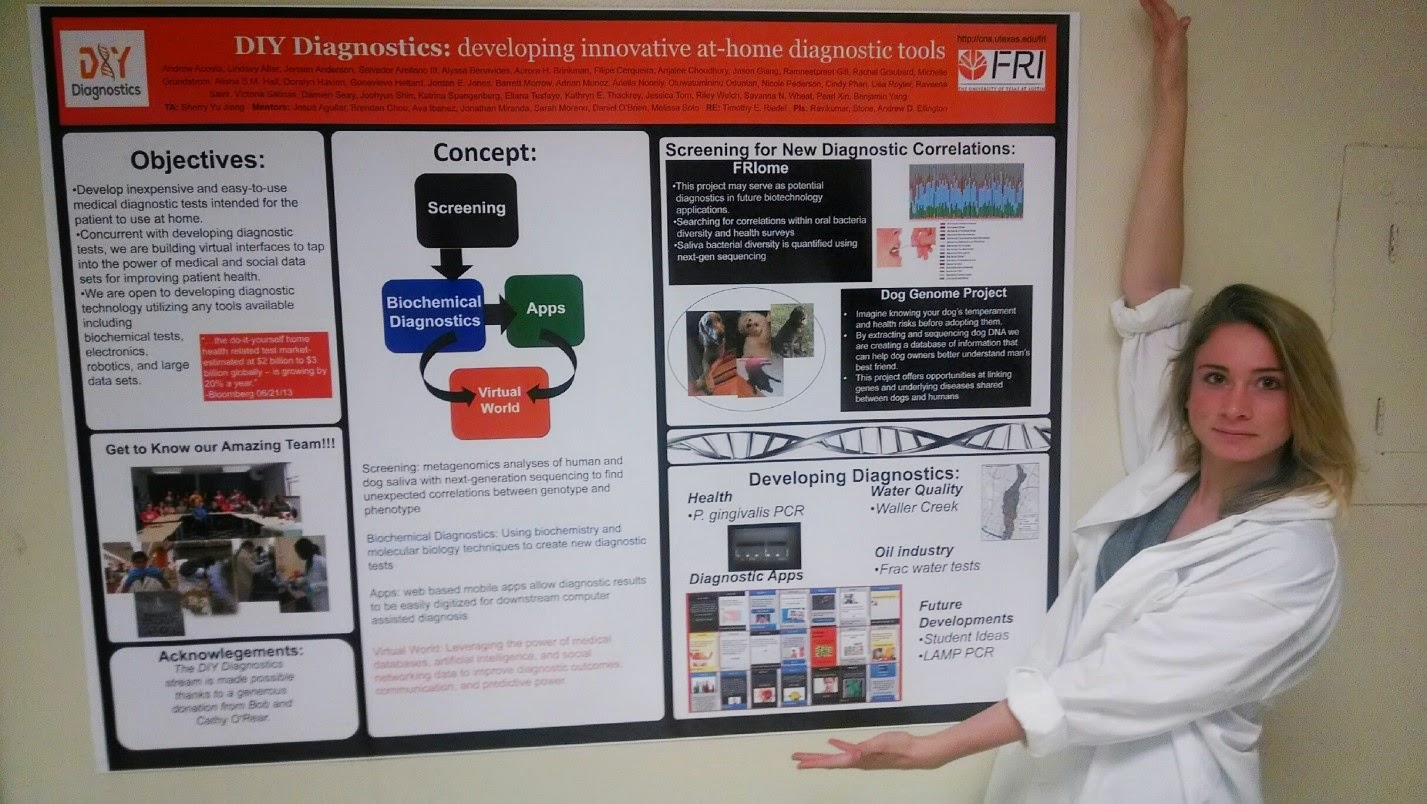
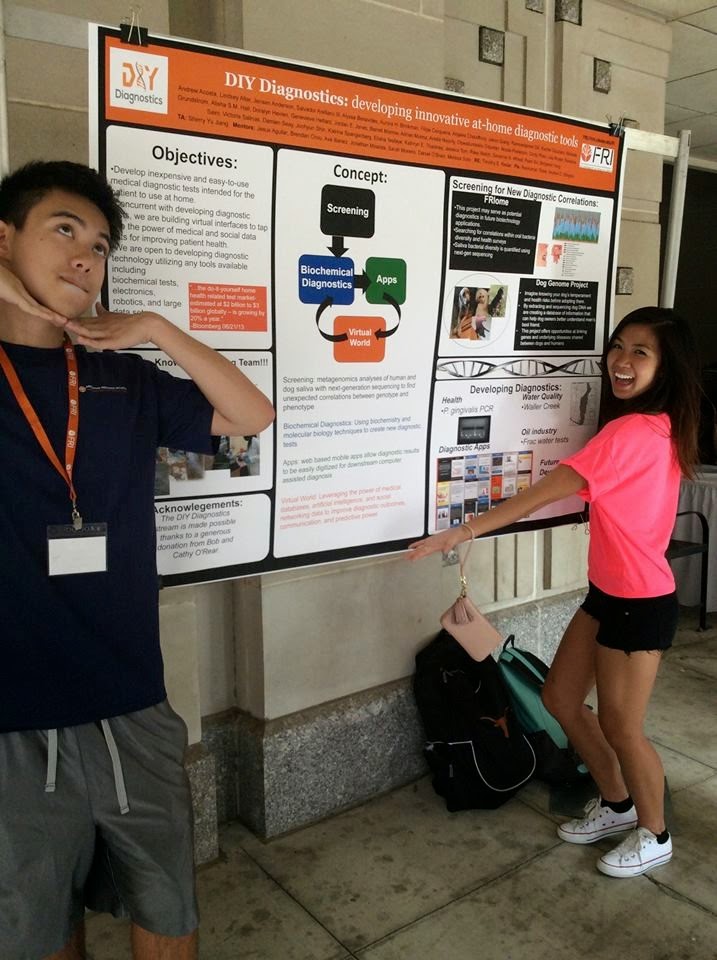
    Do It Yourself (DIY) Diagnostics was a no brainer for a medical school wannabe like me. During the FRI picnic, which showcased all the streams and their educators, the DIY Diagnostics poster and the wonderful Research Educator Tim Riedel was the only stream that caught and held my attention, making it the only stream that I wanted to be a part of. This research stream offers so many opportunities for individuality and support for the development of whatever it is that you want to pursue in this field of diagnostic research and discovery. I love how technologically forward this stream has been, especially with the diagnostic phone apps that many of us researchers have been working on. Learning how to code for these apps has been a really difficult and tedious, yet useful and a pretty cool skill that this non-computer science major has been learning how to do. I also love the support that I have from my R.E. and fellow researchers. We have each other to bounce ideas off of and help stumble through the long process that is research, and long hours in the lab have been made fun because of the people that are a part of this stream. If you want to join FRI and you have some great ideas and you want to be able to do your own independent projects and learn all about the process that is research and discovery then this is definitely the stream for you!

  • Barrett Morrow

    Barrett Morrow

    My name is Barrett and I’m a sophmore Biochemistry major. My freshman year, like for many others, was quite a rollercoaster. From classes of four hundred plus to piling amounts  of homework, college life didn’t seem like all it had been hyped up to be. Thankfully, I made the  decision at the very last second (literally 15 minutes before the application deadline) to join the  FRI, which has served as my saving grace in my time at UT. Now the FRI may be great, but  once you’ve completed your first introductory semester you reach a point where you have a great  many stream options in front of you, but I can assure you DIY Diagnostics is the best. It quite  literally means “Do It Yourself” diagnostics & the goal of the stream is to create at home  diagnostic tests ranging from industrial applications to healthcare oriented tests.

    The DIY  Diagnostic stream is a relatively new stream. What does this mean for you? You have the  opportunity to help mold a lab that will remain at UT far after your graduation. I know from my first  semester in the DIY diagnostics lab that students have far more independence in the topics they pursue as compared to other labs. For example, I have always been interested in  chemistry. With the recent legalization of marijuana I noticed that there lacked an efficient, easy  & cheap test to test for marijuana strength and contaminants. I did plenty of research on the  subject and proposed an idea to Tim Riedel, the stream leader, who was more than excited to  jump on board. It was this enthusiasm, this primal scientific curiosity and drive that exudes from  every corner of the lab that has made my time in the DIY Diagnostic stream so enjoyable.

    I didn’t  actually end up working with Marijuana, due to complex legal issues, but I did extend my idea to  other mixtures to which I could legally test. We eventually decided upon measuring the levels of  cholesterol in earwax. The reason behind this is because there is a hypothesis that earwax  cholesterol levels are a better representation of overall cholesterol health than readily fluctuating  blood levels. I even got a summer internship at UT out of all this where I was able to work on my  own project all summer! I’am still currently working on this very project and hope to finish it up  this fall! I hope you decide to join the DIY Diagnostic stream, and even if not, that you really enjoy  your time in the FRI. There is nothing more exciting and rewarding then running a succesful  experiment after hundreds of failed ones. Doing research has made me become invested in my  schoolwork. I now look forward to organic chemistry in hopes that maybe I will learn something  that will help me with my project!

    Once you get involved academically in a subject you are very  interested in, school becomes less of a job and more of a hobby, something that you can enjoy.  The DIY Diagnostics stream is very exciting, and much progress has been made in the sole year  of its existence, and it needs your help to continue! Pursue the ideas that interest you in an  environment conducive to learning, innovation & discovery. Personally, there has been no  experience of mine thus far that has came close to rivaling that of which I’ve had with Tim & the DIY Diagnostics team. I hope to see you at our open house in the fall!

  • Nicole Pederson

    Nicole Pederson

    Why did I choose DIY Diagnostics? Easy. I wanted a chance to help revolutionize the way people view medical care.  When first introduced to the stream, I was told they were aiming to create at-home tests (like pregnancy tests) for all sorts of conditions and diseases.  This immediately piqued my interest.  As a pre-pharmacy/biology major, I immediately saw a way that I could make my own impact in the science field. I was even more excited to find out that we would be able to come up with our own diagnostic ideas and conduct research on our own time. One of the first ideas I had for a diagnostic test was inspired by my mother, who currently lives with a heart arrhythmia.  She has always wished that she could have an at-home device that would test her heartbeat and notify her if it was racing at the dangerous speed that would signify an attack. The medics use a similar device when they arrive in an ambulance, though an at-home option is not widely available, if available at all. Though the accuracy of such a machine would be questionable and the mechanics outside this streams’ reach, I do hope it can one day become a readily available diagnostic. I hope that my time in DIY Diagnostics will lead me to be involved in this research sometime in my future.


    Through DIY Diagnostics, I have been involved in many interesting projects this last semester. These projects range from creating apps designed to test for a disease to the FRIome project, which is essentially trying to make connections between bacteria in your mouth and certain medical/personal characteristics. Working on these projects has taught me a great deal about coding and useful lab techniques. Being involved in this lab has also helped me in other labs that my major requires because I have already been introduced to proper lab etiquette and common skills. In addition, working independently has shown me how often I rely on other people’s guidance in my life. This stream has opened my eyes to true independent work and the importance of establishing relationships with those around me. Though the work is independent, there is an amazing team of mentors to help you when you truly need it. I am tremendously thankful to be involved in such a terrific stream.


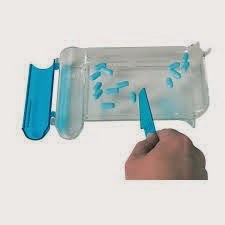
    Over this summer, I have had the privilege to continue my DIY Diagnostic experience through a mini fellowship. I was involved in trying to create an app that will identify a pill based on taking a picture of it.  Over the summer I also worked in a pharmacy and got to experience hands on how this app could affect a Pharmacist’s everyday life. There were several times when I would be counting pills only to realize that there were two different kinds of pills in the same bottle. Though it was usually just a smaller size of the same medication, the Pharmacist would have to look it up and identify the two types of pills before it could be used to fill a prescription.  With my app, however, it would only require a picture to be taken. However, my app is still a work in progress, though I am excited to see how it will end up.

  • Cindy Phan

    Cindy Phan

    As a freshman, I stumbled upon this stream while looking at every potential stream that I might be chosen for. I thought to myself what a great stream this was to have your very own independent project. I was so excited to research about cancer or ringworms and all sorts of strange diseases. I expected this stream to be a “no-team-by-myself kind of stream”, but I was wrong. I learn that teamwork is what this stream strives for and that communication is key.  I learned that even the strangest project, Waller Creek was the one I hold dearest to my heart. I tell people all the time that I am in a research stream where everyone had potential to change the world.

    I tell myself all the time that I am a pre-med student, but do I really love it? It’s really easy to tell that I have no passion for med-school, but I still strive for my parent’s expectations, not my heart. When I hear that I get to be in a lab and going through the stages of failures and success, it gives me the chills down my spine. I learned so many great things and a thing that I am not too fond of as well (the apps), but this stream was really a test to see if I really knew myself.

    The best thing that I had encountered during this lab was being able to work along with my mentors during the summer and being actually useful to them. It was so funny when Sarah accidently transferred the mEI plate instead of the mTEC plate into the 44.5 degree water bath and I was basically hyperventilating trying to search for the missing mEI plate. I think my experience was a lot more fun and enjoyable than other undergrads. This research stream really helps me figure out who I am and what did I really enjoy. I can see this stream running for over 20 years because this stream has something that others do not, a chance to figure who you really are through the frustration and success this stream had to offer. I can see myself going to grad school and be like how Sherry is now. It is actually very exciting to see what my future holds with this experience.

  • Lisa Royter

    Lisa Royter

    What first drew me to the DIY Diagnostics stream was that it was brand new. When I first went up to the presentation poster at the FRI stream fair in the fall of 2013, Dr. Riedel’s excitement for the endeavor drew me in. He told us about at-home tests for HIV, pregnancy, and even at home genome kits. As a pre-med student, this connection to the health industry intrigued me.  When I attended an info session for the stream, Dr. Riedel promised an interesting lab, an effort based grade, and research relevant to our community. As a returning student to Dr. Riedel’s lab, I can confirm that the stream has fulfilled all of his promises.

    Before attending the University of Texas and being a part of the DIY Diagnostics stream, I never considered myself a scientist. The occasional dissection or s’mores lab in my high school sciences classes didn’t quite qualify me. With my experience in the FRI, I have learned so much. One of the biggest lessons I have learned is that you have to rely on your knowledge. You cannot expect your Research Educator or a lab mentor to hold your hand through the assignments. It will be scary at first but when you learn to be confident in yourself, research is so much easier and more enjoyable. This lesson has also applied to my other classes. FRI is a great organization because it is designed for freshmen.  One of the greatest things I have found about it is the class size. Streams are normally about 30-40 students, a group that is small enough to allow everyone to get to know each other. The size also really allows you to get to know your Research Educator. Dr. Riedel, a UT alum, was an excellent resource to have as a second semester freshman. He checked in with us periodically and was always patient with us as we were thrown into brand new lab experiences.

    As part of the DIY Diagnostics stream, my classmates and I learned to program mobile apps. This at first seemed like a daunting task as many of us had zero experience with coding, but after a few simple assignments, coding became sort of fun. I even applied and accepted a research microfellowship over the summer to develop my own app.

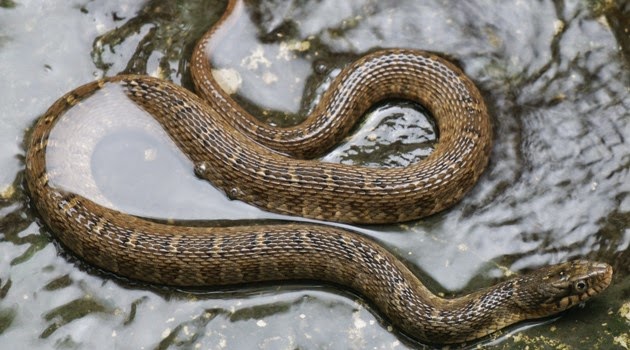
    One of my most interesting experiences as a member of DIY, happened during the Waller Creek project we worked on last spring. Our assignment was to collect creek water at one of three spots and test for the presence of E. Coli and enterococci. Dr. Riedel had warned us about wildlife near the creek but I never expected to see a huge brown snake slithering in the water. Thankfully my partner, Sal, kept a look out for it while I finished collecting my sample.  For the record, we did not capture that picture ourselves. We stayed far, far away from the reptile.

    The diagnostic idea I am most excited about is also the project I have chosen to work on this semester, the FRIome. This project uses human saliva samples to collect and record bacterial DNA. The purpose of this project is to correlate the presence of bacteria with lifestyle choices, such as diet, exercise, and dental hygiene, among others. I enjoyed this project the most because we first began with samples from our own classmates. As the FRIome continues, we plan to extend our sample set to other FRI students as well as students and faculty outside of FRI.

    Overall I am very grateful for the opportunity I have had as a member of the DIY Diagnostics stream.  As I continue in the program, I have realized that it has been a very valuable asset as both a class and an organization. The close working environment allows you to bond and learn alongside your peers while you both advance your experience and confidence in the research field.