By Rendon Reinarz, Graduate of the UT LBJ School of Public Affairs
This summer, I am lucky to experience multiple cultures during my summer internship for the National Democratic Institute (NDI). While I am working with the NDI Ukraine team, I was unable to travel to Ukraine for my internship due to the ongoing war and have been placed in Kosovo for the summer. In many ways, I get the best of both worlds: I have had the privilege to live and experience Balkan culture and hospitality while contributing to work that I find particularly relevant to help Ukrainian democratic institutions as they continue to fight for their future in the context of war and Russian aggression.
By Caleb Mulugeta, Undergraduate student in the UT Government Department and Economics Department
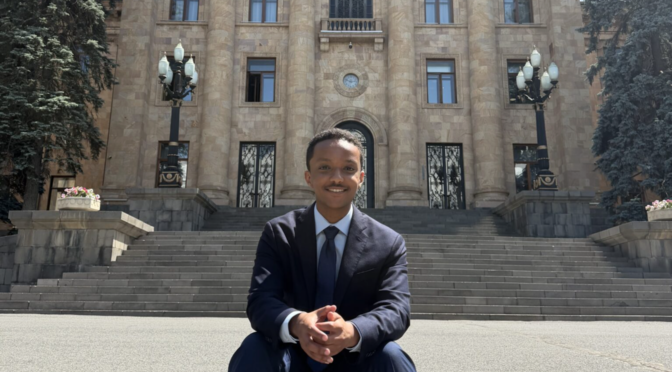
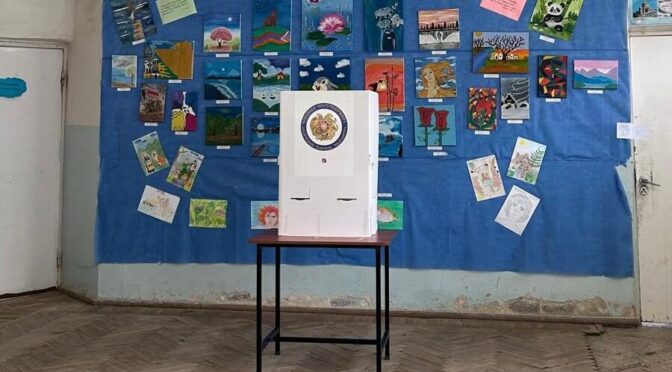
If I had to use one word to describe my time in Armenia, it would be resilience. I do not mean resilience on my part, but rather the resilience of the Armenian people. Armenians have repeatedly been dealt a difficult hand by history, enduring systematic attacks on their culture and attempts to eradicate their presence from portions of their ancestral homeland. For centuries, Armenians have faced invasion, foreign domination, and political upheaval while nevertheless preserving a distinct language, faith, and cultural heritage. My work with the NDI Armenia placed that resilience on full display by allowing me to engage with different parts of Armenian society through election observation, public opinion research, discussions with parliamentary staff and civil society representatives, and my own research into parliamentary oversight of the executive.
By Jackson Nichols, Undergraduate student in the UT Government Department and Sociology Department
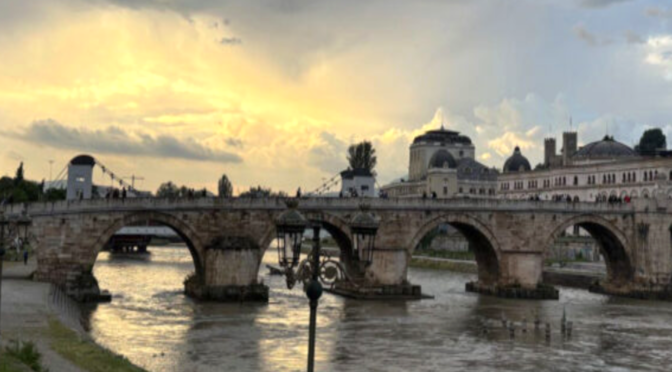
Zdravo! Ever since I found out about the UT Embedded Scholars program from one of my favorite professors, shoutout to Dr. Kiril Avramov, I knew I wanted to be a part of it. As someone who had never been out of the country, I could not say no to the opportunity to experience a new culture, a new hemisphere, and, of course, a new political system. Little did I know that North Macedonia, this small country—roughly the size of Vermont with the population of the greater Austin area—would surpass any expectations I could have had, both in work and lived experience.
By Trinity Elkins, Graduate student at the UT LBJ School of Public Affairs
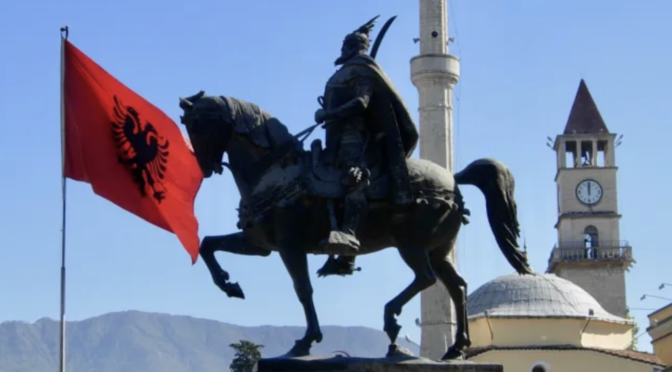
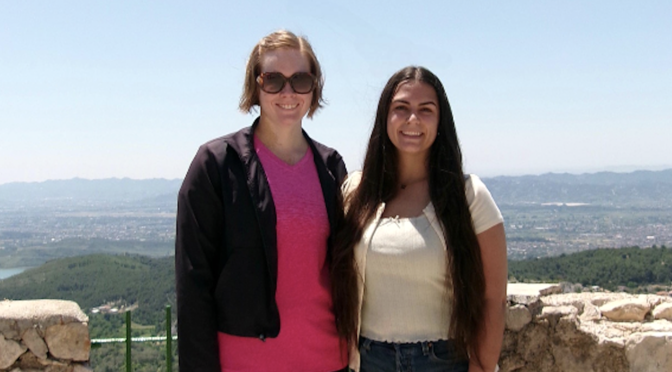
Përshëndetje! This summer I had the incredible privilege of working with the National Democratic Institute in Tirana, Albania, a country with a deeply complex political history. Between 1944 and 1985, the reigning dictator, Enver Hoxha, completely closed Albania off to the rest of the world. Citizens were not allowed to cross the border (in or out), own property, practice religion, or express any sort of individualism. Given his isolationist agenda, Hoxha was immensely paranoid that Albania was on the brink of a foreign invasion, so he ordered the construction of 173,000 bunkers to be built over the 10,500 square miles within the country. He idealized and aligned himself with Albania’s 15th century national hero, Gjergj Kastrioti (Skanderbeg), in order to legitimize his rule.
By Angela Fraioli, PhD Student in the UT Government Department
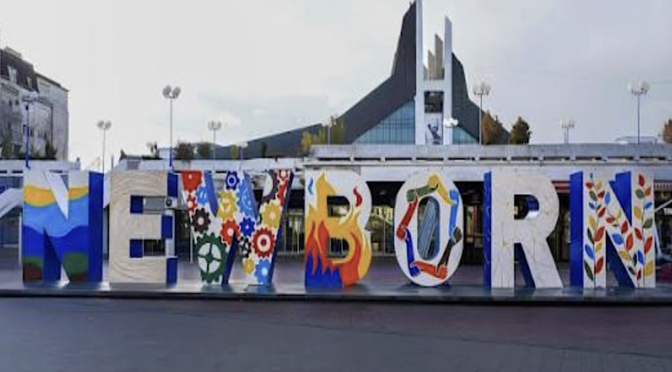
This summer, I had the privilege of completing a two-month long internship for the National Democratic Institute (NDI) in Pristina, Kosovo. This experience greatly developed my academic and professional careers and was incredibly useful so early on in my doctoral degree. As I reach the conclusion of this experience, I feel gratitude for the many communities that have welcomed me, pride for the work I’ve completed during my time here, and excitement for the many ways in which I will apply what I have learned from this experience to my studies, professional career, and personal life.
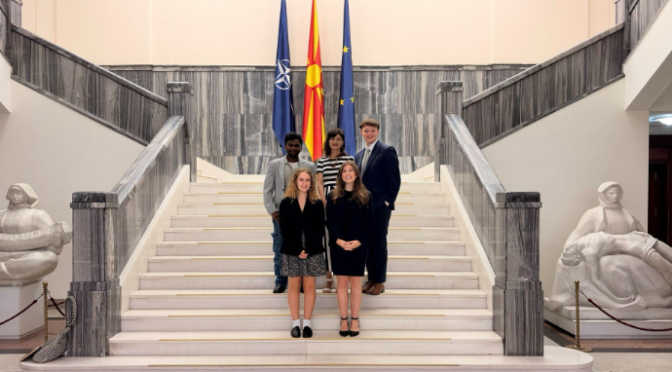
This summer, four UT Austin students traveled to North Macedonia through the UT Embedded Scholars Program and interned for the National Democratic Institute in Skopje, gaining firsthand experience in strengthening democratic institutions, civic participation, transparency, and good governance. The Fellows—Ellie Alford, Rebekah Besserman, Sid Dasari, and Jackson Nichols—moved beyond the classroom and into the field to engage directly with policymakers, civil society leaders, researchers, and young people on some of the most pressing challenges facing North Macedonia’s democracy.
Join us for an Embedded Scholars information session on September 10, 2026, from 12:30 -1:30pm, in RLP 1.302D (details here). Program directors and prior fellows will share more about the program and fellows’ work in the field. (Updated: Click here for video from the info session.)
By Rebekah Besserman, Undergraduate in the UT Plan II Honors Program and Government Department
Zdravo! If you had told me one year ago that I would be interning in Skopje, North Macedonia, this summer, I never would have believed you. I always admired North Macedonia’s flag when taking map quizzes, but beyond that, I didn’t know much about the country yet. After studying the politics and constitution of North Macedonia and the greater Western Balkans region for an entire semester, I was ready to immerse myself in the culture and the work at National Democratic Institute this summer.
By Meera R Hatangadi, Graduate of the UT International Relations and Global Studies Department and Plan II Honors
While Armenia was completely new to me before starting this program, I left Armenia with reminiscences of fascinating work, warm colleagues, gorgeous landscapes, beautiful culture, and memories to last a lifetime. As a part of the Embedded Scholars program, my fellow scholars and I interned with NDI Armenia. We had the privilege of not only working alongside intelligence and dedicated NDI employees, but also being able to have unique interactions with democratic institutions in Armenia.
Two 2026 Embedded Scholars spent their summer internships supporting democracy programs with the National Democratic Institute in Tirana, Albania. Their summer work focused on democratic research in transparency and anti-corruption initiatives, as well as the relationship between civic education and public participation in democratic institutions.
By Ellie Alford, Undergraduate student in the UT Government Department
I’ve never liked tomatoes. I tried them a few times when I was little, hated the taste, and have adamantly avoided them ever since. I could not envision myself eating one willingly, much less enjoying it. But, life has a funny way of surprising you.
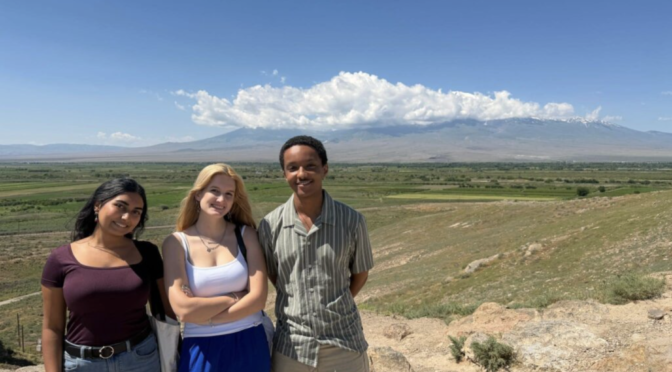
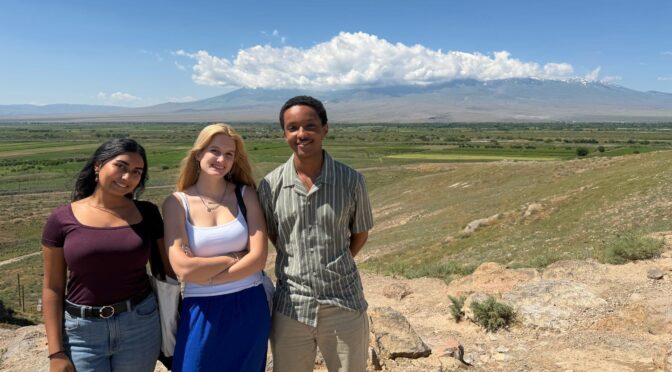
Three 2026 Embedded Scholars spent their summer internships aiding democratic efforts in Yerevan, Armenia, where they observed elections, analyzed public opinion data, worked with the Armenian Parliament and civil society, and researched a range of democracy issues at the National Democratic Institute in Armenia.
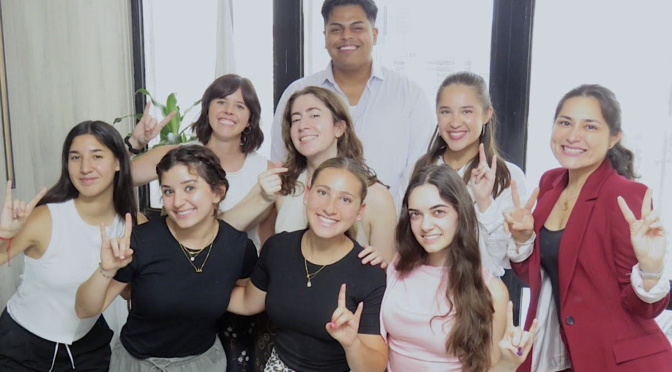
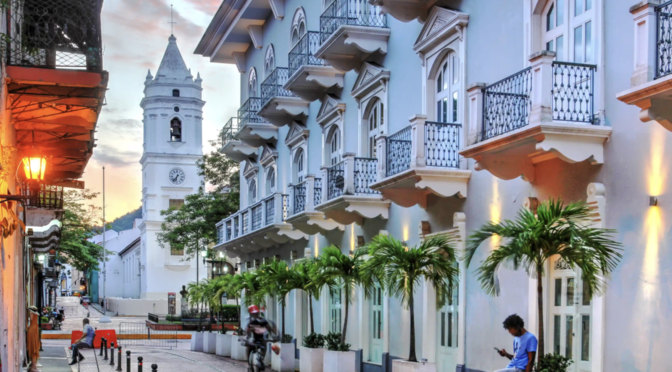
Nine UT students in the Center’s 2026 Embedded Scholars cohort recently completed their internship with CID Gallup in Panama this summer, gaining first-hand experience conducting public opinion research and collecting data that inform policymaking across Latin America. Throughout the summer, the fellows surveyed members of the public, conducted interviews, contributed to major research projects, and participated in every stage of the research process—from designing surveys to collecting data to analyzing results—all in Spanish.
By Eva White, Undergraduate student in the UT Slavic and Eurasian Studies Department and Government Department
Having long been immersed in academic study of the post-Soviet space, interested in energy policy and nuclear transition, and seeking to grow my Russian language skills in an immersive environment, I was completely thrilled to be selected for the National Democratic Institute’s fellowship program in Yerevan, Armenia. I boarded the plane, a 23-hour travel day ahead of me, excited to address challenges to democratization and explore international relations and domestic politics in Armenia as an NDI research fellow. Beyond that, I hoped to have the opportunity to nurture my personal academic interest in energy security. Concomitantly, I was looking forward to diving into the history, culture, and atmosphere of a region entirely new to me and learning as much as possible outside of the office as well.
By Juan Romero, Undergraduate student in the UT Government Department and Philosophy Department
One of my first observations on this adventure was that Panama City’s metro system does not cover the whole metropolitan area — something I initially saw as inconvenient. However, Panama’s metro reaches further into the periphery than any system I had seen before. Interestingly, these are not the corridors only for the upscale Bella Vista or the banking quarter; these are the places where daily commuters wake before sunrise, hauling produce onto buses and up and down escalators. I hadn’t expected this observation to become as significant over the next two months as it did. Every bit we learned helped form an understanding of how the system was built and what it is: a materialization of the very democratic values we were here to study.
By Hana Sawaf, Undergraduate student in the UT International Relations and Global Studies Department
When I boarded my flight to Panama almost a month ago, I knew I would be stepping outside of my comfort zone. I expected long workdays, lots of Spanish, and maybe a little homesickness. What I didn’t expect was just how quickly Panama would start to feel like home—or how my cohort would become a second family. I’m interning with CID Gallup, where I’ve had the opportunity to work alongside a talented team conducting public opinion research throughout Latin America. Coming into this internship, I had taken classes on research methods and survey design, but seeing those concepts applied in real life has been a completely different experience.
By Josie Mandrea, Undergraduate student in the UT School of Civic Leadership
I started work at CID Gallup in Panama City right at the beginning of June. Their office sits on the 18th floor of a massive building right in the center of the city. On day one, the staff welcomed us with a wonderful orientation where they explained the value of public opinion research and survey design. In the first few days, we acclimated to the office, getting to know the other employees and the beloved office cats, Simba and Estrellita.
By Elizabeth Donaway, PhD student in the UT Government Department
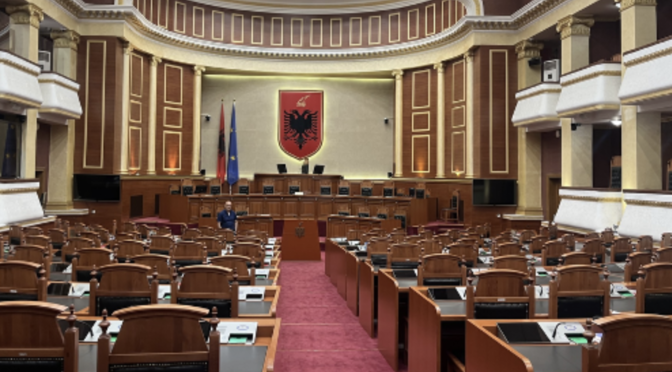
This summer I had the opportunity to work with NDI Albania, where I focused on the relationship between civic education, civic participation, and democratic institutions. Much of my work centered on the Albanian Parliament and its Parliamentary Institute, a nonpartisan institution that supports members of Parliament through research, library services, and civic education programming. Through this work, I came to appreciate that democracy assistance is not only about elections, parties, or formal institutional reform. It is also about helping citizens understand that democratic institutions belong to them and helping institutions create meaningful ways for citizens to participate.
By Bela Madrid, Undergraduate student at the UT Butler School of Music
Latin America has always felt like a destination that was somehow both far away and familiar at the same time. The opportunity to live and work here has always been enticing. Coming from a background studying music, I am used to exploring different cultures, histories, and political environments through emotion, storytelling, and poetry. Engaging in areas of social research and data science felt somewhat outside my scope of expertise, but I have come to realize it’s simply the other side of the same coin. As we round out week five, I have found myself reflecting on my experiences in Panama and feeling excited to see what month two has in store.
By Siddharth Dasari, Undergraduate student in the UT International Relations and Global Studies Department
I’m going where? That was my reaction this past January, when I found out that I had been placed with National Democratic Institute in North Macedonia through UT’s Embedded Scholars Program. Six months later, and I can confidently say that this has been the most rewarding experience of my life.