By Ariana Guerrero, Undergraduate student in the UT International Relations and Global Studies Department, Race Indigeneity and Migration Program, and Bridging Disciplines Program
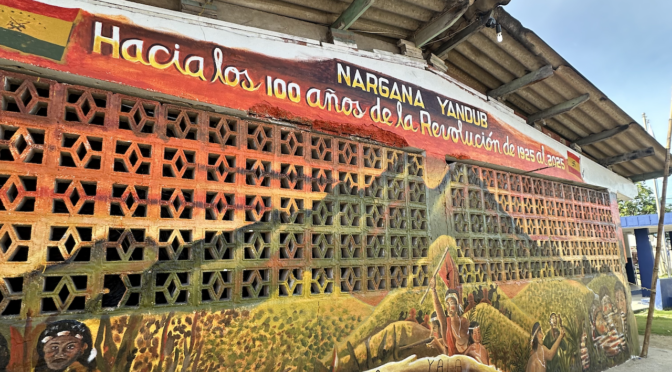
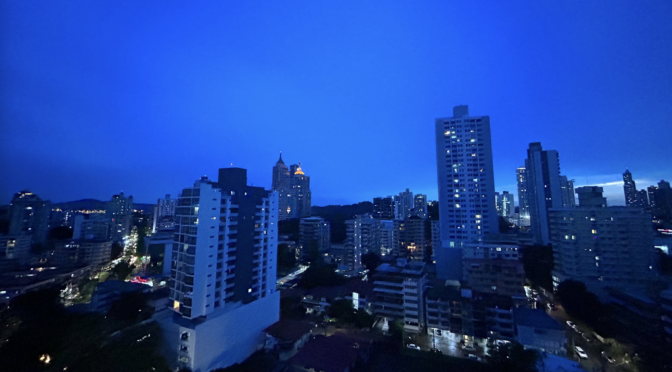
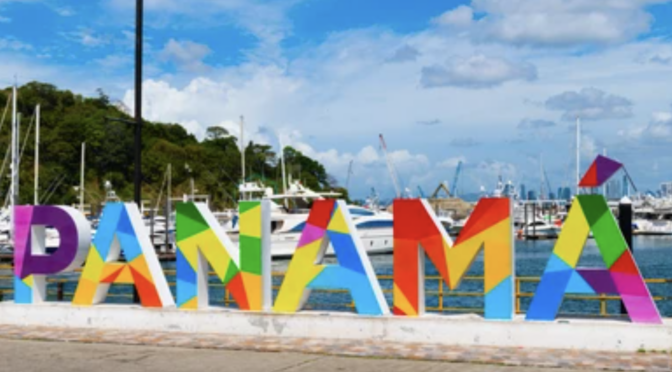
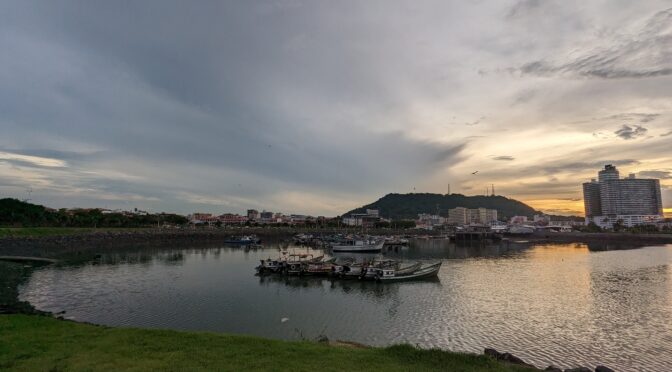
My time in Panama has been enriching and filled with personal and professional growth. My first task was acclimating to a new city and to commuting and having a full-time job in such a diverse city. I loved practicing my Spanish in a professional setting through my internship. This was the first time I had the opportunity to speak my native language outside my home so extensively and freely for an extended period of time. Since my Mexican accent is different from that of my fellow Panamanian coworkers and neighbors, it was exciting to see how cultures can be similar and still unique.
By Taylor Crownover, Undergraduate student in the UT Sociology Department and Plan II Honors Program
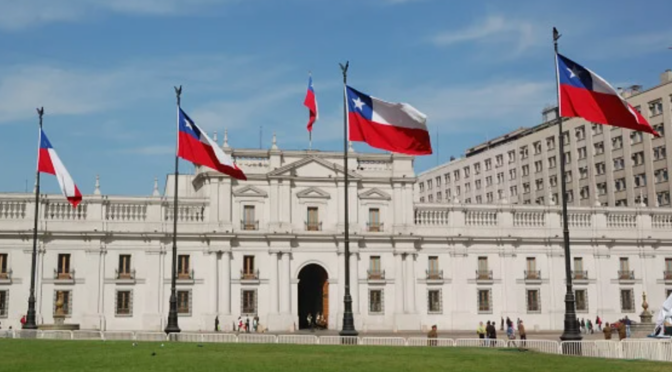
Upon arriving in Santiago, Chile, it dawned on me that I was further south than I had ever been in my life! Despite this, the time difference with Texas is just one hour ahead. Here I am, on the opposite side of the world, yet aligned longitudinally with my home. This realization has persisted throughout my first month in Chile, where cultural differences are strikingly evident, yet abounding moments of familiarity are also present as I continue immersing myself in the city.
By María Mercedes Gómez, Graduate student at the UT Teresa Lozano Long Institute of Latin American Studies
What is democracy? What is the relationship between democracy, security, and gender? This summer working with International IDEA has made me consider deeper ways to understand these concepts. Although I am Colombian and I have lived in Mexico many years of my life, living in Panama has taught me that every Latin American country is unique. Every day has been a constant discovery—from learning how to take public transportation, which products are best in the grocery store, and how to dress for the office in a Central American country to learning how to interact with people from across Latin America in the office.
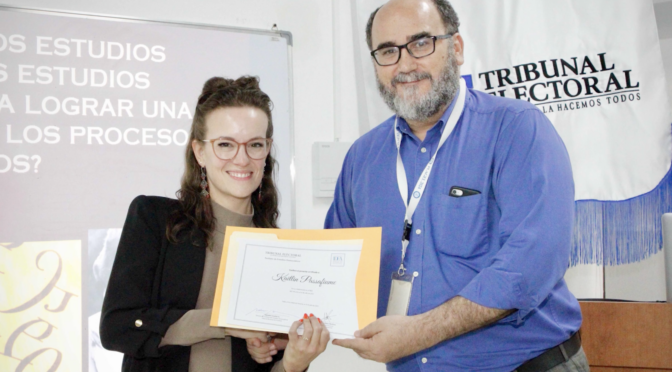
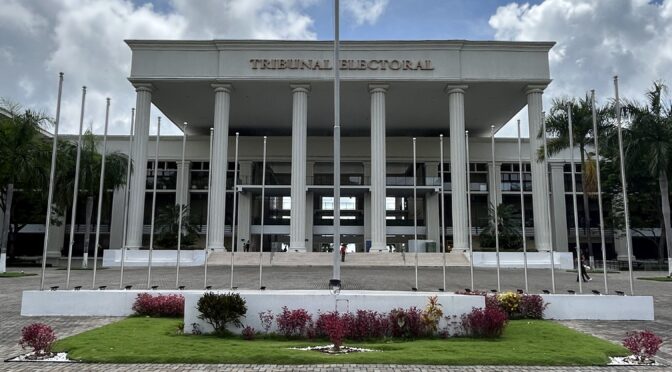
Fellows Ariana Guerrero and Paulina Licon from the UT Embedded Scholars Program participated in post-election assessments in Panama this week in a delegation led by the Electoral Tribunal of Panama and the Institute of Democratic Studies (INED), evaluating initiatives implemented during Panama’s national election held 5 May 2024. Panama is one of at least 73 countries globally holding elections this year in what has been dubbed a global elections super-cycle, with half the world’s population going to the polls this year.
Fellows in the University of Texas at Austin’s Embedded Scholars Program won an award for their research conducted in the spring Embedded Scholars class. Fellows Andreana Faucette and Paulina Licon won the 2024 Patman Center Research Award for Advancing Democracy, which recognizes “exceptional insight and dedication to advancing the cause of democracy.” Their research was conducted in the spring class taught by Ashley Moran on democratic constitutional design that prepares students for field work in democracy assistance.
The University of Texas at Austin’s Embedded Scholars program is sending its 2024 cohort to Latin America later this month to support democracy and electoral assistance programs this summer. With at least 73 countries—eight in Latin America alone—holding elections this year, amid rising polarization and democratic challenges, the stakes are high for national and international actors working to promote free and fair elections and robust democracy.
The 2024 Embedded Scholars conducted research this spring on a range of pressing challenges and opportunities for democracies today. Students shared their research this week, giving presentations on the role of public participation, civic and constitutional culture, and democratic resilience in preserving and advancing democracy.
In their internship class this spring, the 2024 Embedded Scholars conducted research on key challenges facing democracies today. Their research assessed current findings on these challenges globally and the sociopolitical, legal, and constitutional dynamics shaping these issues in Latin America. Today, students presented their research on disinformation in elections and democratic disaffection and backsliding.
The 2024 Embedded Scholars started their class this spring to prepare for their work with International IDEA on democracy assistance programs. In Summer 2024, UT students selected for the Embedded Scholars fellowship will work in International IDEA’s office in Latin America, supporting a range of democracy and electoral assistance programs.
UT fellow Matthew Martin and International IDEA provide a video tour of a day in the life of fellows working for International IDEA in Panama. Matt discusses his work analyzing constitutional performance and takes us on their visit to the National Archives of Panama, exploring the political and cultural history of Panama.
By Frances Parra, Undergraduate student at the UT McCombs School of Business
As my time in Panama came to an end, I was tasked with the professional culmination of my internship, as well as the goodbyes to the place and people I called home for the entirety of the summer. My research for International IDEA had explored topics such as political risk, governance, and foreign policy in Latin American countries. Although my primary focus was Latin America, my investigations delved into the foreign relations of Latin American countries with regions around the world, including Asia, Europe, and North America. Overall, it sought to understand these topics as they pertain to democratic governance and society in Latin America today and in the future.
By Guillermo Pérez, PhD student in the UT Government Department
My experience during the internship was wonderful for multiple reasons. First and foremost, working with a prestigious organization like International IDEA is a privilege. The research projects, the opportunities for influence, and the constant dialogue with political authorities in the country are extremely important for strengthening democracy. Earlier in the summer, we had the opportunity to participate in a seminar organized by IDEA on the Chilean constitutional process. In that seminar, international experts such as Adam Chilton, Lisa Hilbink, and David Landau shared their reflections on the Chilean constitutional proposal. There were also dialogues between the constitutional experts who proposed the draft constitution and the members of the Constitutional Council that reviewed and approved the final version.
By Adriel Bustillos, Undergraduate student in the UT Government Department and Plan II Honors Program
Embarking on an internship with International IDEA in Panama City was been a remarkable and transformative experience. Over the course of my time in Panama, I had the opportunity to contribute to vital projects, including designing new communications materials for IDEA’s regional work and conducting research on elections and runoff processes in Latin American and Caribbean countries. Beyond professional growth, the internship also allowed me to immerse myself in the vibrant Panamanian culture and expand my horizons. The overall experience gave me a new sense of learning, but one that will always be held close to my heart in years to come.
The 2024 Fellowship Application is now open for UT students to apply for the Summer 2024 fellowship focused on democratic institutional development in Panama. Applications are due by November 15, 2023.
By Tien Vo, Undergraduate student in the UT Government Department, Mathematics Department, and Polymathic Scholars Honors Program
I recently graduated from the University of Texas at Austin with degrees in government and math. This summer I got to work with International IDEA through an internship organized by the UT Government Department and two amazing professors, Ashley Moran and Zachary Elkins. It is a newly developed internship program to study democratic institutional development in Latin America, and it has been an honor being one of the students chosen to participate in this program.
By Francisco Alvarado-Quiroz, Graduate student at the UT LBJ School of Public Affairs
What we know collectively as “Latin America” contains, depending on whom you ask and how you count, some 21-plus countries. The landscapes contain high-altitude cities, untouched jungles, and beautiful beaches. While you could get away communicating in Spanish throughout most of the region, there are an uncountable number of languages and dialects.
By Kaitlin Passafiume, PhD candidate in the UT Spanish and Portuguese Department
After my return from Panama, I am full of reflections about my time spent there working with International IDEA and its partners at the Institute for Democratic Studies (INED). My final month working in these capacities was different from the first, as it was more hands on and largely interactive. In the first portion of my internship, I worked in a largely independent way, developing memos that analyzed youth voting programs across Latin America. In the last half of my internship, I was very much part of a team.
By Alejandra Jimenez, Undergraduate student in the UT Government Department
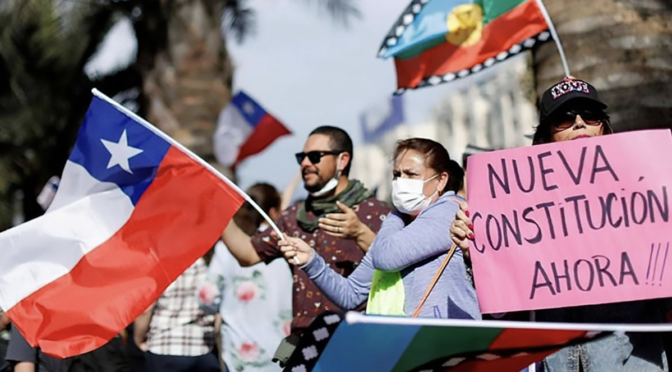
In my last week interning for International IDEA, I had the opportunity to meet with Dr. Fabricio Franco, a professor and director of the Chile office of the Latin American Faculty of Social Sciences. During this meeting, the other interns and I got to learn more about Chile’s current sociopolitical dynamics from a perspective I had not heard before. This made a fulfilling closing to my internship with IDEA that further motivated me to remain informed about Chile’s journey towards a potential new constitution.
By Matt Martin, PhD student in the UT Government Department
After three weeks under the Panamanian sun, I headed to Santiago for a taste of the Chilean winter. There I spent the last three weeks of the Democratic Institutional Development internship working closely alongside the team at the International IDEA office in Chile. The second half of my experience was a perfect complement to the first, providing not only greater exposure to IDEA’s operations but also a chance to understand more deeply Chile’s constitutional moment, a topic of great personal interest.