
By IVÁN CHAAR LÓPEZ and EDGAR GÓMEZ-CRUZ

IT IS QUITE COMMON for new technologies to be framed in the language of hope and optimism. These are effective rhetorical moves to gain allies in an audience who will go on to spread the (good) word and create opportunities of alignment in other places. Audiences become actors that extend the reach of the new technology in the public imaginary and across space through adoption and use. In the 1990s, for example, many voices framed the internet (then known as a world wide web) as offering opportunities to advance democracy, improve education, expand access to information, and expose people to diverse perspectives and values. The 1997 ad campaign “Anthem” by the U.S. telecommunications company MCI stands as exemplar of this rhetorical move. It promoted access to the web as a place where people “communicate mind to mind” and where “there is no race,” “there are no genders,” “there is no age,” and “no infirmities.” To the company, this was not utopia, it was the internet.
Several decades later, optimistic and utopian visions gave way to a more disheartening mood as post-9/11 mass surveillance spread and Edward Snowden revealed its extent. Social media sites became platforms for social and political polarization and manipulation (e.g., the Cambridge Analytica scandal). Technology companies also pursued pathways to eliminate competition and consolidate their economic, political, and social influence by swallowing startups and buying legacy media companies. A growing pessimism emerged as technologies, and those who developed them, came to be seen as concentrating power, intensifying polarization, controlling bodies and identities, and even causing environmental degradation. This is what some in public debate have termed “techlash.”
So often, the languages of optimism and pessimism leave little room for ambivalence, let alone nuance. What happens when benefits are unevenly distributed? What happens when harms are demographically and geographically concentrated? How do people address the challenges of our time if not by coming up with social and technical arrangements themselves?
As practitioners in the field of science and technology studies (STS), we have critically examined the co-construction of technologies and societies for many years. At UT Austin, we have collaborated with faculty and students to reflect collectively on this relationship through a sociotechnical lens. We understand societies (its peoples, their institutions, histories, and power structures) and technologies as mutually shaping one another. More fundamentally, the social and the technological are entangled to the point where it is not helpful, but also empirically unsound, to talk about one without the other.
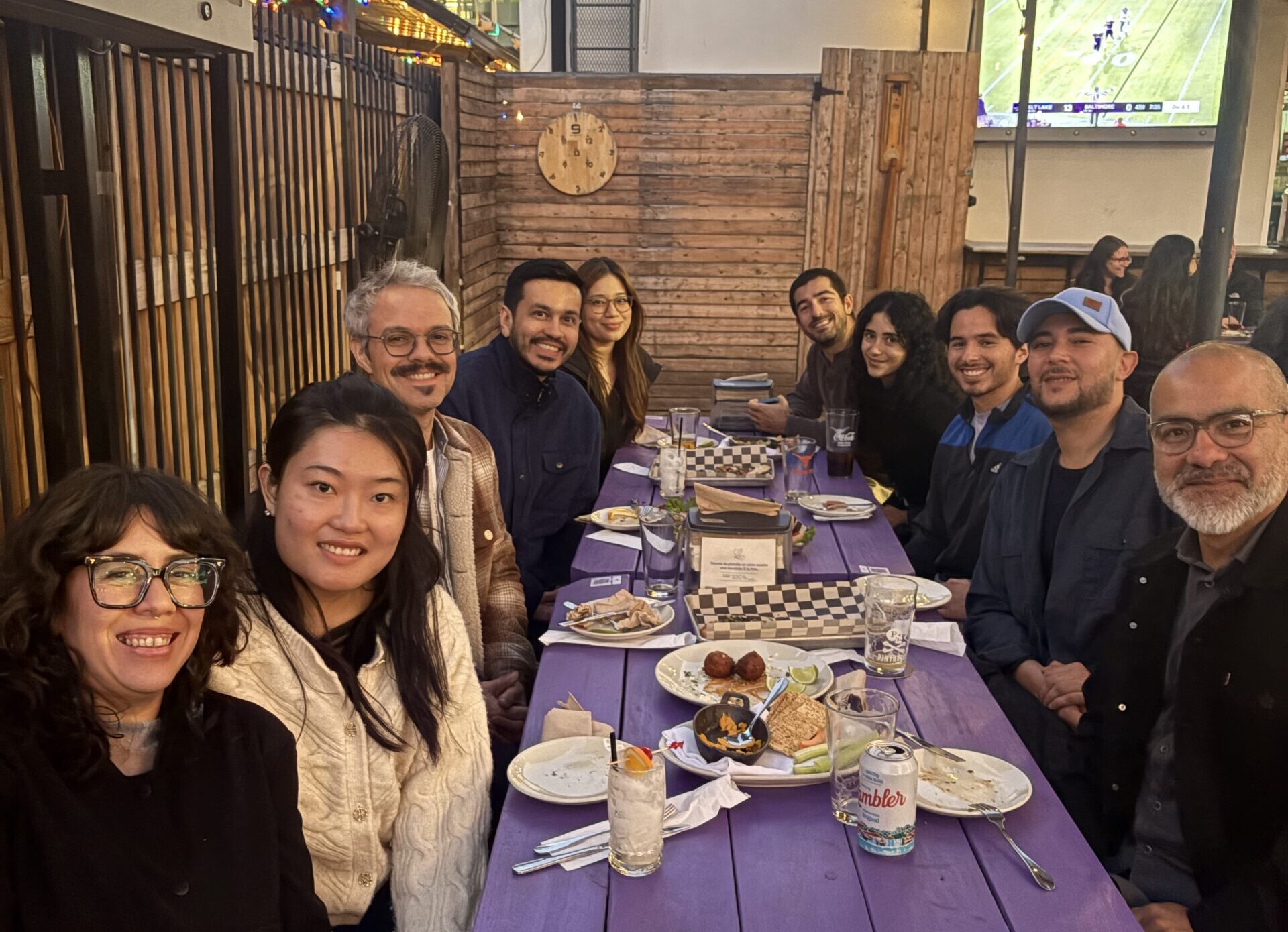
The latest iteration of this collaboration—DigiSur, supported by the Teresa Lozano Long Institute of Latin American Studies—brought together a group of graduate students to explore diverse forms of technology ranging from entrepreneurial hubs to social media and mobile phones. We interrogated their diverse assemblages, from the unacknowledged labor of surrogate mothers and robots to the asymmetries of innovation and sociotechnical resistance within planetary crises. These collective conversations, as diverse as they seemed, always had a component of thinking about the Majority World (Global South) and Latin America in particular. How and what can we think about technological assemblages in Latin America? One of the topics that was constantly mentioned in these meetings was artificial intelligence (AI), the latest sociotechnical arrangement capturing our collective imagination. We invite you to join us as we examine how technological stories in the region draw from the trope of magic, and how scholars trouble this framing by stressing the role of regional, national, and local processes.
Beyond (AI) Magic?
Many people have suggested thinking of sociotechnical arrangements as magic. The writer Arthur C. Clarke famously observed, “Any sufficiently advanced technology is indistinguishable from magic.” Technology is often described as a kind of imported magic. In films and literature, a recurring trope depicts individuals, usually from the Minority World (Global North), arriving in Latin American towns bearing their technological innovations, astonishing local audiences. One oft-cited example are the magical wonders Melquíades brought to Macondo in Gabriel García Márquez’s One Hundred Years of Solitude.
Numerous accounts demonstrate that Latin America is not only a recipient but also a site of innovation.1 And yet, most technologies used in everyday life, particularly digital ones, have been designed and developed in the Minority World. Such innovations, however, would not be possible if not for the labor or raw materials sourced from the region, such as data workers in Venezuela;2 copper from Chile for wiring and semiconductors; or lithium from Chile, Bolivia, and Argentina for computer batteries.3 It would also not be possible without the environmental impact that these extractive activities are having in the region.4 People and earthly materials must first be rendered useful on their way to becoming resources. The process of rendering them as such, and who does it, carries great influence in shaping the kinds of possibilities technologies are set to pursue. As a result, it is crucial that we interrogate the boundaries placed in stories of technologies and innovations as strictly made in el Norte. Their supposed magic, if we are to entertain this rendering, requires extensive networks of materials, workers, and action that do not necessarily start nor end in Silicon Valley. Perhaps there is no better example of technological enchantment than AI.
AI is the latest and one of the most important technologies, not in terms of its use or its implementation, but in terms of its promises and the imaginaries that surround (and sustain) it. In places with big inequality gaps and limited resources, a technology that promises to “change everything,” as AI is usually presented, becomes a source of hope for many governments, institutions, and industries. Public institutions hope that a technological fix will allow them to maximize their resources, close their gaps, and extend their reach and impact regardless of their limitations. Urgency to produce quick and tangible outcomes for the benefit of large populations places pressure on actors in the business and public sectors. Moreover, AI is presented as a potential solution for deeper problems in Latin America such as corruption, accountability, lack of efficiency, and all forms of inequality.
Local and national governments develop plans, often in consultation with international organizations and the private sector, for the implementation of AI that are mostly aspirational. The World Economic Forum, for example, recently published a report,5 prepared in collaboration with the global consulting firm McKinsey & Company, claiming that accelerating AI adoption in Latin America was the surest way to increase value and growth. The report called for the “development of new intelligent economies” by deploying AI for improved user (citizen and client) experiences, automated agents for new workflows in offices and factories, and catalyzing “continuous change in the business model” such as by promoting incubators, AI entrepreneurial projects, and increased global collaborations.
Just as anthropologist Arturo Escobar described development as a social and cultural force in his field-defining Encountering Development (1995), AI should also be understood as an amalgam of strategies, practices, and sociotechnical arrangements meant to achieve distinct political goals. Latin America figures in the World Economic Forum report as lagging behind “world referents,” as an unsettled territory open to technological colonization only if appropriate alignment is achieved through the likes of infrastructural and employee investments, and implementation of new policies. Grounded in Anglo-European conceptions of development, the report assumes universal trajectories for economic growth. In this context, Latin America is seen as out of step with others and in need of clear actions to “advance” itself. Simultaneously, and for many industries, the hope of automation is often protected as fulfilling the capitalist dream of endless production without the challenges of labor and people. Plans like this offer multiple recommendations for different governments, industries, and sectors to “accelerate,” “integrate,” and “optimize” their resources for the era of AI—an era that is always projected into the future, as a magic solution to many of the problems of the region and therefore “potentially” improving the conditions of society.
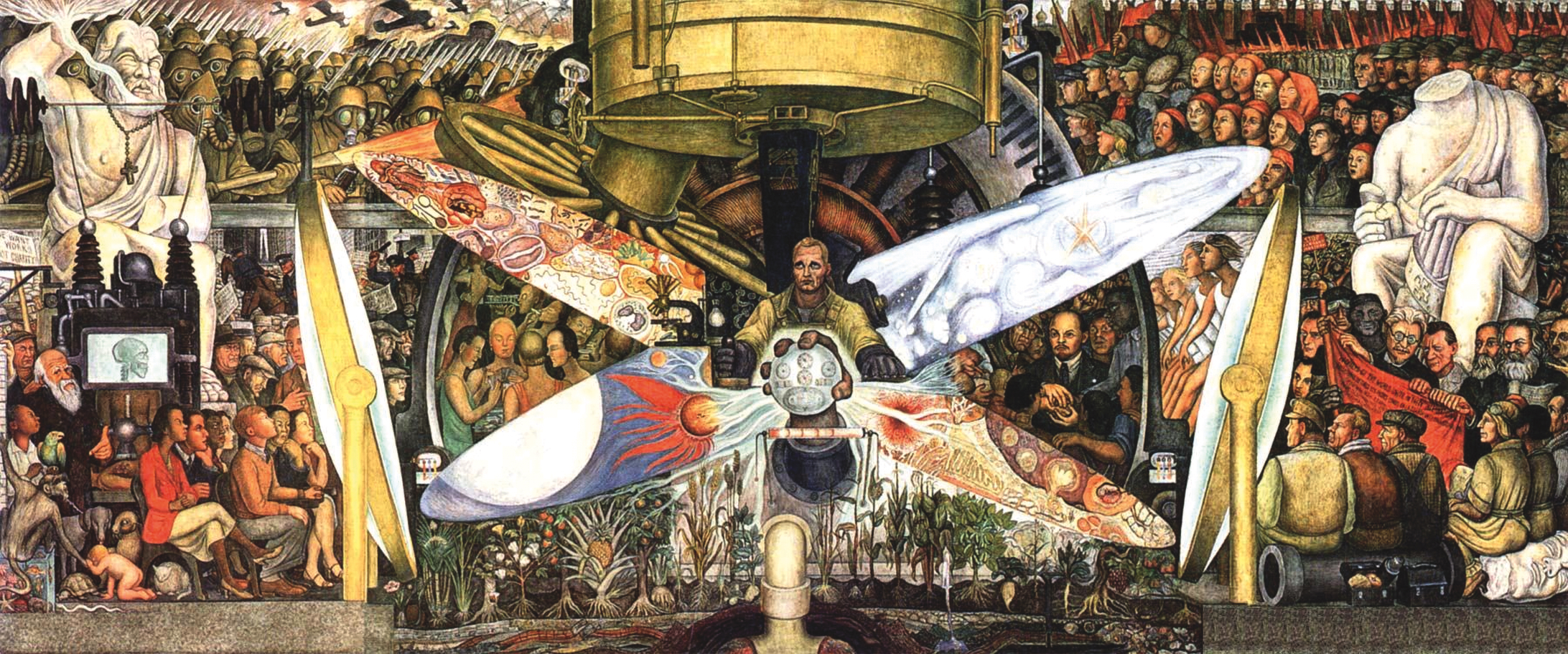
Left unquestioned by the report is whether AI is the appropriate or most beneficial technology for the region. AI development and use are assumed, inevitable goods. The authors document efforts already under way in the region, such as a viability study between Chile and the Dominican Republic, funded by the Development Bank for Latin America and the Caribbean, to create a regional data-processing network that may provide much-needed computational power for the use of AI. The authors barely consider how these technologies—with their protocols, uses, and imaginaries—are introduced and implemented, perhaps having a bigger negative impact on the present than the promises they cast into the future. How might collaborative agreements with technology companies like OpenAI (and their efforts to have governments adopt their AI platform) enable the extraction and commodification of citizen data? How does AI’s extensive rare earth, energy, and water consumption create environmental harms? How might such consumption lead to stubbornly unequal, even widening, public health risks?
A group of Latin American STS scholars invites us to revisit the debates about dependency theory in relation to the hegemony of platforms that arrange lifeworlds across the globe.6 Dependency theory emerged in the 1960s and 1970s as a means to understand how some national economies became entangled in the growth and expansion of other economies, and how such tethering enabled subordination. When Uber entered the market in Puerto Rico and Argentina in 2016, it generated intense friction with the local taxi drivers and organizations. This led to coordinated actions as well as violent confrontations between unionized taxi drivers and precarious gig workers. Uber tapped into an already precarious economy stuck multiple decades in a recession. In doing so, it relied on existing local cultural practices of bregar, meaning hustling and making do. Bregar was digitized, translated, and brought into the networked economies and supply chains of a foreign, U.S. company that could now extract value from Puerto Rico’s precarious workers. Dependency endured in this contemporary setting. The language of hope and possibility deployed by tech companies often occludes how existing vulnerabilities may be intensified and new ones can emerge. Media studies scholar Rafael Grohmann is among the fellow travelers working to trouble narratives of imported magic by understanding how individuals in Latin American contexts use and experiment with digital sociotechnical arrangements.7 We agree with this approach because it gets us to break the spell of AI and its colonizing visions of development as the latest secular theory of salvation.
Questioning Alignment as Collaboration and Obedience
In the United States, tech CEOs,8 investigative journalists,9 and mental health professionals10 have raised concerns about the use of AI systems for mass surveillance of citizens, algorithmic risk assessments in criminal sentencing, and the interactions between users and their AI companions who enact deep and intimate relationships. As tech companies succeed in embedding diverse AI systems into everyday life, many people question the potential failures that could emerge with such an accelerated embrace. Science fiction stories are filled with nightmare scenarios in which autonomous robots betray their human creators. Other seemingly non-nightmarish scenarios call attention to how AI behavior might oppose the interests of human creators and operators, all the while troubling understandings of human identity, relationships, and emotions.
AI researchers and technology companies have come to frame these issues under the umbrella of the “alignment problem” or “value alignment.” Stanford University’s Institute for Human-Centered Artificial Intelligence (HAI) was created in 2019 to advance AI research, education, policy, and practice as means of improving “the human condition.” This led HAI to support research on AI alignment as means of “getting the AI to do the ‘right thing’ even in new situations, not just follow instructions literally in ways that cause harm.”11 In a blogpost for IBM, Alexander Jonker and Alice Gomstyn describe AI alignment as “the process of encoding human values and goals into AI models to make them as helpful, safe and reliable as possible.”12 But who or what is being aligned? Under what terms? And, in the words of sociologist Susan Leigh Star, who benefits?
Efforts to address the “alignment problem” are predicated on the pragmatic non-questioning of AI as a technology and a condition of living. The existence of AI as a singular entity, which science studies scholar Lucy Suchman describes as its “uncontroversial ‘thingness’,” is assumed and not open for debate. The arrangements that allow AI to exist—from data extraction and commodification to the vast materiality of its mineral, manufacturing, and operational infrastructure—are constantly placed outside of the question. When people talk about alignment, they avoid asking what AI is and if we should pursue its development. Instead, we are told to adapt ourselves to its inevitability and to modify systems that are already in place. “Alignment” plays out like an effort to have people justify their very own existence. “Are you a robot?” How can AI be made to behave through human values? What if it is already behaving in such a manner? Would we not say that the treatment of human beings as value-producing entities is a human value, even if/when we may deem it deplorable?
AI systems and their necessary infrastructures are not beyond question. Promises of development ought not to numb us to the asymmetries and harms that such technologies enable and reproduce. Otherwise, we will remain struck by AI’s spell, still waiting for the magic to happen, our hopes met with but a parlor trick. ✹
Iván Chaar López is assistant professor in the UT Department of American Studies and the principal investigator of the Border Tech Lab. He is the author of The Cybernetic Border: Drones, Technology, and Intrusion (2024).
Edgar Gómez-Cruz is associate professor at the UT School of Information. He is the author, most recently, of Vital Technologies: Thinking Digital Cultures from Latin America (2022).
During the 2025–26 academic year, the authors co-led the LLILAS DigiSur Initiative, an interdisciplinary hub focused on technologies and information in the Global South.
Notes
1. Eden Medina, Ivan da Costa Marques, and Christina Holmes, Beyond Imported Magic: Essays on Science, Technology, and Society in Latin America (The MIT Press, 2014).
2. Julián Posada, Platform Extractivism: Data Work and the People Powering Artificial Intelligence (University of California Press: 2026).
3. Javiera Barandiarán, Living Minerals: Nature, Trade, and Power in the Race for Lithium (The MIT Press, 2026).
4. Sebastián Lehuedé, “An elemental ethics for artificial intelligence: water as resistance within AI’s value chain,” AI & Society 40(3): 1761–1774. dl.acm.org/doi/abs/10.1007/s00146-024-01922-2.
5. World Economic Forum, América Latina en la Era Inteligente: Un Nuevo Camino para el Crecimiento (Foro Económico Mundial: 2026). reports.weforum.org/docs/WEF_Latin_America_Intelligent_Age_ES.pdf.
6. Luciana Musello, “(Re)reading dependency: technology and power in Latin America / Releer a la dependencia: tecnología y poder en Latinoamérica,” Society for Social Studies of Science, December 15, 2025. 4sonline.org/news_manager.php?page=42863.
7. Rafael Grohmann, “Labor-atories of Digital Economies: Latin America as a Site of Struggles and Experimentation,” Weizenbaum Journal of the Digital Society 5 (1): 2025. doi.org/10.34669/wi.wjds/5.1.6.
8. Sheera Frenkel and Julian E. Barnes, “Defense Dept. and Anthropic Square Off in Dispute over A.I. Safety,” New York Times, February 18, 2026. nytimes.com/2026/02/18/technology/defense-department-anthropic-ai-safety.html.
9. Julia Angwin, et al., “Machine Bias,” ProPublica, May 23, 2016. propublica.org/article/machine-bias-risk-assessments-in
-criminal-sentencing.
10. Efua Andoh, “AI chatbots and digital companions are reshaping emotional connection,” Monitor on Psychology (American Psychological Association), January 1, 2026. apa.org/monitor/2026/01-02/trends-digital-ai-relationships-emotional-connection.
11. HAI, “What Is AI Alignment?” hai.stanford.edu/ai-definitions/what-is-ai-alignment.
12. Alexandra Jonker and Alice Gomstyn, “What Is AI Alignment?” IBM Think. ibm.com/think/topics/ai-alignment.