
By ASTRID RUNGGALDIER
In December 2025, friends of LLILAS gathered to honor benefactor Joe R. Long and to view a selection of rare and ancient pre-Columbian objects donated to the institute by Mr. Long and his late wife, Dr. Teresa Lozano Long. The event, titled “Gold, Feather, and Form: Ritual and Representation in Ancient Colombia and the Andes,” was a celebration, marking a quarter-
century since the Longs’ transformative gift to the Institute of Latin American Studies at UT Austin ushered in a new era of promise under a new name. During the gathering, Professors Santiago Muñoz-Arbeláez (History) and Astrid Runggaldier (Art and Art History) delivered brief remarks to contextualize both the collection of objects and, more generally, the value of physical collections for university teaching. The text that follows summarizes Professor Runggaldier’s contribution.
At a large public university like The University of Texas at Austin, collections are often understood first through their most visible institutions: museums, libraries, archives, and exhibition spaces that shape public cultural life on campus. Yet beyond these prominent venues exists a much broader ecosystem of collections that quietly support teaching, research, and student learning across disciplines.1 Some are housed in museums and galleries, while others exist in research centers and institutes, laboratories, departmental holdings, and teaching collections that students may encounter only through a class visit or research appointment. Together, they form an essential part of the intellectual infrastructure of the university.
As curator of the Art and Art History Collections (AAHC) in the College of Fine Arts, I work closely with collections of ceramics and textiles from across the Indigenous Americas. These objects enter classrooms in courses on art history, anthropology, Latin American studies, museum studies, material culture, and Indigenous histories. Again and again, I have seen how transformative it can be for students to encounter historical objects directly—not as images in a slideshow or illustrations in a publication, but as physical things that occupy space, carry weight, reveal texture, and bear the traces of human touch.
This kind of object-based learning has become increasingly important in a moment when so much of contemporary education is mediated digitally. Students today move fluidly through online platforms, digital archives, virtual classrooms, social media feeds, and AI-assisted learning tools. These technologies offer extraordinary opportunities for access and experimentation, and they are now becoming pervasively integrated into how universities teach and conduct research. At the same time, they can also produce forms of distance, abstraction, and even alienation. Much of student life now unfolds through screens, interfaces, and representations—all forms of surrogate materiality..2
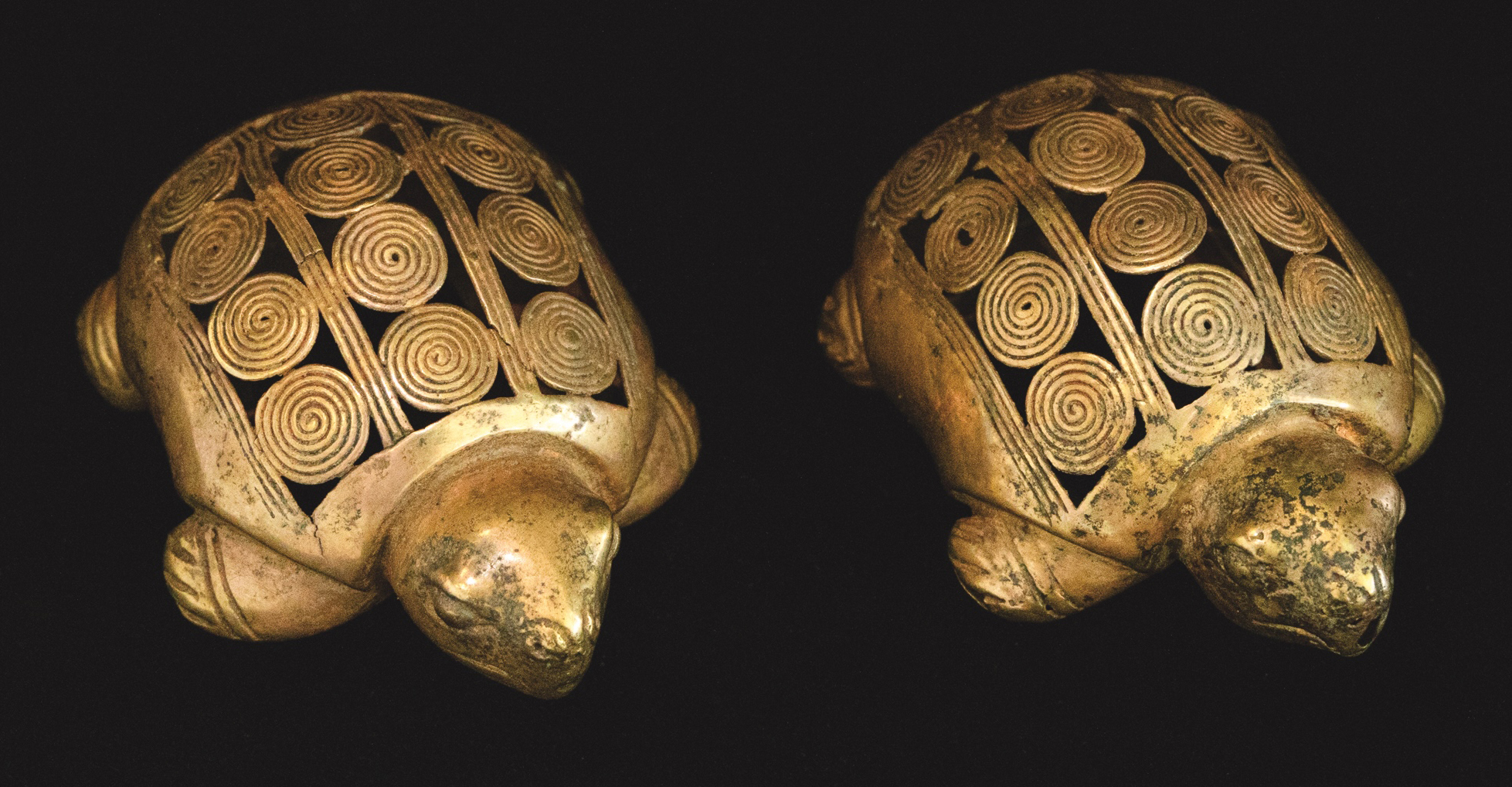
Collections offer a powerful complement to those experiences through engagement that is tangible, material, immediate, and experiential. They provide opportunities for embodied and sensory forms of inquiry that cannot be replicated entirely through digital surrogates. In the classroom, students often discover that objects communicate differently when encountered in person. A ceramic vessel that appears small in a PowerPoint slide may suddenly feel monumental when held in the hand. Two objects that look nearly identical in photographs may reveal entirely different textures, weights, manufacturing techniques, or signs of wear when examined directly.
Students in my collections-based classes frequently describe these encounters in their evaluations as some of the most memorable moments of their coursework. One student wrote that their “favorite part of this class was visiting the AAHC lab and getting the once-in-a-lifetime opportunity to handle ancient artifacts from South America. It moved me to be able to hold and learn from these objects.” Another wrote, “there was something deeply special about being able to hold something thousands of years old that made the content feel real.”
What emerges in these moments is not simply excitement at proximity to rare objects, but a different mode of thinking altogether. Close looking, a foundational practice in art history, slows students down. It encourages careful observation, sustained attention, and curiosity. When students handle historical textiles, for example, discussions quickly move beyond iconography or chronology toward questions of technique, material choice, labor, time, and artistic decision-making. Students begin asking how fibers were spun, how dyes were produced, why certain weaving structures were chosen, or what repeated gestures were required to produce a finished textile. Material encounters foster forms of inquiry that are tactile, analytical, and imaginative at once.
Ancient objects are especially powerful in this regard because they create forms of connection across vast distances of time. Many students today understandably experience their lives through frameworks centered on the present and the future: accelerating technologies, climate anxieties, career preparation, and rapidly changing social worlds. Historical depth can sometimes feel abstract, unreachable, or even irrelevant. Yet collections make the past tangible. They remind students that these objects once belonged to real people who lived complex lives, made aesthetic choices, developed technical expertise, and participated in social and ceremonial worlds that still matter today.
Holding a ceramic vessel, studying a woven textile, or examining objects of personal adornment becomes, in a sense, an encounter with another human presence across centuries, a form of historical “time travel.”
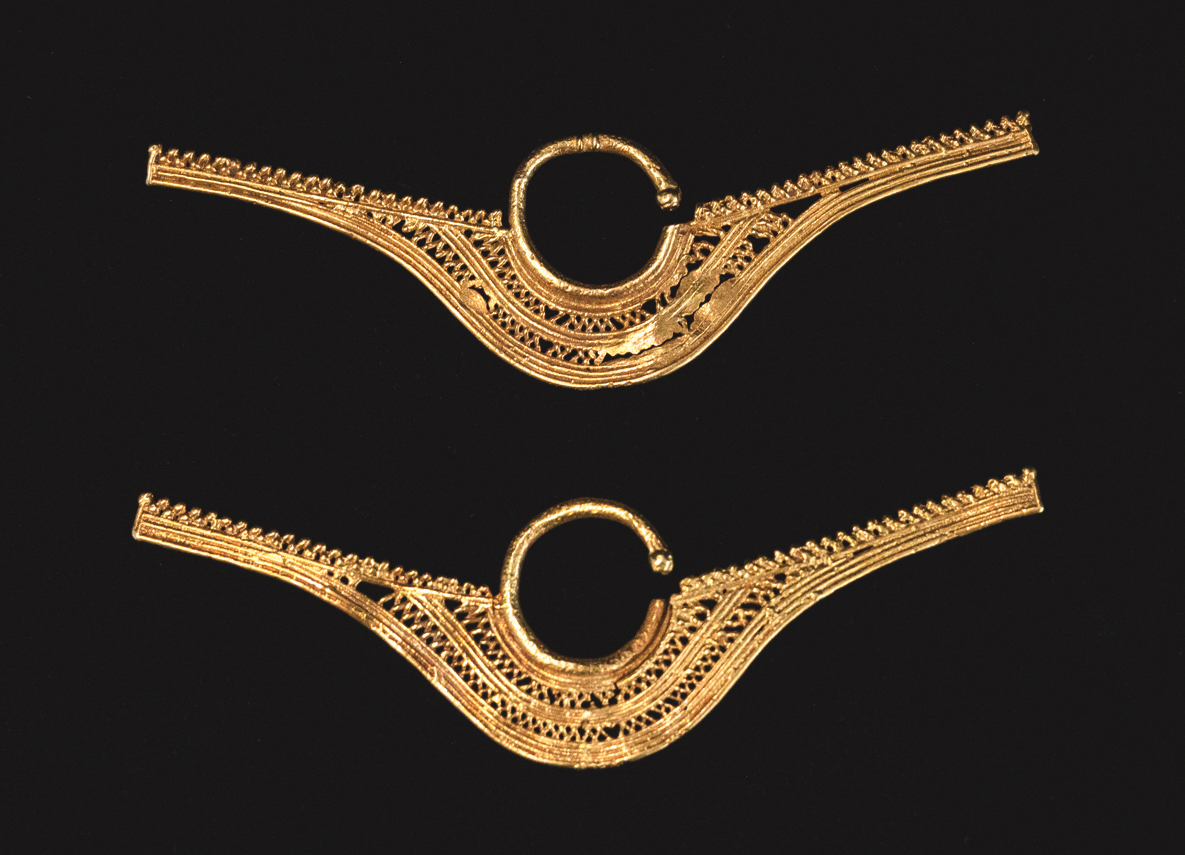
At the same time, historical collections today are also becoming sites for technological innovation and experimentation. Many of UT’s colleges and schools are using photogrammetry, 3D scanning, immersive modeling, and virtual reality technologies to expand information associated with collections and develop new forms of access. These tools can allow students to study fragile objects in extraordinary detail, experiment with replicas, explore provenance histories, reconstruct archaeological environments, or engage with collections remotely in ways that were unimaginable only a few decades ago.
Importantly, these innovations do not replace the value of direct material engagement; rather, they deepen and extend it. A high-resolution 3D model may allow students to rotate and enlarge an object virtually, but handling the original still reveals temperature, smell, texture, scale, weight, balance, and evidence of use in ways no digital model can fully capture. The future of collections-based pedagogy may therefore depend not on choosing between physical and digital learning, but on bringing them into productive conversation.
For public universities especially, collections serve an important civic role. They are resources not only for specialized scholars, but for students across disciplines and for broader communities seeking meaningful engagement with art, history, and cultural heritage. In Texas, where so many students and community members identify with Latin American and Indigenous heritage, these collections can foster connections that are intellectual, personal, and culturally meaningful at the same time.
In an increasingly virtual world, collections remind us that learning happens first through presence: through attention, touch, sensory experience, and direct encounters with the material traces of human history. That may be one of the most valuable lessons universities can offer today. ✹
Astrid Runggaldier is associate professor of instruction on Mesoamerican Archaeology and Architecture in the Department of Art and Art History, where she curates UT’s pre-Columbian and ethnographic collections. She previously served as assistant director of the Mesoamerica Center and Casa Herrera in Antigua, Guatemala.
Notes
1. See sites.utexas.edu/thecollections/ as well as Andrée Bober, ed., The Collections (UT Press, 2016).
2. See Astrid Runggaldier and Meghan Rubinstein, “Generative AI for Image-Based Academic Use,” in Reimagining Art History with Artificial Intelligence, ed. L. Cempellin and M. Geiger (Palgrave Macmillan, June 2026).
Related reading by Santiago Muñoz-Arbeláez: Meaningful Objects: LLILAS’s Collection of South American Gold Work