
By ADRIÁN FERNÁNDEZ
WHILE RESEARCHING at the Benson Latin American Collection for my undergraduate thesis on Uruguayan author Eduardo Galeano, I came across newspaper articles by Galeano intertwining Uruguay’s recent history with my family’s own history. From the late 1950s through the coup d’état in June 1973, Uruguay was in the midst of a national crisis. Shortfalls in the global prices of Uruguayan exports in the late 1950s had constricted the nation’s economy, lowering wages and pensions. This led to massive
working-class strikes. Galeano, then in his early twenties, wrote several articles detailing this crisis for the newspaper Marcha—an independent leftist weekly with a sizable readership in Uruguay and across Latin America.

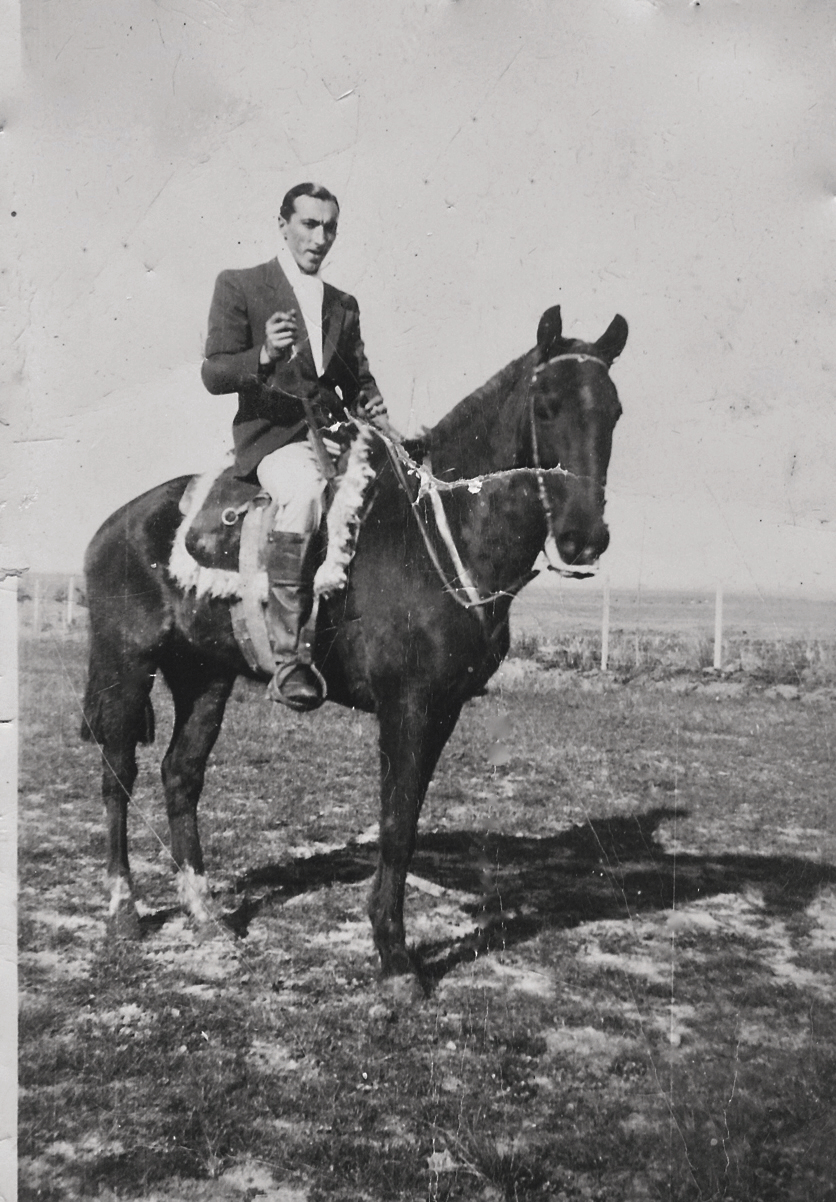
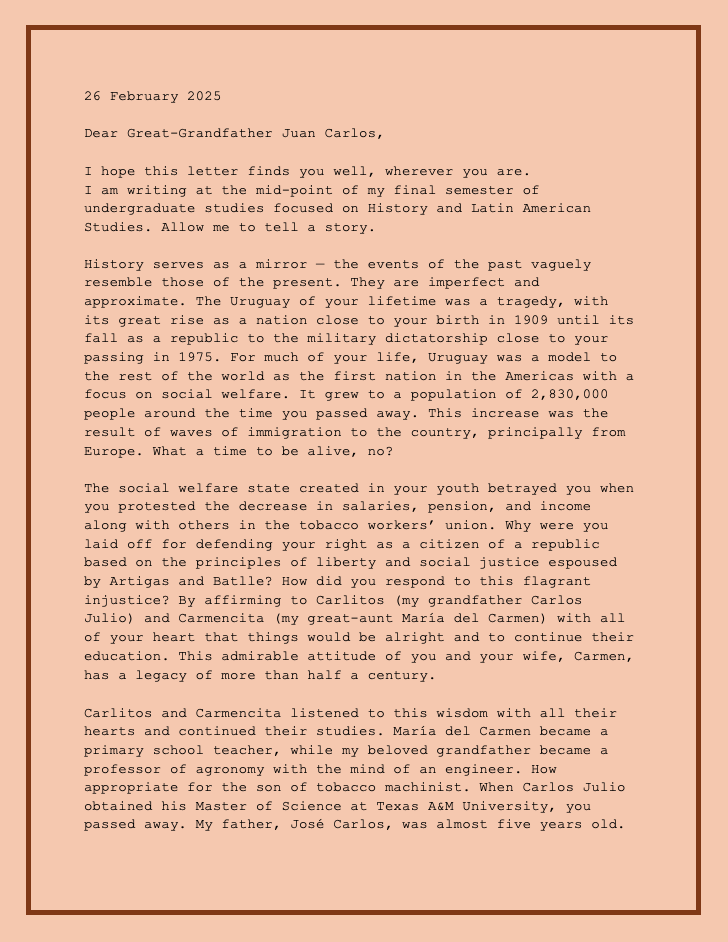
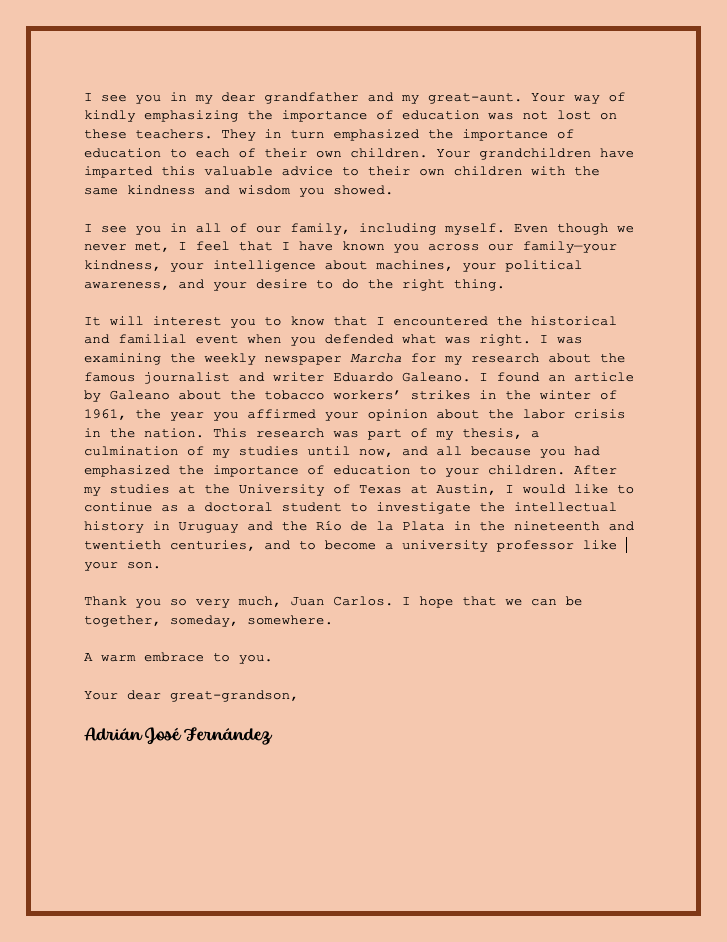
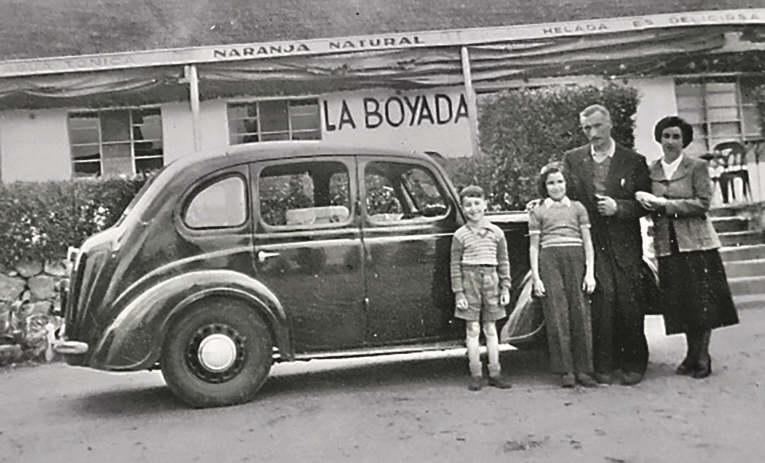
One of these articles caught my attention: “El Humo del Tabaco. Las Dimensiones del Gigante.” The year before, I had heard about how my paternal great-grandfather, Juan Carlos Fernández Sequeira, was involved in a tobacco workers’ union strike, but I did not know many details. Upon finding this article, I called my grandfather to share it. After collecting himself due to the flood of memories that came with my discovery, he would share anecdotes about our family’s past. These details formed the basis of a letter I wrote a year later as a student in Writing on the Edge, a seminar a taught by LLILAS Director Adela Pineda Franco.
The prompt was “write a letter to someone who is now gone.” My great-grandfather was the first person that I thought to write to. I saw it as way to reflect on how my university education can be interwoven with the political history of Uruguay and my family’s experiences, and how rare archival discoveries can reveal ways in which our own stories are intrinsically tied to history. ✹
Adrián Fernández holds a BA in History and Latin American Studies from UT Austin, where he completed several research projects related to the history of Uruguay during the 1960s and early 1970s. He is currently applying to graduate school with the hopes of continuing his research on Uruguay during the early to mid-twentieth century.
The author wishes to thank Latin American Archivist Dylan Joy at the Benson Collection for his assistance in gathering archival materials.