
By EDWIN ROMÁN RAMÍREZ
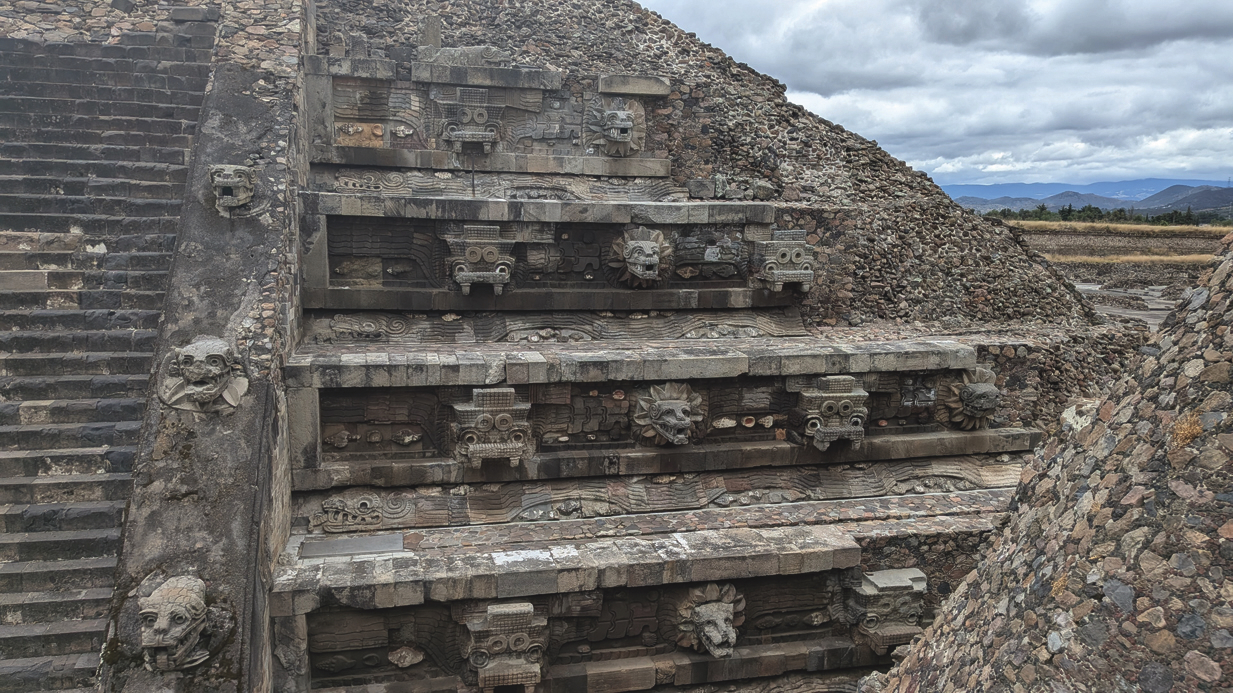
DURING THE LAST WEEK of November 2025, my partner, two friends, and I were preparing for a short adventure from Coyoacán to the famous city of Teotihuacan in Mexico. It was my third visit to this important Mesoamerican site, the most significant settlement of the Early Classic period in the region (200–500 CE). This occasion was particularly special, as we were accompanied by archaeologists studying the Ciudadela (Citadel), one of the city’s most prominent ceremonial complexes. There, beneath the Pyramid of the Feathered Serpent (Figure 1), our hosts revealed one of the most important discoveries in Mesoamerican archaeology: a tunnel over 100 meters long, built by the ancient inhabitants of Teotihuacan, which has yielded more than 200,000 offerings (Gazzola and Gómez 2025). As archaeologist Sergio Gómez explained the purpose and placement of these offerings, I couldn’t help but reflect on their sacred significance for the Teotihuacanos and other Mesoamerican cultures. This tunnel also led me to reflect on a possible deeper connection between the Maya and the ancient inhabitants of Teotihuacan, one that transcends a simple exchange of knowledge and materials.
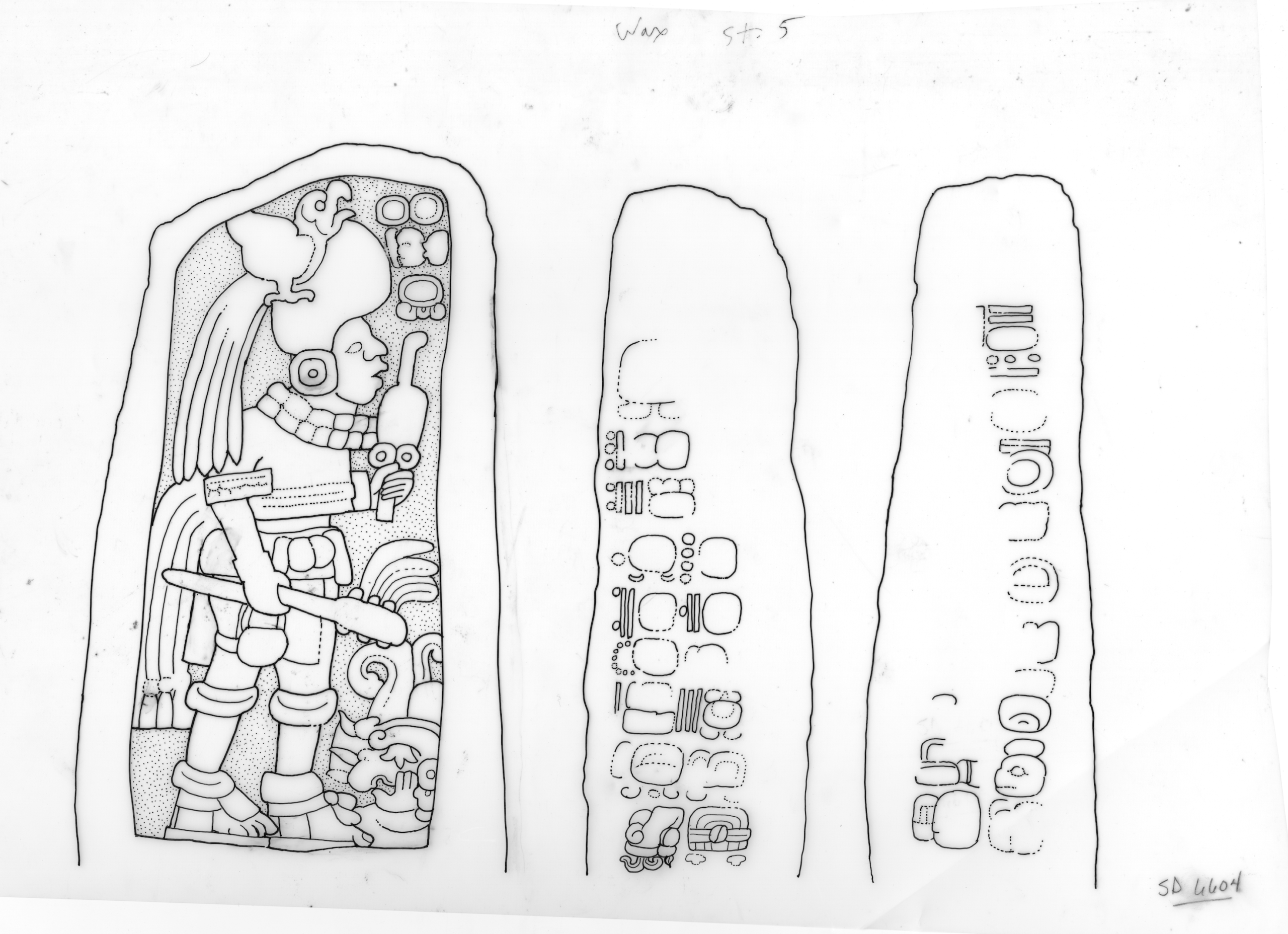
The relationship between Teotihuacan and Maya culture has been extensively studied, beginning with the first explorations at Uaxactun and Tikal in the 1940s. Archaeologist Tatiana Proskouriakoff, analyzing sculpted monuments in the Petén region, observed that some stelae, particularly Stela 5 at Uaxactun, exhibited styles distinct from other finds in the Maya region (Figure 2). She later published a book proposing that these sculptures and monuments indicated the arrival of foreigners to the Maya area, likely from Teotihuacan (1993: 8). Decades later, Clemency Coggins, in her doctoral dissertation on art at Tikal, noted that some ceramics imitated the artistic traditions of Teotihuacan, especially during the third and fourth centuries CE (1975: 100). During that same period, Hattula Moholy-Nagy confirmed the presence of green obsidian at Tikal. This volcanic glass, with origins in the Pachuca region of Mexico, is presumed to have been under Teotihuacan control. Together, these findings prompted consideration of a trade relationship between the two cities.
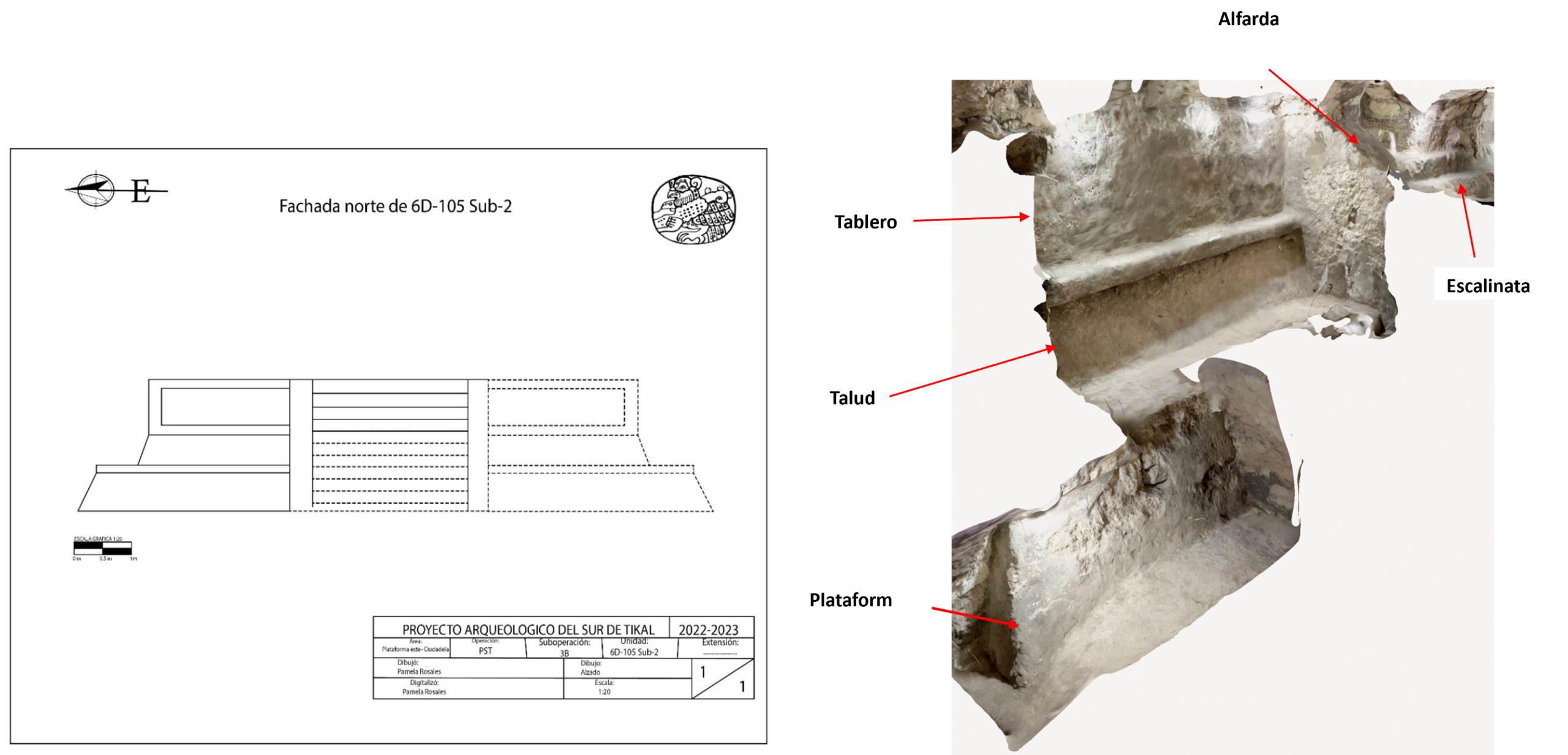
During the 1980s, the Tikal National Project, directed by Juan Pedro Laporte, conducted influential research on the relationship between Tikal and Teotihuacan. These studies showed that builders in Tikal had used the talud-tablero architectural style (originated in the state of Puebla and widely used in Teotihuacan) since at least the third century CE, and that it was used more extensively in the fourth century CE, indicating a long-standing connection between the two cultures (Figure 3). Furthermore, the research identified a palace (Group 6C-XVI) that included the North Plaza, with a style similar to that of the plaza in Plan 4 (Laporte 1987: 270)—that is, at least four structures surrounding a courtyard with an altar in the center, a relationship that, according to archaeologist Marshall Becker, is linked to the cultures of the Valley of Mexico (Becker 2009: 93).
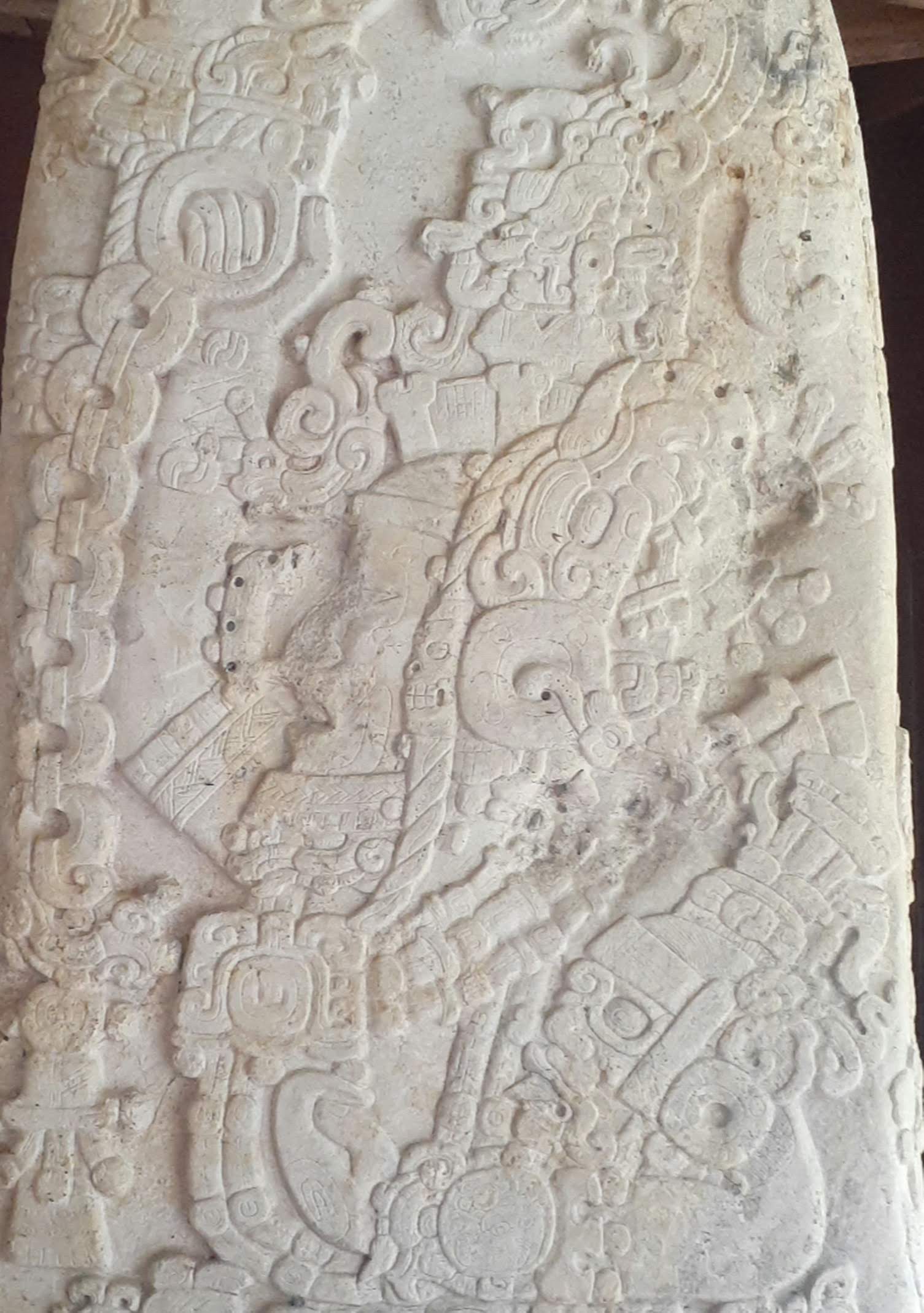
Finally, one of the most influential studies that has helped us to understand another facet of this relationship was conducted in 2000 by archaeologist and epigrapher David Stuart (2000). Examining the texts on sculptures at Tikal (Stela 31 and the Tikal Marker), he proposed that on January 16, 378 CE, the warrior Sihyaj K’ahk’, possibly sent by Teotihuacan, conquered Tikal. Since these pioneering investigations into the connection between the two areas, studies in the Maya Lowlands and at Teotihuacan have proliferated in recent decades, providing new information (Figure 4).
Tikal and Teotihuacan
One of the most recent and important projects in Teotihuacan is the work being done at the Palacio de las Columnas by archaeologists Nawa Sugiyama and Saburo Sugiyama. Their work established that the area was inhabited by Maya people who, along with Teotihuacan-associated individuals, organized a grand banquet to celebrate a union. This union is reflected in the archaeological findings, which include thousands of fragments of bowls, plates, and pots originating from the Maya area, mixed with local ceramics from Teotihuacan. Fragments of Maya-style murals, with some Teotihuacan features, were also found in this area. Both the banquet and the murals date from between 300 and 350 CE (Sugiyama et al. 2020). The Mayan presence in Teotihuacan was strong and did not appear to be limited to this area. In the Merchants’ Barrio, archaeologist Evelyn Rattray (2011: 33) identified Mayan pottery, which included a large number of polychrome pieces that, according to chemical studies carried out by Sarah Clayton, are all from the Mayan Lowlands and not local imitations.
In the Maya region, the connection with Teotihuacan was already quite strong between 300 and 378 CE. For example, in Tikal, structures with the talud-tablero style were found in Structure 5D-49 of Mundo Perdido (Laporte 1987: 225) and in Groups 6D-III and 6D-XVI (Román Ramírez et al. 2025). In Caracol (Belize), a burial was discovered that appears to be more related to the traditions of Central Mexico than to the Maya, as it was placed in a circular pit and accompanied by fragments of pottery and green obsidian (Chase and Chase 2011). In Altun Ha, a burial of an important individual was found with sites of green obsidian points. These findings indicate that trade relations with Teotihuacan already existed, probably from the first two centuries CE.
Indications of a Declining Relationship
The relationship between the Maya elite and Teotihuacan underwent changes starting around 350 CE. In Teotihuacan, the murals featuring Maya iconography were intentionally destroyed, suggesting a possible rift between this group’s families and the Maya people (Sugiyama et al. 2016). Significant changes are also evident in the Merchants’ Barrio, where Maya pottery, which was very common in this area, began to decline while the presence of materials associated with the Veracruz culture increased.
In the Maya area, evidence shows the opposite trend. After 350 CE, the presence of foreign traits gradually increased in Tikal and throughout the Maya region, a phenomenon that intensified after 378 CE, when Tikal lost a battle against Sihyaj K’ahk’ and his army. For example, the new ruler of Tikal, Yax Nuun Ahiin (Ruler 15), is identified as the son of Jatz’om Kuh, a leader who did not belong to the Tikal dynastic line and who, according to Stuart, was probably of Teotihuacan origin (Stuart 2000: 473). This ruler adopted a hybrid style in his clothing, reflecting the influences of both Maya and Teotihuacan cultures. This is also seen in the way monuments were sculpted during that period, in which rulers were depicted frontally rather than in profile, a convention uncommon in Maya tradition.
Changes are also evident in other sectors of Tikal. For example, around the Mundo Perdido ceremonial complex, the number of structures with talud-tablero architecture increased. Furthermore, about 200 meters south of the Plaza of the Seven Temples, a small neighborhood emerged, likely inhabited by people of Teotihuacan or Maya origin with a deep knowledge of Teotihuacan culture (Figure 5). This area is currently under investigation by the Southern Tikal Archaeological Project, which this author directs. Some burials in this area were pit graves, with the deceased seated and surrounded by green obsidian—funerary traditions more closely associated with Teotihuacan than with Maya culture. Dwellings were also constructed in this area using earth as the primary building material, and at least three complexes had an altar in the center (Figure 6), an unusual feature in Tikal (Román Ramírez et al. 2025). Additionally, through the PACUNAM LiDAR Initiative, Steve Houston identified a group (6D-III) that, due to its shape, appears to be a smaller-scale replica of the Ciudadela of Teotihuacan (Houston et al. 2021).
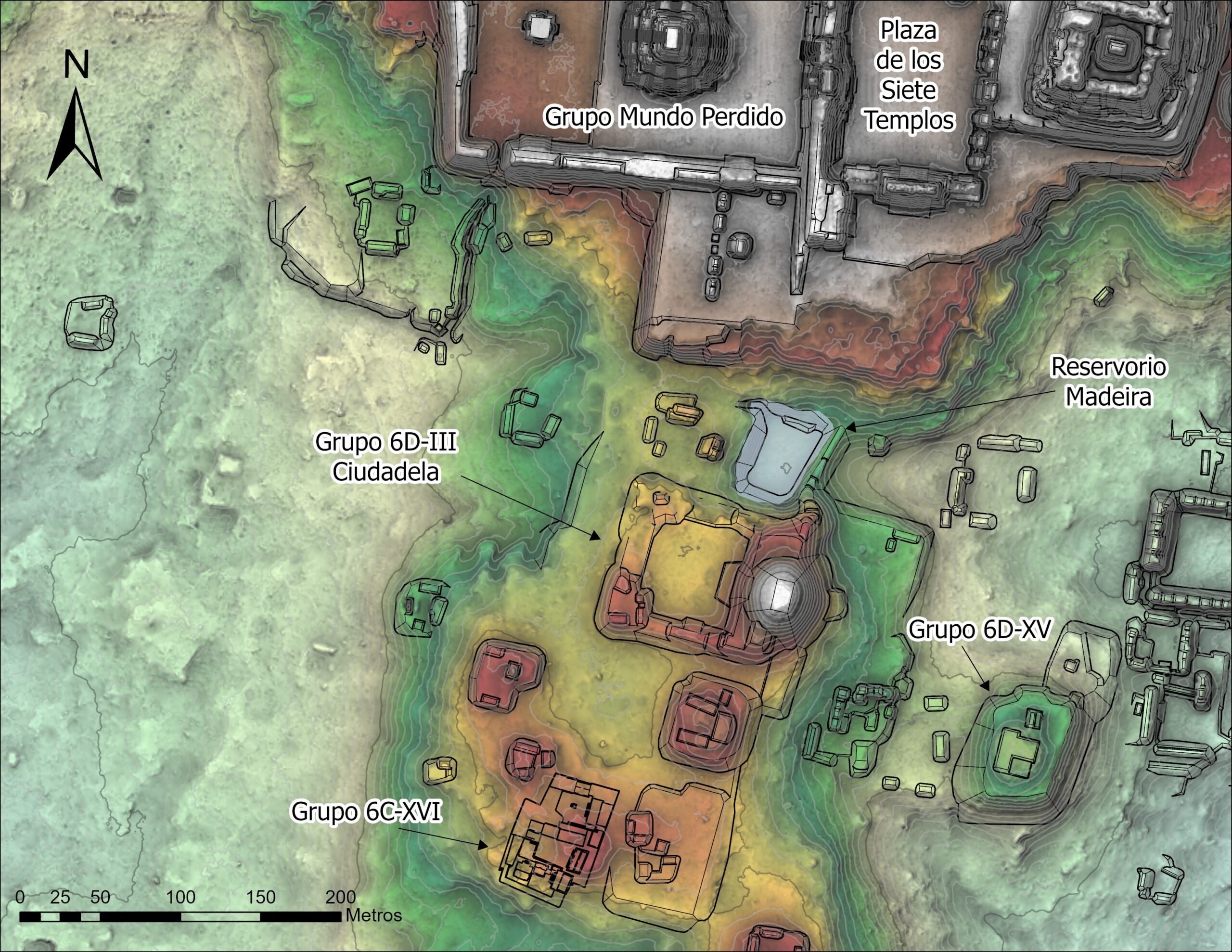
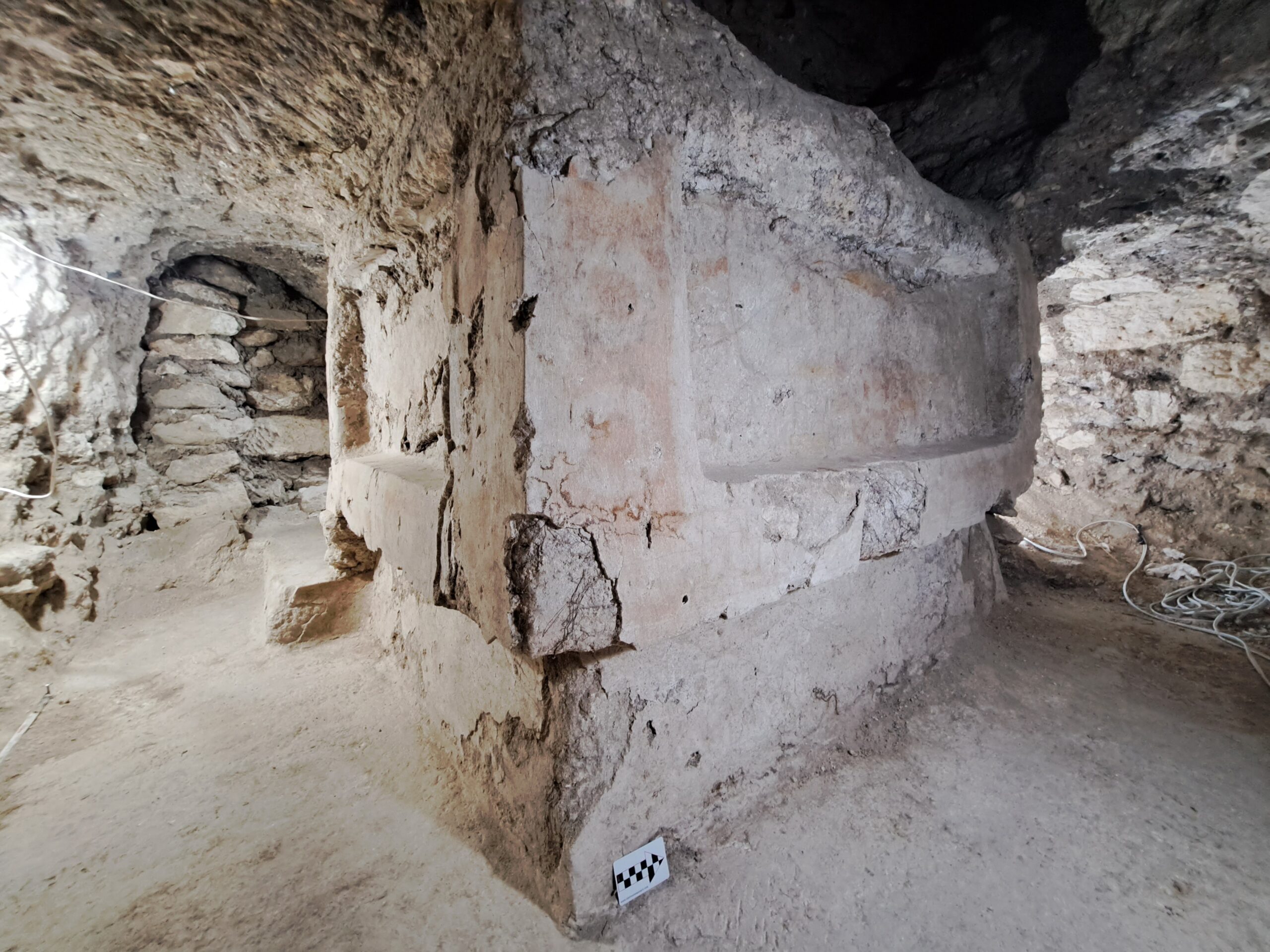
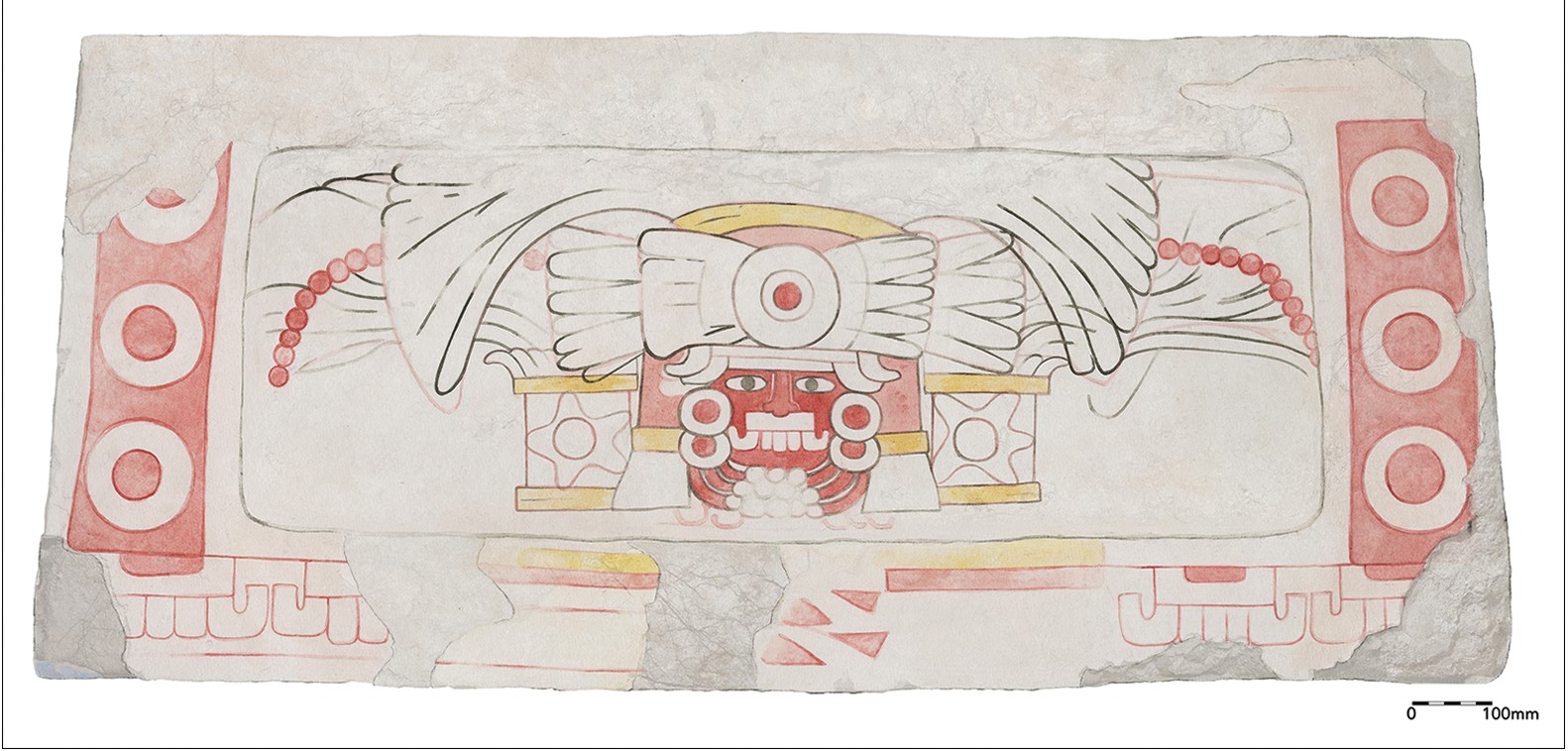
The recovery of numerous flint and green obsidian points, typical of spear-throwers, suggests the presence of a characteristic weapon of the Teotihuacan culture. Finally, one of the most compelling examples of a small settlement associated with Teotihuacan culture is an altar in the residential complex 6D-XV. The dwelling featured a talud-tablero-style altar in the center of the courtyard, and paintings of a Teotihuacan storm deity (Figure 7) were found in the four panels (Román Ramírez et al. 2025).
Unanswered Questions
The relationship between Teotihuacan and the Maya lasted approximately four centuries. After 500 CE, however, many cultural expressions associated with the Valley of Mexico began to decline at Tikal. This possible detachment could have been due to several factors, including the fall of Teotihuacan between 550 and 600 CE. Geopolitical changes in the Maya Lowlands also led to numerous conflicts among different cities.
Although we are learning more every day about the relationship between the Maya and Teotihuacan, there is still much to understand. From which city did the Maya who lived in Teotihuacan come? Were they just one family? Was this interaction exclusive to the elites, or did it also involve other actors? In addition, the challenge arises of contextualizing whether the interactions between cities were similar in other regions, such as Kaminaljuyu, Matacapan, and the sites on the South Coast of Guatemala, among others. ✹
Edwin Román Ramírez is a graduate in archaeology from Universidad San Carlos in Guatemala and holds a master’s (2011) and doctorate (2017) in Latin American Studies from the University of Texas at Austin. Formerly director of El Zotz Archaeological Project in Guatemala, he is the current director of the Southern Tikal Archaeological Project, which focuses on urban planning and intercultural relations in Mesoamerica. Dr. Román Ramírez has held visiting professorships at Skidmore College in New York state and Universidad del Valle de Guatemala. He was LLILAS Tinker Visiting Professor in fall 2025.
Selected Bibliography
Becker, Marshall Joseph. 2009. “Tikal: Evidence for Ethnic Diversity in the Prehispanic Lowland Maya State Capital.” In Domestic Life in Prehispanic Capitals: A Study of Specialization, Hierarchy and Ethnicity ed. Linda R. Manzanilla and Claude Chapdelaine. University of Michigan Press.
Chase, Arlen F., and Diane Z. Chase. 2011. “Status and Power: Caracol, Teotihuacan, and the Early Classic Maya World.” Research Reports in Belizean Archaeology (8): 3–18.
Coggins, C.C. 1975. “Painting and drawing styles at Tikal: A Historical and iconographic reconstruction.” PhD dissertation. Harvard University.
Gómez Chávez, Sergio, and Julie Gazzola. 2025. “Manejo y aprovechamiento del agua en Teotihuacán: del uso cotidiano a lo etéreo y simbólico.” In El agua en Mesoamerica y aridoamérica: Gestión y uso, ed. Geiser Gerardo Martín Medina and Juan García Targa. BAR International Series 3216.
Houston, S.D.; E. Román Ramírez; D. Stuart; H. Escobedo; and P. Rosales. 2021. “A Teotihuacan complex at the Classic Maya city of Tikal, Guatemala.” Antiquity 95 (384).
Laporte Juan Pedro. 1987. “El ‘Talud-Tablero’ en Tikal, Petén: Nuevos Datos.” In Homenaje a Román Piña Chan. Universidad Autónoma de México, Instituto Nacional de Antropología e Historia.
Moholy-Nagy, Hattula. 1999. “Mexican obsidian at Tikal, Guatemala.” Latin American Antiquity 10 (3): 300–313.
———. 2021. “A Reversal of Fortune: Problematical Deposit 50, Tikal, Guatemala.” Latin American Antiquity 32 (3): 486–502.
Proskouriakoff, T. 1993. Maya History. University of Texas Press.
Rattray, Evelyn C. 1978. “Los contactos Teotihuacán-Maya vistos desde el centro de México.” Anales de Antropología (15): 33–52.
Román Ramírez, Edwin; Lorena Paiz Aragón; Angelyn Bass; Thomas Garrison; Stephen Houston; Heather Hurst; David Stuart; Alejandrina Corado Ochoa; Cristina García Leal; Andrew Scherer; Rony Piedrasanta Castellanos. 2025. “A Teotihuacan altar at Tikal, Guatemala: Central Mexican ritual and elite interaction in the Maya Lowlands.” Antiquity 99 (404): 462–480.
Stuart, D. 2000. “‘The Arrival of Strangers’: Teotihuacan and Tollan in Classic Maya History.” In Mesoamerican Classic Heritage from Teotihuacan to the Aztecs, ed. D. Carrasco, L. Jones, and S. Sessions. University Press of Colorado.
Sugiyama, Nawa; William L. Fash; Barbara W. Fash; and Saburo Sugiyama. 2020. “The Maya at Teotihuacan? New insights into Teotihuacan-Maya interactions from the Plaza of the Columns Complex.” In Teotihuacan: The World beyond the City, ed. Kenneth G. Hirth, David M. Carballo, and Barbara Arroyo. Dumbarton Oaks.