
By SUSANNA SHARPE
LLILAS is a place in constant motion. Whether it is a class in session or a guest speaker holding forth, the sounds of lectures, conversations, films, music, and the occasional laughter or applause spill into the hallways on busier days. But the institute also offers an array of more hands-on experiences through its Public Engagement programming.
A visitor might sample coffee during a talk about its production in Colombia; or make a Guatemalan-style kite called a barrilete while learning about Mexican and Central American Day of the Dead celebrations. An interdisciplinary panel discussion on tacos would absolutely need to be followed by the consumption of tacos.
Less strictly academic in nature, LLILAS Public Engagement supports outreach to an array of constituents—university students, members of the local community, K–12 educators, community college faculty, high-schoolers, schoolchildren and their families.
At the center of these initiatives is Public Engagement Coordinator Caroline Garriott, who conceptualizes, plans, executes, and juggles a myriad of public events for this cross-section of audiences. Garriott is also the point person for several LLILAS initiatives, including DigiSur—an interdisciplinary study group that explores the role of technology and information in the Global South—and the Maya Studies Initiative—which supports activities by Mayanist faculty and researchers from across the university.
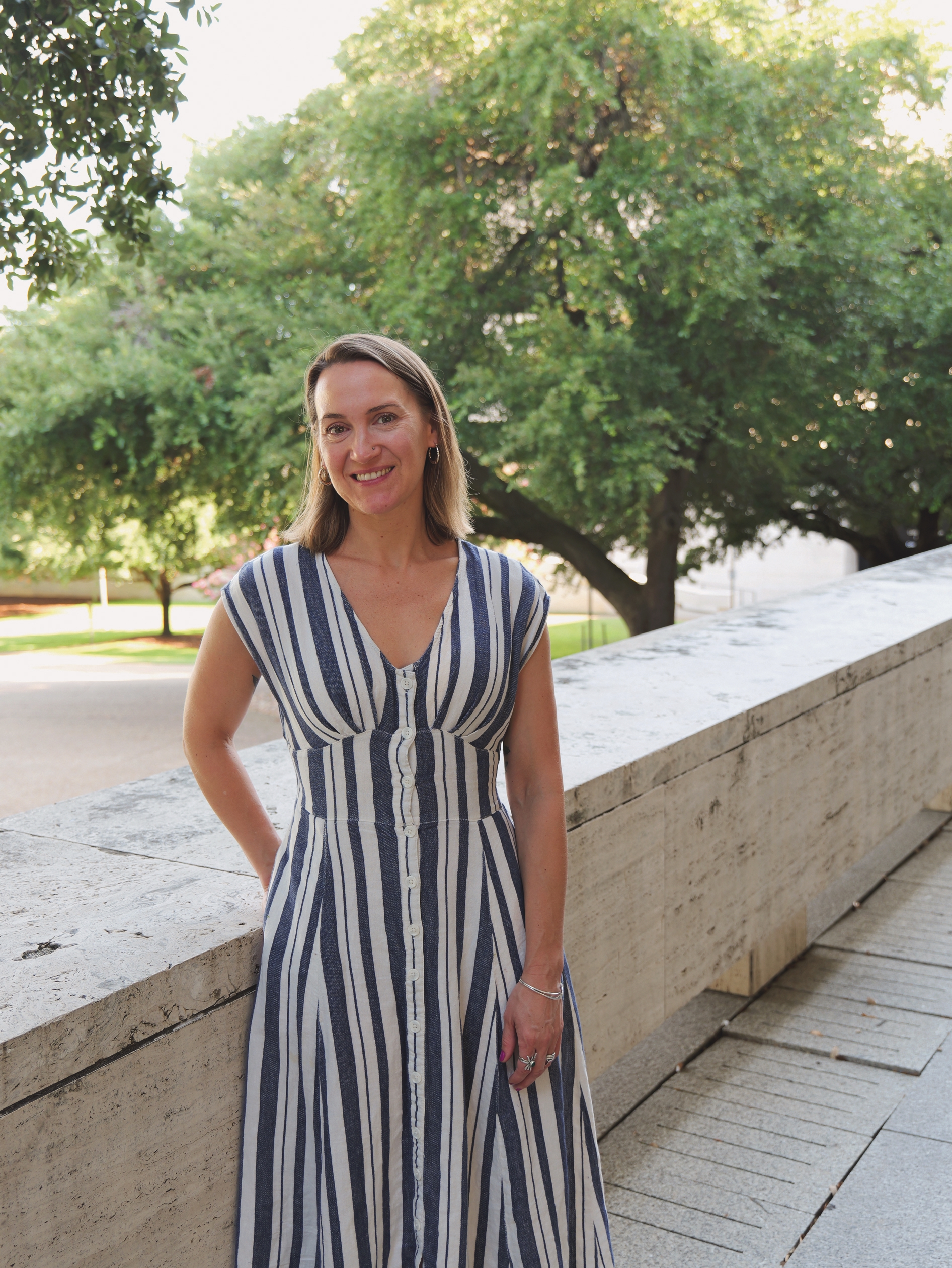
“I see myself as a connector,” says Garriott. She thrives on engaging with international visitors and on finding innovative ways to bring Latin American Studies into various sectors of the Austin community. But an essential part of Garriott’s role lies in her ability to step back and imagine what kinds of connections can be made—between people and ideas, activities, materials, archives.
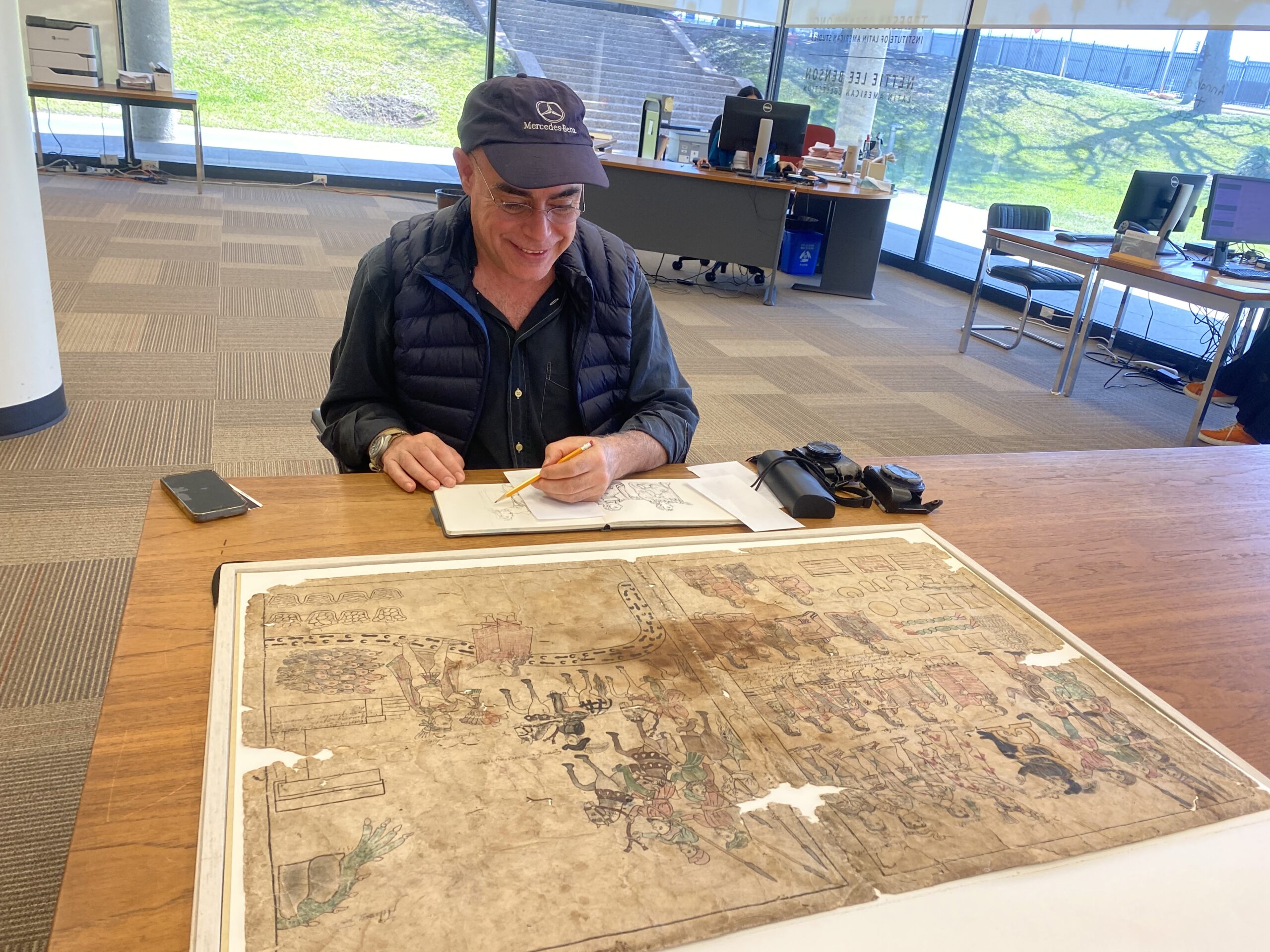
Her work with Oaxaca-based visiting artist and educator Fernando Aceves Humana exemplifies this gift. Garriott coordinated a series of events during the artist’s several-week visit in spring 2025. “This was one case in which I was introduced to someone who inhabits a world that I think it fascinating, and I was like, ‘well, what can we do?’ and we did so much.”
With minimal funding, Garriott organized a well-attended public talk and slide show by Aceves Humana at the Benson Latin American Collection, a copperplate etching class at Flatbed Press, and an artist’s reception. The artist was so inspired by the Lienzo de Tlaxcala, a sixteenth-century Indigenous codex in the Benson’s rare holdings, that he applied for and received a fellowship to return to Austin to study the famous document by copying parts of it in his sketchbook.
Garriott, in turn, was inspired by Aceves Humana’s approach, which merges his talent as a painter and lithographer with his interests in the natural world and archaeology. “He combines so many of the priorities of LLILAS in his work with outreach, with Indigenous rural communities outside of Oaxaca, and training artists in their communities,” says Garriott.
A historian by training, Garriott holds a PhD from Duke University (2019) and an interdisciplinary master’s degree in Andean Studies from Universidad Pontificia Católica de Lima, where she studied under an art historian. Her dissertation in history examined ideas on race and ethnicity in Latin America’s colonial past to explore the manifestation of these ideas in the visual realm.
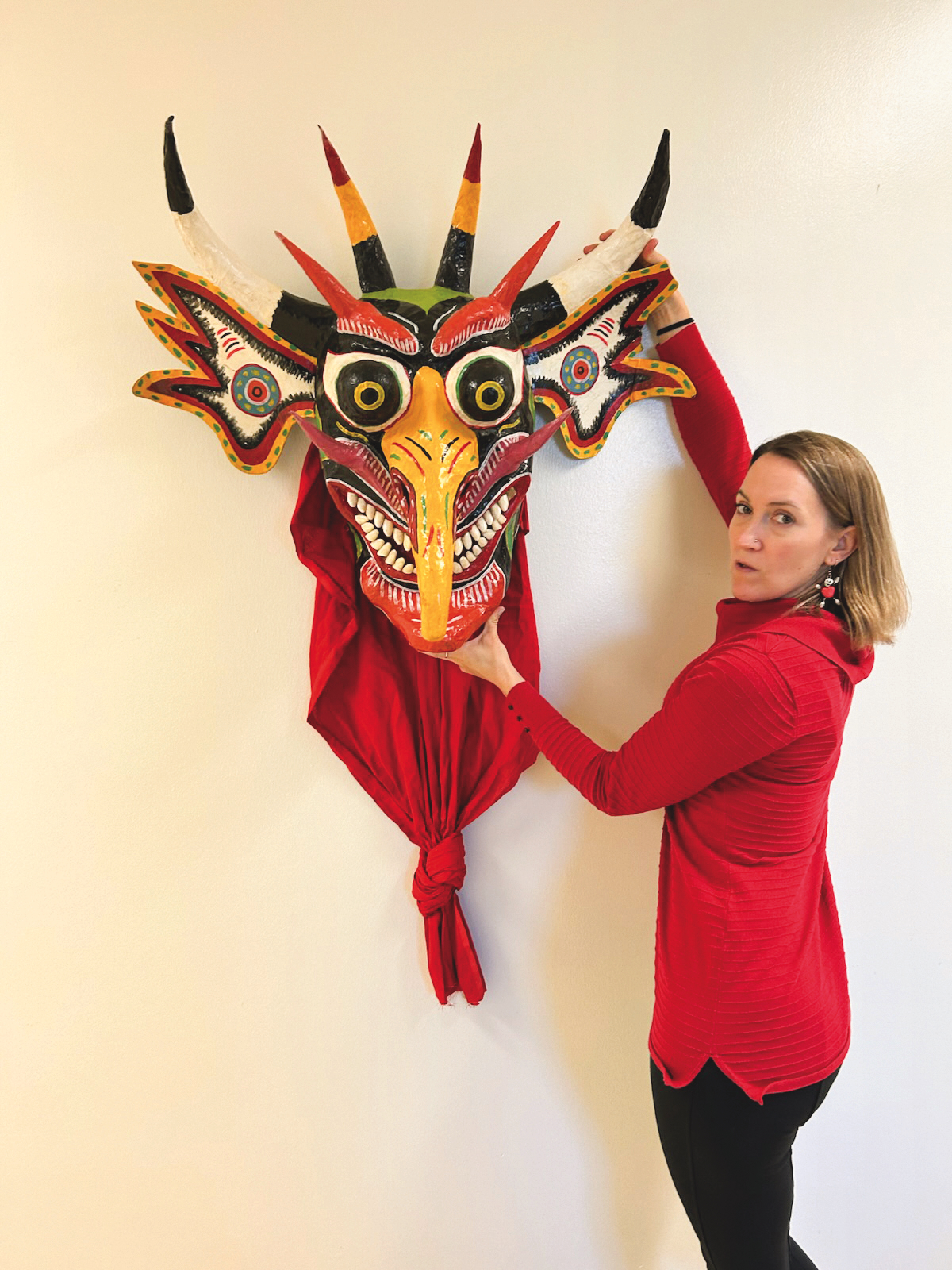
Garriott brings a spirit of curiosity and inquiry to all she does. Projects over the last year have included two physical exhibitions and related events: Dancing with Devils: Latin American Mask Traditions, an extensive loan from Ohio State University consisting of Afro-Caribbean masks, documentary photography, and portraiture; and Who Am I / ¿Quién Soy Yo?: Reflections from Incarcerated Youth in Austin and Oaxaca, a showcase of graphic posters co-sponsored by LLILAS and the Pido la Palabra grant, a prison literature project led by LLILAS Director Adela Pineda Franco. Student worker Hanna Rodríguez Sopracase provided invaluable assistance to Garriott in the mounting of the exhibits and other projects.
The aforementioned Lienzo de Tlaxcala belongs to a set of documents at the center of a well-attended public keynote by archaeologist Margarita Cossich this past spring. The occasion was New Visions of Nahuatl Writing, a LLILAS Maya Studies Initiative workshop organized by Professor David Stuart, with support from Garriott, that brought together specialists in writing, linguistics, epigraphy, and archaeology.
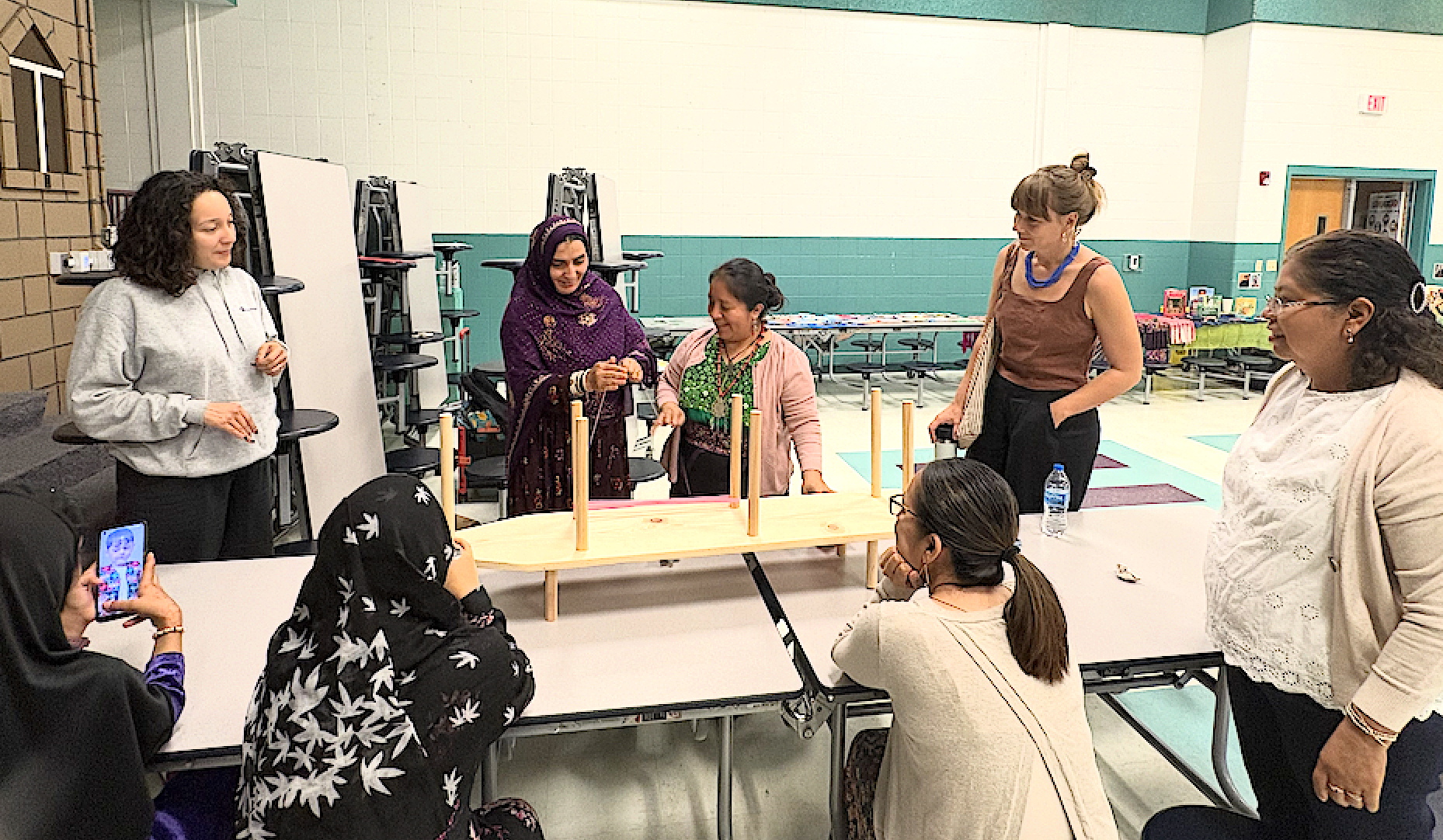
One of Garriott’s favorite partnerships has been with Colaborativa Cuauhtli, an initiative housed in the UT College of Education that brings together bilingual Spanish/English educators to explore how Latin American languages can transform the curricula and modes of teaching in the elementary school classroom. The initiative is spearheaded by Patricia Núñez, a PhD candidate in education with over twenty-five years’ experience as a bilingual educator, with support from Professor Angela Valenzuela of the Department of Educational Leadership and Policy and Professor Emeritus Emilio Zamora of the Department of History. Garriott has worked with Núñez on several co-sponsored events, including the all-ages community event Nuestros Tejidos y Nuestras Historias (Our Weavings and Our Histories). Held at a local elementary school, the successful session featured a talk and weaving workshop by Guatemalan educator Manuela Tahay, LLILAS’s beloved instructor of the K’iche’ language. Participants learned about natural dyes and weaving through hands-on activities. Lunch and storytelling were also included. As with many Public Engagement events, it offered continuing education credits for teachers.
Despite the busy year at LLILAS, Garriott found time for her own scholarly pursuits. In March, she traveled to the University of Florida in Gainesville to present her research at the First Colloquium on Felipe Guaman Poma de Ayala. Her talk, titled “Miracles and Surrogacy in Guaman Poma: A Visual Counterhistory of the Conquest of Cuzco,” bridged art history, literature, and history in examining the work of the Indigenous Peruvian intellectual Guaman Poma (1535–1616). (As fleeting as this event might have seemed to her colleagues as casual observers, it was the product of months of preparation using that elusive commodity known as “spare time.”)
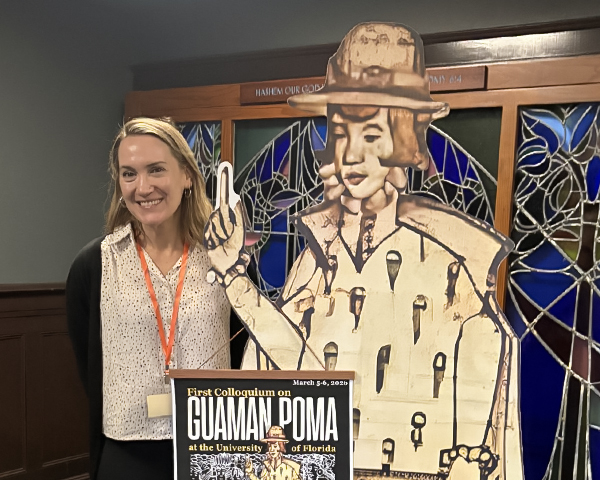
Upon returning to the UT campus after her four-day foray back into scholarship, Garriott picked back up the many strands she carries as a coordinator, collaborator, thinker, leader, and colleague without missing a beat.
“I had to learn a lot this year,” she said, “but that gave me the opportunity to revisit my passions.” The 2026–2027 academic year, with a major Mayanist conference on the horizon, promises to hold many more such opportunities. ✹