
By HAYDÉE CARRASCO-ORTIZ
BILINGUALISM IS far more complex than simply being able to communicate in two languages. It involves cognitive, linguistic, social, and cultural dimensions that shape how people communicate and understand the world. Psycholinguists study how an individual’s mind is able to acquire and represent multiple linguistic systems, including words, structures, sounds, and meanings. At the same time, this bilingual ability is deeply influenced by social dynamics, particularly when languages and cultures come into contact. These interactions may strengthen linguistic communities or place minority languages at risk of disappearing, highlighting the importance of raising awareness about linguistic diversity and different ways of understanding the world.
Globally, bilingualism is far more common than we often think. With 193 countries and over 7,000 languages spoken worldwide, bilingualism and multilingualism should be considered the rule rather than the exception. Mexico is a prime example of this global linguistic diversity. Alongside Spanish, Mexico is home to 68 national Indigenous languages, subdivided into 364 distinct linguistic variants or dialects, representing only a fraction of the many languages spoken long before the arrival of the Spanish colonizers. This remarkable linguistic diversity suggests that bilingualism existed even before colonization, fostered by the commercial and cultural exchanges that took place among Indigenous peoples in the region.
Current Landscape of Indigenous Bilingualism in Mexico
Today, Mexico has the largest Indigenous population in Latin America. According to the 2020 INEGI Census, approximately 23.2 million people in Mexico identify as Indigenous, representing approximately 19.4 percent of the national population. Recent census data also show that the number of bilingual speakers in Mexico continues to increase, with over 7 million people aged three years and older speaking an Indigenous language, of whom the vast majority (87 percent) are bilingual. In other words, more people are using both Spanish and an Indigenous language, while the proportion of monolingual speakers of Indigenous languages has steadily decreased, from 15 percent in 2010 to 11 percent in 2020. If this trend continues, monolingual speakers of these languages may eventually disappear, making bilingualism the dominant linguistic reality for many Indigenous communities in Mexico.
Currently, Indigenous languages in Mexico are spoken by minority groups and mainly used in the family and community domains. Most bilingual children grow up hearing and speaking an Indigenous language at home, but over time their acquisition is often interrupted when they enter school, where Spanish becomes the dominant language of instruction and interaction. Despite recent language policies and institutional educational efforts that formally support bilingualism, school curricula remain largely Spanish-dominant, creating a gap between official pro-bilingual discourse and the linguistic reality experienced by Indigenous children. As a result, most individuals gradually shift toward greater Spanish dominance, often reporting reduced proficiency in their Indigenous first language or feeling that they do not fully master it, even if they understand or use it in limited social contexts.
In recent years, there has been growing interest among some speakers in maintaining, strengthening, or relearning their Indigenous languages. This has led to an increase in community-based revitalization efforts, intergenerational transmission initiatives, and educational programs aimed at supporting the continued presence of these languages in both private and public spheres, as well as promoting their visibility and use in broader social and institutional contexts.
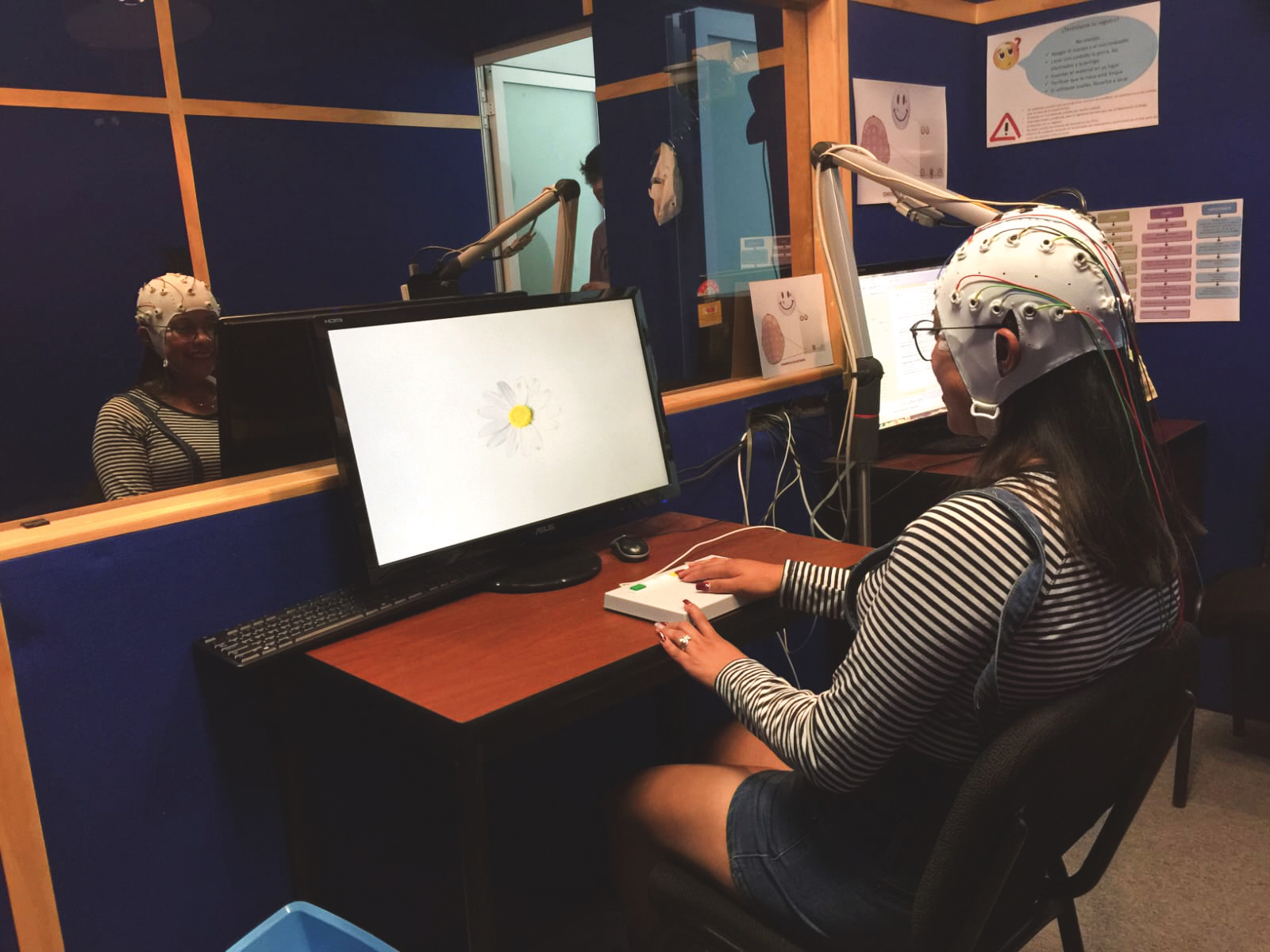
From a psycholinguistic approach, we seek to better understand how much linguistic knowledge acquired early in life can be maintained in bilingual minds after periods of reduced language exposure, as well as how it can be relearned, accessed, and reactivated across the lifespan. In a series of psycholinguistic studies, we have used behavioral and brain measures to investigate the extent to which individuals who were exposed from birth to a Mexican Indigenous language, such as Otomi or Yucatec Maya, can draw on this early-acquired linguistic knowledge to learn or relearn words in the same language. These studies aim to shed light on how early linguistic experience shapes later language processing, and on the cognitive mechanisms that support language retention and accessibility in adulthood after periods of socially restricted language use.
A Closer Look at Otomi Bilingualism
The Otomi language is spoken across several states in Mexico, including Hidalgo, Puebla, the State of Mexico, Veracruz, Querétaro, Michoacán, Tlaxcala, and Guanajuato (INALI 2008: 142–159).1 Otomi is an Indigenous language of Mexico belonging to the Oto-Manguean language family, specifically to the Oto-Pamean branch, which includes Otomi, Mazahua, Matlatzinca, Tlahuica, Pame, and Chichimeco Jonaz (p. 142). Within the state of Querétaro, the three largest communities where Otomi—known by its speakers as Hñäñho—is still concentrated are Tolimán, San Ildefonso Tultepec, and Santiago Mexquititlán. The number of speakers in these communities has decreased over the years, to the point that those who continue to maintain Otomi as their dominant language are generally older adults. While Spanish is now the primary language of younger generations in these communities, Otomi is spoken to a lesser extent. Language shift toward Spanish is particularly strong among speakers who migrate to urban areas, where Otomi use is often restricted to the home. In many cases, younger generations born in cities may not fully acquire the language, resulting in bilingual speakers who had early language exposure through family members but limited active use, and often no reading or writing skills.
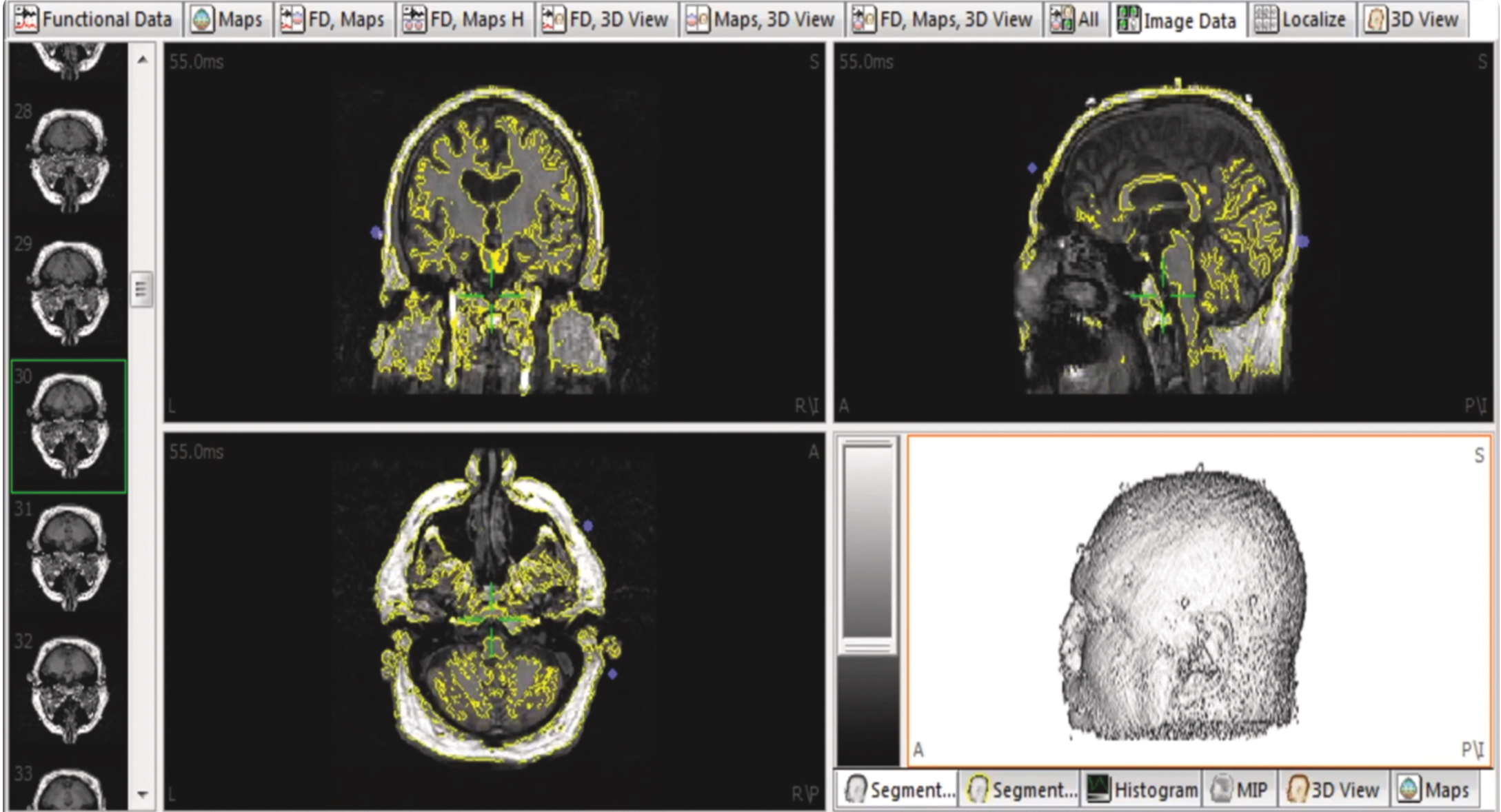
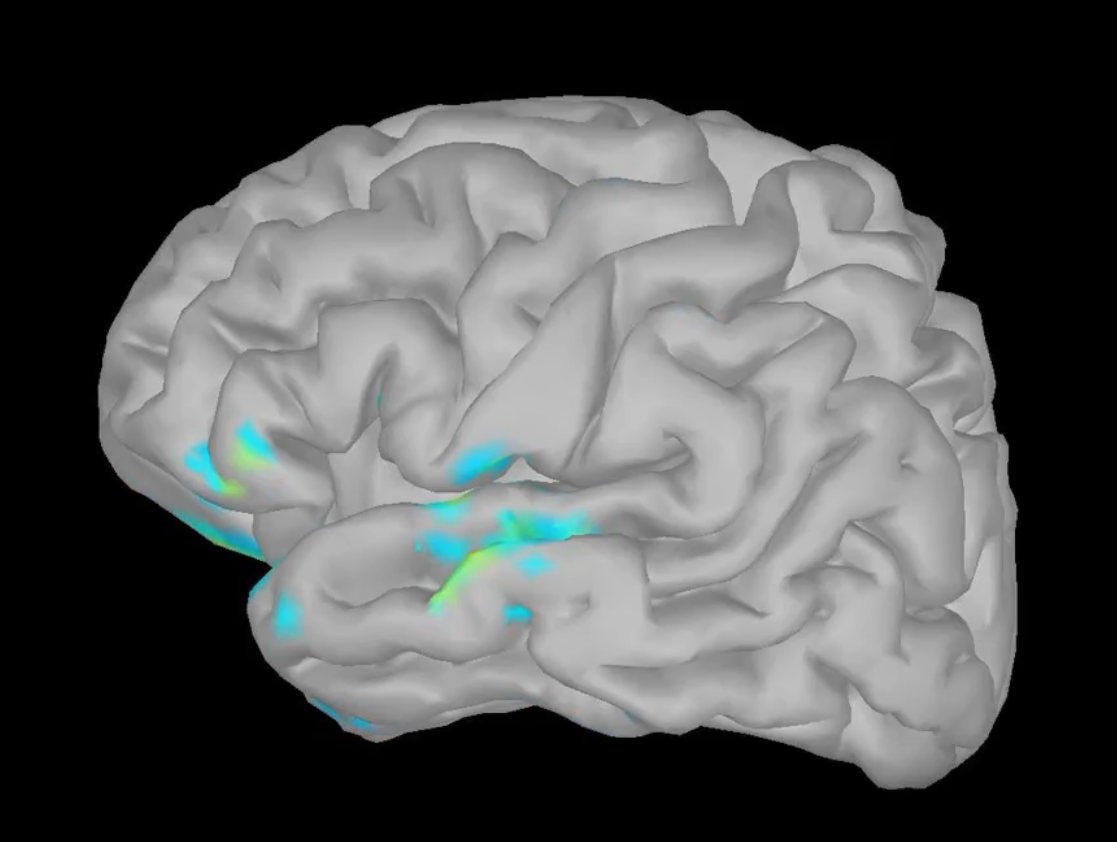
Contrary to a deficit perspective often associated with minority language groups, our research2 focuses on the linguistic knowledge bilinguals can retain to support language (re)learning in adulthood. Specifically, our studies explore how much knowledge about the sounds and meaning of Otomi words remains in the minds of adult bilinguals enrolled at the university. By measuring bilinguals’ brain activity, we examined whether early exposure to Otomi helps speakers learn and recognize the meaning of written words in Otomi more efficiently than second-language (L2) learners with no previous exposure. After a short training phase, we record participants’ neural responses while they read written Otomi words. Bilinguals’ brain response is stronger when a written Otomi word does not match the meaning of the preceding image, suggesting that they are able to access and process the meaning of the words more efficiently than L2 learners do. These findings reveal patterns of language maintenance indicating that lexical knowledge remains accessible across the lifespan, even when the language is socially restricted and rarely used outside the family domain.
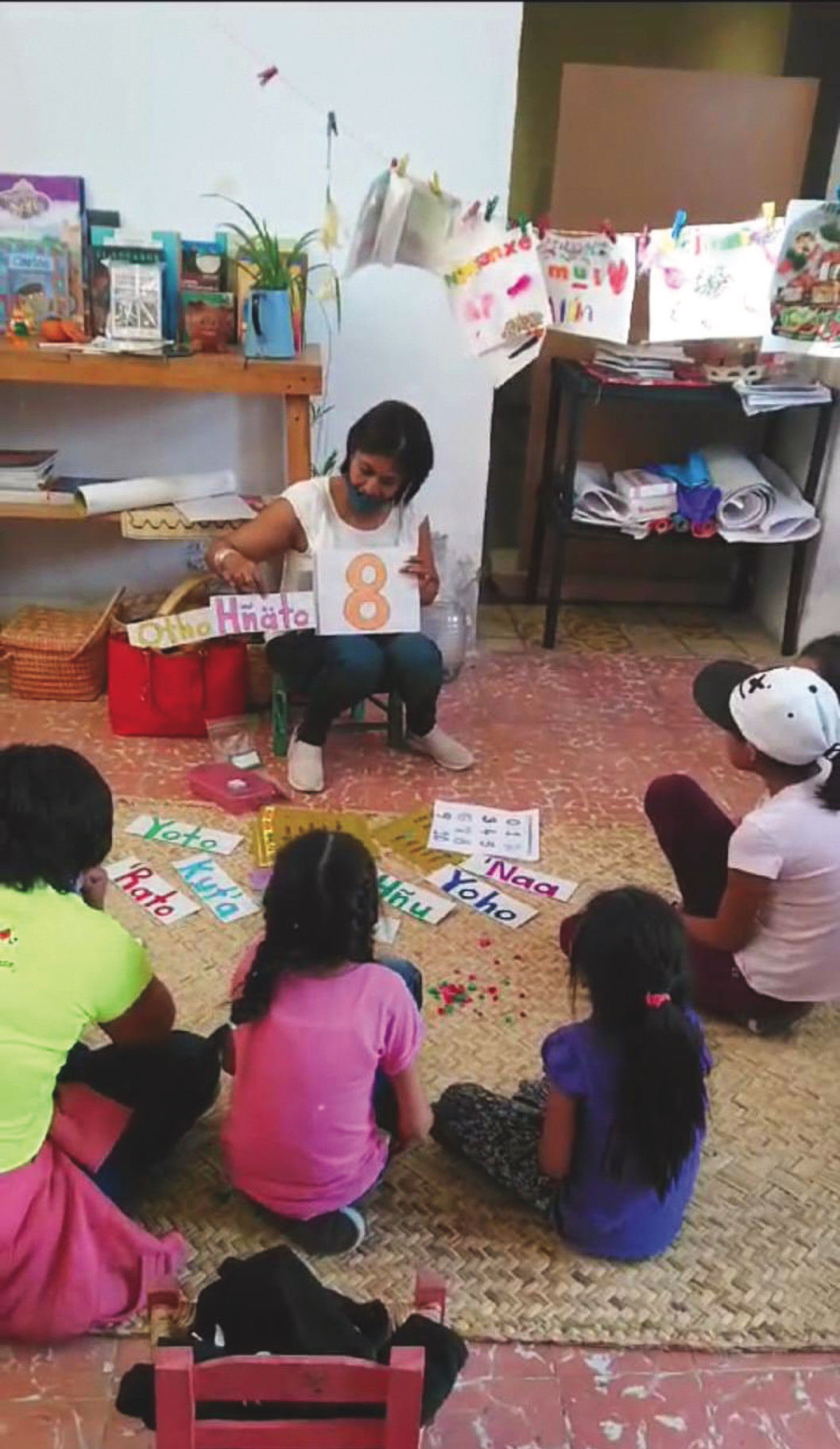
In follow-up studies, we have examined whether bilingual children who have spent five to six years in Spanish-only schooling can still discriminate the unique Otomi vowel sounds and whether this early knowledge gives them an advantage in (re)learning and recognizing word meanings compared to children who have never been exposed to Otomi. Otomi has a more complex vowel system than Spanish, including five vowels that are similar to those found in Spanish /e, a, o, i, u/ and five that are specific to Otomi /ɨ, ɛ, ɘ, ɔ, ã/. For the purposes of these studies, children learn Otomi words through games and computer-based activities and later complete tests measuring vocabulary learning and their ability to distinguish Otomi vowel sounds. The results show that bilingual children are better at recognizing auditory words containing Otomi-specific vowels than monolingual Spanish-speaking children. Overall, these findings suggest that early exposure to an Indigenous language can leave lasting knowledge in the brain, even after years of reduced use and schooling in predominantly Spanish monolingual settings.
Language Contact and the Multilingual History of Mexican Spanish
Mexico’s multilingual and pluricultural diversity includes not only its Indigenous populations but also Afro-descendant communities, whose presence dates back to the colonial period. Centuries of interaction between Spanish, Indigenous languages, and, to a lesser extent, African languages have shaped today’s Mexican Spanish vocabulary, pronunciation, and grammatical structures. Although Afro-Mexican communities were only officially recognized in the Constitution in 2019, they represent an important part of the country’s cultural and historical heritage. Some linguistic features observed in Afro-Mexican Spanish, as well as in other Afro-Hispanic varieties, are often interpreted as reflecting bilingual processes that have developed and stabilized over centuries across generations of speakers. Mexican linguistic and cultural diversity continues to influence regional Spanish varieties today, reflecting the country’s complex multilingual and pluricultural history.
Final Remarks
Bilingualism is a complex and interdisciplinary field of study and a common feature that needs to be understood across its linguistic, psychological, social, and cultural dimensions. Bilingual speakers of Spanish and Indigenous languages in Mexico have historically been invisibilized and subjected to discrimination, as their bilingualism does not enjoy the same prestige as bilingualism associated with Indo-European languages such as English, German, or French. Raising awareness of the cultural and linguistic diversity in Mexico may help reduce the social pressure and stigma faced by bilingual speakers of Indigenous languages and Spanish. Psycholinguistics can offer a window into the minds of Mexican bilinguals, contributing to a better understanding of the cognitive and socio-emotional advantages they can develop across different educational and social contexts. Recognizing and fostering bilingualism in Mexico can help build more equitable and inclusive communities that value linguistic diversity and promote equal opportunities for all their inhabitants. ✹
Haydée Carrasco-Ortiz, a psycholinguist, is professor at Universidad Autónoma de Querétaro. She was Tinker Visiting Professor at LLILAS during spring 2026.
Notes
1. Instituto Nacional de Lenguas Indígenas (INALI), Catálogo de las Lenguas Indígenas Nacionales: Variantes Lingüísticas de México con sus Autodenominaciones (2008). inali.gob.mx/sitios/clin-inali/.
2. My work in this area is done as part of a research team at the Laboratorio de Estudios Lingüísticos (LABEL) at the Universidad Autónoma de Querétaro. LABEL is an interdisciplinary research group focused on the study of language from linguistic, psycholinguistic, and neurocognitive perspectives. The team investigates topics such as bilingualism, language processing, language acquisition, and the relationship between language and the brain using experimental and neurophysiological methods, including EEG/ERP recordings. Particular attention is given to bilingual populations and speakers of Indigenous languages in Mexico, contributing to a broader understanding of language diversity and cognition. The laboratory also promotes academic collaboration, student training, and the dissemination of research on language and cognition.