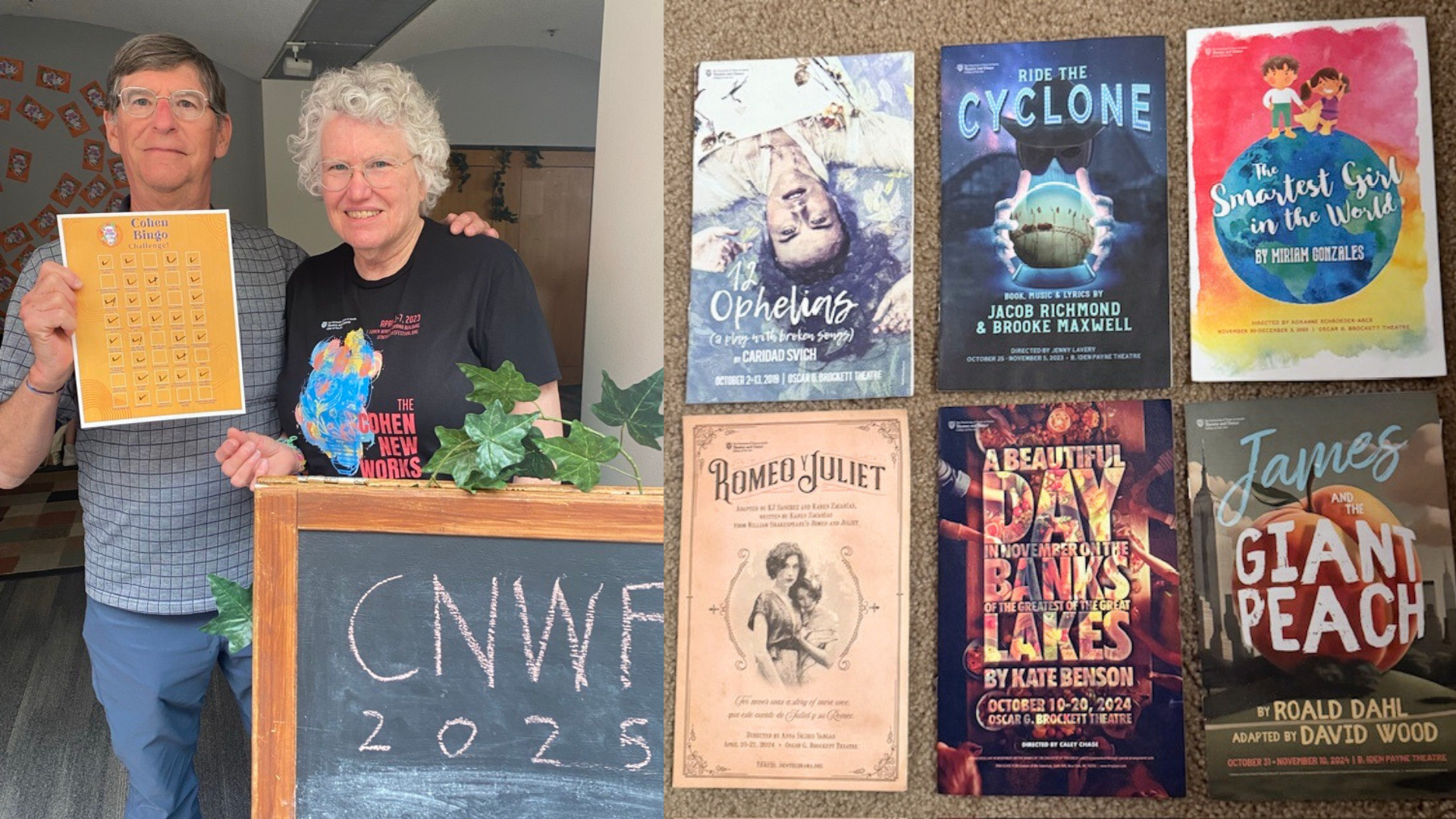
As a performer, there’s nothing like the feeling of peeking through the curtain on opening night and seeing familiar faces in the crowd excited to support you. For the UT Department of Theatre and Dance, those faces include Alice (M.A. 1976) and Chip Gentry (M.A. 1979, M. Ed. 1996), retired mathematics alumni turned devoted theatre patrons and season subscribers. What began with a single dance performance in spring 2019 quickly grew into a deep appreciation for the department’s bold creativity and the students who bring it to life. We spoke with the Gentrys, who have become part of the fabric of the community they admire, about their experience attending Texas Theatre and Dance productions, from experimental new plays to dazzling musicals and dance performances.
Beyond the Stage
Harnessing the Energy of the Cypher: Why CYPHERS is Performed “In the Round”
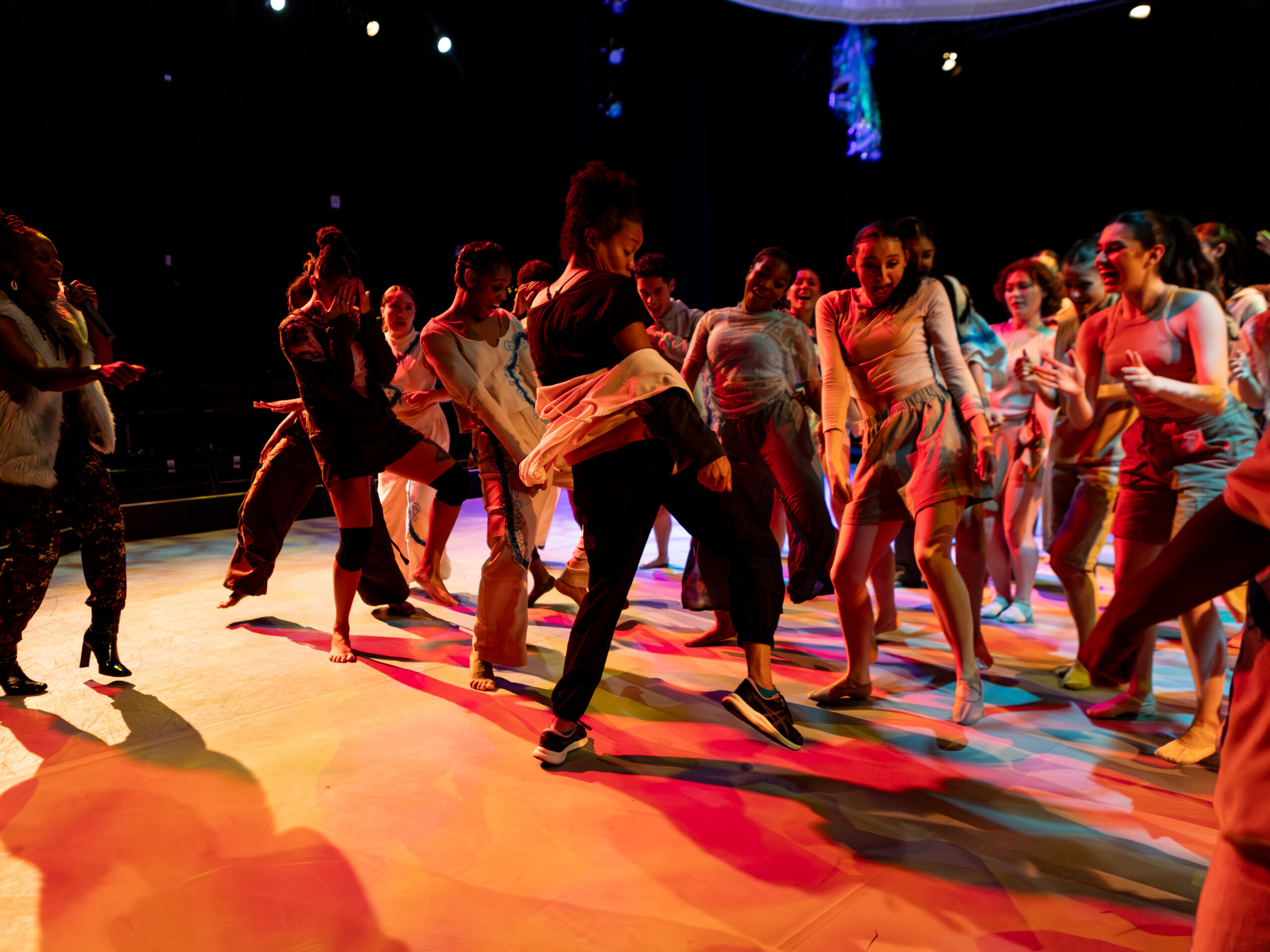
“This is not going to be your traditional black box theatre performance,” shares Gesel Mason, choreographer, professor, dancer and artistic director of CYPHERS. Mason stands in a corner of the Oscar G. Brockett Theatre, gesturing towards the rows of seats, the DJ booth and the circular projection screen suspended above the stage. The stage is surrounded by seating on all four sides, breaking the barrier between audience and performer. We spoke with Mason, student choreographer Megan Davidson and dancers Madeleine Birmingham and Bryli Lee Jameson to understand why audiences seated “in the round” is significant for CYPHERS and what opportunities it has presented for performers and viewers alike.
Continue Reading Harnessing the Energy of the Cypher: Why CYPHERS is Performed “In the Round”
Honoring Complicated Truths and Childlike Wonder: A Dramaturg’s Reflection on JAMES AND THE GIANT PEACH
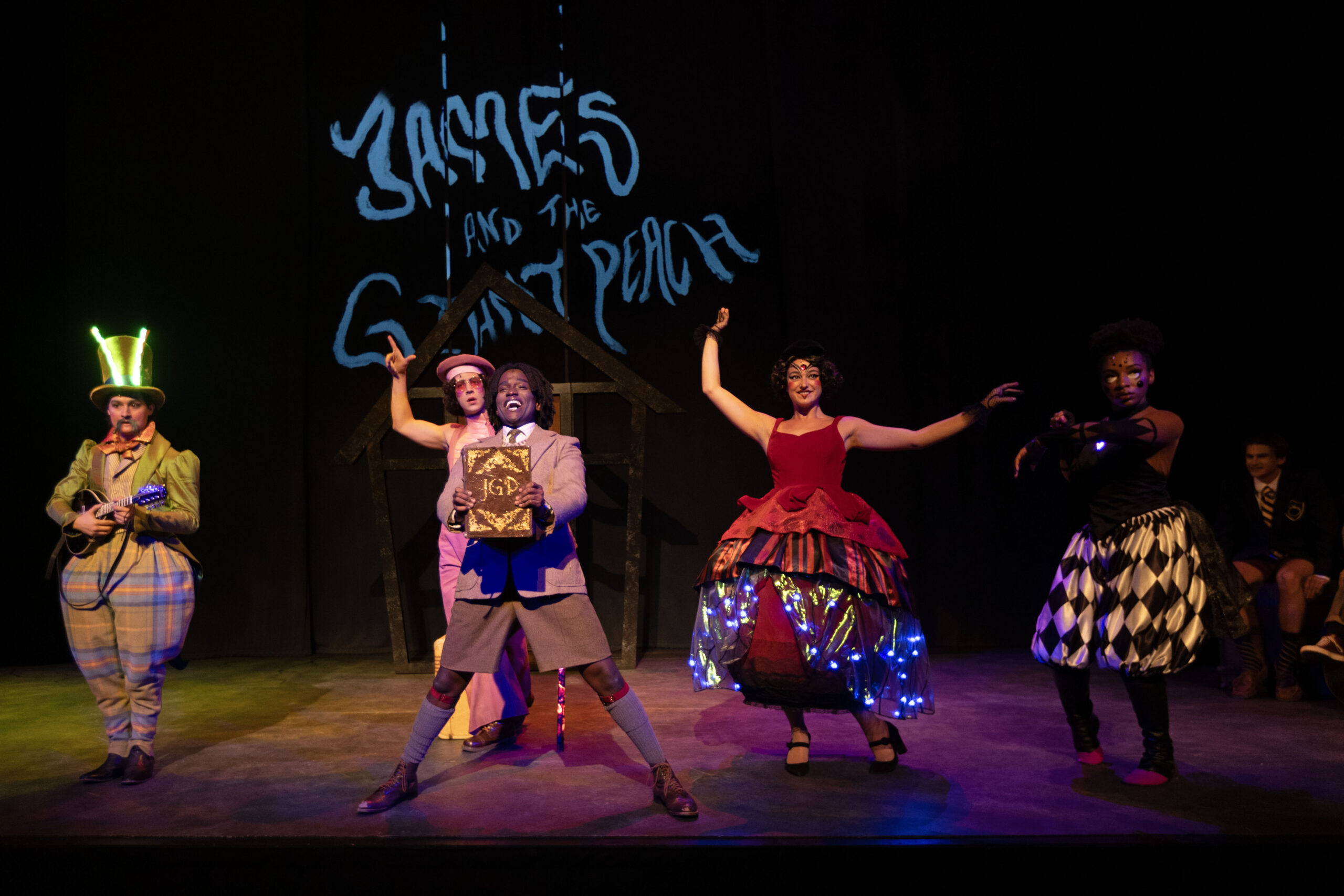
M.F.A. candidate and dramaturg Walker Zupan reflects on the importance of telling stories like James and the Giant Peach, which thoughtfully explore the challenging and beautiful truths of childhood –
Several years ago, while reflecting on his work as a children’s book author, Matt de la Peña asked: “How honest should we be with our readers? Is the job of the writer for the young to tell the truth or preserve innocence?”
As dramaturg for James and the Giant Peach, currently onstage at The University of Texas at Austin’s B. Iden Payne Theatre, I’ve found myself grappling with similar questions. In particular, I’ve wondered: How much should we emphasize some of the darker elements of this classic Roald Dahl story? Does telling the truth and tending to the experience of our young audience members with sensitivity and care exist in contradiction?