Category Archives: All

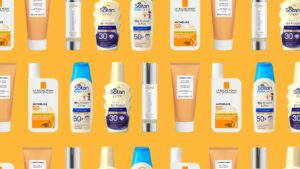
Does higher SPF Sunscreen Provide Greater Sun Protection?

Image from wired.co.uk.com

Oishika Das

With beach season at its peak, wearing sunscreen can protect your skin from harm related to UV radiation. Sunscreens come in various strengths from Sun Protection Factor (SPF) 5 to SPFs over 100. But do sunscreens with higher SPFs actually provide more protection from the sun? 

There are two types of UV radiation produced by the sun: UVA and UVB. UVB causes sunburns and skin cancer while its counterpart UVA infiltrates into deeper skin and induces changes in the skin associated with aging such as increased wrinkles, age spots, and pigmentation. Broad-spectrum blocking sunscreen provides protection against both forms of UV radiation but the Sun Protection Factor (SPF) of a sunscreen refers to how well a sunscreen can protect your skin from UVB. SPF can be thought of as a factor of how much longer it will take your skin to burn than without sunscreen. For example, applying SPF-15 sunscreen means that your skin will take 15 times longer to burn than if you were not wearing sunscreen. 

However, as SPF increases, the benefit decreases, ultimately plateauing at SPFs higher than 50. SPF-15 sunscreen stops approximately 93% of radiation from getting into your skin, SPF-30 stops 97%, and SPF-50 can protect you from 98%. No sunscreen can stop 100% of UV radiation so there isn’t a big difference between using SPF-50 and SPF-100 sunscreen. 

In fact, there can even be diminishing returns from using sunscreen with high SPFs. Higher SPF products usually contain higher concentrations of chemicals that may be associated with potential side effects, such as hormonal imbalance, since there is some level of skin penetration. In fact, the FDA has stated that high SPF sunscreens are misleading, providing a false sense of security without data showing any greater advantage of high SPFs. 

Medical professionals recommend sticking to sunscreen from SPF-15 to SPF-50 while having fun at the beach. Regardless of the SPF you choose, make sure to reapply sunscreen every two hours to stay safe and healthy in the Sun!


https://www.livescience.com/32666-how-does-sunscreen-work.htmlhttps://www.ewg.org/sunscreen/report/whats-wrong-with-high-spf/https://www.fda.gov/news-events/press-announcements/fda-advances-new-proposed-regulation-make-sure-sunscreens-are-safe-and-effective

https://www.fda.gov/drugs/understanding-over-counter-medicines/sunscreen-how-help-protect-your-skin-sun

Does drinking eight glasses of water a day have health benefits?

Image from aces.edu

Emily Samson

About 60 to 75% of your body weight is made up of water, and water has an important role in maintaining vital bodily functions. For example, water is essential for digestion, joint lubrication, nutrient absorption, and much more. Since your body loses water through things like breathing, sweating, and urinating, it is important to replenish your water supply to keep your body functioning properly. So, how much water do you need to drink daily to keep your body functioning properly? 

You might have heard of the 8×8 rule, a theory that drinking 8 eight-ounce glasses of water a day has health benefits. This equates to drinking a little more than half a gallon daily. However, there is no evidence to support that 8 eight-ounce glasses of water is an ideal amount of water intake, and it is unclear where the rule originated. The amount of water that is healthy for a person to drink daily may vary by body weight, environmental temperature, and physical activity levels.

One proposed benefit of drinking excess water is for appetite suppression. One study found that young men who drank 2 glasses of water before meals ate 22% less than those who did not. However, another study found that drinking water before eating only reduced meal consumption in older adults, not younger adults. It’s not clear that drinking water can play a role in appetite suppression and more experimental evidence is needed. Other proposed benefits of drinking excess water are an improvement in skin complexion or reductions in the intensity of headaches, but these claims are not supported with experimental evidence. 

Our bodies are designed to make sure we have enough water. Most water absorption happens in the kidneys. Within seconds, the kidneys can make molecular adjustments to increase or decrease water absorption. For example, if you drink more water than your body needs, you pee out the excess water. On the other hand, if you drink less water than your body needs, your kidneys conserve water and signal your brain to make you feel thirsty. The kidneys help adjust water levels based on the body’s needs. There is no single answer for how much water is healthy to drink daily. However, your water intake is likely adequate if you rarely feel thirsty and if your urine is colorless or a light yellow. 

https://www.mayoclinic.org/healthy-lifestyle/nutrition-and-healthy-eating/in-depth/water/art-20044256#:~:text=The%20U.S.%20National%20Academies%20of,fluids%20a%20day%20for%20women

https://www.mdlinx.com/article/8-glasses-of-water-a-day-myth-or-medicine/lfc-2814

https://www.mdpi.com/2072-6643/11/1/70/htm


Toy Safety

Second-hand toys contain 'surprising' levels of toxic chemicals

Image from medicalnewstoday.com

Prachi Shah

Believe it or not, summer is just around the corner. For many families, the end of the school year means that kids will be spending more time playing, often with toys made of various plastics. Plastics are safely used in countless household items, but recently, many people have begun to voice health concerns regarding their use. Let’s look at what the evidence says.  

One material that is a focus of concern is bisphenol A, commonly known as BPA. Concerns about BPA arose when a 1930’s researcher searching for an artificial estrogen found that BPA shared many of the properties of estrogen. In the late 1990’s, BPA was discovered to be leaching out of plastics when researchers in a lab at Stanford noticed cell cultures in plastic containers reacting as if they had been treated with estrogen. Some have suggested that BPA in low doses may be linked to a number of health effects, such as changes in thyroid function and fertility, birth defects, and others. However, the amount and quality of evidence supporting these theories is limited.   

Phthalates are another class of chemicals that have recently been considered. Since the 1920’s, phthalates have been added to plastics in order to increase flexibility, durability, and other desirable qualities. Some evidence suggests that these materials can come loose from the plastic that they were added to, leach into the surrounding area, and then be introduced into the body through diet. Other studies seem to show that high levels of phthalate exposure in utero could be associated with birth defects such as shorter gestation (pregnancy) period, motor deficits in females, disrupted male reproductive development, and other deficits. Regulatory agencies, such as the US Environmental Protection Agency (EPA) and the US Food and Drug Administration (FDA), now require warnings on products that contain phthalates. Furthermore, regulations and bans on the various uses of phthalates have been passed across North America and Europe.

Lastly, the summer season often comes with hours spent playing in the water, often with squeezable plastic toys such as a rubber duck (which may also be used in the bath). These toys, often stored in dark, damp areas such as a bathroom, are prime environments for the growth of microbes. This microbial growth can develop into what is known as a biofilm– an aggregation of microbes held together by a slimy, secreted matrix of polymers. When the child squeezes the toy to eject the water, the bacteria are expelled as well. Exposure to pathogens early in life can help strengthen a child’s immune system. However, pathogens (including some of those shown to grow in rubber duck biofilms) can potentially also infect children, especially through mucus membranes such as the eyes, ears, nose, or mouth. This infection can lead to diarrhea, meningitis, urinary tract infections, and other symptoms.  

These risks are small and are often mediated by other factors, meaning that overall, these toys should not be considered dangerous for use. For example, older toys tend to be higher risk for dangerous substances. In order to mitigate the risks of overexposure to these chemicals, some researchers have begun developing and advocating for a more clear labeling system and a standardization of materials used in children’s toys. In the meantime, however, cleaning toys regularly can be a great precaution to take.

https://www.healthline.com/nutrition/what-is-bpa

https://www.cdc.gov/biomonitoring/Phthalates_FactSheet.html

https://www.sciencedaily.com/releases/2020/01/200106122033.htm

https://www.sciencedaily.com/releases/2018/03/180327111404.htm

https://www.sciencedaily.com/releases/2018/01/180126085435.htm

https://www.sciencedaily.com/releases/2021/02/210222124552.htm

https://www.ncbi.nlm.nih.gov/pmc/articles/PMC3919369/#:~:text=It%20has%20been%20reported%20to,infections%20%2C%20urinary%20tract%20infections%20etc.

https://www.nature.com/articles/s41522-018-0050-9#Sec2

https://www.ecocenter.org/healthy-stuff/reports/vinyl-floor-tiles/flooring_phthalate_hazards

https://www.ewg.org/research/timeline-bpa-invention-phase-out