Category Archives: All

Exercise for Mental Health 

8 proven ways exercise makes you happier - Healthista

Image from healthista.com 

Emily Samson

As most people know, exercise is great for your body. It can improve physical health, tone your physique, and provide protection against many health conditions such as cardiovascular disease, stroke, and diabetes. But how often do you consider the mental health benefits of physical exercise? It has been shown to reduce stress and ease the symptoms of depression, anxiety, and ADHD. It can also help increase focus, enhance memory, improve sleep, and boost your overall mood.

 Exercise is a great tool for a mental health boost for a number of reasons. Firstly, exercise releases proteins called “endorphins” that bind opioid receptors, reduce pain and boost pleasure. This creates relaxed and positive feelings that give people a sense of well-being. Exercise also stimulates the brain by increasing oxygenation, promoting the growth of neurons, and allowing for increased neuronal connections.

 Getting the mental health boost that comes from exercising doesn’t mean you need to sweat for hours at the gym or run mile after mile every day. Research shows that modest amounts of exercise – no matter your age or fitness level – can make a difference in your mental health. Thirty minutes of moderate activity five times a week is all you need to get a mental health boost. The 30 minutes can also be broken up in two 15-minute workouts or three 10-minute workouts.

 There is no need to force yourself into long, monotonous workouts to get the benefits of exercising. Playing a sport for fun, taking a dance class, or walking around your neighborhood can work just as well. Even a few minutes of physical activity per day is better for your mental and physical health than none! 

https://www.healthline.com/health/endorphins

https://www.helpguide.org/articles/healthy-living/the-mental-health-benefits-of-exercise.htm#:~:text=Regular%20exercise%20can%20have%20a,fanatic%20to%20reap%20the%20benefits

https://www.scientificamerican.com/article/how-exercise-affects-your-brain/#:~:text=Exercise%20affects%20the%20brain%20in,the%20growth%20of%20brain%20cells.

Menstrual Myths

How to Induce a Period: 13 Natural Methods and Myths

Image from greatist.com

Prachi Shah

It’s a story passed from word of mouth, across households, generations and countries. Young people, often young women with an important event coming up, are told to eat certain foods to induce or delay their menstrual period in order to make sure that it doesn’t coincide with a birthday, religious occasion, or other event. Plants and herbs such as turmeric, mangoes, pineapple, and papaya have been touted for centuries as natural ways to encourage the early onset of a menstrual period. However, the evidence regarding these herbal treatments, known as emmenagogues, is often strictly anecdotal, and is often contradictory. 

A menstrual period is the culmination of the body’s roughly 28 day reproductive cycle. The cycle begins with the maturation of an ovum, or egg, which is then released into the body. Over the next few weeks, the endometrium (thick lining of the uterus) thickens. The cycle culminates with the shedding of this lining through the vagina, which is known as the menstrual period. The menstrual period is regulated largely by hormones such as estrogen and progesterone, among others. When these hormones are not present in the correct ratios, it can result in irregular periods, which may lead someone to seek out natural remedies to induce it. 

Anecdotes claim that foods such as citrus, berries, spinach, and tomatoes bring on a period through the increased intake of vitamin C (ascorbic acid), based on the rationale that this will have a hormone-like action that induces uterine contraction and a subsequent shedding of uterine lining. There are several hypotheses that need testing in theories like this. Other foods such as turmeric or pineapple supposedly induce periods by affecting levels of estrogen and progesterone (hormones that regulate the menstrual cycle) in the body. Unfortunately, there is little scientific evidence to support these concepts. Additionally, a few of these recommended herbal remedies, such as dong quai and parsley, can be toxic in high quantities or when children are exposed; therefore, they should be used in moderation. 

Aside from eating particular foods, there are some other suggested methods to help relieve irregular or painful periods. Exercise has been proved to help relieve menstrual pain. However, excessive exercise can delay or temporarily stop one’s menstrual cycle as can eating disorders or prolonged stress. People who seek regular periods may choose to participate in light/moderate exercise and relaxation techniques.

At the end of the day, the only reliable, scientifically proven method to fully control one’s period is hormonal birth control, which needs to be prescribed by a medical professional. 

https://www.healthline.com/health/womens-health/induce-period#natural-treatments

https://www.mountsinai.org/health-library/herb/dong-quai

https://www.sciencedirect.com/topics/medicine-and-dentistry/apiol

https://www.sciencedirect.com/topics/neuroscience/abortifacients

https://www.medicalnewstoday.com/articles/324830#inducing-a-period

https://www.sciencedirect.com/science/article/abs/pii/S2095496417603480

Coronavirus and the Loneliness Epidemic

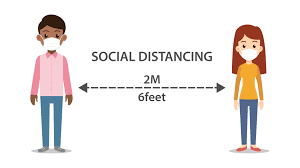
Mask-Wearing/Social Distancing for People who are Deaf/Hard of ...

Image from bridgesrc.org

Eva Patel

From football games to in-person classes to family barbeques, the coronavirus pandemic has transformed our social lives.

At the end of March, when the United States had approximately 20,000 cases a day, 44% of Americans said their life had changed in a major way. In 2017, Vivek Murthy, the past U.S. Surgeon General, described loneliness as a major public health issue in the US. A January 2020 report from Cigna also reported that 60% of Americans over 18 felt lonely — the highest level of loneliness in American history. Coronavirus might make the  loneliness epidemic worse. Social distancing — which is proved to slow the spread of coronavirus and help flatten the curve — might also feed into America’s loneliness epidemic. And although loneliness is defined more by a lack of meaningful social connection than simply face-to-face interactions, a 2018 Cigna study shows that those who have daily in-person interactions are 38% more likely to say their overall mental and physical health is good compared to those who never have in-person interactions. 

Older adults are at an increased risk for loneliness, and as the highest at-risk group for coronavirus, they are also more likely to follow stricter social distancing guidelines, contributing to isolation. Loneliness has some concrete health risks, such as premature death, suicide, depression, heart disease, and stroke. Although loneliness is not something strictly defined by DSM-5, it is an increasingly recognized aspect of health. Many mental health experts advocate for the term “physical distancing”. Social distancing implies disconnecting from friends, family, and support networks at a time when these support networks are most needed.  

https://www.bbc.com/worklife/article/20200408-coronavirus-how-lockdown-helps-those-who-fear-the-phone

https://www.cdc.gov/aging/publications/features/lonely-older-adults.html

https://www.nbcnews.com/think/amp/ncna945446 

https://www.psychologytoday.com/us/blog/cutting-edge-leadership/202004/unfortunate-allies-the-coronavirus-and-loneliness

https://www.pewsocialtrends.org/2020/03/30/most-americans-say-coronavirus-outbreak-has-impacted-their-lives/

https://time.com/5833681/loneliness-covid-19/