
By Kirsten Cather, Professor of Asian Studies, University of Texas at Austin
***
This piece by Kirsten Cather is a part of the WPS Special Series on "Disarming Toxic Empire." This paper is a revised version of a talk delivered at the  Rapoport Center's Disarming Toxic Empire conference in Spring 2024.

Through “Disarming Toxic Empire,” the Rapoport Center and its partners and co-sponsors fostered an interdisciplinary, intergenerational, and international approach to nuclear weapons, waste, extraction, and energy. Conference participants—scholars, artists, advocates, and activists—considered and contested the unjust, imperial histories and geographies of nuclear testing, production, storage, and weaponry through channels of intergenerational memory and action. Through this Special Series of the Rapoport Center’s Working Paper Series, participants in the conference were invited to publish their remarks or papers based on their remarks, with short responses by graduate students part of the Rapoport Center’s Working Paper Series editorial committee. These exceptional pieces capture the critical insight and clarity that were a common feature of contributions to the conference. Considering sites ranging from the Navajo Nation and the Pacific Islands to Japan, North Africa, and Ghana, their exciting interventions showcase the breadth and depth of work considering “toxic empire” that is taking place at the University of Texas at Austin and around the world. To watch the conference presentations, visit the “Disarming Toxic Empire” playlist on YouTube.
***
Kirsten Cather is Professor in the Department of Asian Studies at UT Austin who teaches Japanese literature, film, and culture. Her research and teaching tackle morally and politically sensitive topics, such as the landmark criminal trials surrounding “obscene” (waisetsu) works of art in her first book The Art of Censorship in Postwar Japan (University of Hawai‘i Press, 2012) and, in her second monograph Scripting Suicide in Japan (University of California Press, 2024), the question of how and why individuals write and read in the face of suicide.
***
I begin with a confession. I’m a worrier. Thus, the title of my talk: “How I Learned to Keep Worrying and Teach the Bomb.” After first proposing this title to the organizers of the Disarming Toxic Empire Conference, I worried it might sound too flippant. (Afterward, I also realized that the allusion was largely lost on my current-day students who were unfamiliar with Kubrick’s 1964 Dr. Strangelove, and I worried all the more.) Yet, the title remains for it captures the dilemma I have faced over the years: how to teach “the Bomb” – and also, crucially, how not to teach it—to students today.
I come at this topic from the perspective of someone teaching this subject in the context of Japanese literature, film, history, and culture classes. I start by sharing an unremitting disaster of a teaching experience from about fifteen years ago.
It happened while I was teaching “Introduction to Japan” early on in my career. This large, lower-division survey is tasked with the rather difficult project of somehow capturing the whole of “Japan” across all time. It gets a wide range of students, some who cannot identify Japan on a world map on day one, while others are Japanese or Asian Studies majors and have already taken advanced courses in Japanese politics, history, language, etc. No unit proved more difficult than the short weeklong section on the atomic bomb.
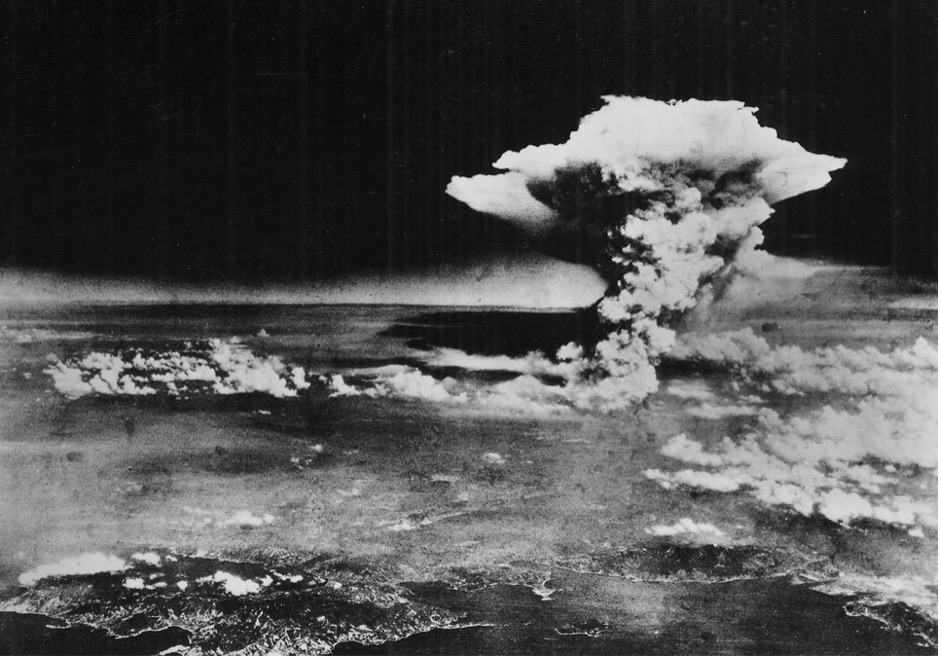

Fig. 1: The iconic mushroom clouds over Hiroshima (left) and Nagasaki (right)
On the first day of our discussion of the A-bomb, I used a series of slides like the above. I started with the iconic photos of the mushroom clouds, juxtaposing oft-forgotten Nagasaki beside Hiroshima (Fig. 1),[1] then cut to what I’ve always found to be a disturbing photo, which simultaneously humanizes and dehumanizes the bomb by capturing its human agents, young men posed for a photo in front of the B-29 the “Enola Gay,” named after the pilot’s mother (Fig. 2).
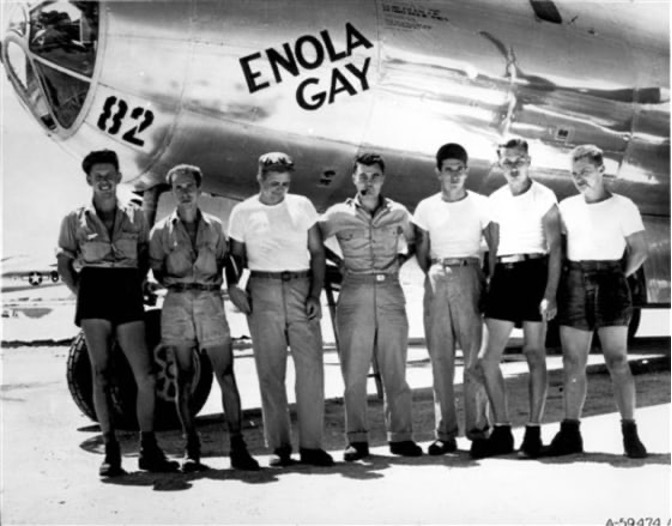
Fig. 2: The crew of the Enola Gay B29 bomber poses before the bombing of Hiroshima, Japan, on
Aug. 6, 1945. Colonel Paul Tibbets at center. Credit: U.S. Army Air Force via AP.
Then I shifted to scenes of the destruction wrought by the bomb: moving from aerial views of Hiroshima pre- and post-attack to photos on the ground with this iconic shot of the sole building remaining in the city center as the Atomic Bomb Dome (Genbaku Dōmu), or what is called in English the Hiroshima Peace Memorial (Fig. 3). As of 1950, this became a designated historical site that was to be preserved forevermore. As the original Japanese suggests, the dome was to re-present the bomb itself in some tangible form, whereas the English-language translation pointedly rebrands it as an embodiment of peace.
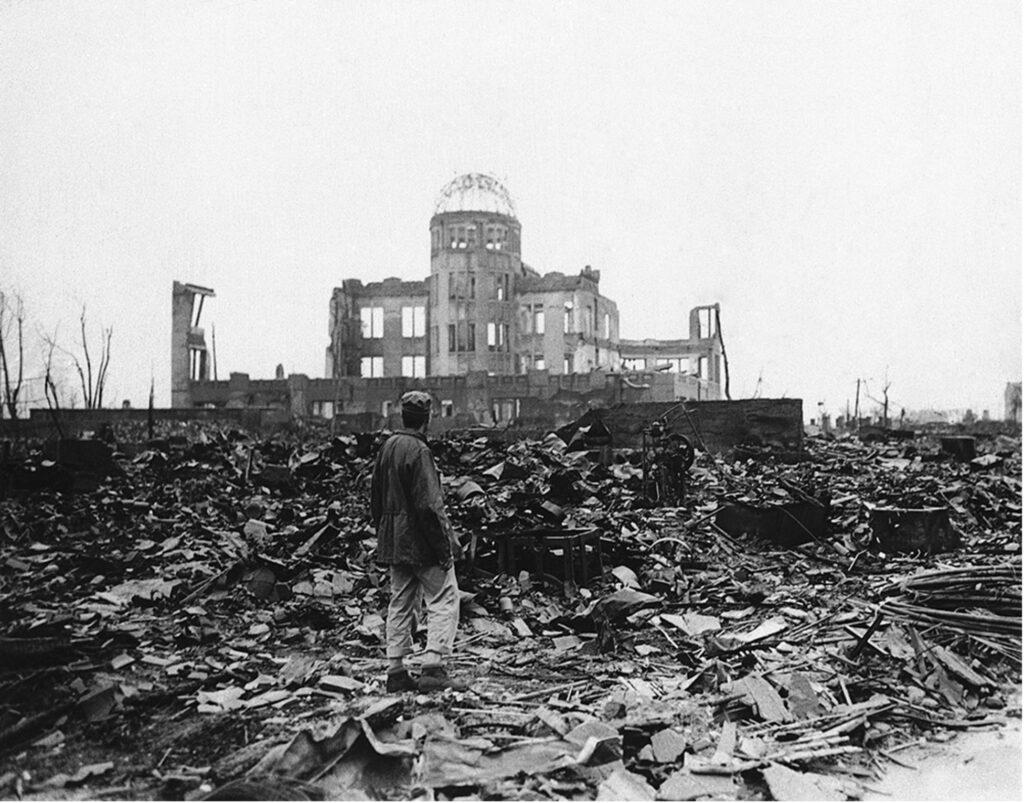
Fig. 3: The Atomic Bomb Dome (Genbaku Dōmu), aka the Hiroshima Peace Memorial
There are many similar photos of this ravaged landscape, but I always preferred to use this shot with the man in the foreground for I thought it helped suggest both the enormous scale and the human cost. I recently discovered the man in the foreground is not a Japanese survivor like I’d thought, but instead an allied war correspondent. Perhaps, one might think, this detail does not matter all that much. But perhaps, as I’ll argue below, it matters deeply.
I tried to supplement these photos with statistics about how many died and how much of the cities were devastated by the blasts (although these figures vary wildly depending on their source, with, for example, death estimates anywhere from 70,000 to over double that number at Hiroshima).[2] I’d discuss with my students both the enormity of the instantaneous destruction and the terrifying, long-lasting effects carried by the bomb’s victims, or hibakusha – a neologism coined to capture the effects of this new kind of bomb: 被爆者, or Victim-Bomb-Person.
In the hopes of getting my students also to think through how Japanese people on the ground who were not in Hiroshima may have first encountered or come to know about the bomb, I cited U.S. propaganda leaflets, ones that threatened utter destruction unless Japan surrenders and callously point to Hiroshima as Exhibit A (Fig. 4) in its caption that reads:
TO THE JAPANESE PEOPLE:
America asks that you take immediate heed of what we say on this leaflet.
We are in possession of the most destructive explosive ever devised by man. A single one of our newly developed atomic bombs is actually the equivalent in explosive power to what 2000 of our giant B-29s can carry on a single mission. This awful fact is one for you to ponder and we solemnly assure you it is grimly accurate.
We have just begun to use this weapon against your homeland. If you still have any doubt, make inquiry as to what happened to Hiroshima when just one atomic bomb fell on that city.[3]
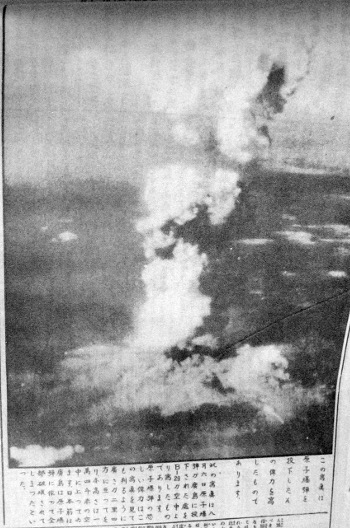
Fig. 4: Hiroshima leaflets belatedly dropped on the Japanese, August 10, 1945, one day after the atomic bombing of Nagasaki
To conclude, I showed the iconic shot of the single Shinto torii gate remaining after the bombing of Nagasaki on August 9th, and, finally, cited the Imperial Rescript on Surrender of August 15, 1945, which included yet another depiction of the bomb:
To our good and loyal subjects:After pondering deeply the general trends of the world and the actual conditions obtaining to our empire today, …we have ordered our government to communicate to the governments of the United States, Great Britain, China, and the Soviet Union that our empire accepts the provisions of their Joint Declaration. …
[N]ow the war has lasted for nearly four years. Despite the best that has been done by everyone—the gallant fighting of the military and naval forces, the diligence and assiduity of our servants of the state, and the devoted service of our 100 million people—the war situation has developed not necessarily to Japan’s advantage, while the general trends of the world have all turned against her interest.
Moreover, the enemy has begun to employ a new and most cruel bomb, the power of which to damage is indeed incalculable, taking the toll of many innocent lives.
Should we continue to fight, it would not only result in an ultimate collapse and obliteration of the Japanese nation, but also it would lead to the total extinction of human civilization.[4]
Notably here, this “new and most cruel bomb,” dropped by an unnamed “enemy” carries dire implications not only for the Japanese nation but for all “human civilization.”
At the end of class, I finished with images that I hoped could suggest how the bomb made time stand still in these places – literally at times – and, also, how time moves on in both Hiroshima and Nagasaki (Fig. 5).
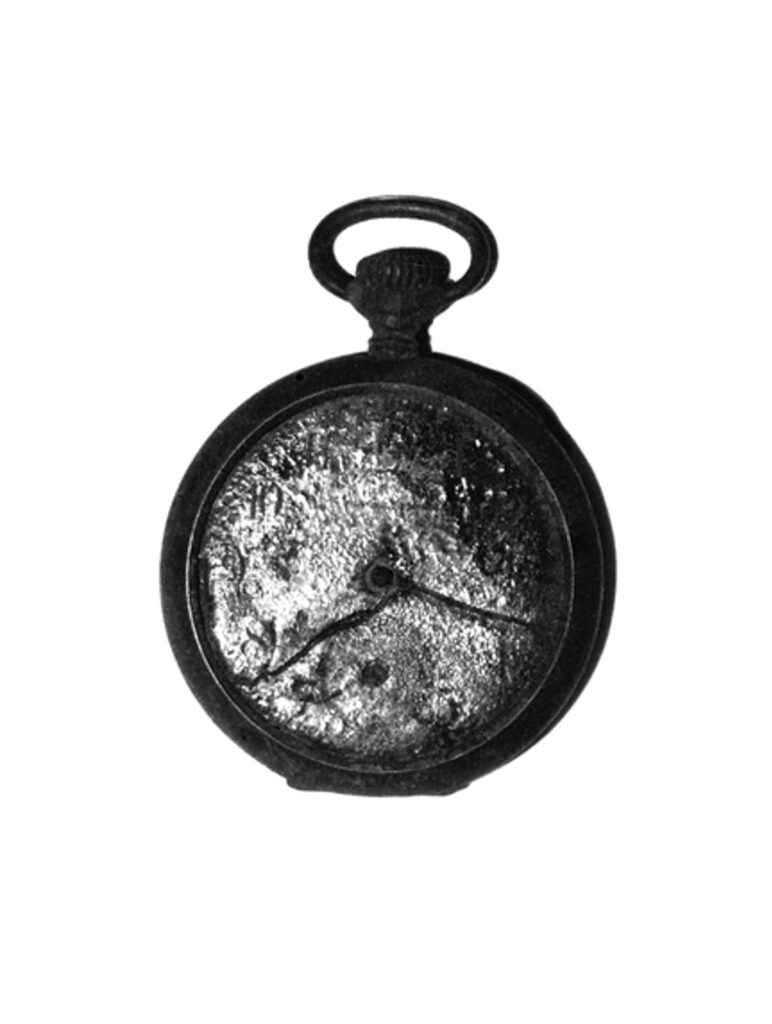
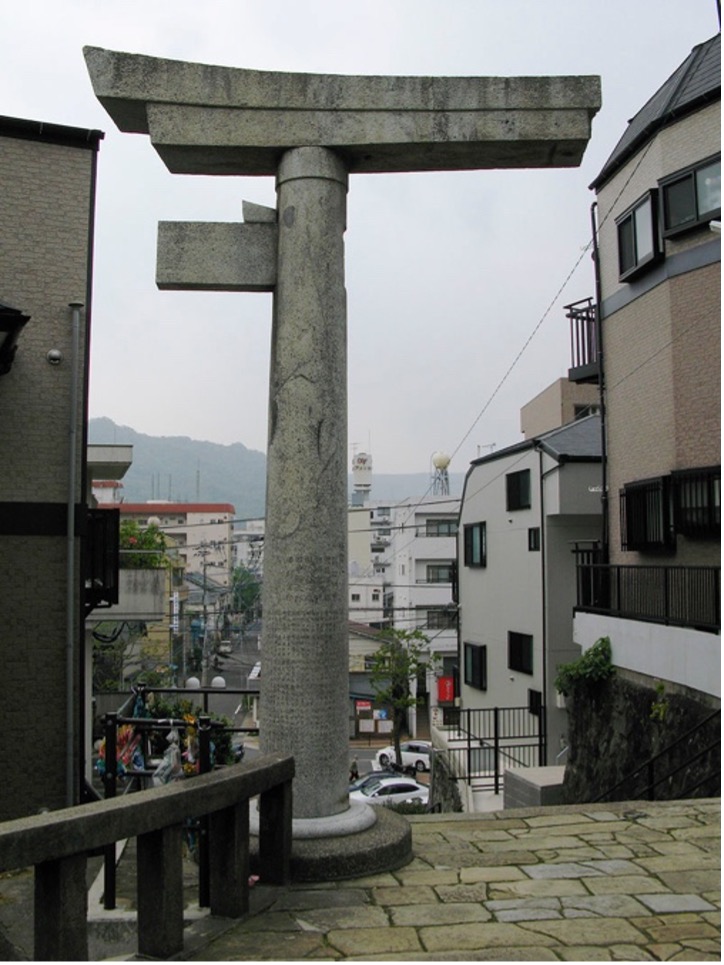

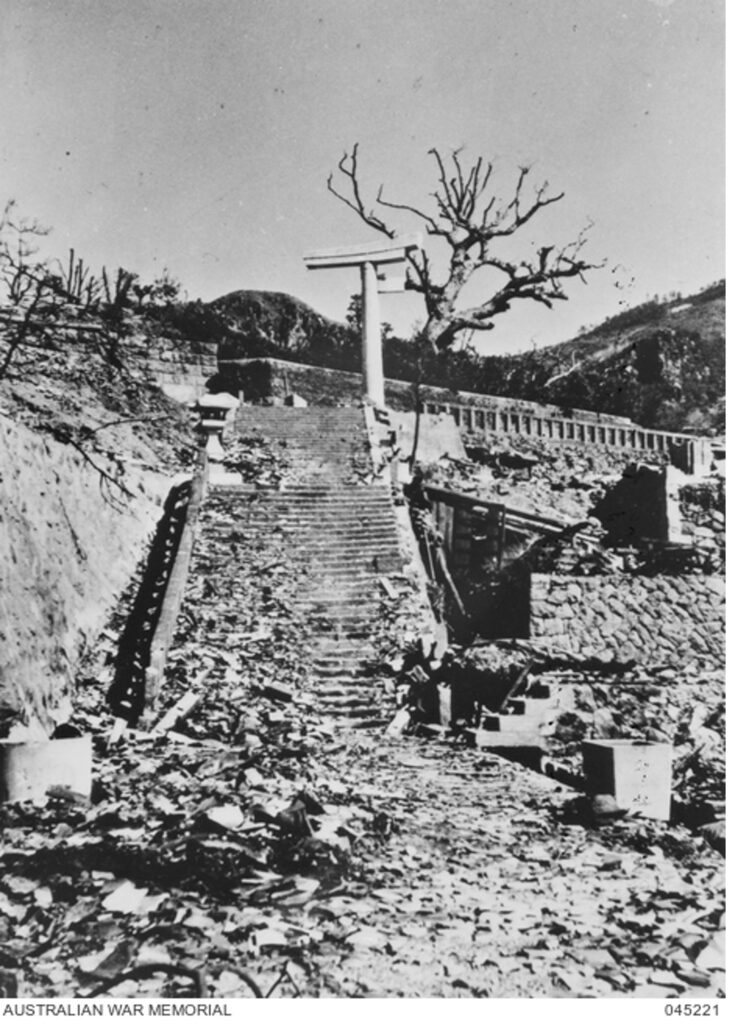
Fig. 5: Time standing still and moving on in Hiroshima and Nagasaki[5]
And I ended with those all-too-familiar iconic mushroom clouds, yet again.
What followed this PPT presentation was an utter disaster of a teaching experience: a very lengthy and heated debate among students over whether it was “right” to drop the bomb or not. Some in the class quoted secret government documents, statistics, facts, while others tried to impress the physical and emotional horrors of the bomb on their classmates. Many sweeping generalizations were made about both “the Japanese” and “America” (a noteworthy linguistic distinction where students point only to a geographic bond/boundary uniting their own country while aggregating a foreign nation’s entire people into one coherent indistinguishable mass). In the end, it left them divided and me worrying. I knew I’d set this class up for failure. Both the students and I were unequipped to debate this matter, and for my part, uninterested in doing so in this way.
The bar was set low for how not to teach the bomb.
My pedagogy needed a major rethinking.[6] Over the years, I have continued to experiment with new ways to teach this topic in ways that hopefully enable me and my students to go beyond any stark black-and-white polarizing vision of “the bomb,” a misnomer that itself suggests the inadequacy of any such re-presentations. As if language or image or numbers could capture it; as if there were only one bomb; as if that were the end of the story.
The use (and abuse) value of Gojira v. Godzilla, King of the Monsters!
I’ve had better success teaching the bombs in the context of my upper-division class called “Genji to Godzilla, Adaptations of the Japanese Classics.” With this class, the point is to think through how cultural productions travel across time and place in the form of adaptations. While the original Gojira – a black and white somber subtitled film from 1954 – does not always thrill students, comparing and contrasting it with the 1956 Hollywood remake Godzilla, King of the Monsters! never fails.[7]
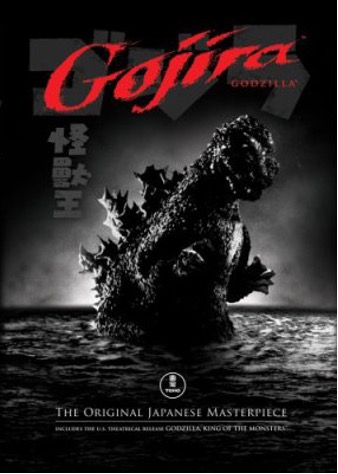
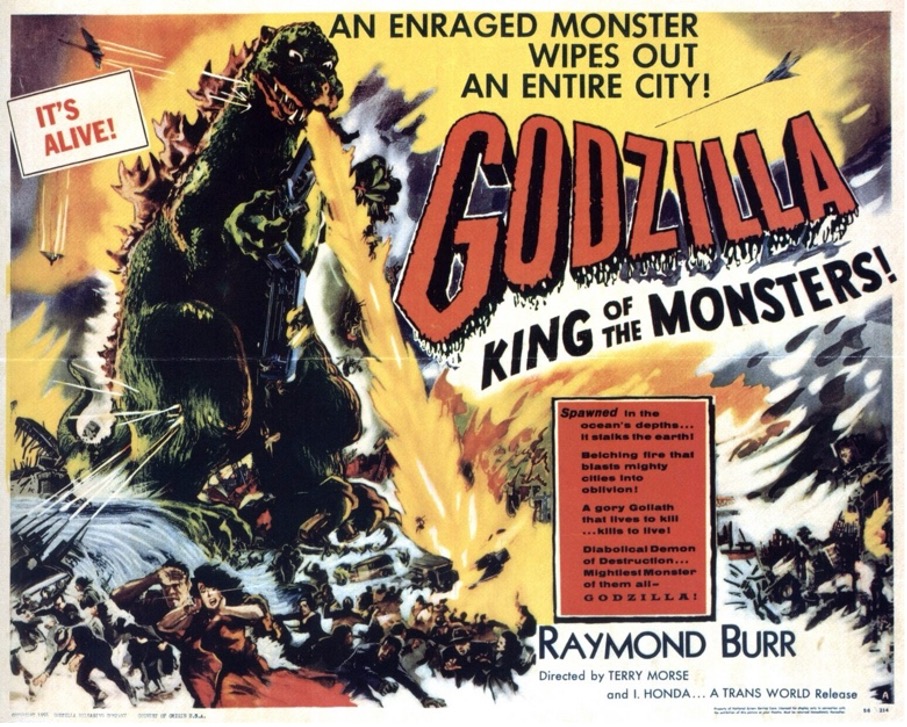
Fig. 6: Gojira (1954) v. Godzilla, King of the Monsters! (1956)
Admittedly, calling this film a “remake” is a bit of a misnomer. In what could be called a brilliant marketing feat or highly unethical plagiarism, the Hollywood filmmakers basically, but selectively, used footage from director Honda Ishirō’s original film while intersplicing scenes that put Raymond Burr – as United World News reporter Steve Martin – at the center of all the action and all the moral decision-making about whether and how to kill Godzilla.

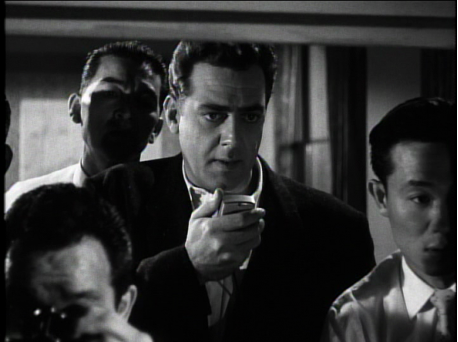


Fig. 7: United World News reporter Steve Martin at the center in Godzilla, King of the Monsters!
When I have students watch these films back-to-back, what they (and I) most enjoy is their outrage over this “self-insertion” of an American into the drama. The film’s racial politics and dubious dubbing practices are outrageous.
Juxtaposing the two films forces us to think about how the story of the bomb can and cannot be told in various contexts. In the adaptation, we see many moments of Japanese suffering muted at the expense of amplifying the danger that the bomb poses to all of the world. It is useful to recall here the rhetorical echoes with the emperor’s own surrender speech that invoked this universal good as well for it suggests the ways that sometimes the very same story can serve multiple audiences. Reframing victimhood at the hands of the agentless bomb as a universal danger enables both sides to conveniently forget acts of victimization. In the Hollywood version as well, the emphasis is on the dangers that the bomb poses to our representative stand-in for that world, our hunky American protagonist, who is, not coincidentally, a United World News reporter. To show just one example, take a scene that appears quite late in the original film after Godzilla’s attack on innocents. There, its point is to show how witnessing the suffering of innocent children and women spurs one of the Japanese heroes of the film – Emiko – to save the day.
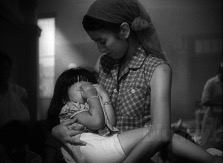

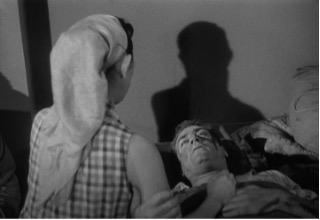
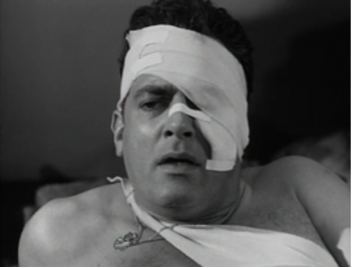
Fig. 8: Emiko, as witness and heroine in the face of Japanese suffering in Gojira, turning to White
Saviors (and Sufferers) in Godzilla, King of the Monster!
Fig. 9: Steve Martin to the rescue
By analyzing these two films back-to-back, we can see the difficult situation of “When ‘Them!’ is U.S.” – to borrow the fantastic title from Chon Noriega’s essay on the subject.[8] It is not just the question of who gets to be the hero that presents audiences with a problem, but the nature of the antagonist too. Godzilla, the monster, is a complicated figure in both films. He is both a victim, awakened from his slumber in his natural environs in the depths of the Pacific seas by H-bomb testing (pointedly, by an unnamed agent in both films), and an agent of destruction, wreaking havoc on innocent civilians. Simultaneously a victim and a victimizer embodied in monstrous form. The bivalent nature of this beast makes for a tricky film for students to understand. Each must be situated in the politics of what could and what could not be said about “the bomb” in cold war Japan and America respectively. As I discuss below, this requires a consideration of censorship provisions and prohibitions.
Godzilla is a useful pedagogical vehicle to keep some memory of the bomb alive, especially given its longevity, with many remakes and sequels that continue to adapt to nuclear crises today. But Godzilla also has its limits: the nature of the beast is not always immediately clear in these generic B-monster films, especially as audiences become more distant in time and space from the historical horror at its origins. In horror films, monsters often reflect contemporary societal anxieties, but when that local context shifts, the origins of the monster become obscured. In this case, the fact that Godzilla’s awakening is a direct result of U.S. 1954 hydrogen bomb testing in Bikini Atoll is conveniently forgotten. In the U.S., Godzilla is remembered as a Japanese icon of epic proportions, but as this 1985 news poll survey suggests, audience’s memory and knowledge may be incomplete. Respondents identified Emperor Hirohito and Bruce Lee (!) alongside Godzilla as the most famous Japanese they know.[9]
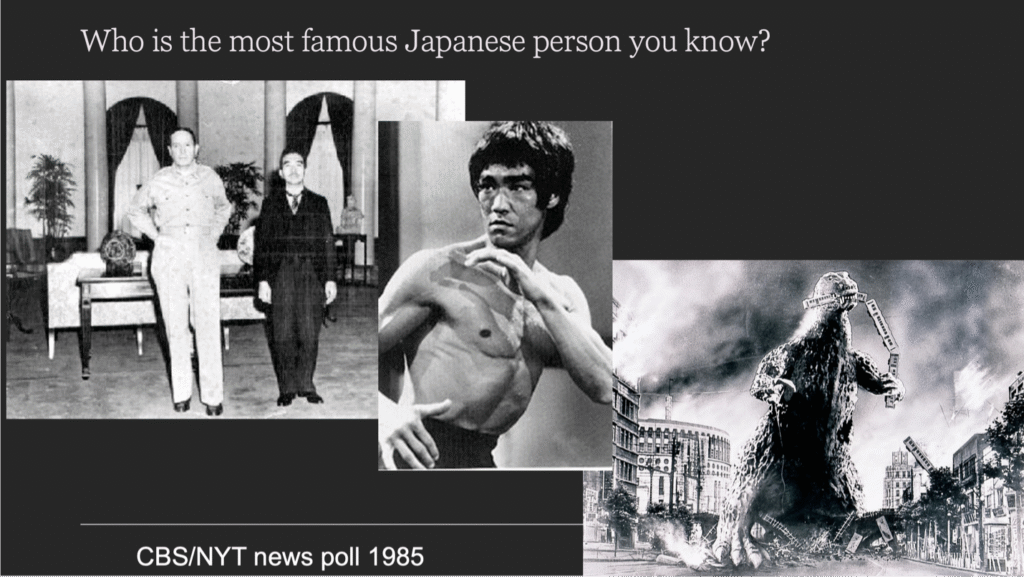
Fig. 10: A 1985 CBS/New York Times Poll of Americans
Banned in Japan: Using censorship of the X-XXX to teach the O-OOOO
Japan’s postwar Constitution opens with this unequivocal declaration of peace:
We, the Japanese people, acting through our duly elected representatives in the National Diet, determined we shall secure for ourselves and our posterity the fruits of peaceful cooperation with all nations and the blessings of liberty throughout this land, and resolved that never again shall we be visited with the horrors of war through the action of government.[10]
Known also as the MacArthur Constitution, this document was drafted by Occupation personnel (after Japanese-scripted drafts were deemed unacceptably conservative) and retranslated back into Japanese during a politically and linguistically fraught process that Kyoko Inoue has traced in her excellent monograph on the subject (Fig. 11).
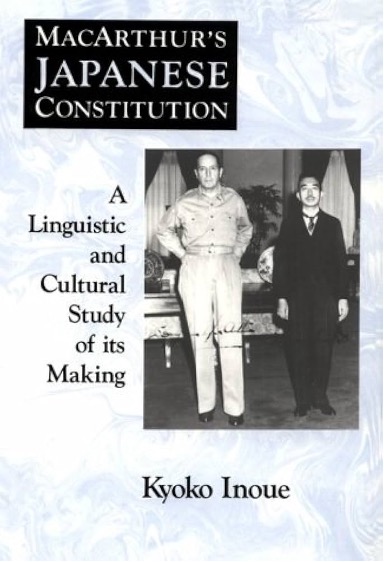
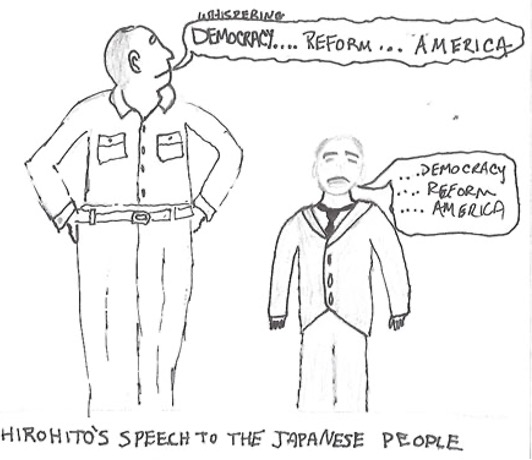
Fig. 11: MacArthur’s Constitution, puppets and puppeteers
As this highly curated newspaper photo and its satirical cartoon version suggest, after Japan’s defeat in WWII, ultimate authority now rest with the new cult figure of Douglas MacArthur as the Supreme Commander of Allied Powers (SCAP). Perhaps not entirely coincidentally, at times, he bears an uncanny resemblance to our erstwhile Godzilla hero Steve Martin.
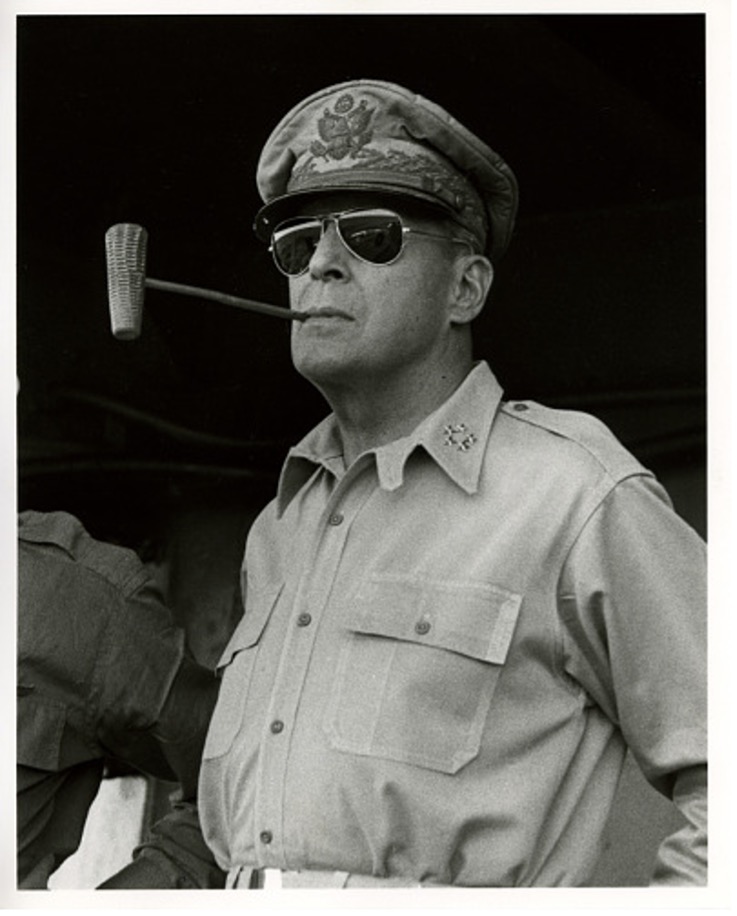
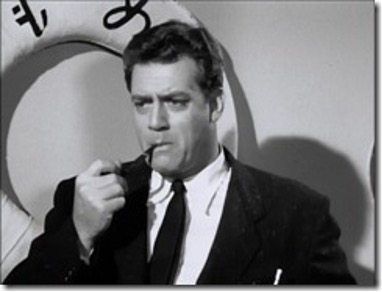
Fig. 12: MacArthur and Steve Martin, pipe-smoking heroes
The new postwar Constitution explicitly forbids censorship. Article 21 unambiguously states: “Freedom of expression is absolutely guaranteed. No censorship (ken’etsu) shall be maintained.” Censorship was to be abolished in law and in word, but not in practice. Although nominally censorship was to be relegated to a demonic fascistic prewar Japanese empire that had no part to play in a forward-looking democratic postwar nation state, it endured in Occupation-era Japan, and, equally unsurprisingly, endures still today.
Both Godzilla films (1954 and 1956) post-date the Occupation period, which on Japan’s mainland lasted from September 1945 through April 1952 (and on Okinawa officially lasted until 1972 with prominent U.S. military presence continuing today). Yet, interestingly, both films adhere to written and unwritten Occupation censorship policies regarding discussions of the atomic bomb.
As early as September 21, 1945, the Civil Censorship Detachment (CCD) issued a new Press Code (Fig. 13). As its preamble suggests, censorship was being instituted, paradoxically, in the name of freedom of expression, but could not itself be named. The word “censorship” is studiously avoided here:
This PRESS CODE, rather than being one of restrictions of the Press, is one which is designed to educate the press of the Japanese in the responsibilities and meaning of the free press.
It’s not hard to read into this Press Code to intuit that discussions of the atomic bombs would be prohibited whether out of fear of “directly or indirectly, disturb[ing] public tranquility” (item #2) or of construing “destructive criticism of the Allied Occupation…that might invite mistrust or resentment of those troops” (item #4). But I would stress the conspicuous absence of any mention of the A-bomb here, or even in the Occupation censors’ own internal guidelines, as seen in the detailed (and highly repetitive) 31 Key Log Categories from June 1946 (Fig. 13). The forced invisibility of any regulations surrounding the atomic bomb left authors at sea trying to discern the unwritten rules.
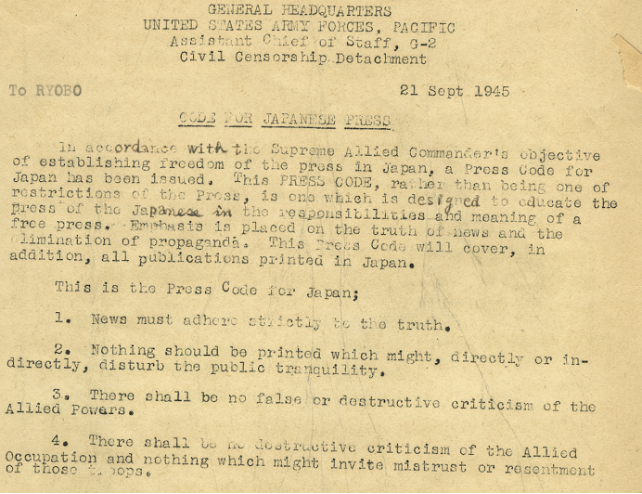
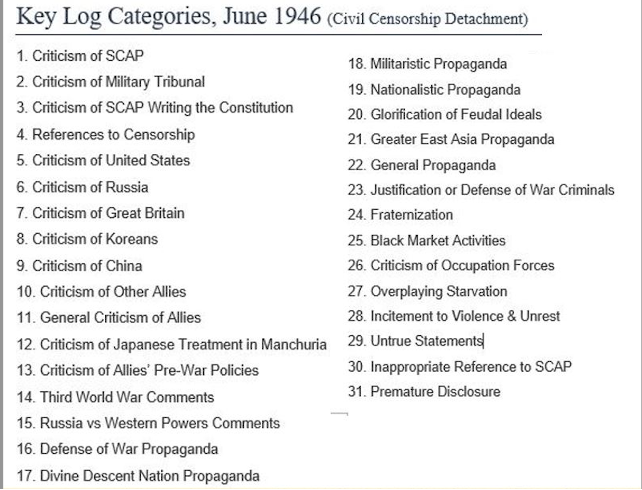
Fig. 13: Civil Censorship Detachment (CCD) Press Code and Key Log Categories
Credit: Gordon W. Prange Collection, University of Maryland.
Ōta Yōko was one such author whose experiences trying to publish her own harrowing first-person account of the bomb suggest the many written and unwritten rules of censorship. Ōta survived the August 6, 1945 atomic bomb in Hiroshima where she had taken refuge after evacuating firebombed Tokyo for her hometown of Kushima. Over a four-month period, she scrambled to write an account that she titled City of Corpses (Shikabane no machi) while living in fear that she would die of radiation poisoning. She produced over 350 manuscript pages scraped from available materials, including shōji wall papering, food wrappers, and toilet paper, finishing the manuscript in November 1945.[11] Sometime in 1946, she sent her handwritten copy to her regional Occupation censorship office in Kokura, Kyushu only to hear back that she had not submitted the required two copies. In Winter 1947, she was visited by a US Army intelligence officer with a translator in tow. They interrogated her as follows, according to an account she published in May 1953 (her dialogue and interior monologue appears in italics below):
Q: Apart from you yourself, who has read the manuscript of your book?
A: Only me before I sent it off to the publisher in Tokyo. I received a letter from Mr. E. of the editorial staff, so he must have read it.
Q: What are Mr. E’s ideas and politics? What Japanese political party does he belong to?
A: He is a liberal. I don’t know him personally, so I can’t say; but to go by the past habits of Japanese intellectuals, he probably doesn’t belong to any political party.
Q: Aside from [any] Japanese, has any foreigner read the manuscript?
A: No. No foreigner has read it.
…
Q: Since August 6, have you walked through Hiroshima?
A: Yes.
Q: At that time, were you in the company of foreigners?
A: No.
Q: Did you write in your manuscript about any atomic bomb secrets?”
A: No. I don’t know any atomic bomb secrets. What I wrote about was simply what the city of Hiroshima and the people in it experienced.
Q: I want you to forget your memories of the atomic bomb. America won’t use the atomic bomb again, so I want you to forget the events in Hiroshima.
A: I don’t think I can forget. Even if I wanted to forget, I couldn’t.
Midway through their conversation, Ōta turns the tables and questions the officer about Occupation censorship standards surrounding the A-bomb, asking:
Q: I hear that in respect to the atomic bomb there is an unwritten rule that only scientific reports can be published; I know that no prohibition has been issued publicly Why is that?
A: It’s not my job to answer.
Q: Even if I can’t publish, I have to write. Apart from any atomic bomb secrets [which I don’t know], is what cannot be published a matter of the cruelty involved? Or is it a total prohibition?
A: It’s not my job to answer that, either, so I can’t answer. I want you to forget the atomic bomb.
I could not accept the American officer’s word that America would not drop another atomic bomb. Given the fact that America dropped it on Japan, there was the possibility of bringing about a crisis in the next, greater war – the pain in my heart was ineradicable. Then, out of the blue, I said:
“If I can’t publish it in Japan, I’ll make a present of it to America.” The resentment piercing my breast suddenly was gone.[12]
This back-and-forth is illuminating in its own way: it suggests what could not even be said about what could not be said.
At first, Ōta published only a self-censored version of City of Corpses in November 1948. Explaining in 1950 why that earlier account was incomplete, she gestured to censorship without mentioning the taboo word:
I was unable to publish City of Corpses even after the war had ended, due to unfortunate conditions that had nothing to do with me personally. …Not being able to publish – that was another of the fateful burdens writers of a defeated nature had to shoulder. City of Corpses was published, in November 1948. But a fair number of pages, containing parts that I thought important, had been excised voluntarily. The result was a work that was watered down and incomplete.[13]
In May 1950, after unwritten restrictions on atomic bomb writings had loosened, Ōta published a second “complete” version. In the preface to this version, she explains her impetus for writing this account so hurriedly with “Death …breathing down my neck. If I was to die, I wanted to first fulfill my responsibility of getting the story written down.” She apologizes for its inadequacy as a literary work, explaining she had “neither the time nor the emotional reserves necessary to portray that reality clearly and skillfully in the format of superior fiction.” She apologizes for her inability to capture the experience in its entirety, explaining, “My pen did not take in the whole city. I wrote only of my very limited experience of the riverbed.” (147-148) Faced with the self-imposed task of writing the A-bomb, Ōta finds herself blocked at many turns – both by external and internal limitations.
In this preface to the 1950 “complete” version, Ōta in fact suggests that no written account of the bomb could possibly capture the experience. Any pen was insufficient “to communicate in writing the indescribable fright and terror, the gruesome misery, the number of victims and dead, the horrifying conditions of atomic bomb sickness.” (148)
First-person accounts like these are now crucial to my pedagogy. In a new class I started teaching for the first time in Spring 2024 called Banned in Japan, I’ve found that probing the first-person accounts and the archives that do remain in the face of this invisible censorship highly productive. Texts like these offer an exciting way for students today to become archeologists of sorts. They get to uncover the covered. I’m indebted to those who have ensured that these traces are preserved and accessible to our students – whether by translating first-person accounts, like Eiko Otake’s beautiful translation of Hayashi Kyōko’s own first-person account of her experience of the Nagasaki bombing and its aftermath in From Trinity to Trinity (2010), or precious archives like the Dolph Briscoe Center for American History at UT Austin or the Gordon W. Prange Collection at University of Maryland.
The lens of censorship is a useful one to engage students. Admittedly, it’s a bit of a cheap trick – by stressing the ways that certain audiences in certain points in time and place were not allowed to see or read something, students are enticed to want to see and to read. As a literature and film teacher, this is the dream.
More recently, along with my colleagues in History here at UT – Adam Clulow and Mark Ravina – we’ve been trying to ensure that students are not just consuming but also creating the kinds of materials that they, and hopefully future generations of students, will continue to want to see and read and to play. At UT JapanLab, teams of student interns work together under faculty supervision to create high-quality digital Japanese Studies resources over the course of a fifteen-week semester. The students have a lot of autonomy to choose their preferred medium for this, and not surprisingly, most are video games.
My most recent team in Fall 2023 created a censorship video game called The Censor’s Desk (Fig. 14). The basic premise is playing the role of an impossibly long-lived censor in Japan from around 1900 to today.
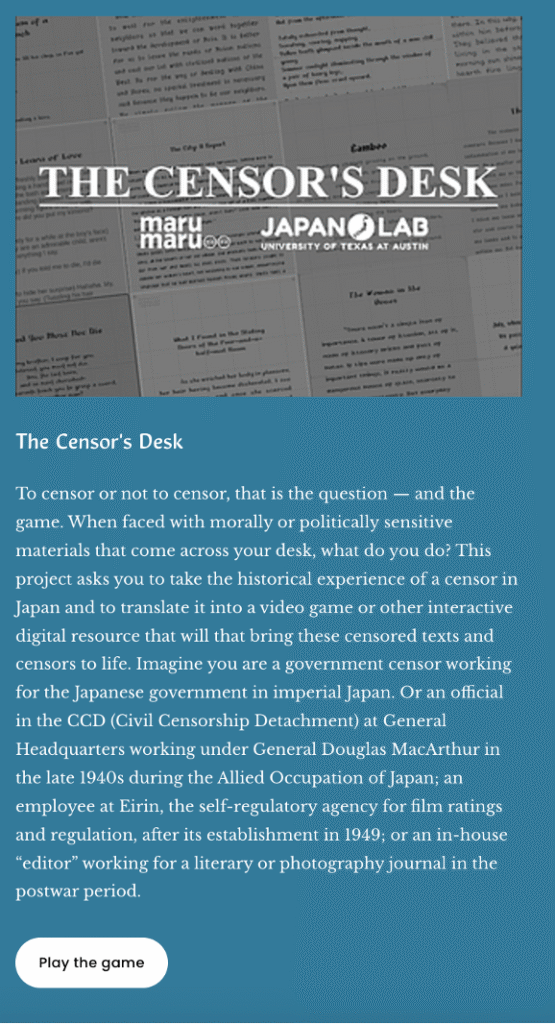

Fig. 14: The Censor’s Desk, UT JapanLab
Here is the segment they created around the atomic bomb sequence centered around author Ōta Yōko’s harrowing account of encountering the bomb in Hiroshima and the censor in its aftermath:
Fig. 15: Excerpt of Ōta Yōko’s encounter with the censor in The Censor’s Desk, UT JapanLab
Like my course “Genji to Godzilla: Adaptations of the Classics,” this game forces a reading of artistic texts with an eye to considering the rapidly changing historical and legal contexts. To create this segment, my students integrated Ōta’s own accounts and responses to the written and unwritten rules of censorship she encountered at many levels.
What is most brilliant about the team’s choices was that for key authors like Ōta, the player’s encounter is not just with a text, but the flesh-and-blood (or pixelated version) of the author in an interview phase. The censor-gamer can subjectively interpret the existing rules, but they also must experience the consequences for doing so. In Ōta’s case, passing the first version is a bombshell that ends the game; if you pass it, you get fired. If you don’t pass an, the author gets a chance to speak back in their own words, here in the form of direct quotes drawn from Ōta’s own accounts. The game beautifully brings to life this difficult body of texts and the bodies of authors in ways that will keep them alive for a long(er) while, I hope.
Worth a thousand words? The powers and limits of picturing the A-bomb
Let me briefly turn back to that early disaster of teaching and that iconic image of the mushroom cloud yet again. What might give us pause is recalling that just such an image was included in the Hiroshima leaflets (see Fig. 4 above). The Atomic Heritage Foundation includes this explanation of the image on their website:
This photo shows the destructive power of the atomic bomb that was dropped on Hiroshima. This photo was taken from B-29 in the air after the atomic bomb was dropped on Hiroshima on August 6. The atomic bomb’s horrendous destructive power can be understood by viewing this photo. As you see, this atomic bomb blast extended to a radius of 8 km, and the height of the bomb cloud reached about 14,000 m into the sky. The Japanese government said that Hiroshima was completely destroyed by the atomic bomb. (all italics added)[14]
This rhetoric suggests that in this photographic representation of the bomb, one can see and can understand. The question I return to here is what power did and does any re-presentation of the bomb have, then or now? In Regarding the Pain of Others, Susan Sontag has written about the ethical and moral difficulties posed by images of suffering especially in an image-saturated world.
To suffer is one thing; another thing is living with the photographed images of suffering, which does not necessarily strengthen conscience and the ability to be compassionate. It can also corrupt them. Once one has seen such images, one has started down the road of seeing more – and more. Images transfix. Images anesthetize.[15]
Sontag wrote this back in 2003, words even truer today in our own image-saturated world.
If we look now, what do we see in this photo (Fig. 16) of the WWII Mushroom Cloud in Nagasaki on August 9th, 1945? A tag on the side notes that the name of the bomb was Fat Man. This photo happened to be hanging just ten feet down from the classroom door where I was teaching my censorship class last Fall in the History building on UT campus.
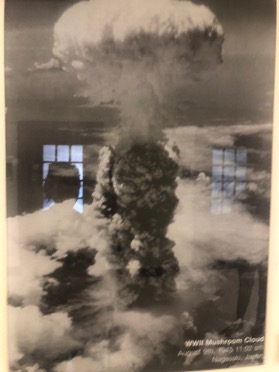
Fig. 16: WWII Mushroom Cloud | August 9th, 1945 | 11:02 a.m. | Nagasaki, Japan
A few weeks before we had studied anything about the A-bomb and its censorship in this class, I surveyed my students to see what they saw. Only 2 of 28 students had registered seeing the photo at all, seemingly all too desensitized to this all-too-familiar image. As one student reflected, “I think seeing so much media about the atomic bombs my whole life truly desensitized me to the image.” Another noted that “Yes, I had seen the picture of the bomb before, but I never really gave it any second thought. When I think of the bomb, similar pictures come to my head. One of a mushroom cloud framed above clouds, but never really portraying the damage it causes on the ground.”[16]
After reading Ōta Yōko’s first-person account in City of Corpses alongside the most famous English-language account Hiroshima by John Hersey, students were prompted to look again and reflect upon what they now saw. Students’ comments were wildly split. Some saw the enormous power of the bomb on par with a divine or natural act. Others found that to be precisely the problem. The class was divided, and a lively debate ensued.
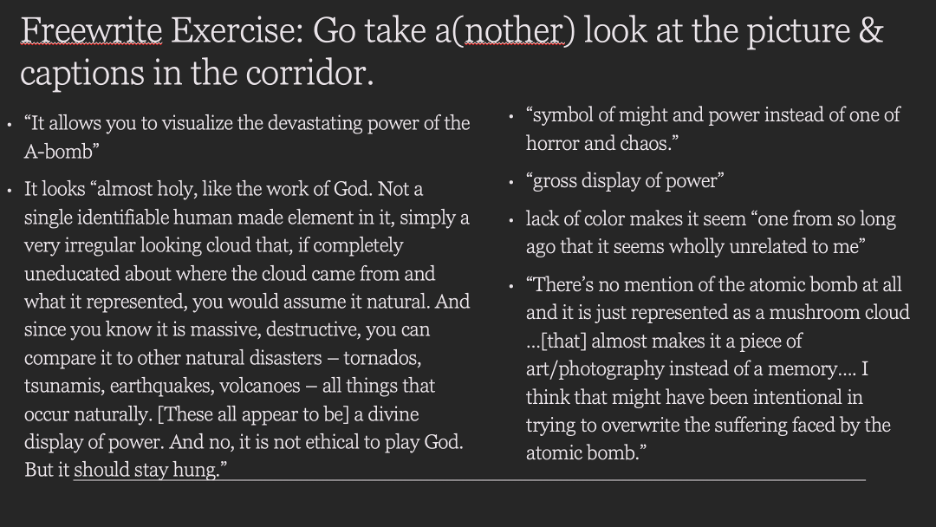
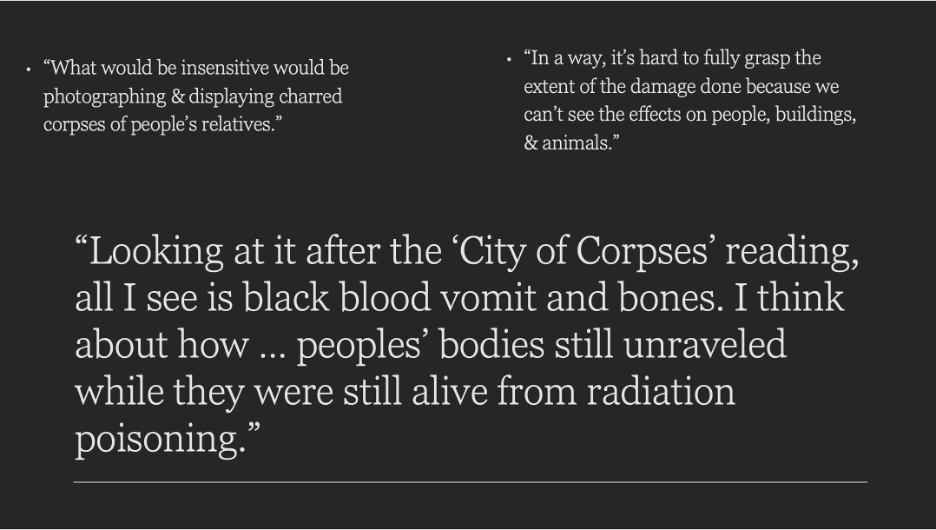
Fig. 17: Student self-reflections on seeing or not seeing the photograph of the bomb
This time, the debate was a welcome one. I could stop worrying because in a sense, I had made my problem theirs – by asking them to reflect on the power and limitations of these representations. Their responses were a teacher’s dream. They were reading and seeing carefully, thinking about art and re-presentations, about history and ethics. Reflecting about their own positions in the classroom and in the world. Reflecting about the positions of others who were distant in time and in space but brought proximate through their own acts of reading and looking with care.
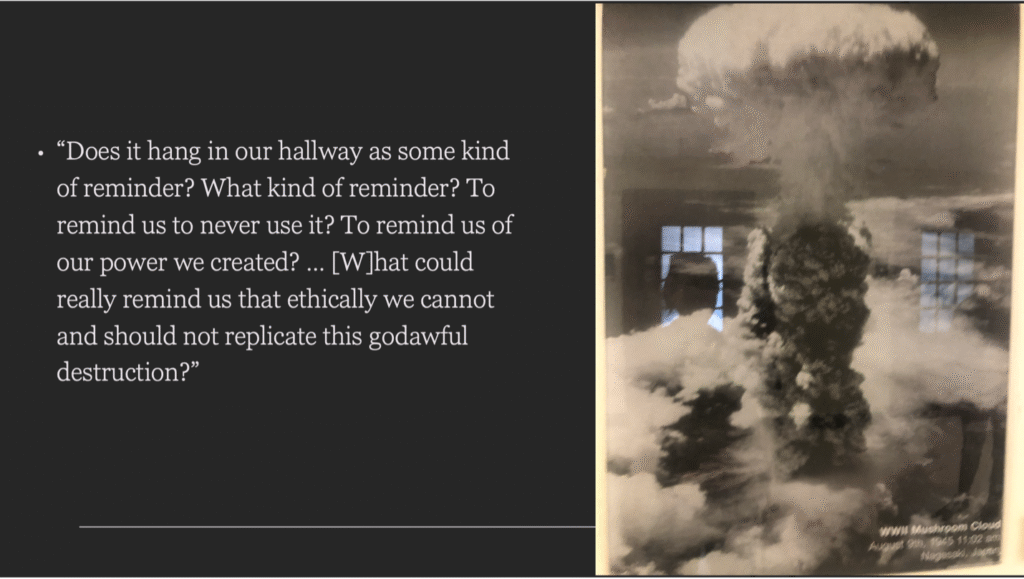
Fig. 18: Seeing through the glare
I would like to end with this one student’s beautifully self-reflexive comments juxtaposed beside this image that I took with my ancient iPhone 8 that week of class. At first, I kept trying to retake it to get rid of the glare and the reflection, worried that it didn’t capture the “original” well enough. But I realized that it is perfect in the way it captures not just – or only, or even – “the” bomb, but the shadowy reflections of me and my students trying to see through the glare.[17]
[1] For the captions for these iconic mushroom cloud images, see https://www.cnn.com/2020/08/04/world/gallery/hiroshima-nagasaki-atomic-bomb/index.html.
[2] Alex Wellerstein, “Counting the Dead at Hiroshima and Nagasaki,” Bulletin of the Atomic Scientists, August 4, 2020, https://thebulletin.org/2020/08/counting-the-dead-at-hiroshima-and-nagasaki/.
[3] For the full translation and other “warning leaflets,” see https://ahf.nuclearmuseum.org/ahf/key-documents/warning-leaflets/ and https://blog.nuclearsecrecy.com/2013/04/26/a-day-too-late/. Translated text also available at https://www.trumanlibrary.gov/library/research-files/translation-leaflet-dropped-japanese-ab-11.
[4] “The Jewel Voice Broadcast” (August 14, 1945), Atomic Heritage Foundation, https://ahf.nuclearmuseum.org/ahf/key-documents/jewel-voice-broadcast/.
[5] Hiroshima images: https://www.huffpost.com/entry/hiroshima_b_7950636; https://www.voanews.com/a/obama-hiroshima-visit-to-emphasize-current-us-ties-with–japan/3340903.html. Nagasaki images: https://www.awm.gov.au/collection/045221?image=1; https://when-the-cold-breeze-blows-away.fandom.com/wiki/Sann%C5%8D_Shrine.
[6] In Fall 2024, I led a workshop geared at middle school and high school teachers “Teaching the Bomb(s): Alternatives to Oppenheimer from Japanese Visual and Popular Culture” sponsored by the National Consortium for Teaching about Asia (NCTA) and our UT Center for East Asian Studies (CEAS). I was dismayed to find that the nature of AP History classes generally entail structuring discussions around this issue precisely in these terms, offering students a smattering of archival documents from which to base their arguments about the necessity of dropping the atomic bombs on Japan.
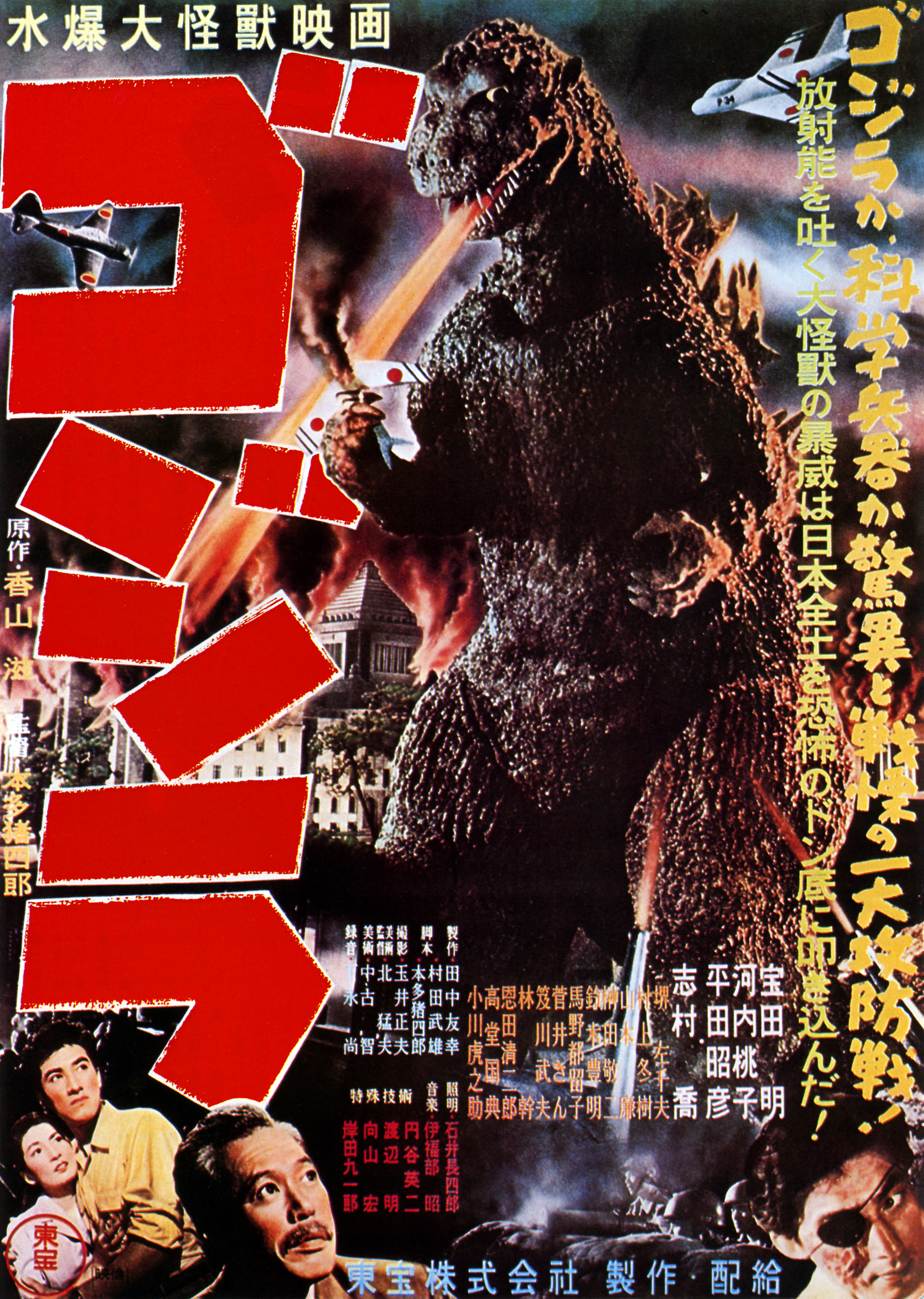
[7] To be fair, the Hollywood marketing of the film bore more resemblance to the original B-movie release in 1954 Japan than the recent Criterion Collection somber cover might suggest. See an original Japanese poster at https://upload.wikimedia.org/wikipedia/commons/9/95/Gojira_1954_Japanese_poster.jpg.
[8] Chon Noriega, “Godzilla and the Japanese Nightmare: When ‘Them!’ is U.S.” (Cinema Journal, Autumn 1987), 63-77.
[9] William Tsutsui mentioned this fascinating CBS/NYT news poll in a talk he gave at UCLA on May 23, 2005, https://www.youtube.com/watch?v=UoJ-9VkV6ks.
[10] The official English-language translation of the Japanese postwar constitution is available at https://japan.kantei.go.jp/constitution_and_government_of_japan/constitution_e.html.
[11] Ōta Yōko also published an earlier first account before Occupation censorship regimes were fully in place, an essay in the September 30, 1945 Asahi Shinbun titled “A flash as at the bottom of the sea: Encountering the A-Bomb” (Umizoko no yōna hikari: Genshibakudan no kūshū ni atte).
[12] Richard H. Minear, “Translator’s Introduction,” Hiroshima: Three Witnesses (Princeton: Princeton University Press, 1990), 138-142 passim. The dialogue is based on Ōta’s account in her May 1953 “Sanjō” (Mountaintop) (orig. Gunzō).
[13] Ōta Yōko, “Preface to Second Edition,” translated by Richard H. Minear in Hiroshima: Three Witnesses (Princeton: Princeton University Press, 1990), 149-150. Subsequent page numbers cited parenthetically.
[14] Alex Wellerstein, “Warning Leaflets,” Atomic Heritage Foundation, https://ahf.nuclearmuseum.org/ahf/key-documents/warning-leaflets/.
[15] Susan Sontag, On Photography (New York: Picador, 1977), 20.
[16] I thank my students for their permission to share their candid and thoughtful reflections.
[17] An update from November 2024: When teaching my censorship class again on that corridor in Fall 2024, I noticed that the photo no longer hangs. When I inquired, I was told it was taken down by the department because of complaints. We might ask ourselves what are the ethics of this erasure? If its former presence was problematic, what to make of its disappearance? Now there is only a blank space with screw holes visibly pockmarking the wall and a side tag redacted so that any mention of “Fat Man” is obscured. Its absent presence nonetheless offers a haunting reminder for those who know where and how to look.