Is the Neoliberal Education Market Gender-Neutral? A Comparative Review of the Global North and Global South — by Wajiha Saqib

Wajiha Saqib (Department of Educational Leadership and Policy, University of Texas at Austin)

Abstract

Over the past several decades, neoliberal ideology, including concepts of marketization and competition, has entered public education. For example, we see charter schools, aka Public-Private Partnerships schools (PPP), expanding globally. Neoliberal policies often downplay the role of gender in society, and while research has shown how charter schools impact inequalities by race, class, language, and disability, there is little research that looks at gender gaps in charter schools. In this narrative literature review, examining literature from the Global North and Global South and drawing on 38 sources, I conduct a comparative review of gender gaps related to enrollment, retention, and academic performance of students in education and then turn to how these gaps emerge in the context of charter schools. Moreover, my review examines how gender gaps in charter schools vary across contexts. I ask: a) To what extent do charter schools impact gender gaps in education for students? and b) How does this relationship vary across the Global North and Global South? These questions are essential to understanding the nuances of gender in a neoliberal education market from a global comparative lens, which is missing in the scholarly literature at present.

Keywords: Charter Schools, Public Private Partnerships, Gender, School choice, “girl child” education, “boy turn” education

Read the full working paper.

“Only a Piece of the Total Prophecy”: Ghost Dancing Against Nuclear Waste

by Jennifer Graber, Department of Religious Studies and Affiliate Faculty in Native American & Indigenous Studies, University of Texas at Austin

This piece by Jennifer Graber is a part of the WPS Special Series on "Disarming Toxic Empire."  All contributions to this Special Series were originally delivered as talks at the Rapoport Center's Disarming Toxic Empire conference in Spring 2024. A commentary responding to this paper was written by WPS editor Nancy Blanco. It can be found here.

Through "Disarming Toxic Empire," the Rapoport Center and its partners and co-sponsors fostered an interdisciplinary, intergenerational, and international approach to nuclear weapons, waste, extraction, and energy. Conference participants—scholars, artists, advocates, and activists—considered and contested the unjust, imperial histories and geographies of nuclear testing, production, storage, and weaponry through channels of intergenerational memory and action. Through this Special Series of the Rapoport Center's Working Paper Series, participants in the conference were invited to publish their remarks or papers based on their remarks, with short responses by graduate students part of the Rapoport Center's Working Paper Series editorial committee. These exceptional pieces capture the critical insight and clarity that were a common feature of contributions to the conference. Considering sites ranging from the Navajo Nation and the Pacific Islands to Japan, North Africa, and Ghana, their exciting interventions showcase the breadth and depth of work considering "toxic empire" that is taking place at the University of Texas at Austin and around the world. To watch the conference presentations, visit the "Disarming Toxic Empire" playlist on YouTube.


In 1997, Mr. Maurice Eben testified on behalf of the Pyramid Lake Paiute Tribe before the Nevada Nuclear Regulatory Commission. He addressed the C     ommission’s plan to transport spent nuclear fuel, essentially nuclear waste, through tribal lands. Eben said the tribe had      not been consulted properly, a violation of the 1970 National Environmental Policy Act. His people did not have the opportunity to voice their objections, which were multifold. Nuclear waste, Eben insisted, was simply “not part of our Indian society.”[1]

He then provided a primer on that society. He told the commissioners where he came from, including what Paiute bands his parents belonged to and      what territories in the Great Basin he lived in and visited. He explained      how his parents “were forced” to enroll in boarding school and how later, he and his family left the reservation to find work. Then he went back further into the Paiute past. He told of the establishment of Pyramid Lake Reservation in 1874. Then he went still further. Oral histories and scientific evidence, namely petroglyphs, showed that Numic peoples had lived in the basin at least 15,000 years. Paiute ancestors, Eben claimed, were buried in valleys and rock crevices throughout the landscape. The graves, he said, “were prepared with loving care with place mats made of tule reeds. Food was stored in willow woven baskets, blankets made of rabbit hide were made to keep the body warm. Clothing was made for the journey home.” It was this land and these graves through which nuclear materials would be moved. Eben objected to it.[2]

Eben then referenced a particular episode in Paiute history that informed his relationship with the landscape and the ancestors: the Ghost Dance and its first leader, Wodziwub. In 1869, a man named Wodziwub had a vision in which he learned that the dead would soon return. He taught his people a dance and songs to accompany it. He promised that dancing would not only accelerate the arrival of the ancestors, but also “shake off the sicknesses” and “bring water in its many forms and cleanse and bless us.” The Ghost Dance, according to Eben’s telling, healed and resurrected humans, as well as replenished the landscape’s waterways, which had been devastated by settler irrigation projects and mining practices.[3]

And Eben wasn’t finished. That’s because the Ghost Dance wasn’t finished. In 1980, he said, the movement had been reprised, as the “prophecy” had promised. Stanley Smart, a member of the nearby Fort McDermitt Paiute Tribe, brought it to Pyramid Lake. Smart told Eben and others that Wodziwub’s movement, the first Ghost Dance, was “only a piece of the total prophecy.” Now was the time to gather, dance, and “make the sound the Creator is waiting for us to make.”[4]

Rethinking the Ghost Dance

This characterization of the Ghost Dance, as reprised in the 1980s and invoked in nuclear regulatory commission meetings, does not appear in standard accounts of what is usually described as a nineteenth-century Native revitalization or prophetic movement. And if you’ll bear with me a moment as I consider the Ghost Dance and popular and scholarly interpretations of it, I’ll get to why this matters for understanding Native anti-nuclear and other forms of environmental activism. 

In brief, for decades, anthropologists and historians described the Ghost Dance as one example of universal, religious revitalization consisting of ecstatic behaviors and apocalyptic visions brought on by deprivations caused by colonial invasion.[5] These scholars bemoaned how Americans responded to the Ghost Dance, including the 1890 massacre of more than 300 Lakota Ghost Dancers at Wounded Knee. As such, the Ghost Dance and Wounded Knee have become symbols, for many, of the last gasp of Native resistance to colonial invasion. This approach is exemplified in Niehardt’s best-selling Black Elk Speaks in the 1930s and has been replicated by historians for decades.[6] 

Until it wasn’t. Changes in scholarly approaches, including what’s been called the “New Indian History” prompted new Ghost Dance interpretations. Scholars began attending more to Native perspectives. They started to consider      Native traditions and prerogatives. Even so, problems remain. Take, for example, Louis Warren’s Bancroft prize-     winning 2017 book, God’s Red Son, in which he argues the Ghost Dance was actually a “forward-looking, pragmatic religion” “engag[ed] with the modern, industrial Gilded Age.” Warren’s evidence for this argument? The movement leader’s advice to followers to work for cash wages. The Ghost Dance, according to Warren, asked its participants to adjust to conquest as a kind of pragmatic survival strategy.[7]  

This seems odd to me, or at least at odds with references to the movement that have been made by Native activists like Eben, as well as tribal historians and Indigenous artists.

For example, consider American Indian Movement leader Russell Means’ evocation of the Ghost Dance as he reflected on the 1973 occupation of Wounded Knee. Or Leslie Marmon Silko’s 1991 novel that ends with a hemispheric Ghost Dance reprised in an Arizona convention center. Or a special exhibit of Indigenous artists in Toronto in 2013 that connected the Ghost Dance with ongoing Native activism. I could name so many more examples, including activists at the No DAPL protests at Standing Rock just a few years ago.[8]

When I look at these examples, I don’t see a pragmatic adjustment to conquest. So, I’d like to think about Eben’s      statement before the NNRC as one among many ways Native activists invoke spiritual traditions in the face of ongoing existential and environmental challenges. 

One way to do that is to use historian Paul Rosier’s work on Native environmental activism that started mid-century and blossomed in the 1970s. Rosier quotes Kiowa writer M. Scott Momaday on “emerging Indian” voices in relation      to environmental destruction. According to Rosier, these emerging voices highlighted environmental issues of concern within and beyond Native communities. They then did two particular, if not unique, things. They connected these issues to Native sovereignty and they invoked particular cultural traditions, including spiritual and religious practices, to recommend paths forward for all.[9] Rosier details folks who fought dams and reservoirs, and who resisted hunting and fishing regulations, as well as extractive industries. Rosier provides      an extended analysis of Navajo and Hopi protests against the Black Mesa mine.

I think Rosier’s analysis helps for understanding Eben’s resistance to the transport of nuclear waste and provides an opportunity for a more robust understanding of how “emerging Indian” voices invoke spiritual and religious traditions to do so. I want to briefly explore it, relying on public and archival records, as well as my 2022 interview with Paiute elder, Ms. Billie Jean Guerrero, who worked in activist circles      alongside both Eben and Smart in the 1970s and 80s. She currently directs the tribal museum at Pyramid Lake.

According to census data, Stanley Smart was born in Paiute country around 1931. He was married by 1950 and worked on a ranch. He appeared briefly in a 1950 short film about Paiute farm laborers. According to some sources, he and his wife had nine children.[10]

Later, Mr. Smart appeared in a rush of newspaper articles. He had gotten in some legal trouble. In 1968, he was arrested for breaking hunting laws. According to some sources, Smart said in his court appearances that he had been laid off from his job at a mercury mine. He was hunting to feed his family. And he rejected the state of Nevada’s authority to limit Paiute hunting for food in their own homelands.[11] Of course, Smart’s actions and words reflect events in broader Native activism, which included fish-ins in the Pacific Northwest and other hunting protests in Wisconsin and Oklahoma.[12]

Given the year – 1968 – it shouldn’t surprise us that his story was picked up in Native newspapers with activist leanings, including Akwesasne Notes in October 1969.[13] But to Rosier’s point about the way Native environmental activism overlapped with the broader environmental movement, his story appeared in a number of alternative newspapers, including the Berkeley Barb, Ann Arbor Sun, East Village Other, and San Francisco Express Times, among others.[14]

Simultaneously, some of the most prominent protests, including the 1969 occupation of Alcatraz Island by Indians of All Tribes (IAT), included statements about environmental protection and its connection to Native sovereignty. Indeed, shortly after Alcatraz, IAT caravanned to Pyramid Lake to assist Paiutes protecting their water rights.[15]

We know that Smart’s activism continued after 1968 even though the paper trail drops off for a bit. In an interview, Ms. Guerrero discussed working in activist circles with Smart and Eben      throughout the 1970s. She talked about their participation in segments of AIM’s 1978 Longest Walk.[16]

This activism coincided with Paiute cultivation of memories and stories about the Ghost Dance. 1973 brought the celebration of Wovoka Days at a local high school.[17] That same year, Paiutes in Yerington began efforts to raise a Wovoka statute.[18] In 1976, Walker River’s tribal historian published an article on Wovoka in Nevada’s pan-Indian newspaper.[19]

In this period of pan-Indian activism (which included concerns about the environment) and a renewed Paiute engagement with Ghost Dance history, Stanley Smart arrived and claimed that the prophecy was still unfolding. He said the time to dance had returned. He told listeners the dance could bless landscapes and heal people.[20] Smart and Eben carried with them all of these experiences by the time Congress designated the nuclear test at Yucca Mountain in the early 1980s. They were ready when officials proposed shipping nuclear waste across Paiute lands.[21] 

This backdrop helps us make sense of Eben’s 1997 statements. In his testimony, we see Rosier (and Momaday’s) “emerging Indian” voice. Eben identified an environmental issue of concern relevant to Native people, but with implications for non-Natives as well. He connected that issue to sovereignty, insisting that the federal government consult with tribes as required by law, as well as elders who held the land’s stories. Then he turned to particular Paiute traditions, including the Ghost Dance. He explained how the movement’s early leaders taught them something about the land and the ancestors held within it. He also insisted that the prophecy introduced in the original Ghost Dance was still in the process of realization, that it spoke to the environmental controversies of the present.

My research is primary concerned with interpretations of the Ghost Dance, but Eben’s experience of a renewed Ghost Dance movement also has something to tell us about Native anti-nuclear activism specifically and Native environmental activism more broadly. Consider the end of Eben’s testimony. “Since time immemorial, we Indian People have had a respect for the land that we walk upon. At no time has that caretaking responsibility changed. Indian People are still the rightful caretaker [sic] of this land … . We remind you of this responsibility and stand by the prayer and sincerity to our Creator in allowing us to continue that responsibility.”[22]

     As one scholar has observed, invoking spiritual traditions in cases related to repatriation of ancestral or human remains      has a “tremendous moral gravity,” a kind of “moral certainty” with which opponents must grapple.[23] As with repatriation disputes, I see these invocations as a vital part of Native anti-nuclear activism. 


[1] “Statement by the Pyramid Lake Paiute Tribe Before the Nuclear Regulatory Commission,” May 15, 1997.

[2] Ibid.

[3] Ibid.

[4] Ibid.

[5] For a review of this revitalization literature, see Jennifer Graber, “Beyond Prophecy: Native Visionaries in American Religious Studies,” American Religion 2, no. 1 (2020): 65-76.

[6] James Mooney, The Ghost Dance Religion and Wounded Knee, reprint edition (New York: Dover Publications, 1973);

John G. Niehardt, Black Elk Speaks: Being the Life Story of a Holy Man of the Oglala Sioux, revised edition (Lincoln: University of Nebraska Press, 2004); Dee Brown, Bury My Heart at Wounded Knee, thirtieth anniversary edition (New York: Henry Holt, 2001).

[7] Louis S. Warren, God’s Red Son: The Ghost Dance Religion and the Making of Modern America (New York: Basic Books, 2017), 7-8.

[8] On Means, see John William Sayer, Ghost Dancing the Law: The Wounded Knee Trials (Cambridge, MA: Harvard University Press, 1997, 7. For other examples, see Leslie Marmon-Silko, Almanac of the Dead (New York:  Simon and Schuster, 1991; “Ghost Dance: Activism. Resistance. Art.” The Image Center, Toronto, Canada, 2013. On No-DAPL, see Nick Estes, Our History is the Future: Standing Rock Versus the Dakota Access Pipeline and the Long Tradition of Indigenous Resistance (London: Verso, 2019), 16-17.

[9] Paul C. Rosier, “‘Modern America Desperately Needs to Listen’: The Emerging Indian in an Age of Environmental Crisis,” The Journal of American History 100, no. 3 (2013): 711–35.

[10] Year: 1940; Census Place: McDermitt, Humboldt, Nevada; Roll: m-t0627-02278; Page: 3A; Enumeration District: 7-4, Ancestry.com. 1940 United States Federal Census [database on-line]. Provo, UT, USA: Ancestry.com Operations, Inc., 2012. National Archives at Washington, DC; Washington, D.C.; Seventeenth Census of the United States, 1950; Year: 1950; Census Place: McDermitt, Humboldt, Nevada; Roll: 3483; Page: 10; Enumeration District: 7-3, Ancestry.com. 1950 United States Federal Census [database on-line]. Lehi, UT, USA: Ancestry.com Operations, Inc., 2022; Haying Season, directed by Dan Miller (c. 1950) video recording, Paradise Valley Folklife Project Collection (AFC 1991/021), Library of Congress, Washington DC.

[11] G. P. Ceicsery, “Paiute Indians’ Fight for Ancient Ways,” Berkeley Barb 8:19 (May 9-15, 1969): 4.

[12] Rosier, “‘Modern America Desperately Needs to Listen.’ 717.

[13] G. P. Ceicsery, “Paiute Indians’ Fight for Ancient Ways,” Akwesasne Notes 1:9 (October 1969): 12. Reprinted from Berkeley Barb.

[14] G. P. Ceicsery, “Paiute Indians’ Fight for Ancient Ways,” Berkeley Barb, 8:19 (May 9-15, 1969): 4; “Up Against the Wall & Off the Reservation, Motherfucker,” Ann Arbor Sun (November 20, 1968); “Earth Read Out,” East Village Other 4:27 (June 4, 1969): 6; “Rolling Thunder Speaks Out on Native American Activism,” San Francisco Express Times (November 13, 1968).

[15] Rosier, “‘Modern America Desperately Needs to Listen,’” 722.

[16] Billie Jean Guerrero (Director, Pyramid Lake Tribe Museum and Visitors Center) in discussion with the author, September 2022.

[17] “Wovoka Days” Native Nevadan (May 1973).

[18] “Wovoka To Be Memorialized,” Wassaja (October 1975); “Paiutes to Honor Wovoka,” Wassaja (December 1975).

[19] Edward C. Johnson, “Nevada Indian History and the Ghost Dance Prophets,” Native Nevadan (August 6, 1976): 9.

[20] If we go back to Smart’s 1968 arrest, we can see that he was already talking like the original Ghost Dance leaders. See G. P. Ceicsery, “Paiute Indians’ Fight for Ancient Ways,” Akwesasne Notes 1:9 (October 1969): 12. Reprinted from Berkeley Barb.

[21] Richard W. Stoffle, John E. Olmstead, and Michael J. Evans, Yucca Mountain Project: Literature Review and Ethnohistory of Native American Occupancy and Use of the Yucca Mountain Region: Interim Report, January 1990 (Las Vegas, NV: Science Applications International Corp, 1990); John Karl Gross, “Nuclear Native America: Nuclear Waste and Liability on the Skull Valley Goshute Reservation,” Boston University Journal of Science & Technology Law 7, no. 1 (2001): 9.

[22] “Statement by the Pyramid Lake Paiute Tribe Before the Nuclear Regulatory Commission,” May 15, 1997.

[23] Gregory B. Johnson, “Facing Down the Representation of an Impossibility: Indigenous Responses to a ‘Universal’ Problem in the Repatriation Context,” Culture and Religion 6, no. 1 (March 2005): 64, 69.

COMMENTARY: “‘Only a Piece of the Total Prophecy’: Ghost Dancing Against Nuclear Waste” by Jennifer Graber

Commentary by Nancy Blanco

This is a commentary written by PhD student Nancy Blanco (University of Texas, Nursing) in response to Professor Jennifer Graber's paper, “‘Only a Piece of the Total Prophecy’: Ghost Dancing Against Nuclear Waste." Blanco wrote this commentary as a member of the Working Paper Series Editorial Committee.

Professor Jennifer Graber’s paper, “‘Only a Piece of the Total Prophecy’: Ghost Dancing Against Nuclear Waste,” offers a critical re-evaluation of the Ghost Dance, situating it as an ongoing and adaptive form of Indigenous resistance rather than a relic of the past. Through an examination of Maurice Eben’s 1997 testimony before the Nevada Nuclear Regulatory Commission, Graber highlights how Paiute activists drew upon spiritual traditions to oppose the transportation of nuclear waste through their lands. By doing so, she challenges dominant historiographical narratives that have often framed the Ghost Dance as a reactionary movement confined to the 19th century, instead illustrating its continued resonance in contemporary Indigenous struggles for sovereignty and environmental justice.

Graber’s intervention complicates prevailing academic interpretations of the Ghost Dance, particularly Louis Warren’s argument that it was primarily a pragmatic adaptation to colonial conditions, but those conditions are not over. While acknowledging Warren’s contributions, she critiques the tendency to flatten the movement’s significance into a utilitarian survival strate. She instead emphasizes how Indigenous leaders and activists have persistently invoked the Ghost Dance as a means of spiritual and political assertion. This reframing foregrounds Native epistemologies that have historically been marginalized in scholarly discourse, positioning Indigenous spirituality as both an interpretative framework and a mechanism for political resistance.

Interdisciplinary Perspective

From an interdisciplinary standpoint, Graber’s work contributes meaningfully to religious studies, Indigenous studies, and environmental justice scholarship. By foregrounding Native perspectives, she challenges reductionist readings that separate spiritual practice from political activism. The invocation of the Ghost Dance within anti-nuclear advocacy aligns with broader patterns of Indigenous environmental resistance, demonstrating how sovereignty claims are frequently intertwined with ecological preservation. This analysis invites further engagement with works like Winona LaDuke’s scholarship on Indigenous environmental activism, which similarly highlights the ways in which spiritual sovereignty informs contemporary land and resource struggles.

Moreover, Graber’s discussion highlights the methodological tensions within the study of religion and history. Her critique of anthropological and historical approaches that have framed the Ghost Dance within a universalist model of religious revitalization calls for a more nuanced, context-sensitive understanding of Indigenous movements. This methodological intervention has implications beyond the case study at hand, urging scholars to reconsider how they engage with Indigenous sources and traditions in their analyses.

Regional Insights and Comparative Frameworks

Graber’s focus on the Pyramid Lake Paiute Tribe offers an opportunity to draw parallels with other Indigenous-led environmental struggles. The Standing Rock protests against the Dakota Access Pipeline, for instance, similarly mobilized resistance based on spiritual frameworks. Lakota activists emphasized their sacred duty to protect the land and water, echoing Eben’s invocation of the Ghost Dance as a means of safeguarding Paiute lands from environmental harm. This comparative perspective not only strengthens Graber’s argument but also raises important questions about how Indigenous resistance movements strategically engage with spiritual traditions to challenge state and corporate encroachments on their sovereignty.

At the same time, Graber’s discussion invites reflection on the limitations of these comparisons. While the Ghost Dance provides a powerful case study of spiritual activism, its particular historical and cultural context should not be subsumed into a generalized model of Indigenous environmental resistance. Recognizing the distinct political and spiritual genealogies of different Indigenous movements is crucial in avoiding essentialist readings that conflate diverse traditions and strategies under a single framework.

Future Research and Avenues of Inquiry

            One avenue for further exploration is the relationship between 20th-century and contemporary Indigenous spiritual activism. Graber’s discussion of how Paiute leaders like Stanley Smart reactivated the Ghost Dance raises important questions about how younger generations of Indigenous activists engage with these traditions today. Digital media, for instance, has facilitated new forms of cultural and political mobilization—analyzing how contemporary Indigenous activists invoke historical movements like the Ghost Dance in online advocacy could provide valuable insights into the evolving nature of Indigenous resistance.

Additionally, Graber’s work could benefit from further engagement with transnational Indigenous movements. The intersection of spiritual and environmental activism is not confined to North America; Andean Indigenous communities, for example, have invoked the concept of Pachamama (Mother Earth) in their resistance to extractivist industries. In Mexico, Indigenous communities such as the Wixárika (Huichol) have actively resisted mining projects that threaten their sacred lands, particularly in Wirikuta, a site of spiritual significance. Similarly, the Zapatista movement in Chiapas has long framed environmental defense as part of their broader struggle for autonomy, intertwining spiritual, ecological, and political resistance. Exploring these global and regional connections could further illuminate the ways in which Indigenous spiritual frameworks shape contemporary struggles for land and sovereignty.

An “Islamic Bomb” and the Politics of Scientific Dissent: Pakistan’s Feminist and Peace Disquietudes amidst an Unending Cold War

by Vanja Hamzić, Professor of Law, History, and Anthropology, SOAS University of London [1]


This piece by Vanja Hamzić is a part of the WPS Special Series on "Disarming Toxic Empire." All contributions to this Special Series were originally delivered as talks at the Rapoport Center's Disarming Toxic Empire conference in Spring 2024. A commentary responding to this paper was written by WPS editor Jackie Cheng. That commentary and a response by Professor Hamzić can be found here.

Through “Disarming Toxic Empire,” the Rapoport Center and its partners and co-sponsors fostered an interdisciplinary, intergenerational, and international approach to nuclear weapons, waste, extraction, and energy. Conference participants—scholars, artists, advocates, and activists—considered and contested the unjust, imperial histories and geographies of nuclear testing, production, storage, and weaponry through channels of intergenerational memory and action. Through this Special Series of the Rapoport Center’s Working Paper Series, participants in the conference were invited to publish their remarks or papers based on their remarks, with short responses by graduate students part of the Rapoport Center’s Working Paper Series editorial committee. These exceptional pieces capture the critical insight and clarity that were a common feature of contributions to the conference. Considering sites ranging from the Navajo Nation and the Pacific Islands to Japan, North Africa, and Ghana, their exciting interventions showcase the breadth and depth of work considering “toxic empire” that is taking place at the University of Texas at Austin and around the world. To watch the conference presentations, visit the “Disarming Toxic Empire” playlist on YouTube.

“Pakistan has thought and done the unthinkable,” cried out Zia Mian, an eminent Pakistani physicist, nuclear expert, and peace activist in 2011, in one of his many publications against the atomic arms race in South Asia. “With its nuclear weapons tests,” he continued, referring to two fateful days in the late May 1998, when the state exploded six of its hitherto clandestine nuclear devices, Pakistan “has demonstrated to itself, as much as to the world, that it is now a murderous state. It is willing and now able to commit nuclear mass murder.” However, Mian warned, “[t]his was not done with universal consent. There were brave voices who spoke the language of right and wrong, and not that of power” (Mian 2011: 352). One of these voices was decidedly his own.

Grown out of an enduring desperation and anger with Cold War Realpolitik, besetting much of the country’s post-independence existence and prospects, Pakistan’s peace movement has long fought an uphill battle with what Mian described as “nuclear nationalism” (Mian 2009): a feverish, zero-sum vision of the state locked in something akin to a frozen peace with its immediate neighbors—especially the nuclear-capable India. According to this vision, if such a peace were to last, it was only thanks to Pakistan’s nuclear deterrent, given that any open conflict between the two nuclear powers of the Indian Subcontinent would come with a chilling prospect of nuclear winter. In response, Pakistan’s peace movement—involving, right from its beginnings, diverse feminist voices and collectives—has sought to expose an inherent danger and patriarchal bias of this vision. But what has enabled Pakistan to achieve nuclear weapon capabilities and become, in Mian’s parlance, a “murderous state?” And how did its grassroots movements for peace and gender justice coalesce to produce a counternarrative to nuclear nationalism?

In response to these queries, the pages that follow sketch out a series of brief, situated analytical directions in what might be called a feminist and queer recollection of Pakistan’s complex history of its own nuclear program (Das 2010; Khattak 1999; Feigenbaum 2015; Otto 2020). What one encounters at the surface, when memories are rejogged and old stories retold, is a sense of disquietude about opportunities lost, movements stunted in their growth, and antinuclear voices dissonant, disjoint, and fading in their lonesome tenor. Perhaps this is not unusual for intergenerational peace and justice movements everywhere, but Pakistan’s unique standing in, and dealings with, the wider Muslim world give it a distinct flare—and it is this complex, extraordinary sense of multiple displacement, Orientalism, and systemic erasures that this essay revisits, in hope that some disgruntled silences can one day give way to more capacious processes of re/memorialization. To do so, I briefly explain how Pakistan became the only Muslim-majority nuclear-weapon state, and how this came to be framed as first the prospect and then the rather underwhelming reality of an “Islamic bomb”—a preposterous construct ostensibly symbolizing Muslim worldwide “nuclear solidarity” (Hoodbhoy 1993: 42), though it was actually borne out of opportunistic politicking with varied, largely unintended, repercussions (Shaikh 2002: 40; Yasmeen 2008). Then, the essay considers what I call the politics of scientific dissent, with Pakistani scientists taking several, mutually irreconcilable, directions in their dealings with nuclear nationalism and daily Realpolitik. This should provide a useful background to the complex terrain of feminist and peace movements’ disquietudes, which, as I next argue, should be examined against what certainly feels like a protracted, unending regional Cold War in all but name. In the end, I offer some thoughts on what makes such a war possible, by asking what gets cooled or frozen in South Asia’s cisheteropatriarchal nationalist nuclear politics.          

Vignettes from a History of Pakistan’s Bomb: Reality Masquerading as Fiction

Pakistan’s now conventional history of the atomic bomb reads not unlike a popular Cold War novel. Larger-than-life characters, spy and proliferation networks of ambiguous allegiances, and thrilling duels behind enemy lines all abound, set against some stunning feats of modern technology and architecture. Recounted as it is in the Subcontinental academic and popular press alike, it has acquired a nearly mythopoetic veneer, which presents both opportunities and challenges to its diverse audiences. To those seeking to unravel the nationalist drive that structures much of Pakistani politics, its tightly interwoven factual and fictitious elements serve as an obstacle in understanding the power relations behind the neat public-facing storyboard. And to those partaking in such politics, the mainstream history of the bomb has become a form of useful political mirage, a novelesque account of the nation’s outsized resilience and ability to achieve the near-impossible, which masks deeper, persistent inequalities befalling Pakistani society. Here are a few highlights.

There are not-so-secretive secret meetings, such as that of January 20th, 1972, in Multan, where Zulfikar Ali Bhutto, just one month after assuming the Pakistani presidency, gathered Pakistani scientists, with local politicians and selected members of his press corps in attendance, and asked, bluntly, as had been his intent for quite some time: “How long will it take you to make a nuclear bomb?” In response, apparently, young scientists were trying to “outbid each other as though at an auction,” and Bhutto gave them the deadline: “I want the bomb in three years” (Abbas 2018: 62). The meeting set in motion a series of events that would eventually lead to the country pursuing two routes toward nuclear weapon capabilities—a plutonium bomb and a uranium bomb (Kapur 1987: 139).  

There are epic archrivalries inviting inevitable popular comparisons, such as that between the two Khans, that is, Dr Munir Ahmed Khan, a talented nuclear reactor physicist, whom Bhutto placed at the helm of the Pakistan Atomic Energy Commission (PAEC), and the flamboyant Dr Abdul Qadeer Khan. The latter was a metallurgic engineer whose clandestine operations and—perhaps contradictorily—his love for the media spotlight earned him the status of a national hero. He headed a separate research and uranium-enrichment facility in Kahuta, soon renamed in his honor as the Khan Research Laboratories (KRL). Munir Ahmed Khan was nicknamed “Reactor Khan” and popularly described as speaking in code and in whispers, while A. Q. Khan, as he was known, was extolled as “the Muslim Oppenheimer” and “a cross between Dr Strangelove and an Islamic James Bond” (Abbas 2018: 63, 155; Sreedhar 1987: 92). Though long extolled as the “father of Islamic bomb” (Nayar 1987), A. Q. Khan was eventually forced to apologize and leave the public spotlight for exporting nuclear technology and materials to other countries—apparently including Libya, Iran, and North Korea—for personal financial gain (Chakma 2009: 107–21; Durrani 2009: 95–6).

There is risqué storytelling laced with sexist innuendo, a hallmark of the era not unlike the James Bond franchise. The prominent journalist Shahid-ur-Rehman’s tell-all is an apt representative of this genre, in which he recounts, for example, how the theoretical physicist Abdus Salam asked a blushing PAEC scientist to design a nuclear device that resembled “explosive breasts” of a woman, or how Pakistan leadership’s reluctance to accept American aid was like “a ravishing beauty” who first hesitates to provide “her services” but is inevitably persuaded when offered a much larger sum (Rehman 1999: 40, 128–9). It is a reflection of an overwhelmingly patriarchal “atomic esthetics” and politics (Taha 2022), evident throughout the Cold War lifeworlds.    

There is appreciation for modernist architecture exuding a distinct South Asian Muslim flair, as with the Pakistan Institute of Nuclear Science and Technology (PINSTECH) in Nilore, designed by the American architect Edward Durell Stone and described as potentially the most architecturally exquisite mid-twentieth-century physics complex in the world: “With its decorative dome concealing the reactor shield, soaring exhaust stack in place of a minaret, and formal gardens, fountains, and reflecting pools, it seemed to herald the scientific future in much the same way as the original Taj Mahal exemplified the artistic and scientific renaissance of its day” (Leslie 2015: 40). That this scientific facility—which trained many of the scientists and engineers who would transform Pakistan into a nuclear state—needed to rise to an esthetic rival of the wonders of both modernist and Mughal architecture is a peculiar feature of Pakistani nuclear nationalism, not least because PINSTECH was housed in a purpose-built townsite that had initially been closed to the public. It shows that such projects had multiple uses—one of which being not so much to assuage the commonfolk as to forge and maintain elite military and political alliances.  

And, of course, there is the occasional cameo of Henry Kissinger. In August 1976, for example, Kissinger arrived in Islamabad to persuade Zulfikar Ali Bhutto to drop the purchase of a nuclear reprocessing plant from France (Abbas 2018: 302). “‘I was in the hall at the time Henry Kissinger came in and said, ‘We will make a horrible example of you,’” recalls Benazir Bhutto, the daughter of Zulfikar Ali and future Prime Minister. “And my father said, ‘That is no way to talk to the head of an elected government in a country’” (Rehman 1999: 101). Perhaps because of such uncouth bullishness, Bhutto signed a reprocessing plant agreement with France that very day.

            Finally, there are ethically ambiguous twists and turns throughout. The history of the bomb in Pakistan complicates the usual way the distinction between its democratically elected governments and military dictatorships is painted, with allegiances that are murky and changing precisely because of the symbolic power of such a weapon. Pakistan’s quest for the bomb began in earnest under Bhutto, a democratically elected, ostensibly Muslim socialist leader, famed for his progressive agenda. It continued, after his demise, under the military dictator Zia-ul-Haq, with both the PAEC and KRL succeeding in “developing a deliverable nuclear weapon independently of each other at roughly the same time;” that is, in March 1983 and December 1984, respectively (Abbas 2018: 74). And it finally reached a public “demonstration” of this pursuit under another civilian leader, Nawaz Sharif, when—in the wake of the Indian nuclear tests earlier that month—six nuclear devices were set off under the Ras-Koh hills in the Chagai District of Balochistan on May 28th and 30th, 1998. While the style of government and its domestic outcomes varied considerably between different Pakistani political and military elites, they all supported Pakistan’s road to nuclearization and engaged in multiple aspects of nuclear statecraft. And, especially after Bhutto, the army’s role in these dangerous machinations remained central throughout.  

Overall, my contention is that the vignettes such as these of Pakistan’s checkered nuclear history reveal a complex and varied set of effects of nuclear nationalism. On the one hand, the near-fictional audacity of scientists and politicians popularly depicted as the country’s Cold War heroes has protected these actors, and the institutions they oversaw, from any serious accountability for the actions that at times clearly favored self-interest over any collective concerns, let alone the considerations of the country’s peaceful future. Because these men and their “nukespeak” (Biswas 2014: 122) were seen not only as saviors of the nation but as protectors of the nation’s Cold War “masculinity,” it was possible for a Pakistani general and Chief of Army Staff to argue, as recounted by Zia Mian, “that giving up Pakistan’s nuclear capability would amount to ‘nuclear castration’” (Mian 2011: 353). This, of course, reflected similar attitudes on the other side of the regional nuclear arms race. As the peace activist and writer Arundhati Roy recalls, an Indian politician celebrated India’s own nuclear tests with the following bravado: “‘We have proved we are not eunuchs any more’” (Roy 1999: 136). On the other hand, much of Subcontinental nuclear nationalism rested on a shaky ground. While it achieved the purpose of keeping military elites in power, it brought little political and virtually no economic stability in the long run.

The Making of an “Islamic Bomb”

Scientists, feminists, and peace activists alike found Pakistan’s complex nuclear political terrain exceptionally difficult to navigate, not least because a great deal of Pakistan’s “atomic public”—to use Itty Abraham’s helpful term-of-art—“came to love the bomb” (Abraham 2009: 4), especially given its alleged “Islamic character.” Years before any public “demonstration” of the bomb, or even its clandestine designs, the foreign and domestic press and the analysts of a wide range of political persuasions warned that Pakistan was building “an Islamic bomb” (Hoodbhoy 1993). In an oft-quoted passage, Bhutto himself lamented that the “Christian, Jewish and Hindu civilizations have this capability” and that “[o]nly the Islamic civilization was without it,” adding conspicuously, “but that position was about to change” (Kak 1979: 52; Bhutto [1979]: 166). But the project, as far as Bhutto was concerned, was spun as an “Islamic bomb” primarily so as to “motivate scientists and generate requisite funds from wealthy Muslim states” (Abbas 2018: 79).

If Libya under Muʿammar al-Qaddhāfī, Bhutto’s political ally and confidant, was to acquire the bomb through Pakistan’s assistance, as it was apparently originally conceived, that bomb would have been perhaps as “Islamic” as Pakistan’s, in that Islam and the vision of pan-Muslim unity were important tools in these leaders’ political toolbox, albeit hardly something far more significant than that (Pasha 2005: 66–9, 101–3). And, for all his conservative posturing and projects aimed at the “Islamization” of law, education, and public policy, the military dictator Zia-ul-Haq refrained from publicly boasting about the country’s still-clandestine nuclear weapon capabilities, not least because of his deep ties with the United States.

However, the discourse on an “Islamic bomb” was soon appropriated by a wide range of conservative religious parties in Pakistan, exploding into numerous acts of public commemoration and defiance in the aftermath of the 1998 nuclear tests (Hoodbhoy 2013d). These acts left a spate of curious artefacts behind, including gaudy, colorful models of Pakistan’s nuclear missiles and the Chagai mountains adorning public crossroads and squares for years to come (Dadi 2009). Ona such a makeshift missile, erected in Karachi by the Pasban—a youth wing of the Jamaʿat-i Islami, an influential rightwing religious movement, at the time—was labeled “Pasban Islamic Atom Bomb,” featuring Pakistan’s and a range of other Muslim-majority countries’ flags. “Now that Pakistan has attained nuclear capability,” enthused the Pakistani weekly magazine Akhbar-i Jahan, reporting on Pasban’s “monument,” “we have finally become able to blacken the enemy’s face by mounting the atomic bomb on the Ghauri missile, the nation’s fervor has again reached a climax” (Dadi 2009: 189–90). The tests were also enshrined in the annual calendar of official celebrations, with each May 28th becoming an occasion to remember Youm-e-takbīr, or the Day of Greatness.

Elsewhere in the Muslim world, an “Islamic bomb” was not a straightforward matter. Though major funding for Pakistan’s nuclear program came from Libya and Saudi Arabia (Hoodbhoy 2013d: 162), and even if “Bhutto intended to share with Arab countries Pakistan’s nuclear capability” (Kak 1979: 52), complex rivalries between various Muslim-majority states prevented the formation of any long-lasting alliances (Yasmeen 2008). Thus, although, a few days after the 1998 tests, Iran’s minister of foreign affairs visited Pakistan to show his country’s support, while Saudi Arabia sent public congratulations, apparently the Saudi King “had repeatedly urged the U.S. to destroy Iran’s nuclear program and ‘cut off the head of the snake’ by launching military strikes” (Hoodbhoy 2013c: 136; Hoodbhoy 2013d: 160). It was, therefore, in neither of these countries’ interest for Pakistan to share its “Islamic bomb” technology and materials with their rival Muslim-majority state—or, indeed, for Pakistan to claim any supremacy in wider international and inter-Muslim affairs.

Besides, prominent clerics such as Iran’s Ayatollah ʿAlī Khāmeneʾī and Egypt’s Grand Mufti ʿAlī Ǧumʿa, have issued fatāwā, or Islamic legal opinions, against weapons of mass destruction (Porter 2014; Radsch and Awad 2009). Despite his country’s covert activities toward achieving nuclear weapon capabilities, Khāmeneʾī “emphatically characterized both the use and production of nuclear weapons as crimes against humanity and Islam” (Yousuf and Hussain 2022: 85). Meanwhile, Ǧumʿa emphasized the use, rather than the attainment, of weapons of mass destruction as prohibited under Islamic law. “There is a difference between acquiring these weapons to deter potential aggressors and between initiating their use,” clarified Ǧumʿa. As for the latter, “[s]uch a foolish act will bring about catastrophes not only upon Muslims but upon the entire world because the countries under attack may retaliate either in kind or in a more brutal manner.” Of utmost importance here is the Islamic legal maxim that preventing harm takes precedence over gaining benefit (darʾ al-mafāsid awlā min jalb al-maṣāliḥ), Ǧumʿa concluded, while denouncing as invalid any analogical legal reasoning (qiyās) that equates the means and tactics of classical Muslim warfare with the use of contemporary nuclear weapons (Mowatt-Larssen 2011: 75–9; Muhsin et al. 2019; Hamzić 2024).

In Pakistan, however, conservative clerics insisted that the bomb was a matter of national security and Muslim pride. When, in early 2004, it was revealed that A. Q. Khan had sold, through his clandestine international proliferation network, nuclear technology and materials to Iran, Libya, and North Korea, public protests and strikes erupted in his support. An ultraconservative preacher retorted: “He shared the technology for the supremacy of Islam, and he acted on [God’s] command” (Abbas 2018: 74). Two years prior to Pakistan’s 1998 tests, A. Q. Khan himself declared the nuclear weapon know-how a matter of Muslim survival and necessity worldwide. “Our resources are being robbed by the advanced nations,” he warned, “our governments are virtually becoming hostage to international agencies and from Afghanistan to Bosnia and from the Middle East to Somalia our lands are being converted into lucrative markets of the Western manufactured arms” (Abbas 2018: 160). Thus, what started as a political act, expedient inasmuch as it garnered financial support from well-to-do Muslim states, eventually escalated into a paradigm of Pakistan’s good standing in the wider Muslim world, which in turn helped buttress domestic religio-political movements such as the Jamaʿat-i Islami for decades to come.   

The Horizons of Scientific Dissent

Pakistani scientists participated in, ignored, or outright opposed Pakistan’s journey toward and the life after the public “demonstration” of its nuclear weapon capabilities. Though widely divergent in nature, I contend that these were all forms of the peculiar politics of scientific dissent. A few, like A. Q. Khan, sought to further various would-be pan-Muslim causes. Two even journeyed several times into Afghanistan, in 2000, for meetings with the Ṭālibān (Abbas 2018: 174). The majority preferred a form of silent dissent, concerning themselves primarily with matters of scientific research and education, or were persuaded by the dominant form of nuclear nationalism.

But a group of dedicated peace activists has also emerged from the Pakistani scientific community, foremost of whom were the nuclear physicists Pervez Amirali Hoodbhoy, Abdul Hameed Nayyar, and Zia Mian. The trio has published, together and separately, a great deal of books and articles, in which they cogently argue against Pakistan’s brand of nuclear nationalism and advocate for a range of peaceful, economically sensible steps toward disarmament and abolition (e.g., Mian 1995; Mian et al. 2019; Hoodbhoy and Mian 2016a; Hoodbhoy and Mian 2016b; Nayyar and Mian 2015; Hoodbhoy 2013a). As self-avowed “scientists who reject nuclear patriotism” (Hoodbhoy 2013b: xxii), they have often been the target of state and non-state actors who see Pakistan’s security permanently tied to its nuclear weapon capabilities. Hoodbhoy, Nayyar, and Mian’s analysis—delivered in clear, facts-centered prose—defies disciplinary boundaries and aims at debunking various commonly cherished myths about Pakistan’s nuclear nationalists. Memorable is, for example, Pervez Hoodbhoy’s recollection of a meeting with a Pakistani general, unmoved by the lethality of nuclear war. “You can die crossing the street,” wryly observed the general, “or you could die in a nuclear war. You’ve got to die someday anyway” (Hoodbhoy 2013b: xxxi).  

            The lethality, environmental hazards, and huge state expenditures related to developing and maintaining nuclear weapons were often at the forefront of this strand of scientific dissent. Hoodbhoy has argued, for example, for “an economy for peace rather than war,” demonstrating the impossibility of economic justice with the nuclear-armed military keeping a near-feudal sway over Pakistan’s resources and land (Hoodbhoy 2013c: 147–9). Mian has warned that the maintenance of Pakistan’s nuclear weapons arsenal “exacts a terrible toll on people’s health and on the environment,” including the dangers of the highly polluting domestic mining and processing of uranium along with the extracting of plutonium produced by a reactor from the spent uranium fuel, which “accounts for 85 per cent of the radioactivity released in the nuclear weapons production process.” His conclusion: “[i]t is only by renouncing nuclear weapons that damage can be stopped” (Mian 2011: 357–8).   

            While the abolitionist stance is yet to be publicly acknowledged as a viable option by the wider Pakistani scientific community, it has been the main drive of Pakistan’s peace and feminist movements. Nayyar, for example, has acknowledged the importance of both scientists and activists speaking out in unison on the necessity of denuclearization. “The peace movement has always warned of the many dangers of Pakistan’s nuclear weapons,” he argues. But these warnings were not taken seriously by “those in power in Pakistan [who] do not yet understand the full seriousness of the harm the nuclear programme has done to us,” which is why both the scientists and the “peace movement [have] a long way to go” (Durrani 2009: 108). As for the former, the mutual irreconcilability of the nationalist, silent, and pro-peace politics of scientific dissent has made its long-term impact on the national nuclear policy all but limited. In such an environment, as Mian has argued, the strategy of warning people of the many dangers of a life with nuclear weapons in their midst can backfire, since it may lead to an immobilizing sense of hopelessness and fear, rather than to concerted action. Nor does it suffice to imagine and build a future that emulates “the states, economies, societies, and knowledge systems of the ‘developed’ world.” Rather, as Mian concludes, new dreams altogether are required (Mian 2009: 37).

Feminist and Peace Disquietudes

The wider Pakistani feminist and peace movements share in the sobering accounts of Pakistan’s abolitionist scientists. Activists recalled, on multiple occasions, how lonely and helpless they had felt at times when the deathly Realpolitik of Pakistani-Indian relations threatened to throttle any form of dialogue or dissent (Sarwar 2007). Their near-erasure from the popular histories of social movements in Pakistan had had a similar effect. Feminist histories in particular, centered as they are on the role of the Women’s Action Forum (WAF) as a loose umbrella collective for women’s rights since the early 1980s, often refrain from recounting its early solidarity and peace action for the fear of depicting it as “too broad” and, in some cases, as “too political” (Mumtaz and Shaheed 1987; Saigol 2013). Yet, in its early years, WAF “raised a voice not only for women’s rights but also against military dictatorship and for the demand for the restoration of democracy” (Haroon 1995: 183). Operating as a non-hierarchical platform, it refused to accept any external funding or open a permanent office. Instead, it engaged in direct action against the oppressive state, which saw its members “arrested and threatened” as well as “baton-charged and tear-gassed by the police” (Haroon 1995: 183; Hamzić 2019). Left-leaning women’s collectives operated both within and without it, such as Lahore-based Tehrik-e-Khawateen, which tried “pulling WAF further to the left” (Rouse 1988: 13) or the Applied Social Research Resource Center, “one of the vocal socialist feminist” fora (Rashid 2006: 178). Also of note is a Marxist collective known as the Democratic Women’s Organization (DWO), which “raised issues of equal wages for equal work, of transport services and basic facilities for workers, and issues of non-militarization and peace” (Haroon 1995: 180). The DWO and other similar groups are, however, rarely described as feminist, or indeed as pacifist.

            It is, however, now commonly understood that the peace movement, including its various feminist strands, gained considerable urgency and broadened its base in the aftermath of the 1998 nuclear tests and the 1999 Kargil conflict, the latter first to involve now openly nuclear Pakistan and India at the opposing sides. Out of many cross-border peace actions that ensued, memorable is the episode of the first peace bus, in March 2000, which one keen observer described as follows: “A ‘women’s peace bus,’ involving several women’s groups, came to Pakistan, spearheaded by the veteran Gandhian Nirmala Deshpande. Pakistani women, led by Asma Jahangir, greeted the bus-load of Indian women on their arrival in Lahore with flower garlands, music, and glass bangles” (Sarwar 2007: 47). As for the bangles, Asma Jahangir, Pakistan’s foremost human rights activist, later observed: “We exchanged bangles, which are traditionally used as symbols of weakness, and subverted the negative connotation to positive one by using them as symbols of peace” (Sarwar 2007: 47). Jahangir believed that the urgency of the moment had encouraged the widespread feminist peace action, which in turn “successfully brought about a thaw” in India-Pakistan relations (Fiaz 2007: 89). Yet, these moments of apparent triumph and togetherness are rarely remembered, more rarely still critically appraised and contextualized.

            There is, then, an abiding necessity to study Pakistan’s feminist peace action in greater detail. For instance, some of the possible fissures in those turbulent post-Kargil times might suggest the reason behind at least some abiding disquietude. A Pakistani account of the events surrounding the first peace bus depicts a complex reality of the Indian-Pakistani feminist exchange. On the one hand, it speaks of the courage of the delegates from both countries and of repeated visits and cross-border collaboration, recalling, for example, Arundhati Roy’s defiant declaration in Karachi, two years after the first bus had reached Pakistan: “If I had prior knowledge that India was preparing to send a nuclear missile towards Pakistan, I would be here to receive it.” On the other hand, the same account demonstrates the differences in opinion and preferred tactics between the Pakistani and Indian delegates: “the women’s bus delegates disappointed many Pakistanis with their insistence that India should disarm only after the US and China take the lead; Pakistanis were calling for a unilateral disbanding of nuclear weapons—a stand criticized by many as unrealistic and therefore unlikely to be realized” (Sarwar 2007: 59). Some of these unresolved tensions—along with the cessation of further nuclear weapon “demonstrations” on either side of the border (perhaps giving out an impression that a nuclear war between the two countries was no longer imminent) and the sustained outsized role of the military in Pakistan’s perennially unstable daily politics—may have prolonged the domestic feminist peace disquietudes. The ensuing détente, after all, between the two Subcontinental nuclear powers resembled a frozen peace at best—a state of affairs uncannily resembling Cold War reasoning and relations.  

Conclusion: Frozen Peace as a Continued Regional Cold War

I have argued elsewhere (Hamzić 2020) that, owing to the complexity of many regional relations, not least that between India and Pakistan, the Cold War in South Asia may have entered a new phase after the fall of the Berlin Wall on November 9th, 1989, but it certainly did not end. After all, multiple constellations of predominantly “cold” yet constant warfare characterized the global Cold War, too. I have also suggested that, due to its ominous Cold War legacy, Pakistan often relives its own Orwellian future past—a constant loop of events and circumstances in which Cold War-like elites prolong indefinitely a “peace that is no peace” for the sake of their own survival (Hamzić 2020: 465–6). Similarly, authors across South Asia have observed that the protracted, seemingly indefinite, India-Pakistan conflict has been, in the words of Saira Khan, “frozen at the […] phase [of] escalation” (Khan 2009: 128). What made this high-tense stagnation possible is precisely the emergence and “declaration” of these states as nuclear, and with it, as staunchly nuclear nationalist.

            This study has presented a series of vignettes that reveal a troublesome history of Pakistan’s atomic bomb, replete with militaristic bravado, sexism, and less-than-altruistic calculations. These included the political discourse of an “Islamic bomb,” a tactic gone awry only to bolden the country’s religious right wing and give fuel to Pakistan’s Orientalist critics abroad. In the wider Muslim world—whose prominent spiritual leaders declared the use and, in some cases, the acquisition of weapons of mass destruction as squarely impermissible—Pakistan’s “going nuclear” produced complex responses, which exacerbated inter-state rivalries. In Pakistan, however, the public “demonstration” of the country’s nuclear weapon capabilities only strengthened the course of an already rampant nuclear nationalism. Some of its prominent nuclear experts voiced their scientific dissent—albeit to a varied and limited effect. And its peace and feminist movements reacted courageously, though with a deep sense of disquietude amidst the resulting frozen peace.

Such a peace is not of their making, nor can it assuage their yearning for the true absence of war, which seems incongruent with the continued presence of nuclear weapons in the region. New dreams might be necessary, as these movements ponder their future, along with more probing studies of their past. Perhaps one way to go about it would be to ask what else gets cooled or slowed in its tracks by a frozen peace and its never-too-distant prospect of nuclear winter. In the meantime, it is the prerogative of critical, decolonial, pacifist, feminist, and queer scholarship to expose this stilted, regional Cold War for what it is—a technology of undemocratic and extractive cisheteropatriarchal governance, whose toxic residue will be felt years after it is finally consigned to the annals of history. 

References

Abbas, Hassan. 2018. Pakistan’s Nuclear Bomb: A Story of Defiance, Deterrence, and Deviance. London: Hurst.

Abraham, Itty. 2009. “Introduction: Nuclear Power and Atomic Publics.” In South Asian Cultures of the Bomb: Atomic Publics and the State in India and Pakistan. Edited by Itty Abraham. Bloomington: Indiana University Press, pp. 1–19.

Bhutto, Zulfikar Ali. [1979.] If I am Assassinated. Karachi: Sani H. Panhwar.

Biswas, Shampa. 2014. Nuclear Desire: Power and the Postcolonial Nuclear Order. Minneapolis: University of Minnesota Press.

Chakma, Bhumitra. 2009. Pakistan’s Nuclear Weapons. London: Routledge.

Dadi, Iftikhar. 2009. “Nuclearization and Pakistani Popular Culture since 1998.” In South Asian Cultures of the Bomb: Atomic Publics and the State in India and Pakistan. Edited by Itty Abraham. Bloomington: Indiana University Press, pp. 173–194.

Das, Runa. 2010. “Colonial Legacies, Post-Colonial (In)Securities, and Gender(ed) Representations in South Asia’s Nuclear Policies.” Social Identities 16: 717–740.

Durrani, Ammara. 2009. “Pride and Proliferation: Pakistan’s Nuclear Psyche after A. Q. Khan.” In South Asian Cultures of the Bomb: Atomic Publics and the State in India and Pakistan. Edited by Itty Abraham. Bloomington: Indiana University Press, pp. 89–112.

Feigenbaum, Anna. 2015. “From Cyborg Feminism to Drone Feminism: Remembering Women’s Anti-Nuclear Activisms.” Feminist Theory 16: 265–288.

Fiaz, Shahid. 2007. “Women and the Peace Movement in Pakistan.” In Women Building Peace between India and Pakistan. Edited by Shree Mulay and Jackie Kirk. New Delhi: Anthem Press, pp. 81–92.

Hamzić, Vanja. 2019. “A Cry for Madness: Governance Feminism and Neoliberal Consonance in Pakistan.” In Governance Feminism: Notes from the Field. Edited by Janet Halley, Prabha Kotiswaran, Rachel Rebouché, and Hila Shamir. Minneapolis: University of Minnesota Press, 407–433.

Hamzić, Vanja. 2020. “Pakistan’s Cold War(s) and International Law.” In International Law and the Cold War. Edited by Matthew Craven, Sundhya Pahuja, and Gerry Simpson. Cambridge: Cambridge University Press, 447–466.

Hamzić, Vanja. 2024. “Rival Systems: Islamic International Law during the Cold War.” In International Law during the Cold War, 1945–1990. Edited by Matthew Craven, Sundhya Pahuja, and Gerry Simpson. Cambridge: Cambridge University Press. [Forthcoming.]

Haroon, Anis. 1995. “The Women’s Movement in Pakistan.” In Unveiling the Issues: Pakistani Women’s Perspectives on Social, Political, and Ideological Issues. Edited by Nighat Said Khan and Afiya Shehrbano Zia. Lahore: ASR Publications, pp. 178–186.

Hoodbhoy, Pervez, and Zia Mian. 2016a. “Nuclear Battles in South Asia.” Bulletin of the Atomic Scientists, May 4th.

Hoodbhoy, Pervez, and Zia Mian. 2016b. “Securing Pakistan’s Nuclear Arsenal: The Threat from Within.” In Nuclear Terrorism: Countering the Threat. Edited by Brecht Volders and Tom Sauer. London: Routledge, pp. 182–194.

Hoodbhoy, Pervez. 1993. “Myth-Building: The ‘Islamic’ Bomb. Bulletin of the Atomic Scientists 49, 42–49.

Hoodbhoy, Pervez. 2013a. Editor. Confronting the Bomb: Pakistani and Indian Scientists Speak Out. Islamabad: Oxford University Press.

Hoodbhoy, Pervez. 2013b. “Introduction.” In Confronting the Bomb: Pakistani and Indian Scientists Speak Out. Edited by Pervez Hoodbhoy. Islamabad: Oxford University Press, pp. xxi–lii.

Hoodbhoy, Pervez. 2013c. “Iran, Saudi Arabia, Pakistan and the ‘Islamic Bomb.’” In Confronting the Bomb: Pakistani and Indian Scientists Speak Out. Edited by Pervez Hoodbhoy. Islamabad: Oxford University Press, pp. 151–167.

Hoodbhoy, Pervez. 2013d. “Iran, Saudi Arabia, Pakistan and the ‘Islamic Bomb.’” In Confronting the Bomb: Pakistani and Indian Scientists Speak Out. Edited by Pervez Hoodbhoy. Islamabad: Oxford University Press, pp. 151–167.

Kak, B. L. 1979. Z. A. Bhutto: Notes from the Death Cell. New Delhi: Radha Krishna.

Kapur, Ashok. 1987. Pakistan’s Nuclear Development. London: Croom Helm.

Khan, Saira. 2009. Nuclear Weapons and Conflict Transformation: The Case of India-Pakistan. London: Routledge.

Khattak, Saba Gul. “The Repercussions of Nuclearization on Pakistani Women.” 1999. Development 42: 71–73.   

Leslie, Stuart W. 2015. “Pakistan’s Nuclear Taj Mahal.” Physics Today 68: 40–46.

Mian, Zia, Abdul H. Nayyar, Sandeep Pandey, and M.V. Ramana. 2019. “India, Pakistan, Kashmir: Taking the War Option off the Table.” Bulletin of the Atomic Scientists, September 23rd.

Mian, Zia. 1995. Editor. Pakistan’s Atomic Bomb and the Search for Security. Lahore: Gautam Publishers.

Mian, Zia. 2009. “Fevered with Dreams of the Future: The Coming of the Atomic Age to Pakistan.” In South Asian Cultures of the Bomb: Atomic Publics and the State in India and Pakistan. Edited by Itty Abraham. Bloomington: Indiana University Press, pp. 20–40.

Mian, Zia. 2011. “Pakistan’s Fateful Nuclear Option.” In Perspectives on Modern South Asia: A Reader in Culture, History, and Representation. Edited by Kamala Visweswaran. Malden: Blackwell, pp. 352–358.

Mowatt-Larssen, Rolf. Islam and the Bomb: Religious Justification For and Against Nuclear Weapons. Cambridge: Belfer Center for Science and International Affairs.

Muhsin, Sayyed Mohamed, Muhammad Amanullah, and Luqman Zakariyah. 2019. “Framework for Harm Elimination in Light of the Islamic Legal Maxims.” Islamic Quarterly 63: 233–272.

Mumtaz, Khawar, and Farida Shaheed. 1987. Women of Pakistan: Two Steps Forward, One Step Back? London: Zed Books.

Nayar, Kuldip. 1987. “‘Pakistan Has the Bomb:’ Dr. A. Q. Khan Speaks.” Observer, March 1st.

Nayyar, A. H., and Zia Mian. 2015. “Pakistan and the Nasr Missile: Searching for a Method in the Madness.” Economic and Political Weekly 50, September 26th.

Otto, Dianne. 2020. “Rethinking ‘Peace’ in International Law and Politics from a Queer Feminist Perspective.” Feminist Review 126: 19–38.

Pasha, S. A. M. 2005. Islam in Pakistan’s Foreign Policy. New Delhi: Global Media Publications.

Porter, Gareth. 2014. “When the Ayatollah Said No to Nukes.” Foreign Policy, October 16th.

Radsch, Courtney C., and Marwa Awad. 2009. “Egypt’s Grand Mufti Bans Muslim Use of WMDs.” Al-Arabiya, June 1st.

Rashid, Tahmina. 2006. Contested Representation: Punjabi Women in Feminist Debate in Pakistan. Islamabad: Oxford University Press.

Rehman, Shahid-ur. 1999. Long Road to Chagai. Islamabad: Print Wise.

Rouse, Shahnaz. 1988. “Women’s Movement in Pakistan: State, Class, Gender.” Dossier 3: 9–16. 

Roy, Arundhati. 1999. The Cost of Living. London: Flamingo.

Saigol, Rubina. 2013. The Pakistan Project: A Feminist Perspective on Nation and Identity. New Delhi: Women Unlimited.

Sarwar, Beena. “Role of Women in Building Peace between India and Pakistan: A Pakistani Perspective.” In Women Building Peace between India and Pakistan. Edited by Shree Mulay and Jackie Kirk. New Delhi: Anthem Press, pp. 37–63.

Shaikh, Farzana. 2002. “Pakistan’s Nuclear Bomb: Beyond the Non-Proliferation Regime.” International Affairs 78: 29–48.

Sreedhar. 1987. Dr A. Q. Khan on Pakistan Bomb. New Delhi: ABC Publishing House.

Taha, Hebatalla. 2022. “Atomic Aesthetics: Gender, Visualization and Popular Culture in Egypt.” International Affairs 98: 1169–1187.

Yasmeen, Samina. 2008. “Is Pakistan’s Nuclear Bomb an Islamic Bomb?” Asian Studies Review 25: 201–215.

Yousuf, Shafat, and Syed Jaleel Hussain. 2022. “Culture, Religion and Strategy: The ‘Islamic’ Contours of Iran’s Nuclear Thinking.” Journal of Asian Security and International Affairs 9: 72–98.


[1] Professor of Law, History, and Anthropology, SOAS University of London (vh1@soas.ac.uk). This paper is based on the presentation I gave on March 22nd, 2024, at the Disarming Toxic Empire Conference at the University of Texas at Austin. I am deeply grateful to the organisers of this extraordinary conference—especially Karen Engle, Neville Hoad, and Cooper Christiancy—for their hospitality, critical conversations, and encouragement. Many thanks, also, to Safet HadžiMuhamedović for his incisive comments and support. All errors are mine.

COMMENTARY: “An ‘Islamic Bomb’ and the Politics of Scientific Dissent: Pakistan’s Feminist and Peace Disquietudes amidst an Unending Cold War”

Commentary by Jackie Cheng

This is a commentary written by law student Jackie Cheng (University of Texas) in response to Professor Vanja Hamzić's paper, "An 'Islamic Bomb' and the Politics of Scientific Dissent: Pakistan's Feminist and Peace Disquietudes amidst an Unending Cold War.” Cheng wrote this commentary as a member of the Working Paper Series Editorial Committee. Professor Hamzić provided a response to Cheng's commentary that can be read at the bottom of this post.

The paper An ‘Islamic Bomb’ and the Politics of Scientific Dissent: Pakistan’s Feminist and Peace Disquietudes amidst an Unending Cold War” by Vanja Hamzić, examines Pakistan’s nuclear program through the lens of scientific dissent, feminist and peace movements, and the lingering effects of Cold War politics. It critiques the notion of an “Islamic bomb,” tracing its origins in nationalist and opportunistic rhetoric while highlighting the ways patriarchal, militaristic, and Cold War-era logic shape nuclear nationalism. The paper explores how Pakistan’s nuclearization was justified through an entanglement of security concerns, religious symbolism, and geopolitical maneuvering, while simultaneously suppressing counter-narratives from scientists, feminists, and peace activists.

The paper’s central intervention reframes Pakistan’s nuclear history through the perspectives of scientific dissent and feminist-queer critique. Rather than viewing nuclear development solely as a geopolitical or security matter, the author situates it within broader structures of power—highlighting how nuclear nationalism has been deeply intertwined with patriarchal geopolitics and militarized masculinity. In doing so, the paper challenges dominant narratives that glorify nuclear weapons as symbols of national strength, revealing instead the suppression of alternative voices that advocate for peace and disarmament. The author critiques the prevailing Cold War logic that continues to shape South Asian and global politics, arguing that the region’s “frozen peace” is an extension of an unending Cold War rather than a genuine path to stability.

Hamzić argues against the personification of Pakistan’s nuclear program as a necessary or inevitable development and critiques the sidelining of dissenting voices, particularly from feminist-queer and peace movements. The paper brings in debates on nuclear politics, gender, and postcolonial statecraft by demonstrating how nuclear nationalism serves as both a militaristic and gendered project that sustains elite power structures from the colonial era.

From a legal perspective, Hamzić’s paper raises important questions about nuclear governance, international law, and the role of legal frameworks in enabling nuclear nationalism and upholding gendered discourse regarding the role and rule of law. Pakistan’s decision to not sign the Treaty on the Non-Proliferation of Nuclear Weapons (NPT) and its intention not to sign as long as India has nuclear weapons offer a unique case study of the limitations of international legal regimes in preventing nuclear proliferation in an increasingly security-oriented world. This legal positioning reflects broader debates in international law about the effectiveness of treaties and international statutes in shaping state behavior when geopolitical realities demand alternative strategies and often take a securitized and militarized approach.

Feminist legal scholars have examined how nuclear policy is interwoven with gendered legal and diplomatic discourses. For instance, Carol Cohn’s work demonstrates that discussions on nuclear deterrence and conflict often reinforce masculinist notions of power and control. The discourse surrounding security issues frequently employs sexualized language to refer to war and conflict. Hamzić’s engagement with feminist and queer perspectives aligns with these critiques, emphasizing that nuclear nationalism is not just a security matter but also a product of patriarchal statecraft. This intersection of international law and gendered legal analysis offers valuable insights into the social and political forces shaping both nuclear policies and the discourse surrounding conflict and security in the legal and policy spheres.

Additionally, the paper discusses how scientific dissent raises important legal questions regarding state secrecy and the rights of scientists to challenge national security policies. Many states, including Pakistan, enforce strict secrecy laws that limit open debate on nuclear policy. Examining Pakistan’s legal framework in comparison to other nuclear states could shed light on the balance between national security concerns and the rights of scientists and activists to advocate for disarmament and speak out without fear of retribution.

By considering these legal dimensions, the paper contributes to a broader interdisciplinary conversation about nuclear governance and the role of international law in upholding these gendered and masculinist ideas of power and control.


Professor Hamzić provided the following reply to Cheng’s commentary:

Thank you so much for this thoughtful and deeply engaged comment. I agree entirely with what you’ve conveyed—it captures the core concerns and analytical ambitions of my working paper with clarity and care.  

As you’ve rightly noted, the piece aims to complicate dominant narratives of nuclear nationalism by foregrounding feminist-queer and dissident-scientific perspectives, and by situating Pakistan’s nuclearisation within broader patriarchal and Cold War-inflected structures of power. It’s particularly affirming to see these dimensions so carefully unpacked in your response.  

Sadly, as you also suggest, the research paper remains all too relevant. It was written before the latest round of Indo-Pakistani military skirmishes, which, whilst not addressed directly in the text (written prior to them taking place), continue to operate within the same nuclear logic I critique—one marked by deterrence posturing, hypermasculine nationalism, and the systematic marginalisation of peace-oriented voices. These developments further underscore how enduring—and dangerous—this unending Cold War paradigm remains.  

Thank you again for your generous engagement. It’s contributions like yours that keep this conversation vital and evolving in these troubled times!

COMMENTARY: How I Learned to Keep Worrying and Teach the Bomb

This is a commentary written by law student Katelyn Lilley (University of Texas) in response to Professor Kirsten Cather's paper, "How I Learned to Keep Worrying and Teach the Bomb." Lilley wrote this commentary as a member of the Working Paper Series Editorial Committee.

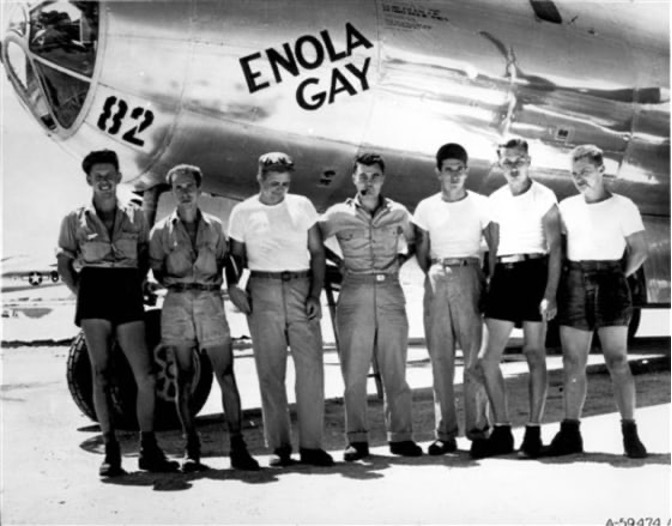
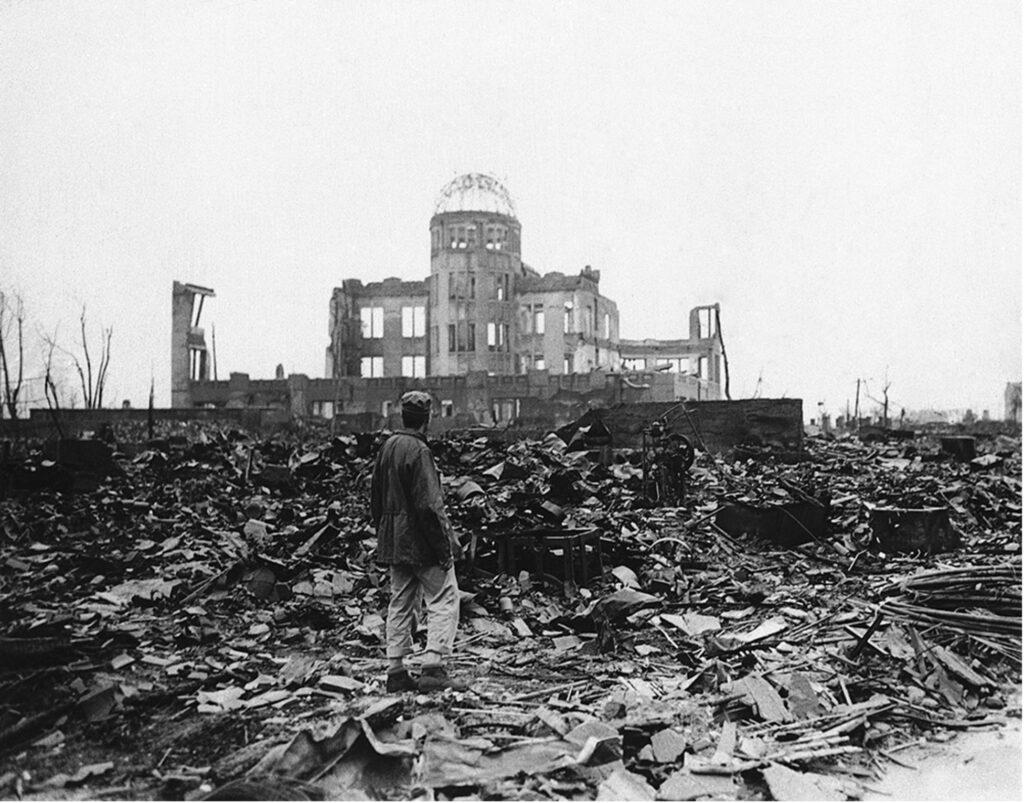
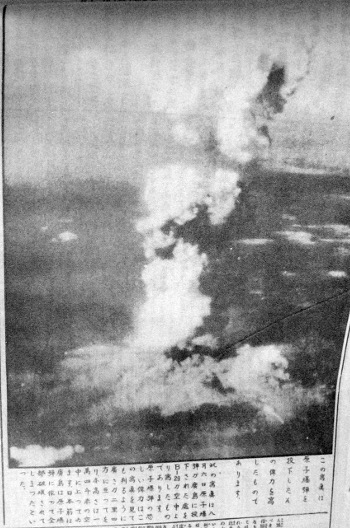
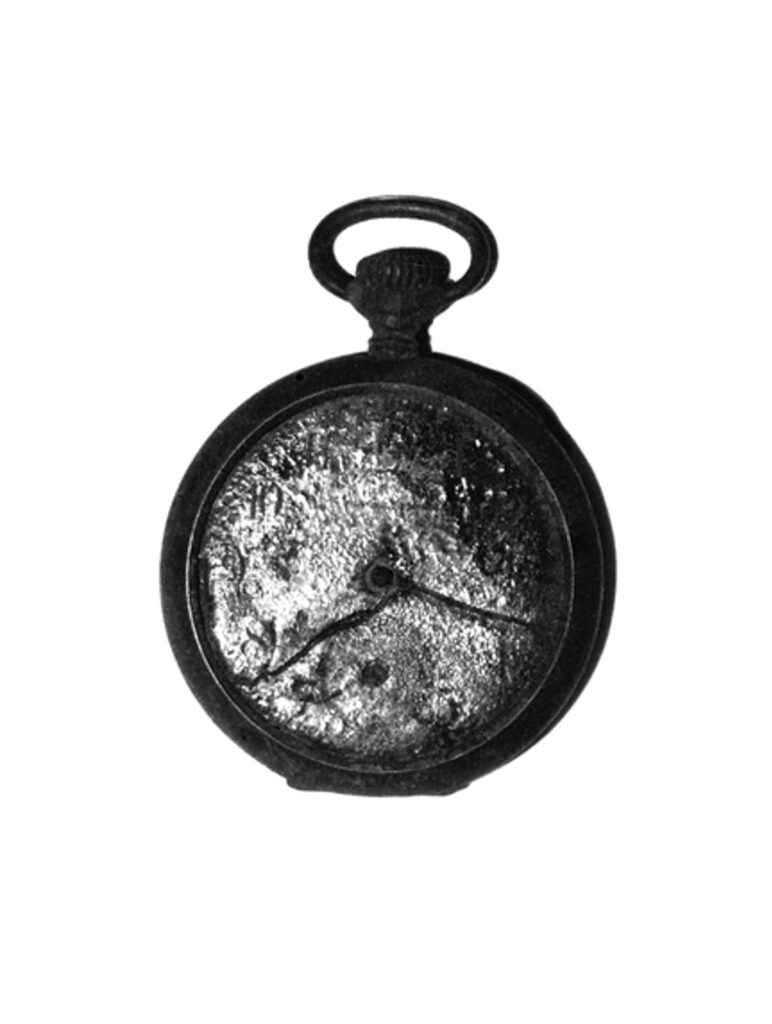
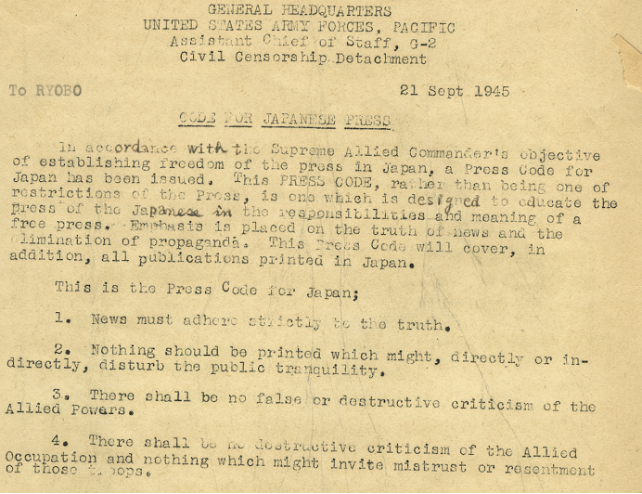
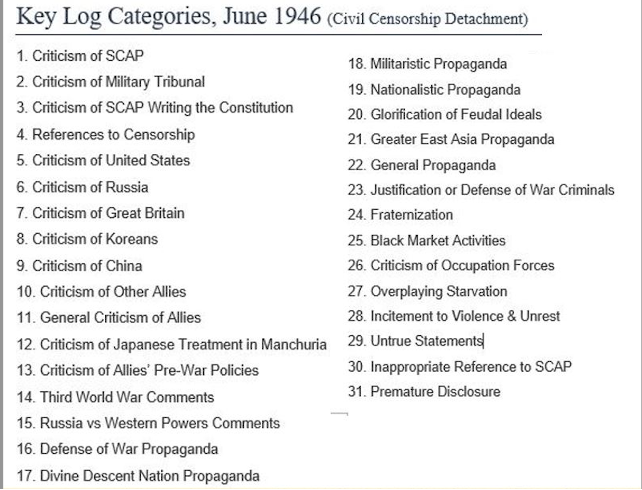
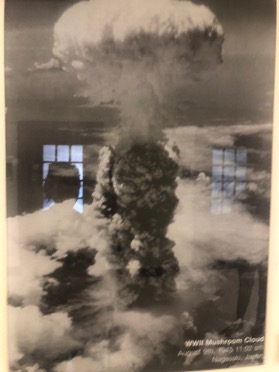
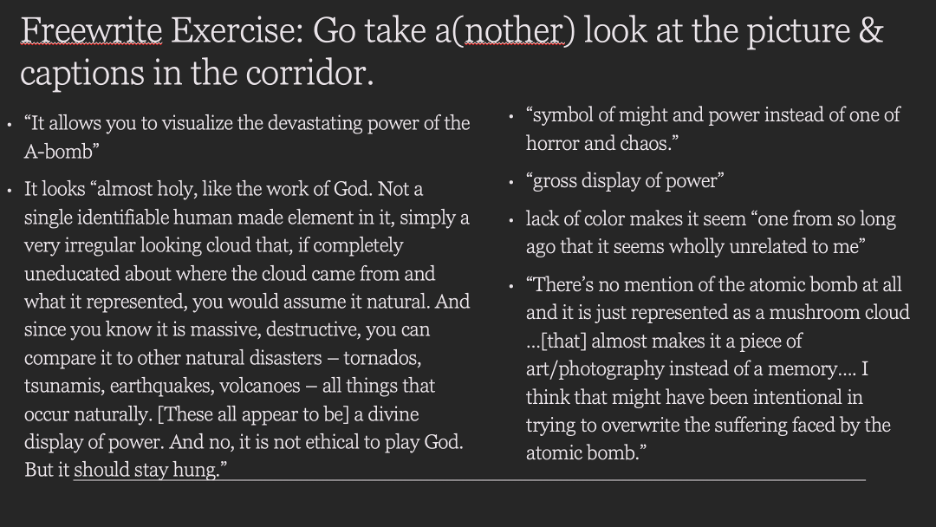
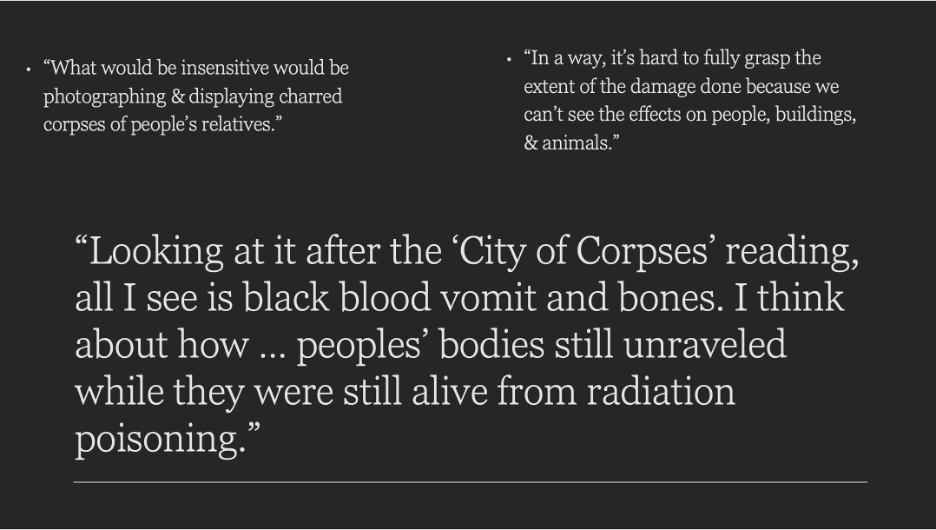
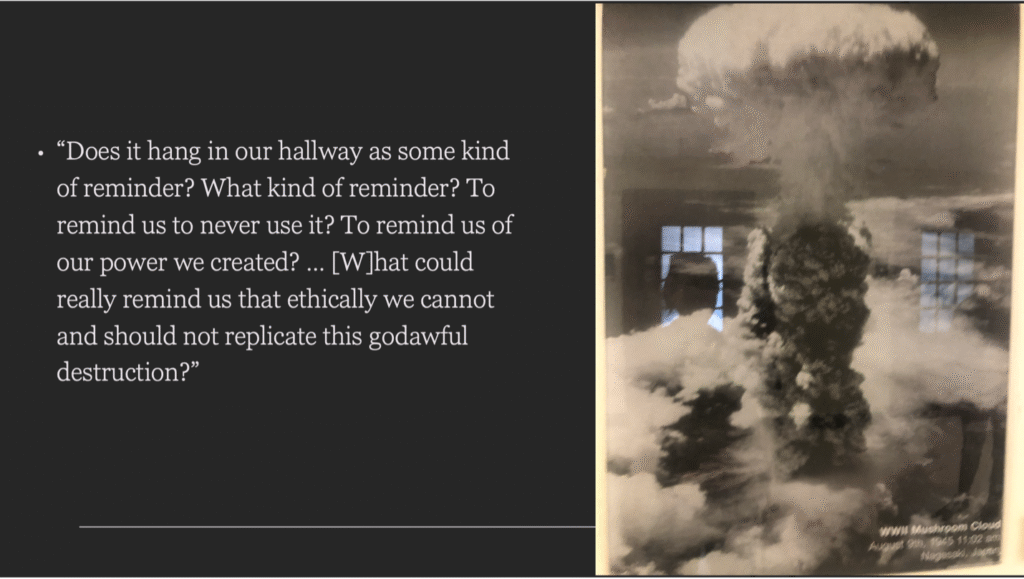
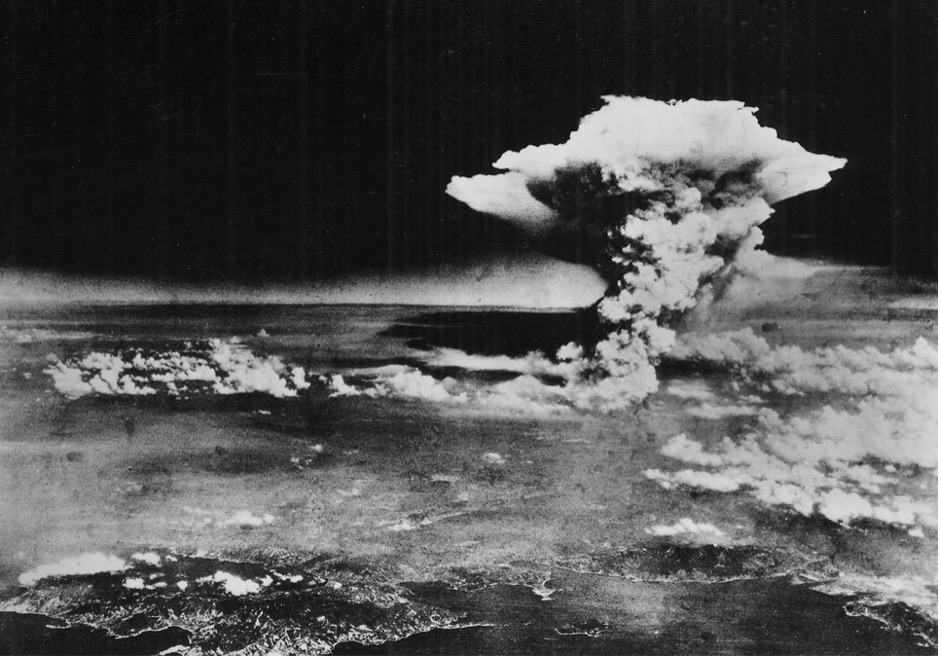
In her paper, “How I Learned to Keep Worrying and Teach the Bomb,” Professor Kirsten Cather draws upon her experience utilizing literature, film,  games, historical documents, and photographs to teach  “the Bomb”, i.e. the atomic bombs that destroyed Hiroshima and Nagasaki and the long political, ethical and aesthetic afterlife of that historic event. Cather utilizes the term “the Bomb,” throughout the paper to highlight how difficult and incorrect it is to re-present the use of the atomic bombs on Hiroshima and Nagasaki in such simplistic terms. The paper grapples with “how to teach ‘the Bomb’ – and also, crucially, how not to teach it.” Cather opens with relaying an “unremitting disaster” early in her teaching career. She introduced the topic to students by showing images of the Bomb. Instead of sparking conversation centered around its effects on Japan, the students fell into a debate on whether it was “right” for the United States to use it, leaving the class split over that question and not engaging with the highly contested meanings and consequences of the Bomb and how it could be represented.

Following the introductory example, Cather recounts how she has since modified her teaching methods. She has shifted her focus to exposing students to diverse personal and political narratives surrounding the Bomb, and their censorship in different national contexts. Through watching films and reading first-person accounts, students explore themes of post-war censorship in Japan and the United States. Cather has also turned to interactive genres, with her students creating a video game around these themes. She stresses the importance of teaching the Bomb in a manner that not simply re-presents its damage using pictures, statistics, and facts, but through methods that sparkunderstanding of the “power and limitations of these representations.”

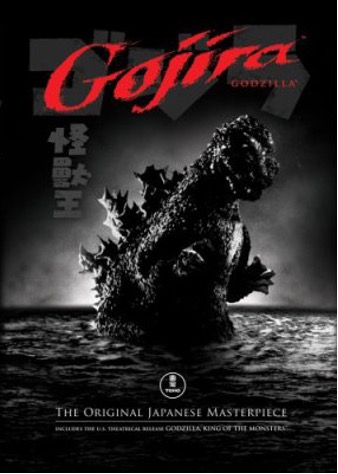
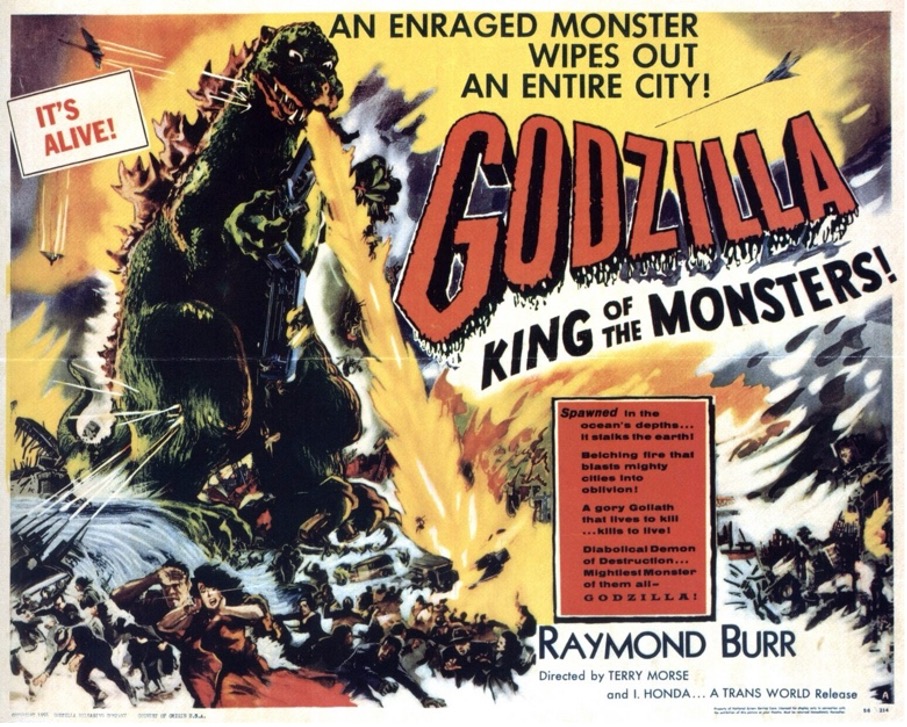
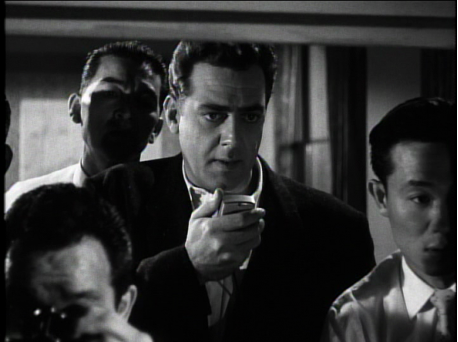
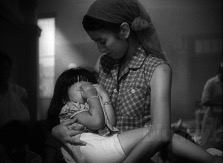
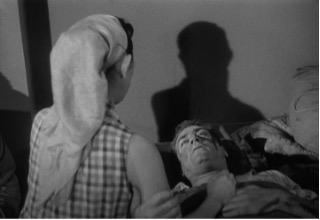
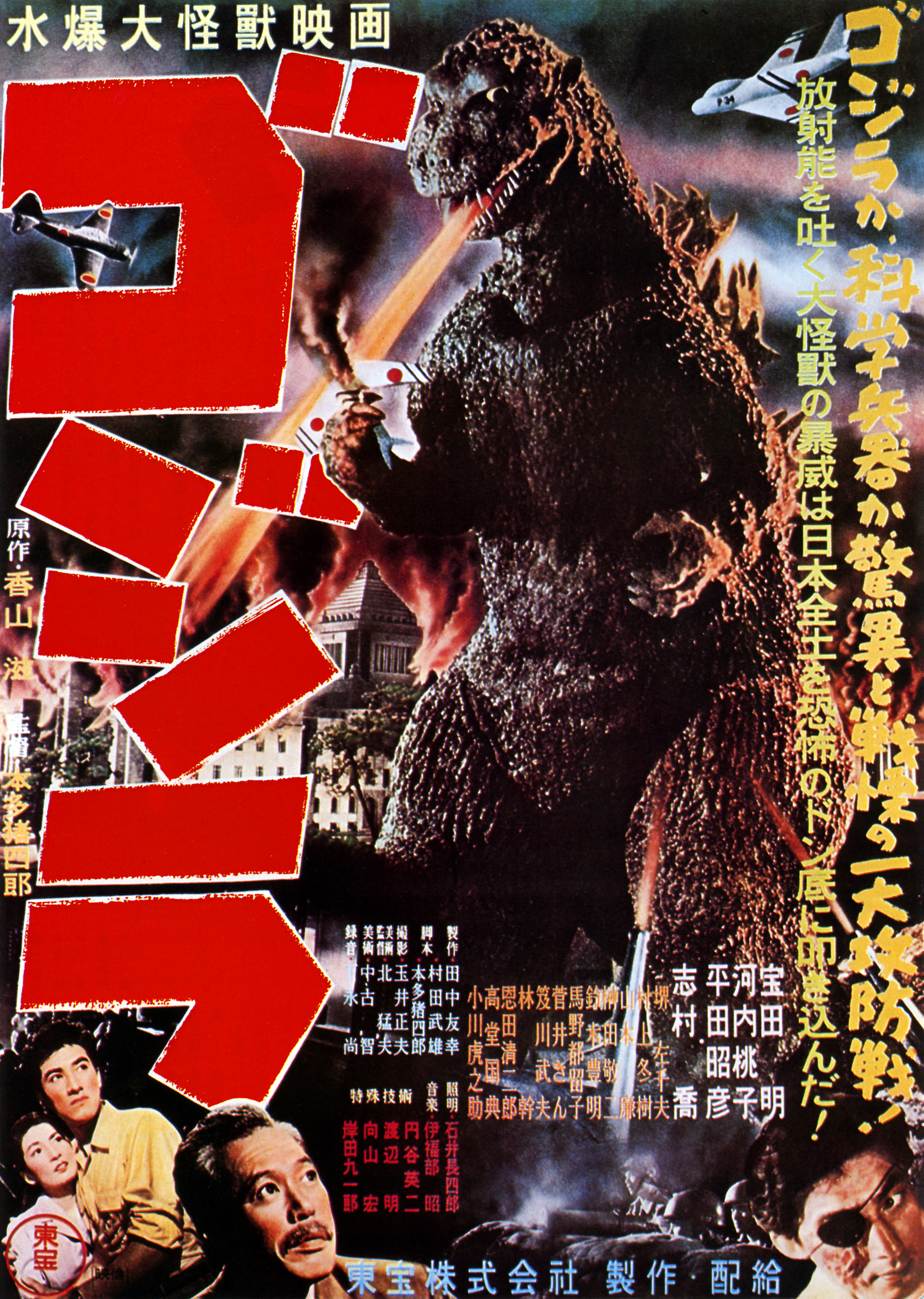
Several questions are raised in responding to Cather’s paper: How do we teach significant moments in history that are becoming more distant from us in space and in time, while remaining true to lived experience? How do we remain aware of the difference in possible narratives that emerge from different sources? Cather’s use of Gojira and Godzilla, King of the Monsters! provides the perfect example of these questions in practice with her students. Through comparing and contrasting the films, Cather’s students were able to view representations of ‘the Bomb’ from the original Japanese filmmakers of Gojira, to the Western recreation in Godzilla, King of the Monsters! The students were able to understand that in essentially poaching the original film, Godzilla, King of the Monsters! recenters the narrative to focus on the West, decentering the Japanese experience.

In Gojira, the protagonist of the story is a Japanese man, while in Godzilla, King of the Monsters!,the protagonist is an American reporter, and the focus of the film is shifted. The narrative becomes centered not on those harmed by the Bomb, but on the American journalist and the West viewing its devastation. By contrasting the two films, students were able to understand both films in a new light, viewing each narrative as a product of its sociohistorical and political context.

How can we then utilize this comparative teaching method in other educational settings, for example, courses on human rights law? Many universities now offer courses on the intersection of narrative/literature and human rights.[1] Law school programs have also offered courses related to the intersection of the law and literature/film.[2] Continuing to incorporate learning through narrative within these classrooms could assist and form similar discussions to those Cather recounts. Both fictional and factual narratives, created by those who have experienced abuses, can assist in underscoring the personal impact of these abuses. Exploring the similarities and differences in these narratives could also provoke more perceptive discussions on policy and the implications of the law. For example, by comparing American media portrayals of immigration to personal accounts by immigrants themselves, educators can center those most affected by injustice.


[1] See, for example, Human Rights and World Literature, Stanford Bull. ExploreCourses, https://explorecourses.stanford.edu/search?q=COMPLIT57; Narrative and Human Rights, Colombia Univ. Dep’t. of Eng. and Compar. Literature, https://english.columbia.edu/content/narrative-and-human-rights.

[2] See, for example, SMNR: Literature and the Law, The Univ. of Tex. at Austin School of Law, https://law.utexas.edu/courses/class-details/20249/28960/; 399 Law and Literature, Duke Law, https://law.duke.edu/academics/course/339; Law in Literature and Film, Colombia Law School Courses, https://www.law.columbia.edu/academics/courses/36420.

How I Learned to Keep Worrying and Teach the Bomb | Kirsten Cather

By Kirsten Cather, Professor of Asian Studies, University of Texas at Austin

***

This piece by Kirsten Cather is a part of the WPS Special Series on "Disarming Toxic Empire." This paper is a revised version of a talk delivered at the  Rapoport Center's Disarming Toxic Empire conference in Spring 2024.

Through “Disarming Toxic Empire,” the Rapoport Center and its partners and co-sponsors fostered an interdisciplinary, intergenerational, and international approach to nuclear weapons, waste, extraction, and energy. Conference participants—scholars, artists, advocates, and activists—considered and contested the unjust, imperial histories and geographies of nuclear testing, production, storage, and weaponry through channels of intergenerational memory and action. Through this Special Series of the Rapoport Center’s Working Paper Series, participants in the conference were invited to publish their remarks or papers based on their remarks, with short responses by graduate students part of the Rapoport Center’s Working Paper Series editorial committee. These exceptional pieces capture the critical insight and clarity that were a common feature of contributions to the conference. Considering sites ranging from the Navajo Nation and the Pacific Islands to Japan, North Africa, and Ghana, their exciting interventions showcase the breadth and depth of work considering “toxic empire” that is taking place at the University of Texas at Austin and around the world. To watch the conference presentations, visit the “Disarming Toxic Empire” playlist on YouTube.

***

Kirsten Cather is Professor in the Department of Asian Studies at UT Austin who teaches Japanese literature, film, and culture. Her research and teaching tackle morally and politically sensitive topics, such as the landmark criminal trials surrounding “obscene” (waisetsu) works of art in her first book The Art of Censorship in Postwar Japan (University of Hawai‘i Press, 2012) and, in her second monograph Scripting Suicide in Japan (University of California Press, 2024), the question of how and why individuals write and read in the face of suicide.

***

I begin with a confession. I’m a worrier. Thus, the title of my talk: “How I Learned to Keep Worrying and Teach the Bomb.” After first proposing this title to the organizers of the Disarming Toxic Empire Conference, I worried it might sound too flippant. (Afterward, I also realized that the allusion was largely lost on my current-day students who were unfamiliar with Kubrick’s 1964 Dr. Strangelove, and I worried all the more.) Yet, the title remains for it captures the dilemma I have faced over the years: how to teach “the Bomb” – and also, crucially, how not to teach it—to students today.

I come at this topic from the perspective of someone teaching this subject in the context of Japanese literature, film, history, and culture classes. I start by sharing an unremitting disaster of a teaching experience from about fifteen years ago.

It happened while I was teaching “Introduction to Japan” early on in my career. This large, lower-division survey is tasked with the rather difficult project of somehow capturing the whole of “Japan” across all time. It gets a wide range of students, some who cannot identify Japan on a world map on day one, while others are Japanese or Asian Studies majors and have already taken advanced courses in Japanese politics, history, language, etc. No unit proved more difficult than the short weeklong section on the atomic bomb.

Fig. 1: The iconic mushroom clouds over Hiroshima (left) and Nagasaki (right)

On the first day of our discussion of the A-bomb, I used a series of slides like the above. I started with the iconic photos of the mushroom clouds, juxtaposing oft-forgotten Nagasaki beside Hiroshima (Fig. 1),[1] then cut to what I’ve always found to be a disturbing photo, which  simultaneously humanizes and dehumanizes the bomb by capturing its human agents, young men posed for a photo in front of the B-29 the “Enola Gay,” named after the pilot’s mother (Fig. 2).

Fig. 2: The crew of the Enola Gay B29 bomber poses before the bombing of Hiroshima, Japan, on

Aug. 6, 1945. Colonel Paul Tibbets at center. Credit: U.S. Army Air Force via AP.

Then I shifted  to scenes of the destruction wrought by the bomb: moving from aerial views of Hiroshima pre- and post-attack to photos on the ground with this iconic shot of the sole building remaining in the city center as the Atomic Bomb Dome (Genbaku Dōmu), or what is called in English the Hiroshima Peace Memorial (Fig. 3). As of 1950, this became a designated historical site that was to be preserved forevermore. As the original Japanese suggests, the dome was to re-present the bomb itself in some tangible form, whereas the English-language translation pointedly rebrands it as an embodiment of peace.

Fig. 3: The Atomic Bomb Dome (Genbaku Dōmu), aka the Hiroshima Peace Memorial

There are many similar photos of this ravaged landscape, but I always preferred to use this shot with the man in the foreground for I thought it helped suggest both the enormous scale and the human cost. I recently discovered the man in the foreground is not a Japanese survivor like I’d thought, but instead an allied war correspondent. Perhaps, one might think, this detail does not matter all that much. But perhaps, as I’ll argue below, it matters deeply.

I tried to supplement these photos with statistics about how many died and how much of the cities were devastated by the blasts (although these figures vary wildly depending on their source, with, for example, death estimates anywhere from 70,000 to over double that number at Hiroshima).[2] I’d discuss with my students both the enormity of the instantaneous destruction and the terrifying, long-lasting effects carried by the bomb’s victims, or hibakusha – a neologism coined to capture the effects of this new kind of bomb: 被爆者, or Victim-Bomb-Person.

In the hopes of getting my students also to think through how Japanese people on the ground who were not in Hiroshima may have first encountered or come to know about the bomb, I cited U.S. propaganda leaflets, ones that threatened utter destruction unless Japan surrenders and callously point to Hiroshima as Exhibit A (Fig. 4) in its caption that reads:

TO THE JAPANESE PEOPLE:

America asks that you take immediate heed of what we say on this leaflet.

We are in possession of the most destructive explosive ever devised by man. A single one of our newly developed atomic bombs is actually the equivalent in explosive power to what 2000 of our giant B-29s can carry on a single mission. This awful fact is one for you to ponder and we solemnly assure you it is grimly accurate.

We have just begun to use this weapon against your homeland. If you still have any doubt, make inquiry as to what happened to Hiroshima when just one atomic bomb fell on that city.[3]

Fig. 4: Hiroshima leaflets belatedly dropped on the Japanese, August 10, 1945, one day after the atomic bombing of Nagasaki

To conclude, I showed the iconic shot of the single Shinto torii gate remaining after the bombing of Nagasaki on August 9th, and, finally, cited the Imperial Rescript on Surrender of August 15, 1945, which included yet another depiction of the bomb:


To our good and loyal subjects:

After pondering deeply the general trends of the world and the actual conditions obtaining to our empire today, …we have ordered our government to communicate to the governments of the United States, Great Britain, China, and the Soviet Union that our empire accepts the provisions of their Joint Declaration. …

[N]ow the war has lasted for nearly four years. Despite the best that has been done by everyone—the gallant fighting of the military and naval forces, the diligence and assiduity of our servants of the state, and the devoted service of our 100 million people—the war situation has developed not necessarily to Japan’s advantage, while the general trends of the world have all turned against her interest.

Moreover, the enemy has begun to employ a new and most cruel bomb, the power of which to damage is indeed incalculable, taking the toll of many innocent lives.

Should we continue to fight, it would not only result in an ultimate collapse and obliteration of the Japanese nation, but also it would lead to the total extinction of human civilization.[4]

Notably here, this “new and most cruel bomb,” dropped by an unnamed “enemy” carries dire implications not only for the Japanese nation but for all “human civilization.”

At the end of class, I finished with images that I hoped could suggest how the bomb made time stand still in these places – literally at times – and, also, how time moves on in both Hiroshima and Nagasaki (Fig. 5).

Fig. 5: Time standing still and moving on in Hiroshima and Nagasaki[5]

And I ended with those all-too-familiar iconic mushroom clouds, yet again.

What followed this PPT presentation was an utter disaster of a teaching experience: a very lengthy and heated debate among students over whether it was “right” to drop the bomb or not. Some in the class quoted secret government documents, statistics, facts, while others tried to impress the physical and emotional horrors of the bomb on their classmates. Many sweeping generalizations were made about both “the Japanese” and “America” (a noteworthy linguistic distinction where students point only to a geographic bond/boundary uniting their own country while aggregating a foreign nation’s entire people into one coherent indistinguishable mass). In the end, it left them divided and me worrying. I knew I’d set this class up for failure. Both the students and I were unequipped to debate this matter, and for my part, uninterested in doing so in this way.

The bar was set low for how not to teach the bomb.

My pedagogy needed a major rethinking.[6] Over the years, I have continued to experiment with new ways to teach this topic in ways that hopefully enable me and my students to go beyond any stark black-and-white polarizing vision of “the bomb,” a misnomer that itself suggests the inadequacy of any such re-presentations. As if language or image or numbers could capture it; as if there were only one bomb; as if that were the end of the story.

The use (and abuse) value of Gojira v. Godzilla, King of the Monsters!

I’ve had better success teaching the bombs in the context of my upper-division class called “Genji to Godzilla, Adaptations of the Japanese Classics.” With this class, the point is to think through how cultural productions travel across time and place in the form of adaptations. While the original Gojira – a black and white somber subtitled film from 1954 – does not always thrill students, comparing and contrasting it with the 1956 Hollywood remake Godzilla, King of the Monsters! never fails.[7]

Fig. 6: Gojira (1954) v. Godzilla, King of the Monsters! (1956)

Admittedly, calling this film a “remake” is a bit of a misnomer. In what could be called a brilliant marketing feat or highly unethical plagiarism, the Hollywood filmmakers basically, but selectively, used footage from director Honda Ishirō’s original film while intersplicing scenes that put Raymond Burr – as United World News reporter Steve Martin – at the center of all the action and all the moral decision-making about whether and how to kill Godzilla.

Fig. 7: United World News reporter Steve Martin at the center in Godzilla, King of the Monsters!

When I have students watch these films back-to-back, what they (and I) most enjoy is their outrage over this “self-insertion” of an American into the drama. The film’s racial politics and dubious dubbing practices are outrageous.

Juxtaposing the two films forces us to think about how the story of the bomb can and cannot be told in various contexts. In the adaptation, we see many moments of Japanese suffering muted at the expense of amplifying the danger that the bomb poses to all of the world. It is useful to recall here the rhetorical echoes with the emperor’s own surrender speech that invoked this universal good as well for it suggests the ways that sometimes the very same story can serve multiple audiences. Reframing victimhood at the hands of the agentless bomb as a universal danger enables both sides to conveniently forget acts of victimization. In the Hollywood version as well, the emphasis is on the dangers that the bomb poses to our representative stand-in for that world, our hunky American protagonist, who is, not coincidentally, a United World News reporter. To show just one example, take a scene that appears quite late in the original film after Godzilla’s attack on innocents. There, its point is to show how witnessing the suffering of innocent children and women spurs one of the Japanese heroes of the film – Emiko – to save the day.

Fig. 8: Emiko, as witness and heroine in the face of Japanese suffering in Gojira, turning to White

Saviors (and Sufferers) in Godzilla, King of the Monster!

Fig. 9: Steve Martin to the rescue

By analyzing these two films back-to-back, we can see the difficult situation of “When ‘Them!’ is U.S.” – to borrow the fantastic title from Chon Noriega’s essay on the subject.[8] It is not just the question of who gets to be the hero that presents audiences with a problem, but the nature of the antagonist too. Godzilla, the monster, is a complicated figure in both films. He is both a victim, awakened from his slumber in his natural environs in the depths of the Pacific seas by H-bomb testing (pointedly, by an unnamed agent in both films), and an agent of destruction, wreaking havoc on innocent civilians. Simultaneously a victim and a victimizer embodied in monstrous form. The bivalent nature of this beast makes for a tricky film for students to understand. Each must be situated in the politics of what could and what could not be said about “the bomb” in cold war Japan and America respectively. As I discuss below, this requires a consideration of censorship provisions and prohibitions.

Godzilla is a useful pedagogical vehicle to keep some memory of the bomb alive, especially given its longevity, with many remakes and sequels that continue to adapt to nuclear crises today. But Godzilla also has its limits: the nature of the beast is not always immediately clear in these generic B-monster films, especially as audiences become more distant in time and space from the historical horror at its origins. In horror films, monsters often reflect contemporary societal anxieties, but when that local context shifts, the origins of the monster become obscured. In this case, the fact that Godzilla’s awakening is a direct result of U.S. 1954 hydrogen bomb testing in Bikini Atoll is conveniently forgotten. In the U.S., Godzilla is remembered as a Japanese icon of epic proportions, but as this 1985 news poll survey suggests, audience’s memory and knowledge may be incomplete. Respondents identified Emperor Hirohito and Bruce Lee (!) alongside Godzilla as the most famous Japanese they know.[9]

Fig. 10: A 1985 CBS/New York Times Poll of Americans

Banned in Japan: Using censorship of the X-XXX to teach the O-OOOO

Japan’s postwar Constitution opens with this unequivocal declaration of peace:

We, the Japanese people, acting through our duly elected representatives in the National Diet, determined we shall secure for ourselves and our posterity the fruits of peaceful cooperation with all nations and the blessings of liberty throughout this land, and resolved that never again shall we be visited with the horrors of war through the action of government.[10]

Known also as the MacArthur Constitution, this document was drafted by Occupation personnel (after Japanese-scripted drafts were deemed unacceptably conservative) and retranslated back into Japanese during a politically and linguistically fraught process that Kyoko Inoue has traced in her excellent monograph on the subject (Fig. 11).

Fig. 11: MacArthur’s Constitution, puppets and puppeteers

As this highly curated newspaper photo and its satirical cartoon version suggest, after Japan’s defeat in WWII, ultimate authority now rest with the new cult figure of Douglas MacArthur as the Supreme Commander of Allied Powers (SCAP). Perhaps not entirely coincidentally, at times, he bears an uncanny resemblance to our erstwhile Godzilla hero Steve Martin.

Fig. 12: MacArthur and Steve Martin, pipe-smoking heroes

The new postwar Constitution explicitly forbids censorship. Article 21 unambiguously states: “Freedom of expression is absolutely guaranteed. No censorship (ken’etsu) shall be maintained.” Censorship was to be abolished in law and in word, but not in practice. Although nominally censorship was to be relegated to a demonic fascistic prewar Japanese empire that had no part to play in a forward-looking democratic postwar nation state, it endured in Occupation-era Japan, and, equally unsurprisingly, endures still today.

Both Godzilla films (1954 and 1956) post-date the Occupation period, which on Japan’s mainland lasted from September 1945 through April 1952 (and on Okinawa officially lasted until 1972 with prominent U.S. military presence continuing today). Yet, interestingly, both films adhere to written and unwritten Occupation censorship policies regarding discussions of the atomic bomb.

As early as September 21, 1945, the Civil Censorship Detachment (CCD) issued a new Press Code (Fig. 13). As its preamble suggests, censorship was being instituted, paradoxically, in the name of freedom of expression, but could not itself be named. The word “censorship” is studiously avoided here:

This PRESS CODE, rather than being one of restrictions of the Press, is one which is designed to educate the press of the Japanese in the responsibilities and meaning of the free press.

It’s not hard to read into this Press Code to intuit that discussions of the atomic bombs would be prohibited whether out of fear of “directly or indirectly, disturb[ing] public tranquility” (item #2) or of construing “destructive criticism of the Allied Occupation…that might invite mistrust or resentment of those troops” (item #4). But I would stress the conspicuous absence of any mention of the A-bomb here, or even in the Occupation censors’ own internal guidelines, as seen in the detailed (and highly repetitive) 31 Key Log Categories from June 1946 (Fig. 13). The forced invisibility of any regulations surrounding the atomic bomb left authors at sea trying to discern the unwritten rules.

Fig. 13: Civil Censorship Detachment (CCD) Press Code and Key Log Categories

            Credit: Gordon W. Prange Collection, University of Maryland.

Ōta Yōko was one such author whose experiences trying to publish her own harrowing first-person account of the bomb suggest the many written and unwritten rules of censorship. Ōta survived the August 6, 1945 atomic bomb in Hiroshima where she had taken refuge after evacuating firebombed Tokyo for her hometown of Kushima. Over a four-month period, she scrambled to write an account that she titled City of Corpses (Shikabane no machi) while living in fear that she would die of radiation poisoning. She produced over 350 manuscript pages scraped from available materials, including shōji wall papering, food wrappers, and toilet paper, finishing the manuscript in November 1945.[11] Sometime in 1946, she sent her handwritten copy to her regional Occupation censorship office in Kokura, Kyushu only to hear back that she had not submitted the required two copies. In Winter 1947, she was visited by a US Army intelligence officer with a translator in tow. They interrogated her as follows, according to an account she published in May 1953 (her dialogue and interior monologue appears in italics below):

Q: Apart from you yourself, who has read the manuscript of your book?

A: Only me before I sent it off to the publisher in Tokyo. I received a letter from Mr. E. of the editorial staff, so he must have read it.

Q: What are Mr. E’s ideas and politics? What Japanese political party does he belong to?

A: He is a liberal. I don’t know him personally, so I can’t say; but to go by the past habits of Japanese intellectuals, he probably doesn’t belong to any political party.

Q: Aside from [any] Japanese, has any foreigner read the manuscript?

A: No. No foreigner has read it.

Q: Since August 6, have you walked through Hiroshima?

A: Yes.

Q: At that time, were you in the company of foreigners?

A: No.

Q: Did you write in your manuscript about any atomic bomb secrets?”

A: No. I don’t know any atomic bomb secrets. What I wrote about was simply what the city of Hiroshima and the people in it experienced.

Q: I want you to forget your memories of the atomic bomb. America won’t use the atomic bomb again, so I want you to forget the events in Hiroshima.

A:  I don’t think I can forget. Even if I wanted to forget, I couldn’t.

Midway through their conversation, Ōta turns the tables and questions the officer about Occupation censorship standards surrounding the A-bomb, asking:

Q: I hear that in respect to the atomic bomb there is an unwritten rule that only scientific reports can be published; I know that no prohibition has been issued publicly Why is that?

A: It’s not my job to answer.

Q: Even if I can’t publish, I have to write. Apart from any atomic bomb secrets [which I don’t know], is what cannot be published a matter of the cruelty involved? Or is it a total prohibition?

A: It’s not my job to answer that, either, so I can’t answer. I want you to forget the atomic bomb.

I could not accept the American officer’s word that America would not drop another atomic bomb. Given the fact that America dropped it on Japan, there was the possibility of bringing about a crisis in the next, greater war – the pain in my heart was ineradicable. Then, out of the blue, I said:

“If I can’t publish it in Japan, I’ll make a present of it to America.” The resentment piercing my breast suddenly was gone.[12]

This back-and-forth is illuminating in its own way: it suggests what could not even be said about what could not be said.

At first, Ōta published only a self-censored version of City of Corpses in November 1948. Explaining in 1950 why that earlier account was incomplete, she gestured to censorship without mentioning the taboo word:

I was unable to publish City of Corpses even after the war had ended, due to unfortunate conditions that had nothing to do with me personally. …Not being able to publish – that was another of the fateful burdens writers of a defeated nature had to shoulder. City of Corpses was published, in November 1948. But a fair number of pages, containing parts that I thought important, had been excised voluntarily. The result was a work that was watered down and incomplete.[13]

In May 1950, after unwritten restrictions on atomic bomb writings had loosened, Ōta published a second “complete” version. In the preface to this version, she explains her impetus for writing this account so hurriedly with “Death …breathing down my neck. If I was to die, I wanted to first fulfill my responsibility of getting the story written down.” She apologizes for its inadequacy as a literary work, explaining she had “neither the time nor the emotional reserves necessary to portray that reality clearly and skillfully in the format of superior fiction.” She apologizes for her inability to capture the experience in its entirety, explaining, “My pen did not take in the whole city. I wrote only of my very limited experience of the riverbed.” (147-148) Faced with the self-imposed task of writing the A-bomb, Ōta finds herself blocked at many turns – both by external and internal limitations.

In this preface to the 1950 “complete” version, Ōta in fact suggests that no written account of the bomb could possibly capture the experience. Any pen was insufficient “to communicate in writing the indescribable fright and terror, the gruesome misery, the number of victims and dead, the horrifying conditions of atomic bomb sickness.” (148)

First-person accounts like these are now crucial to my pedagogy. In a new class I started teaching for the first time in Spring 2024 called Banned in Japan, I’ve found that probing the first-person accounts and the archives that do remain in the face of this invisible censorship highly productive. Texts like these offer an exciting way for students today to become archeologists of sorts. They get to uncover the covered. I’m indebted to those who have ensured that these traces are preserved and accessible to our students – whether by translating first-person accounts, like Eiko Otake’s beautiful translation of Hayashi Kyōko’s own first-person account of her experience of the Nagasaki bombing and its aftermath in From Trinity to Trinity (2010), or precious archives like the Dolph Briscoe Center for American History at UT Austin or the Gordon W. Prange Collection at University of Maryland.

The lens of censorship is a useful one to engage students. Admittedly, it’s a bit of a cheap trick – by stressing the ways that certain audiences in certain points in time and place were not allowed to see or read something, students are enticed to want to see and to read. As a literature and film teacher, this is the dream.

More recently, along with my colleagues in History here at UT – Adam Clulow and Mark Ravina – we’ve been trying to ensure that students are not just consuming but also creating the kinds of materials that they, and hopefully future generations of students, will continue to want to see and read and to play. At UT JapanLab, teams of student interns work together under faculty supervision to create high-quality digital Japanese Studies resources over the course of a fifteen-week semester. The students have a lot of autonomy to choose their preferred medium for this, and not surprisingly, most are video games.

My most recent team in Fall 2023 created a censorship video game called The Censor’s Desk (Fig. 14). The basic premise is playing the role of an impossibly long-lived censor in Japan from around 1900 to today.

Fig. 14: The Censor’s Desk, UT JapanLab

Here is the segment they created around the atomic bomb sequence centered around author Ōta Yōko’s harrowing account of encountering the bomb in Hiroshima and the censor in its aftermath:

Fig. 15: Excerpt of Ōta Yōko’s encounter with the censor in The Censor’s Desk, UT JapanLab

Like my course “Genji to Godzilla: Adaptations of the Classics,” this game forces a reading of artistic texts with an eye to considering the rapidly changing historical and legal contexts. To create this segment, my students integrated Ōta’s own accounts and responses to the written and unwritten rules of censorship she encountered at many levels.

What is most brilliant about the team’s choices was that for key authors like Ōta, the player’s encounter is not just with a text, but the flesh-and-blood (or pixelated version) of the author in an interview phase. The censor-gamer can subjectively interpret the existing rules, but they also must experience the consequences for doing so. In Ōta’s case, passing the first version is a bombshell that ends the game; if you pass it, you get fired. If you don’t pass an, the author gets a chance to speak back in their own words, here in the form of direct quotes drawn from Ōta’s own accounts. The game beautifully brings to life this difficult body of texts and the bodies of authors in ways that will keep them alive for a long(er) while, I hope.

Worth a thousand words? The powers and limits of picturing the A-bomb

Let me briefly turn back to that early disaster of teaching and that iconic image of the mushroom cloud yet again. What might give us pause is recalling that just such an image was included in the Hiroshima leaflets (see Fig. 4 above). The Atomic Heritage Foundation includes this explanation of the image on their website:  

This photo shows the destructive power of the atomic bomb that was dropped on Hiroshima. This photo was taken from B-29 in the air after the atomic bomb was dropped on Hiroshima on August 6. The atomic bomb’s horrendous destructive power can be understood by viewing this photo. As you see, this atomic bomb blast extended to a radius of 8 km, and the height of the bomb cloud reached about 14,000 m into the sky. The Japanese government said that Hiroshima was completely destroyed by the atomic bomb. (all italics added)[14]

This rhetoric suggests that in this photographic representation of the bomb, one can see and can understand. The question I return to here is what power did and does any re-presentation of the bomb have, then or now? In Regarding the Pain of Others, Susan Sontag has written about the ethical and moral difficulties posed by images of suffering especially in an image-saturated world.

To suffer is one thing; another thing is living with the photographed images of suffering, which does not necessarily strengthen conscience and the ability to be compassionate. It can also corrupt them. Once one has seen such images, one has started down the road of seeing more – and more. Images transfix. Images anesthetize.[15]

Sontag wrote this back in 2003, words even truer today in our own image-saturated world.

If we look now, what do we see in this photo (Fig. 16) of the WWII Mushroom Cloud in Nagasaki on August 9th, 1945? A tag on the side notes that the name of the bomb was Fat Man. This photo happened to be hanging just ten feet down from the classroom door where I was teaching my censorship class last Fall in the History building on UT campus.

Fig. 16: WWII Mushroom Cloud | August 9th, 1945 | 11:02 a.m. | Nagasaki, Japan

A few weeks before we had studied anything about the A-bomb and its censorship in this class, I surveyed my students to see what they saw. Only 2 of 28 students had registered seeing the photo at all, seemingly all too desensitized to this all-too-familiar image. As one student reflected, “I think seeing so much media about the atomic bombs my whole life truly desensitized me to the image.” Another noted that “Yes, I had seen the picture of the bomb before, but I never really gave it any second thought. When I think of the bomb, similar pictures come to my head. One of a mushroom cloud framed above clouds, but never really portraying the damage it causes on the ground.”[16]

After reading Ōta Yōko’s first-person account in City of Corpses alongside the most famous English-language account Hiroshima by John Hersey, students were prompted to look again and reflect upon what they now saw. Students’ comments were wildly split. Some saw the enormous power of the bomb on par with a divine or natural act. Others found that to be precisely the problem. The class was divided, and a lively debate ensued.

Fig. 17: Student self-reflections on seeing or not seeing the photograph of the bomb

This time, the debate was a welcome one. I could stop worrying because in a sense, I had made my problem theirs – by asking them to reflect on the power and limitations of these representations. Their responses were a teacher’s dream. They were reading and seeing carefully, thinking about art and re-presentations, about history and ethics. Reflecting about their own positions in the classroom and in the world. Reflecting about the positions of others who were distant in time and in space but brought proximate through their own acts of reading and looking with care.

Fig. 18: Seeing through the glare

I would like to end with this one student’s beautifully self-reflexive comments juxtaposed beside this image that I took with my ancient iPhone 8 that week of class. At first, I kept trying to retake it to get rid of the glare and the reflection, worried that it didn’t capture the “original” well enough. But I realized that it is perfect in the way it captures not just – or only, or even – “the” bomb, but the shadowy reflections of me and my students trying to see through the glare.[17]


[1] For the captions for these iconic mushroom cloud images, see https://www.cnn.com/2020/08/04/world/gallery/hiroshima-nagasaki-atomic-bomb/index.html.

[2] Alex Wellerstein, “Counting the Dead at Hiroshima and Nagasaki,” Bulletin of the Atomic Scientists, August 4, 2020, https://thebulletin.org/2020/08/counting-the-dead-at-hiroshima-and-nagasaki/.

[3] For the full translation and other “warning leaflets,” see https://ahf.nuclearmuseum.org/ahf/key-documents/warning-leaflets/ and https://blog.nuclearsecrecy.com/2013/04/26/a-day-too-late/. Translated text also available at https://www.trumanlibrary.gov/library/research-files/translation-leaflet-dropped-japanese-ab-11.

[4] “The Jewel Voice Broadcast” (August 14, 1945), Atomic Heritage Foundation, https://ahf.nuclearmuseum.org/ahf/key-documents/jewel-voice-broadcast/.

[5] Hiroshima images: https://www.huffpost.com/entry/hiroshima_b_7950636; https://www.voanews.com/a/obama-hiroshima-visit-to-emphasize-current-us-ties-with–japan/3340903.html. Nagasaki images: https://www.awm.gov.au/collection/045221?image=1; https://when-the-cold-breeze-blows-away.fandom.com/wiki/Sann%C5%8D_Shrine.

[6] In Fall 2024, I led a workshop geared at middle school and high school teachers “Teaching the Bomb(s): Alternatives to Oppenheimer from Japanese Visual and Popular Culture” sponsored by the National Consortium for Teaching about Asia (NCTA) and our UT Center for East Asian Studies (CEAS). I was dismayed to find that the nature of AP History classes generally entail structuring discussions around this issue precisely in these terms, offering students a smattering of archival documents from which to base their arguments about the necessity of dropping the atomic bombs on Japan.

[7] To be fair, the Hollywood marketing of the film bore more resemblance to the original B-movie release in 1954 Japan than the recent Criterion Collection somber cover might suggest. See an original Japanese poster at https://upload.wikimedia.org/wikipedia/commons/9/95/Gojira_1954_Japanese_poster.jpg.

[8] Chon Noriega, “Godzilla and the Japanese Nightmare: When ‘Them!’ is U.S.” (Cinema Journal, Autumn 1987), 63-77.

[9] William Tsutsui mentioned this fascinating CBS/NYT news poll in a talk he gave at UCLA on May 23, 2005, https://www.youtube.com/watch?v=UoJ-9VkV6ks.  

[10] The official English-language translation of the Japanese postwar constitution is available at https://japan.kantei.go.jp/constitution_and_government_of_japan/constitution_e.html.

[11] Ōta Yōko also published an earlier first account before Occupation censorship regimes were fully in place, an essay in the September 30, 1945 Asahi Shinbun titled “A flash as at the bottom of the sea: Encountering the A-Bomb” (Umizoko no yōna hikari: Genshibakudan no kūshū ni atte).

[12] Richard H. Minear, “Translator’s Introduction,” Hiroshima: Three Witnesses (Princeton: Princeton University Press, 1990), 138-142 passim. The dialogue is based on Ōta’s account in her May 1953 “Sanjō” (Mountaintop) (orig. Gunzō).

[13] Ōta Yōko, “Preface to Second Edition,” translated by Richard H. Minear in Hiroshima: Three Witnesses (Princeton: Princeton University Press, 1990), 149-150. Subsequent page numbers cited parenthetically.

[14] Alex Wellerstein, “Warning Leaflets,” Atomic Heritage Foundation, https://ahf.nuclearmuseum.org/ahf/key-documents/warning-leaflets/.

[15] Susan Sontag, On Photography (New York: Picador, 1977), 20.

[16] I thank my students for their permission to share their candid and thoughtful reflections.

[17] An update from November 2024: When teaching my censorship class again on that corridor in Fall 2024, I noticed that the photo no longer hangs. When I inquired, I was told it was taken down by the department because of complaints. We might ask ourselves what are the ethics of this erasure? If its former presence was problematic, what to make of its disappearance? Now there is only a blank space with screw holes visibly pockmarking the wall and a side tag redacted so that any mention of “Fat Man” is obscured. Its absent presence nonetheless offers a haunting reminder for those who know where and how to look.