Yearly Archives: 2014

Swiss Direct Democracy: a Model for Europe?

Small states by definition are too small to be good at everything. So they tend to bundle their resources to excel at one or two things. Like chocolate, or watches. But small states are also laboratories for ideas–like the plan to make Sweden an oil-free society by 2020. The Swiss contribution to the global melting pot of ideas is direct democracy. In Switzerland, a sufficient number of signatures can force a popular referendum on any federal law or can require a vote on a constitutional amendment on any issue imaginable.

To be sure, direct democracy is a beautiful thing–even when people make stupid decisions. Switzerland, the haven of direct democracy, showcases both the brilliance and the absurdity of direct democracy as a system of governance. While the Swiss elect a parliament, as do citizens in other democracies, the Swiss also can use referendums to undo the work of the very same parliament they just elected. So direct democracy essentially creates a parallel system that can control and even bypass the parliamentary process.

The advantage of this system is that politicians are forced to come up with laws that most likely would withstand the test of a popular referendum. So compromise is essential for the system to work. The drawback is that ordinary people like you and I could come up with something really stupid at the kitchen table and get enough signatures to force a popular vote on it—like the successful initiative to ban minarets in Switzerland. This creates opportunities for populist groups to bypass the parliamentary system altogether. This can be a good thing as long as an educated electorate can be trusted to act in the interest of the republic. This assumption will be seriously tested in the votes coming up in Switzerland this coming Sunday, November 30.

Swiss direct democracy is the envy of democratically-minded people all over the world. But the tool of the constitutional initiative has been mostly used by populist groups on the left and on the right who do not have broad parliamentary support. While leftist initiatives, like the constitutional amendment to abolish the Swiss Army, have failed consistently, the initiatives and referendums launched by the right frequently have been successful, like the vote against Swiss membership in the European Economic Area in 1992 or the vote to curb “Mass Immigration” earlier in 2014.

It has become fashionable among the populist right in Europe to promote direct democracy, most prominently the United Kingdom Independence Party (UKIP) in Britain and the Alternative für Deutschland (Alternative for Germany; AfD) in Germany. There are reasons to doubt that these movements are more democratically inclined than mainstream parties—in fact, there is evidence to the contrary. Rather, they promote direct democracy because of its populist potential: they see it as a tool to implement their anti-immigration and anti-EU agendas. One of the outspoken supporters of Swiss-style direct democracy is the euroskeptic Daniel Hannan, a journalist and Conservative British Member of the European Parliament. When Swiss voters banned minarets in 2009, Hannan wrote a column with the title “Switzerland bans minarets: long live referendums, even when they go the wrong way.”

So Europe will be watching as Swiss voters will cast their ballots on November 30. There are two contentious issues to be voted on, both with consequences that will reach far beyond Switzerland’s borders. One of them is the popular initiative with the official title Rettet unser Schweizer Gold (Save Our Swiss Gold). Its declared intent is to secure the Swiss National Bank’s gold reserves with the specific stipulations that the National Bank needs to hold at least twenty percent of its assets in gold, that it does not have the right to sell gold reserves, and that the gold must be physically stored in Switzerland. Its populist appeal is evident in the language: the phrases “our Swiss gold” makes it sound like the Swiss have a birth right to the gold that has been chiseled out of Swiss Alpine granite–rather than mined by sweat labor in Botswana.

GoldVI_F12_de21

“Protecting the wealth of the people”: deceptive imagery to support the Gold Initiative.

Experts agree that the initiative does not make sense economically as the gold standard to support currencies has long been abandoned around the globe. But the impact would be felt globally as gold prices would rise substantially because the Swiss National Bank would be required to buy large quantities of gold. Furthermore, the Swiss Franc would rise in value to unprecedented heights which would do serious damage to the Swiss export industry. Already before the vote, the Euro briefly dropped to below the magic barrier of 1.2 Swiss Francs.

The second ballot issue is the so-called Ecopop initiative. It is a hard-core anti-immigration measure sugar-coated in language that feigns concern for the environment. It creates a horror scenario in which twelve Million people would live in Switzerland by 2050—the current resident population is eight million–which would cause the Swiss landscape to be paved over by concrete and destroy biodiversity. It seeks to limit net migration into Switzerland at .2 percent of the resident population or at currently about 16,000 individuals per year in order to keep the resident population stable and  to limit the environmental degradation associated with overpopulation. The increase in 2013 was about 100,000 so the impact on migration indeed would be serious.

Ecopop

Ecopop horror scenario: deceptive images showing Lucerne littered by highrises by 2050.

The consequences would be dire: it would stop immigration almost completely (which is the true intent of the initiative), deprive the Swiss economy of a much-needed labor force, irreversibly harm Swiss universities and research institutes, and force the cancellation of the extensive system of bilateral treaties with the EU which are critical for Switzerland–which is another undeclared objective of the initiative. As a result, Switzerland would lose direct access to EU markets and all the benefits the country enjoys from its current status of de-facto integration without the burdens of full membership. It also would embolden Euroskeptics in EU member states to demand similar measures in their countries.

Both ballot initiatives show the difficulties of addressing complex issues in a globalized and networked world by means of direct democracy. It is easy to convince ordinary voters to tell the National Bank to keep their gold in their piggy bank and to keep the Swiss landscapes from getting sullied by concrete. All that is needed are simplistic slogans using emotion-laden language that caters to  base fears in the population. But it is much harder to make a reasoned argument that demonstrates the extreme dangers these ballet issues will pose if passed. While the ramifications for Switzerland and Europe would be extremely serious, it is unclear if Swiss voters have the capacity to understand them. Of course, this could be decried as an elitist viewpoint–an argument often used by populists to defend their brand of direct democracy.

Direct democracy is a good indicator for popular sentiment and allows for a more nuanced expression of popular will than parliamentary elections and therefore is a very important political institution. But it also is prone to falling prey to populist seduction and deception. Many in Europe believe that some form of direct democracy could help address the perceived democratic deficit within the European Union. But recent Swiss votes raise doubt whether direct democracy really offers a viable alternative. The vote this coming Sunday will go a long way to answer that question. In a sense, the two ballot issues also will be referendum on the viability of Swiss direct democracy.

So Why is Walgreens Moving to Switzerland? (And What Can We Do about It?)

The other day, a petition from Campaign for America’s Future ended up in my in-box. Its subject line read: “Why is Walgreens Moving to Switzerland?” Of course, Walgreens is not moving to Switzerland. My Walgreens still will by around the corner from my house. And most corporate jobs will remain in Chicago.  The first line of the e-mail reads: “Walgreens is an American success story.  Or, at least, they used to be.” Wrong again: it still is, and will remain so even after Walgreens moves its corporate headquarters to Switzerland. It just will not pay taxes in the US anymore. But that, too, is very American. Ever since Ronald Reagan declared the government the enemy of the people, paying taxes no longer is a civic virtue. Avoiding taxation altogether is considered smart because the money would only serve to bloat the government.

The planned move by Walgreens was precipitated by its merger with Alliance Boots, a British drugstore chain. Alliance Boots moved its corporate headquarters to Zug, Switzerland, in 2008 which caused the very same discussion about corporate citizenship in Britain. Alliance Boots never had more than a mailbox in Zug. According to The Guardian, the move comes at a cost of £100 million to the British taxpayer every year. In 2013, the company headquarters were moved to Bern as Alliance Boots already had operations there. While Zug is the quintessential corporate tax haven, the move to Bern, which was missed by Bloomberg News, does little to change the story. A move to Switzerland by the Walgreen Corporation would have similar benefits. A few weeks ago, analysts from UBS, a global bank based in Switzerland, claimed that stocks in the Walgreen Corporation would rise 75 per cent if corporate headquarters were to be moved to Switzerland.

IMG_7052a

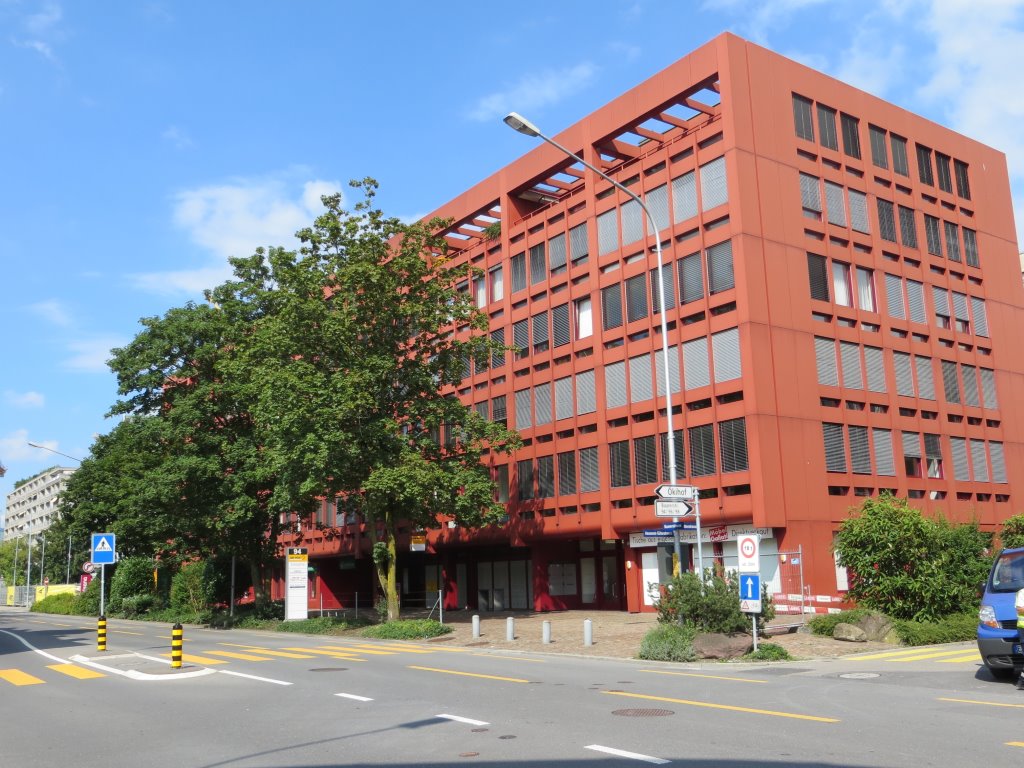
Modest multi-party office building at Baarerstrasse 94 in Zug. Alliance Boots was based here until 2013.

Clearly, Walgreens does not want you to read this. In 1904, Charles Walgreen traveled from his small-town home in Dixon, Illinois, to Chicago and opened a pharmacy and soda fountain. It is the quintessential American success story, but today’s corporation has little to do with its humble beginnings. Walgreens want you to believe that they are an American company that pays their taxes, that they are being a good corporate American citizen, and that they live up to their iconic status as a quintessential American corporation. In a wicked way, of course, they are: like so many other American corporations, they are moving their corporate headquarters offshore.

Large corporations are de-nationalized entities which nimbly navigate the global financial and fiscal system while maintaining the fiction of national citizenship for public consumption. Two years ago, Gregory D. Wasson, the chief executive of Walgreen Corporation, sought tax breaks from the state of Illinois the company is still based. At that point, he stated: “We are proud of our Illinois heritage. Just as our stores and pharmacies are health and daily living anchors for the communities we serve, we as a company are now recommitted to serving as an economic anchor for northeastern Illinois.” At the time Wasson made this statement, the merger with Alliance Boots was essentially a done deal.

Walgreens is not the first and probably not the last US corporation to move their headquarters overseas for tax reasons. But Walgreens is different in that it is part of daily life in the US. My Walgreens is not just a pharmacy, I go there as well when I am out of dish detergent or beer. When Transocean, the owner of the Deepwater Horizon platform which caused the huge oil spill in the Gulf of Mexico in 2010, moved its corporate mailbox from Houston to Zug in 2008, nobody took notice. But Walgreens lives off he daily contact with American consumers, and in that it is seen as a quintessentially American brand that cannot be relocated so easily. And herein lies the chance to create public pressure not just to prevent Walgreens from moving to Switzlerland but to expose the fraudulent global scheme of corporate taxation.

So what does Campaign for America’s Future want you to do about this? They want you to send them ten bucks so they can “expose this scam, pressure Walgreens to do the right thing, and shut down the tax loophole that allows this to happen.” You can also sign their “Tell Walgreens: Don’t Desert America” petition. While I cannot argue against closing tax loopholes, this approach is merely cosmetic.

In 1998, the OECD published a report entitled Harmful Tax Competition: An Emerging Global Issue which arrives at the stunningly simple analysis: “Where activities are not in some way proportional to the investment undertaken or income generated, this may indicate a harmful tax practice.” Ultimately, the OECD had to abandon its efforts to develop non-abusive global taxation standards due to resistance from the wealthiest countries. The OECD report makes it clear that it is unethical for Swiss cantons (and other entities) to allow foreign corporations to incorporate and that it is harmful for tax jurisdictions where the actual economic activity of these corporations takes place. This practice particularly hurts developing countries, as Nicholas Shaxson argues in Treasure Islands (2012), that as a consequence become more dependent on foreign aid. Yet, fighting individual predatory jurisdictions, like many Swiss cantons, would only be marginally productive as corporations easily can move their mailbox to a different, equally beneficial jurisdiction.

One of the OECD recommendations was that a global standard should be established by which corporations should be taxed where their economic activity is taking place. We need to vigorously push for this standard, and we need to seek a fundamental change in how corporations are taxed globally. Corporations need to be taxed where they are producing goods and services and where they are using the infrastructure, not where they are having their corporate headquarters, i.e. their mailboxes. Such mailbox headquarters create a windfall for the host tax jurisdictions which in turn allows them to drop the corporate tax rates even more to attract even more corporate mailboxes. The Swiss canton of Zug is a textbook example for that.

The only real solution, ultimately, is to end tax competition between jurisdictions. In competitive tax environments, corporations win and taxpayers lose. Corporations and their lawyers always can move more nimbly than politicians and the polities they represent. Corporations can move their mailboxes as they please, pick where they pay taxes, and play tax jurisdictions against each other. Tax jurisdictions cannot move their citizens or their infrastructures. Unless we change the very system of how corporations are taxed, the Walgreens of this world will always have their way and citizens will lose out.

IMG_7055L

One of many mailboxes at Baarerstrasse 94 in Zug: Künzi Treuhand AG. About 50 corporations and business groups receive their mail here–meaning that this is where they are legally incorporated. One of their advertised specialties: helping foreign corporations set up and manage corporate headquarters here. This is big business, and there are many such companies in Zug.


Small-State Reaction to Crisis: Let’s Hoard Food

Ever since I read the two volumes of the graphic novel Maus by Art Spiegelman two decades ago, I have been thinking how the historical context that marked our parents’ formative years impacts our lives today. My parents are not Holocaust survivors–they spent their teenage years during WW II in northern Switzerland, about 20 miles from the German border. Switzerland was completely surrounded by the Axis powers, food and other daily commodities were scarce, and practically everything was rationed. Not to speak of the daily routine of going to bed with the fear of waking up to German tanks rumbling through town.

IMG_6256 (2)

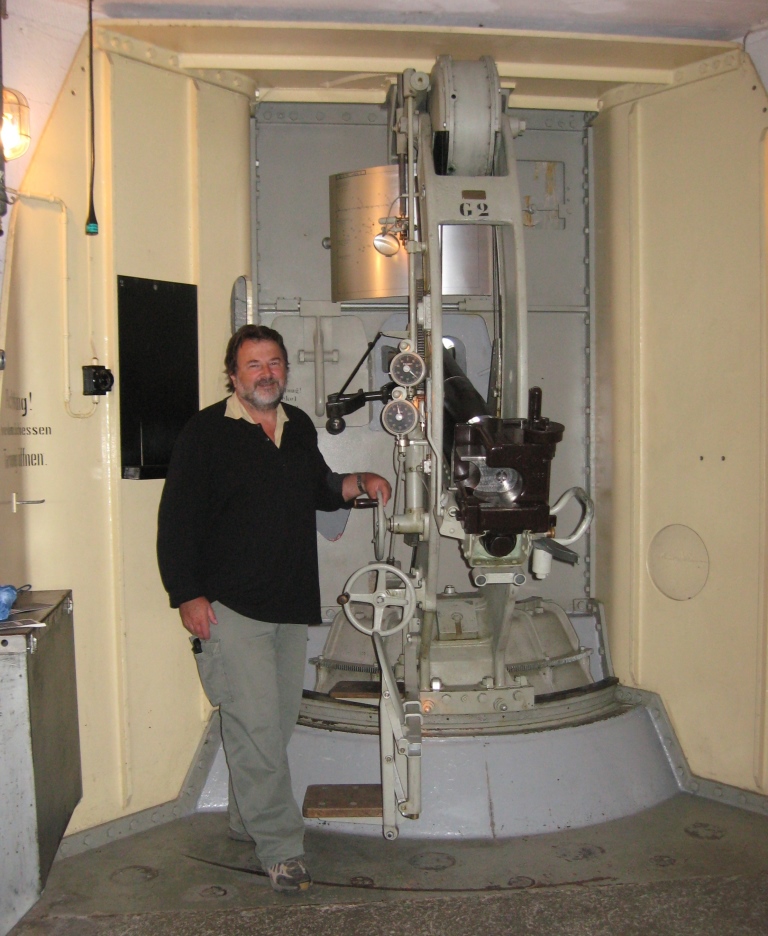
My father operated this artillery gun at the underground Fürigen fortress which was tunneled into the rocky cliffs overlooking Lake Lucerne in 1941-42. The fortress is a museum now.

My father was a soldier in the Swiss Army starting in 1943. He never fired a shot. I cannot possibly compare the history of my family with the tragic fate of the Spiegelman family. Yet what happened to my parents marked an entire generation in Switzerland and has been passed on to my generation. I grew up in a house of food hoarders. An entire pantry was dedicated to the storage of non-perishables, such as flour, sugar, rice, canned food and of course soap. My mother stored potatoes and apples in our cool, dark cellar, and we ate home-made jam that was always about three years old. Yes, my mother had a sophisticated labeling and rotation system.  It was clear that my parents were not ever going to suffer food shortages again.

I had a dinner party at my house a week ago, and one of my sons made fun of the extraordinary amount of pasta in my pantry. This was one of these Maus moments in my life. We all laughed, including myself, because it is funny. And we had laughed about this before, and will again. Yet I know I always will store ample food supplies. I would not feel comfortable without a full pantry. And freezer. When in 2005 Hurricane Rita hit the Gulf Coast and even threatened my home in Austin, my house was ready for six additional people who had been displaced by the storm while everybody else was at the stores clearing shelves of anything that was edible.

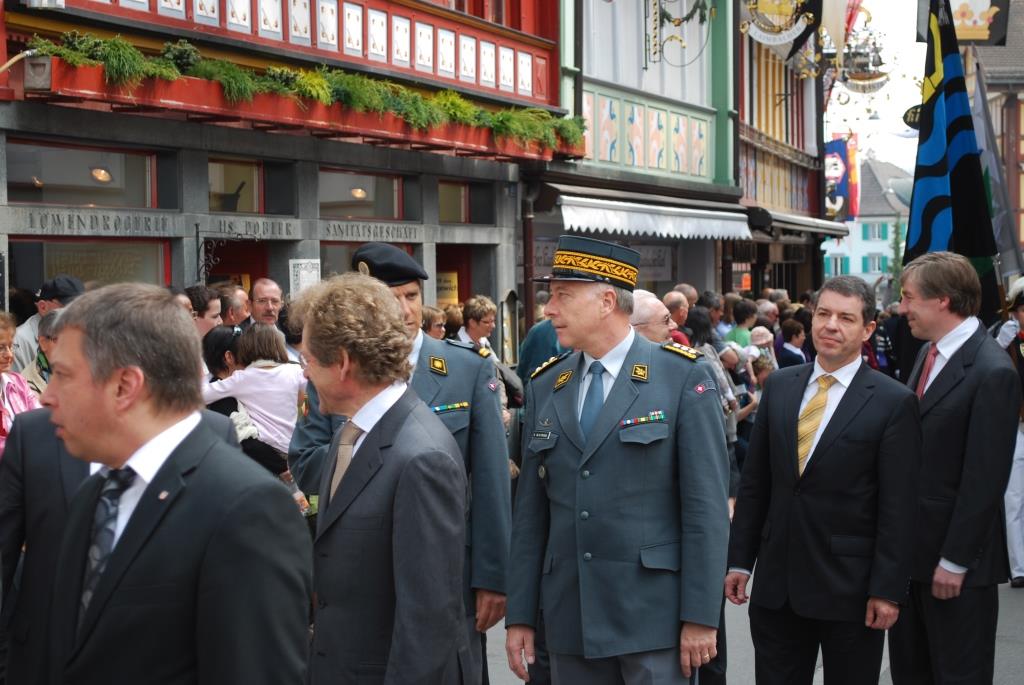
This morning I read this headline in the online version of the German news magazine Der Spiegel : “Swiss Army chief hoards emergency supplies.” Of course, I knew right away that General André Blattmann was a kindred spirit. Apparently, he is storing about 80 gallons of mineral water (non-carbonated, in case you were wondering), wood for heating, and all kinds of food supplies. The title of the interview General Blattmann gave to the Swiss Sunday paper Schweiz am Sonntag, on which the Spiegel report was based, makes it plain that he would like all Swiss to do the same: “The Army chief advises the population to store emergency supplies.”

LandsgemeindeAI_Ehrengäste

General Blattmann (in uniform), food hoarder, at a political event in 2010. (Wikipedia, Creative Commons)

Blattmann points out that contemporary society has become very vulnerable to a number of threats: the crisis in Ukraine with the potential for armed conflict, the growing risk of cyber-attacks, and the possibility of accidents in nuclear power stations in or near Switzerland, all of which could cause a systemic loss of electric power and disrupt the supply of food, water, and other necessities of life. And he paints a bleak picture for the role of the army: “We need the army to prevent looting when ATM machines don’t work anymore and there is nothing to buy.” Here is the lesson Blattmann takes away from this: “If you cannot defend yourself, history will tell you what you will have to do.”

This is the essence of small-state thinking. Small states do not have the resources to shape international politics. But small states can prepare for worst-case scenarios to ensure their own survival. Switzerland always has taken the concept of Zivilverteidigung (civil defense) very seriously, and after 1945 enormous resources were spent to create nuclear shelters and underground hospitals for the general population, culminating in the publication of the Zivilverteidigungsbuch (Civil Defense Book) in 1969 which was distributed to all Swiss households. Storing food supplies and asking citizens to do the same was part of that effort. But my parents did not need that reminder.

This kind of preparedness has been the essence of the long-standing Swiss policy of neutrality which has been practiced successfully since the 16th century: keeping out of conflicts between other countries to ensure survival, and being prepared militarily to create a deterrent. The lesson of WW II clearly has been that Switzerland as a nation, but also individual Swiss citizens have to prepare the resources to be self-reliant in times of crisis as the country cannot control the outcomes of international conflicts and cannot count on being bailed out by a larger power. According to Blattmann, the conflict in Ukraine and the threat of future asymmetrical conflicts have shown that we are entering a renewed period of uncertainty that requires a higher degree of preparedness.

Blattmann’s response to this new sense of insecurity clearly is a small-state response. Just imagine General Dempsey requesting that all Americans do the same. It also is anchored in this hoarding reflex the generation that came of age during the last war has instilled in their children and grandchildren. Just check the general’s basement–or my pantry. But then, I sleep better that way, even in Texas.

Francis Drake’s Sack of Santo Domingo: A Case of Terrorism?

1586_Santo_Domingo_compressed

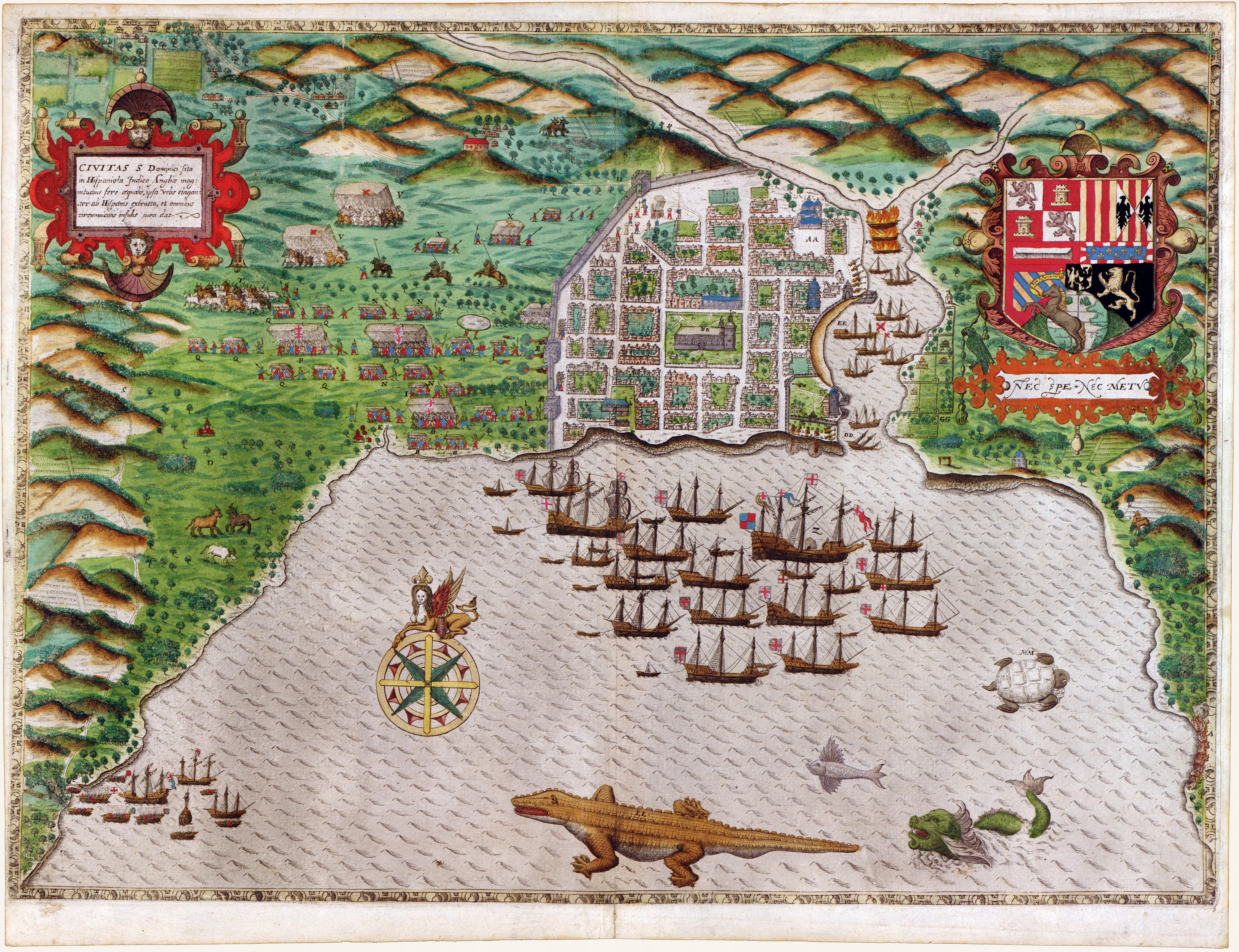
Santo Domingo, sacked by Francis Drake in 1586. Note the small harbor protecting only a handful of ships.

We believe that we live in an age of terrorism. But terror is as old as humankind. Just ask the unsuspecting population of Santo Domingo on the island of Hispaniola which on January 1, 1586, woke up to Francis Drake (c. 1540 – 1596) and his marauding mercenaries ransacking their city. Santo Domingo, founded in 1496, is the oldest colonial city in the New World and at that time as the seat of a real audiencia still was a Spanish administrative center for the Caribbean. But it long had lost the political and strategic centrality it enjoyed during the years of the Conquest, and its pivotal role in the Transatlantic trade had been passed on to nearby San Juan, Puerto Rico, as I have discussed in a different post. When Francis Drake arrived, Santo Domingo was well past its prime.

IMG_1764compressed

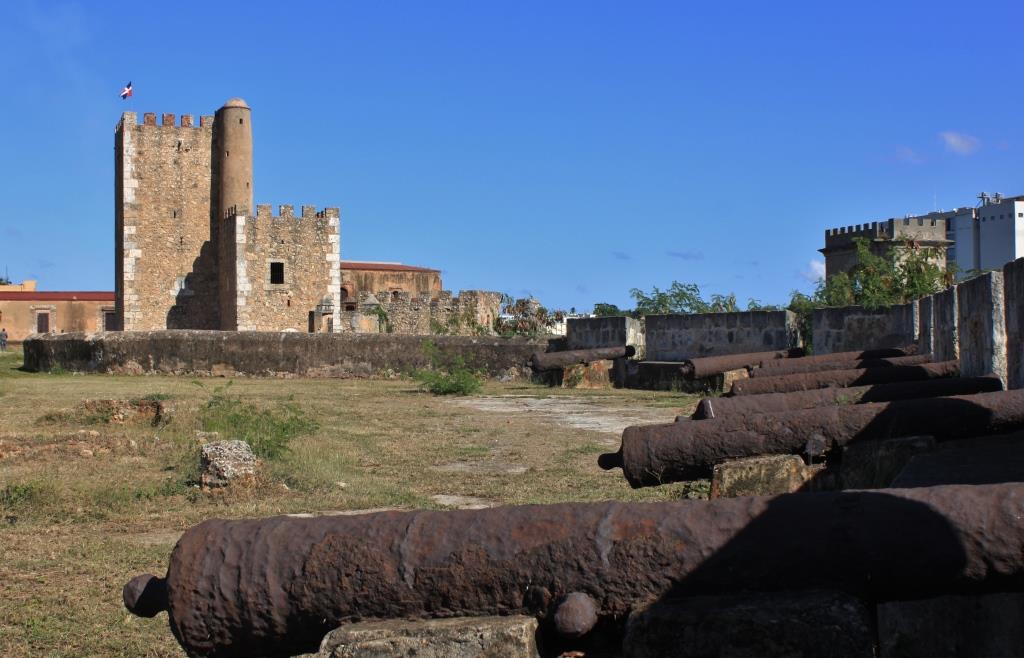
The Fortaleza Ozama, built 1502-1505, with its modest size was no match for Drake’s forces.

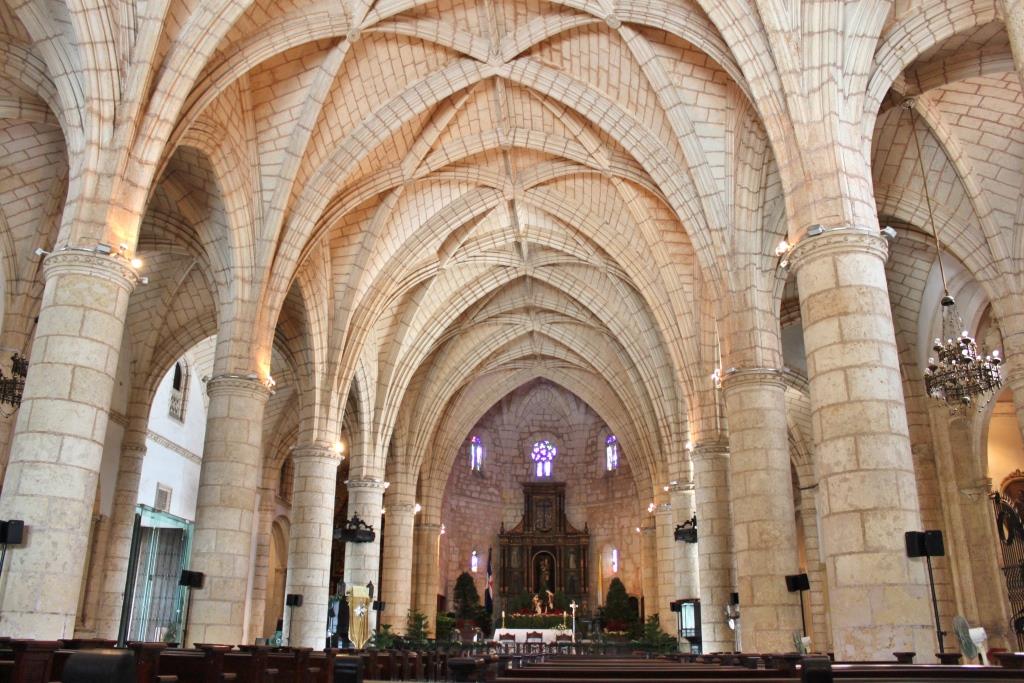
Drake’s men took the city by surprise, both by shelling the Fortaleza Ozama and by entering the city through the poorly defended gates on the land side. The pirates plundered and vandalized the city, burned down parts of it, and started to destroy stone buildings and monasteries to extort a ransom. He set up his headquarters in the cathedral where he looted the altars, destroyed all religious art, plundered the tombs, taking anything that was of value, and quite literally defecating on all things Catholic. Finally, a ransom of  25,000 ducats was negotiated–an extraordinary sum that only could be amassed by forcing citizens to surrender gold and jewels. At the nearby Casa del Cordón Drake installed a scale to weigh the exact amount of gold and jewels that were turned in by citizens.  Drake and his men left again a month later, turning their attention to Cartagena which was sacked and plundered in a similar fashion.

IMG_1200J_compressed

Catedral de Santa María la Menor: Drake housed in a chapel to the right of the main altar.

Drake left behind not just a city that was a smoldering ruin, he also left behind a humiliated and traumatized city. To be sure, most of the churches and houses were restored, but the Spanish did not update the defense installations as they did in San Juan, Cartagena and other strategic points in the Caribbean. Simply put, the Spanish stopped investing into Santo Domingo. Very little of importance happened here after 1586, and the Spanish colonial Baroque architecture and culture of the 17th and 18th centuries which flourished in Mexico and South America completely bypassed Santo Domingo.

IMG_1693_Puerta de la Misericordia (2)

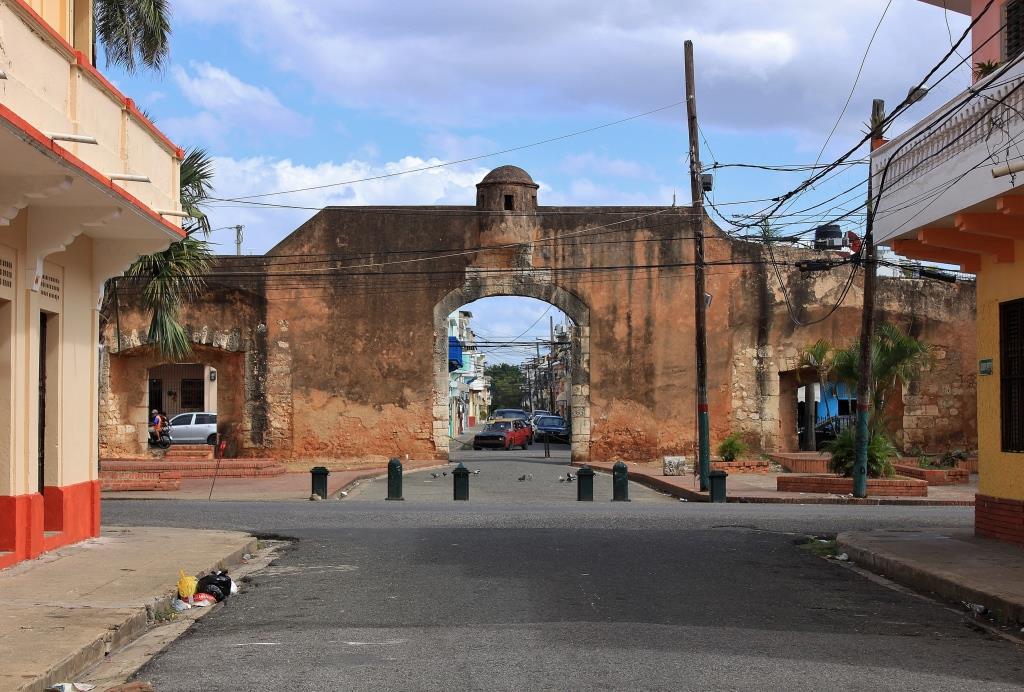
The Puerta de la Misericordia, built in 1543 and expanded in 1568, could not stop Drake’s attack on land.

In a modern definition, terrorism involves non-state actors fighting enemy states, their representatives, institutions, and populations in asymmetrical warfare. In that sense, Robespierre‘s Reign of Terror in post-revolutionary France in 1793-94 does not qualify: this is just a case of a despot savagely abusing his own people. We have seen many since: from Stalin and Hitler to native sons “El Jefe” Trujillo and “Papa Doc” Duvalier who more recently traumatized the two nations that now share the island of Hispaniola.

Obviously, we have to see Francis Drake’s savage pillaging in the geopolitical context of the time: England challenging the Habsburg hegemony (the Habsburgs ruled Spain, Austria, and the Low Lands and controlled the Empire), supporting the Dutch in their wars of liberation against the Spanish, taking an active role in fighting Catholicism, and striving to become a maritime and colonial power in its own right.

In fact, Francis Drake, Sir Francis Drake if you are British, was sailing to the West Indies in something of an official mission. His acts of piracy in the Caribbean clearly were part of an English strategy to weaken the Spanish control over the Caribbean and the Transatlantic trade. But his fleet of 30 ships was financed by merchants who clearly had an interest in developing a trade network in the Caribbean, and his mission was not to take land and plant the English flag. His mission was to plunder and destroy, to take ransom, in short to inflict terror. Drake may have been the original of the “Pirates of the Caribbean.” He ushered in a century of piracy that left the Caribbean an unsafe, violence-filled space.

Like most explorers and navigators of the time, Drake also was a privateer, entrepreneur and free agent who worked for himself first and foremost. This agency is also an attribute of modern terrorists. Like many terrorists today, Drake had the implicit support by a state actor, the English crown, and had the financial backing of his own commercial network. Most importantly, the trauma of this humiliation he inflicted on Santo Domingo more than four centuries ago lives on today.* That is the very definition of terror.

IMG_1561 (2)

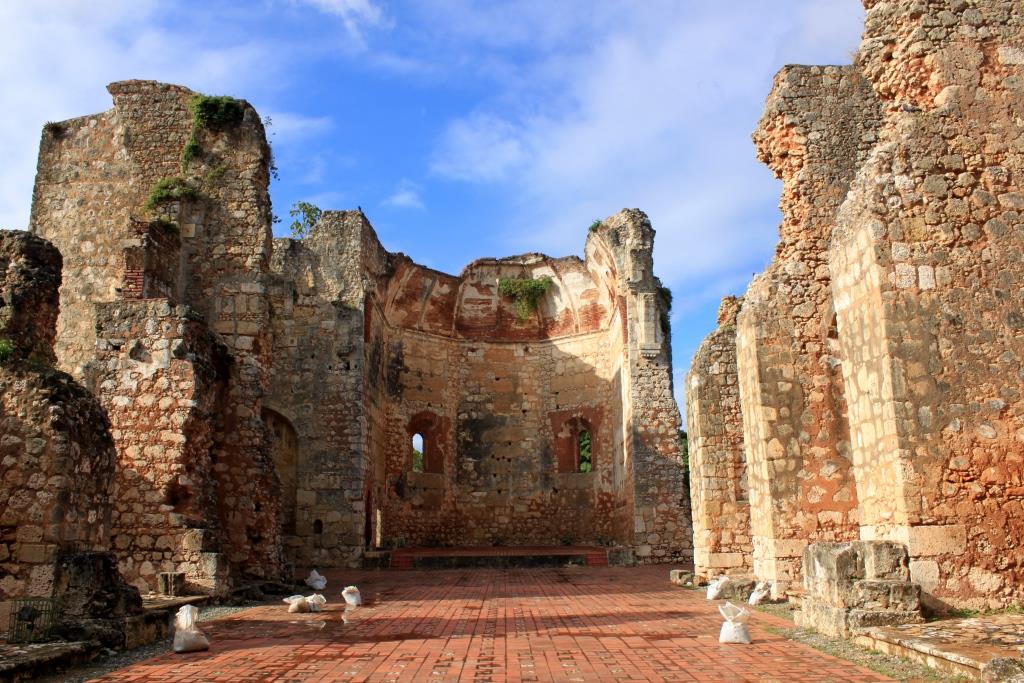
Iglesia de San Francisco, constructed 1544-1556. The Franciscan convent in Santo Domingo was mostly destroyed by Drake, then partly restored, damaged again in earthquakes in 1673 and 1751, abandoned in 1795.

* Note added 5/22/14: Gabriel García Márquez in his novel Chronicle of a Death Foretold (NY: Vintage Books, 1983, p. 98) describes the Palace of Justice in Riohacha on Colombia’s Caribbean coast with this apparently random phrase: “decrepit colonial building that had been Sir Francis Drake’s headquarters for two days.” This is the only overt historical reference in the book and indicates how Drake’s terror lives on in the collective memory in the areas he affected.

Switzerland Discovers the Ugliness of Offshore

In recent days, Johann Schneider-Ammann, the Swiss Minister of Economic Affairs, has become the target of criticism for the tax dealings of the Ammann Group in Langenthal, the company he led between 1987 and 2010. From 1999 to 2010, Schneider-Ammann served in the National Council, the lower chamber of the Swiss parliament. He only gave up control of the Ammann Group when he became a member of the Swiss Federal Council, the federal cabinet, as Minister of Economic Affairs in 2010.

Bundesrat_der_Schweiz_2014

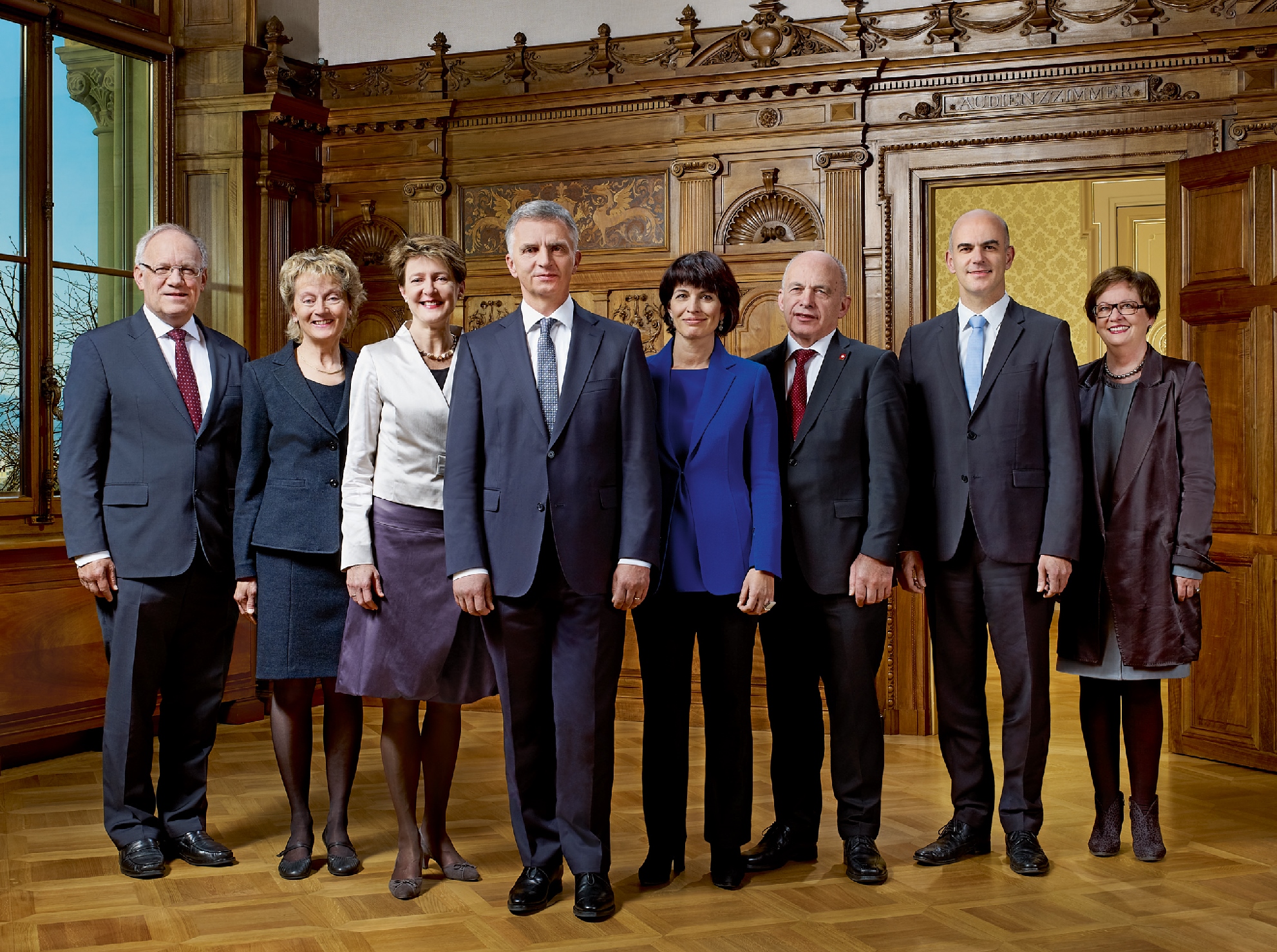
Official 2014 picture of the Swiss Federal Council. Schneider-Ammann is on the left.

The Ammann group was founded in 1869 by an ancestor of Schneider-Ammann’s wife and has been specializing in the production of construction machines. Since 1931, Ammann has been the exclusive importer of Caterpillar products to Switzerland. Today, the company has a worldwide employment of about 3,700–2,500 of them abroad.

Building_Fairs_Brno_2011_(129)

Ammann road construction machines (Pavel Ševela / Wikimedia Commons)

One of the allegations, first reported by Swiss TV in late January, is that the Amman Group sold Caterpillar equipment to Iran after the 1979 revolution, thus circumventing the US embargo. Two retired truck drivers, Werner Zwahlen and Robert Z’Rotz, claim to have delivered many truckloads of Caterpillar products to Teheran and Baghdad between 1975 and 1984: “We picked up the machines and spare parts in Belgium and the Netherlands and brought them to Ammann in Langenthal. There we got new papers and, without ever unloading, drove on to Teheran and Baghdad.” As Schneider-Ammann entered the company in a leading position in 1981, it stands to reason that he knew about this scheme–which to be sure was not illegal under Swiss law.

The more serious allegation is that the Ammann Group set up offshore schemes to evade–or avoid–taxation in Switzerland.  In 1976, the Ammann Group founded Manilux SA, a financial holding corporation, in Luxemburg. In 1996, they founded another financial subsidiary, Jerfin Ltd., on the Channel island of Jersey. Schneider-Ammann himself was listed as the chief of Manilux which had neither employees nor offices in Luxemburg, nor elsewhere, even though 250 million Swiss Francs were invested there. Manilux and Jerfin were dissolved in 2007 and 2009, respectively, and the funds transferred first to Jersey and then back to Switzerland.

In an interview with the Zurich daily Neue Zürcher Zeitung on February 8, Schneider-Ammann confirmed the basic facts but denied any wrongdoing: “This was about reserves which we optimized in terms of taxation. The funds were intended for the strategic development of the international Ammann Group and were used to protect jobs. Everything was legal, everything was transparent, the taxation authorities had complete insight at any time. They confirmed this to the company again on Friday.” Entrepreneurs today, according to Schneider-Ammann, have to resort to such offshore schemes because companies are part of a global competition where this is standard procedure: “If you want to secure domestic jobs in an international corporation, it is legitimate to optimize taxes. From an entrepreneurial perspective, it would be a mistake not to take advantage of all legal options.”

While many corporations set up much more sophisticated tax avoidance schemes with a more complex web of subsidiaries in numerous jurisdictions, this is a textbook example for how offshore works. “Optimizing” tax liabilities becomes part of what corporate leaders do in order to increase profits or just to remain competitive. At the other end of the bargain, jurisdictions compete to offer the most attractive conditions to get companies to incorporate there. This is the mechanism Schneider-Ammann described quite frankly: “The Ammann group has to compete in a brutal environment. Before the turn of the millennium, this type of a tax break did not exist in Switzerland. That is why it was recommended to us to invest money in offshore corporations to shelter it from taxation. In the last few years, similar tax shelters were created here [in Switzerland]. This is why we brought the money back to Switzerland.”

This is how the offshore race to the bottom works: corporations create shell companies to move their money to the jurisdiction that offers the most advantageous conditions–and ordinary citizens all over the world shoulder an ever-increasing percentage of the tax burden. Jurisdictions in turn adjust their tax schemes to make their location even more attractive to corporations. When Switzerland matched the conditions offered by Luxemburg and Jersey, repatriating the accounts made business sense for the Ammann Group.

So why did revelations about the business practices of their Minister of Economic Affairs create such a stir in Switzerland to the point that some demand his resignation? Switzerland is one of the pioneers of the offshore system and for well over 80 years has created offshore opportunities for corporations and individuals who are based elsewhere. Mr. Schneider-Ammann has delivered a high-profile example for how offshore looks from the point of view of the jurisdiction that gets cannibalized–a perspective the Swiss are not used to seeing. And all of a sudden, it is very easy to comprehend just how wrong and unjust this system is.

The question is not just whether Mr. Schneider-Ammann’s tax schemes were legal but whether a corporate leader who actively pursued offshore strategies to avoid paying corporate taxes in Switzerland can be a trusted guardian of the common good and more specifically is fit to be its Minister of Economic Affairs–who sits at the table when tax issues are discussed with foreign entities. And just perhaps the offshore system has become odious enough for even the Swiss to understand that the global offshore system they helped create–and from which they profited immensely–may be legal but is morally corrupt.


Eusébio, A Life in the Shadows of the Colonial Past

Eusébio was one of the heroes of my childhood. Watching the 1966 Soccer World Cup in England on our neighbor’s black and white TV set  in Switzerland, all we wanted to see is Eusébio. Eusébio was the dominant player of that tournament, Pelé notwithstanding, and led the Portuguese squad to the third place. We admired the elegance of his play, his speed, and his superb ball control. It is because of players like him that we call soccer the beautiful game. Eusébio died on January 5, 2014.

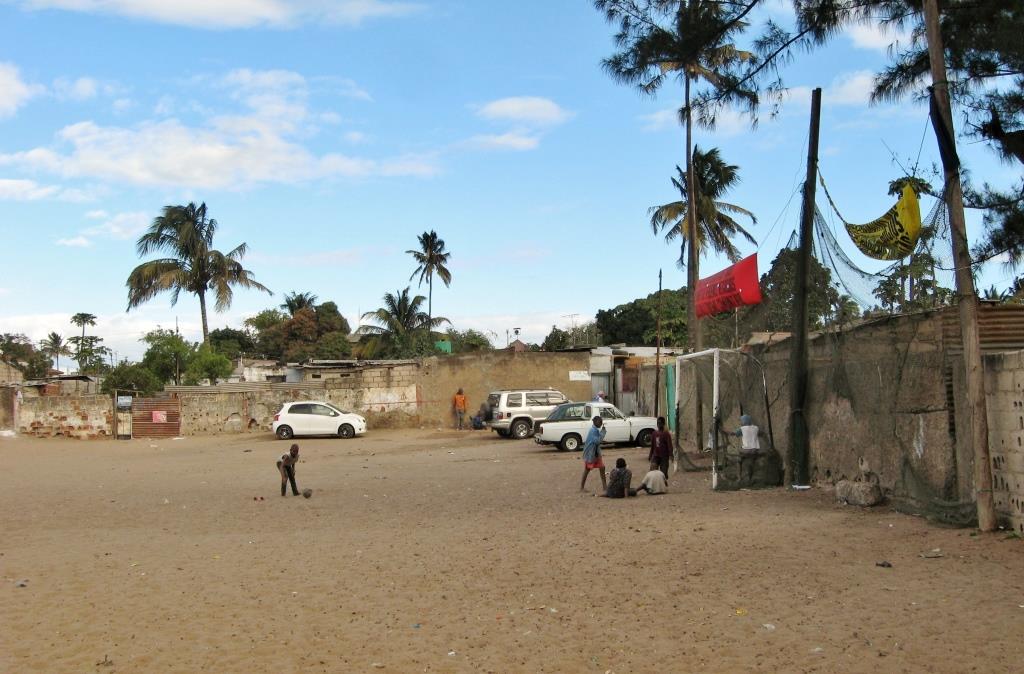
Eusébio, whose full name was Eusébio da Silva Ferreira, retired from soccer in Portugal in 1975 to play in North America, and I did not think about him much anymore after that. Until 2012, when I took a walking tour through Mafalala, a poor slum of Maputo, the capital city of Mozambique. As I walked across a gravel field, my guide told me that this is the place where Eusébio learned to play soccer and that Eusébio grew up in Mafalala. I was completely surprised–I always had thought of him as Portuguese, and the fact that he was black somehow went unnoticed during my childhood.

IMG_6023 (2)

Eusébio learned to play soccer on this field in Mafalala, Maputo.

Eusébio’s biography is marked by the de-facto Apartheid regime Portugal had implemented in Mozambique at the tail end of Portugal’s global empire. It lasted more than half a millennium and only ended in 1975 when Mozambique became independent from Portugal. The center of Maputo, then called Lourenço Marques, was reserved for whites only. In the 1950s and 1960s, the Portuguese built a large number of concrete highrises along stately avenues in the center of Maputo for a substantial Portuguese population–this is why it is referred to as Concrete City sometimes.

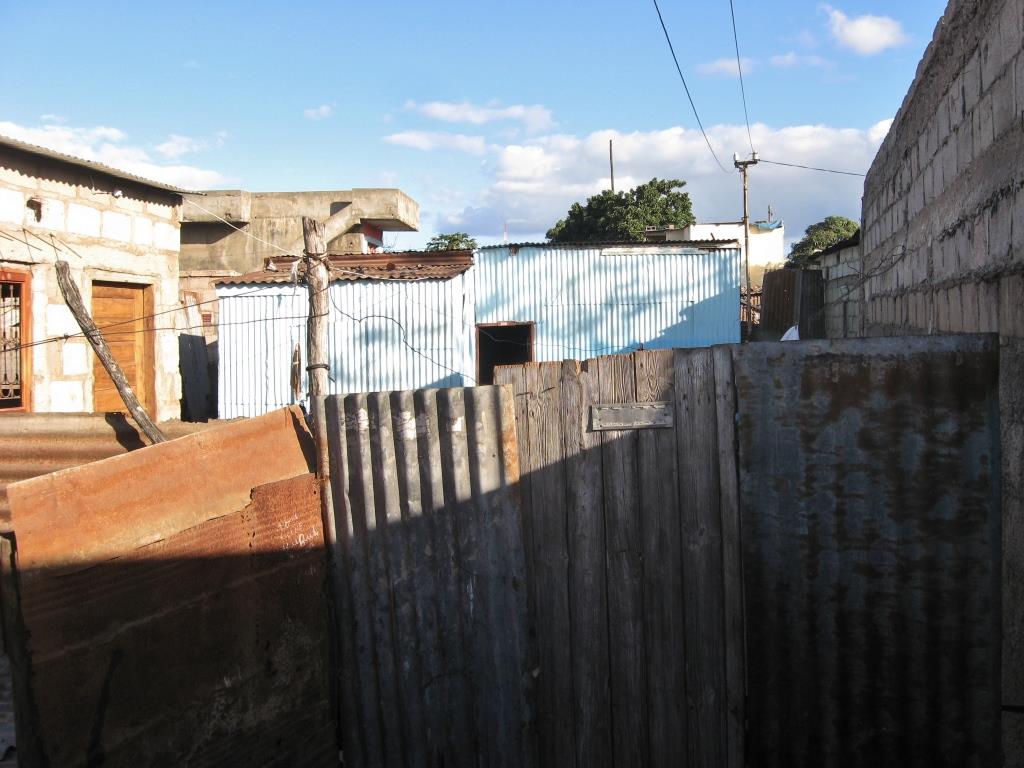
Blacks were not allowed to live there and were relegated to slums without any modern infrastructure. Mafalala was adjacent to the city center and became the focus of black intellectual life during the final decades of the colonial regime. It also was the center of resistance against white rule, and many leaders of FRELIMO, the Marxist liberation movement that seized power after independence, lived in shacks in Mafalala.

IMG_6029 (2)

Joaquim Chissano (b. 1939), the second president of Mozambique, used to live in the light blue house.

Eusébio moved to Lisbon in December 1960, at age 18, to play for Benfica. Sporting Lisbon, its cross-town rival, had first dibs on him as he played in their youth organization in Maputo. But Benfica outsmarted Sporting, and apparently they convinced Eusébio’s mother with a good bit of cash. Regardless the circumstances, for a kid from Mafalala to play for one of the major European clubs was a dream come true.

In Maputo, Eusébio was subjected to open racism imposed by the Portuguese colonial regime, but he was part of a majority community that gave him support. While the racism in Lisbon may have been less overt,  he had no community in Lisbon. So soccer became his community–which he worked for until the end of his life. He remained an untiring soccer ambassador for both Portugal and Benfica, his club, until his death. When Sepp Blatter, the FIFA boss, in 2011 stated that black soccer players just should shrug off racism, thus causing a scandal, Eusébio essentially agreed.

But we know that his 15 years at Benfica were tough, in spite of the huge sportive successes. Portugal then was a fascist state, ruled by António de Oliveira Salazar (1889-1970) and his successor Marcelo Caetano (1906-1980), until the Carnation Revolution of 1974 swept away the dictatorship–which led to the independence of all Portuguese colonies in the following year. The established society always saw Eusébio as an inferior African, and Eusébio also endured racist attitudes at Benfica. But he never talked publicly about his experience with racism–in spite of the fact that he agreed to be ambassador against racism for FIFPro, the global association of soccer players.

His pay at Benifica was far below of what top players elsewhere in Europe earned. Clubs like Inter Milan were interested in him, but Benfica demanded unreasonable amounts of money to release him. Apparently, Eusébio personally appealed to Salazar the dictator to get permission to leave. But Salazar denied the request with the justification that Eusébio belonged to the Portuguese people. Dictators are lousy at understanding irony. And by the time the regime fell, he was 35 and no longer of interest to top European teams.

Eusébio’s biography has a lot more layers of complexity than I possibly could have suspected as kid who admired him. As a victim of a brutal colonial regime, he moved to the racist “motherland” and sought his fortunes there. He never moved back to his native Mozambique where he was admired as a national hero, although he visited often.

IMG_6021 (2)

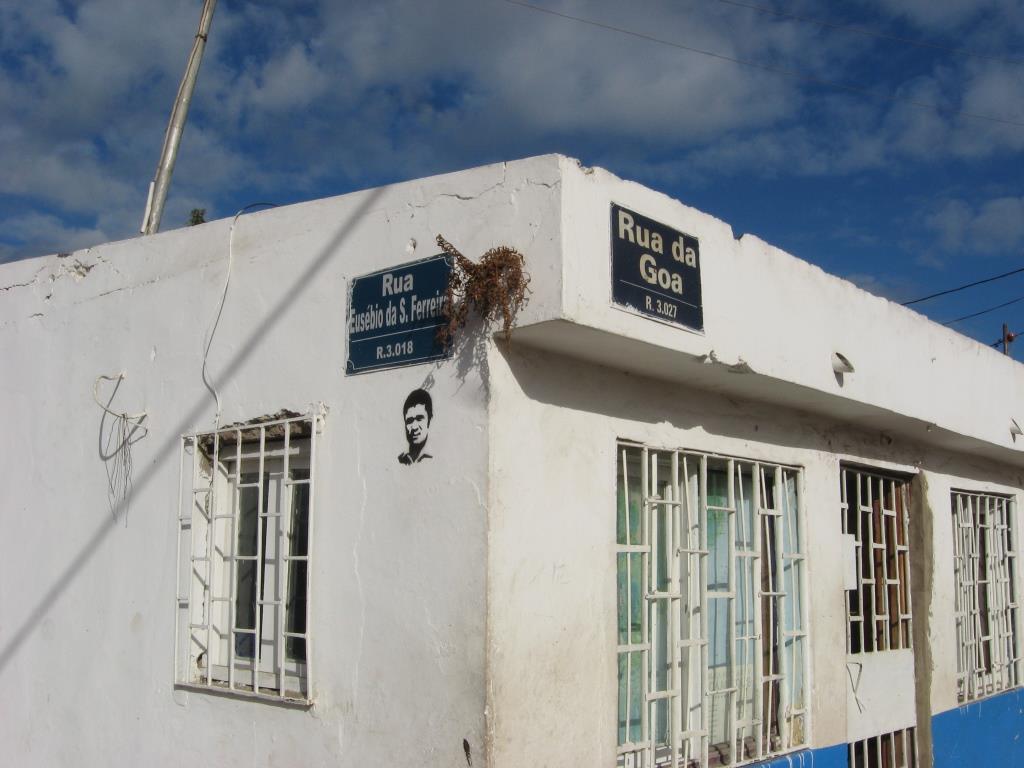
Street sign and informal portrait of Eusébio in Mafalala.

It appears that the issue of race was like a festering wound to him–a topic he never wanted to discuss publicly. Donald McRae in a 2006 piece in The Guardian describes Eusébio as a conflicted individual who was haunted by the ghosts of his past and struggled with issues of identity and belonging. Apartheid and the Portuguese colonial rule are gone, but their impacts on lives are real and ongoing. Eusébio is exhibit A. In its obituary, The Guardian writes: “Eusébio was the greatest African footballer in the history of the game.” While this is true, I would have never thought of it this way. The story is more complicated than that.