Sophie Leung-Lieu Week 2, 2025

On Wednesday, May 21st, we took a bus west of Milan to the corporate headquarters of Artemide, a hub for Italian-designed lighting fixtures. The day before, we also visited their smaller showroom closer to central Milan, which was a glimpse into the creative designs they produce. In our visit, we had the privilege of experiencing private tours of lighting design, testing, and production from experts at Artemide. 

I was very interested in the multiple ways that Artemide experiments on its products to ensure that they are not only elegant in visuality but also have limited flaws in their functionality. They were running tests on transportation and wire durability, heat levels emitted from the lamps, light strength compared to candles/natural light, and more. This showed how unique their production process and was very impressive to me. 

We also had the opportunity to walk through the factory where they made lighting fixtures. We saw the process of creating and packaging lamps through the work of many people and machinery. 

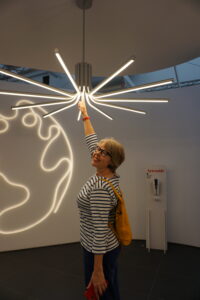
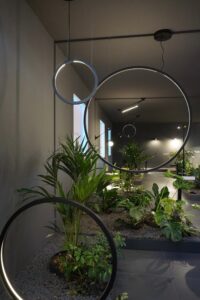
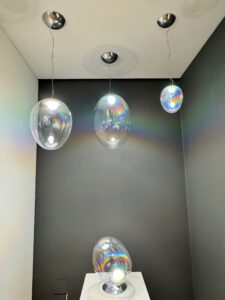
Photos from the gallery of lights inside the factory!

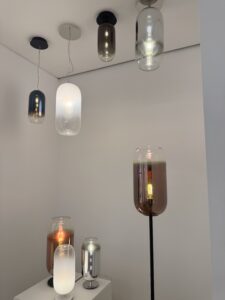
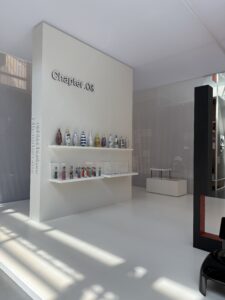
Photos from the Artemide showroom from 5/20

Week 3

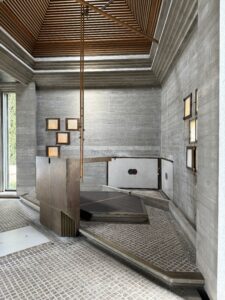
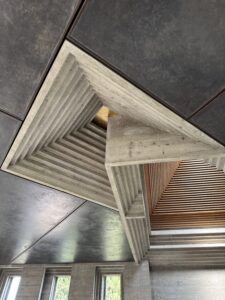
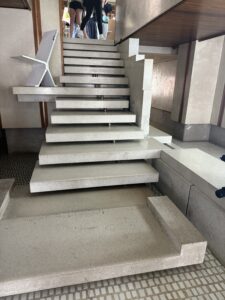
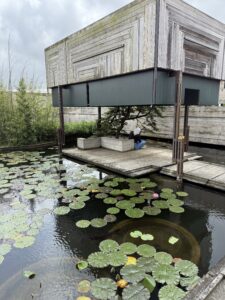
Carlo Scarpa was a renowned Italian architect deeply influenced by Venetian culture, its materials, landscape, and history as well as Japanese design. He translated his passion for history, regional identity, and craftsmanship into innovative glasswork, furniture, and architectural details. This week, I had the opportunity to visit 4 of his architectural designs, the Brion, the Negozio Olivetti, the Fondazione Querini, and finally the exhibition of Venezuela at the Biennale and all of the experiences was truly fascinating. What stood out most was his meticulous attention to detail and the way he played with form, using gaps, ledges, and carefully cut shapes to create layered spaces. His work offers rich, multidimensional perspectives that make each site feel alive and thoughtfully composed.

Week 2 – Spaces That Speak – Isabelle Cloeter

During my class trip to Treviso and Venice this week from Milan, I found myself unexpectedly pulled back to my first semester in college in the school of architecture. As I stepped into the Brion Cemetery in Treviso and the elegant store of Otivelli in Venice, I was struck by the memory of Professor Snyder’s lecture in my Design 1 studio, learning about Tadao Ando’s Azuma House. 

Back then, the Azuma House felt abstract: a stark concrete box in Osaka with a courtyard that was caved in the center. But the words that Professor Snyder lectured to my studio stuck with me, how Ando used materials and space not just for the safety and shelter of a home but to create a feeling. That conversation gave me a thought in my head, architecture has a purpose to make an emotional and sensory experience whether we realize it or not. Architects are store tellers for individuals that walk through space. 

Now a few years later, walking through the layered textures of Carlo Scarpa’s work from the craftsmanship of the Otivelli storefront to the spiritual geometry of the Brion Cemetery. I felt my ideas come full circle. Scarpa and Ando are from different cultures and time periods, but they slightly overlap. Both used architecture as a medium of silence, reflection, storytelling and material poetry. 

Each space is very different from a commercial store, cemetery and home all invite you to slow down and take a moment to enjoy the moment in the quiet space. The Olivelli store, while in one of the most fast paced areas in Venice, finds a way to make a retail space be intimate and slow paced. The Brio Cemetery has flowing water, thresholds that are gentle and areas to sit and reflect. The Azuma house, though I have never visited in person, during Professor Snyders lecture I could feel a sense like I was in space based on the way he talked about the calm and elevated space. All three of these spaces use light, texture, materiality and spatial rhythm to connect the body with the mind. You feel these spaces when you walk through them. 

Those two days in Venice and Treviso reminded me of why I fell in love with design and how many spaces, while from different times and areas of the country, can both tell a story. Architecture has the ability to hold memory, to speak across many time and spaces, and to shape how we see the world around us.
 

Week 3

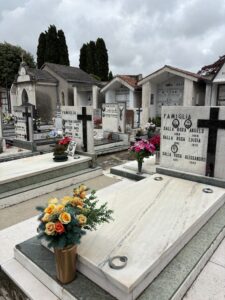
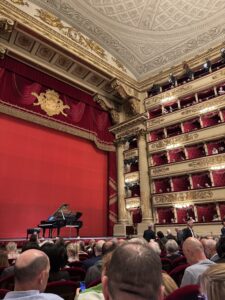
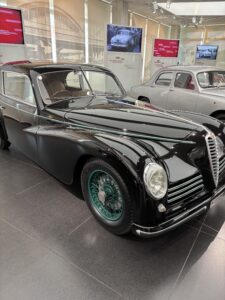
This week, between Teatro alla Scala, the Alfa Romeo museum, Kartell museum, the Brion cemetery, and Tipoteca, an important theme that stuck out to me was the preservation of the past. An important theme in my walk between Torre Velasca and Torre Branca was the tension between modernity and tradition, and in Milan the physical manifestation of this phenomena has inured to our benefit; we are able to participate in the marriage between history and progress. Yet, it is important to preserve a portion of the past in its entirety so that we can continue to experience its beauty and see how we have developed as a society. Each one of aforementioned experiences and activities of the past week has done this, either through preservation (leaving the opera and typography untouched in their grandeur and honoring the deceased) or display (showing the evolution of Kartell plastics and Alpa Romeo cars). To move forward together in a productive, fruitful way, we must remember that it entails vibrant paradox: both conservation and progress.

Joy in the little moments of Milan

My first full week in Milan was full to the brim: of learning, traveling, and being inspired.

We visited several museums, studios, and galleries, my favorites of which were Spazio Rossana Orlandi, FM Studio, and the ADI Design Museum. I was so inspired by some of them that it made me want to switch career paths! I also really enjoyed taking Italian language classes this past week as well- I’ve been trying to use Italian as much as possible while I’m here and have finally gotten through a few interactions successfully without English! I thought it was really interesting to learn about Italian hand gestures; I had no idea they had so many meanings! At the end of the week, I traveled to Monaco and Nice and had an adventurous time exploring two new countries for the first time on rapid day trips.

As much as I have enjoyed our planned events and classes, I have found so much joy in the random, spontaneous experiences I’ve had so far! Below are some pictures and sketches from casual day to day moments that I’ve been loving:

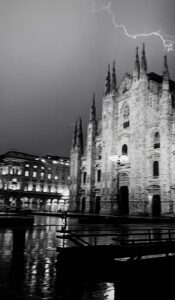
Getting caught in a thunderstorm at the Duomo and capturing this photo:

Lightning strikes over the Duomo. Photo by Sandhya Iyer

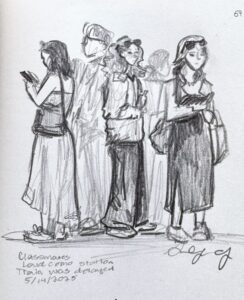
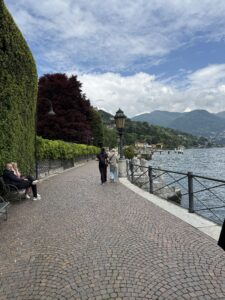
Train getting delayed from Lake Como and getting a delicious apple tart to enjoy while sketching some of my classmates:

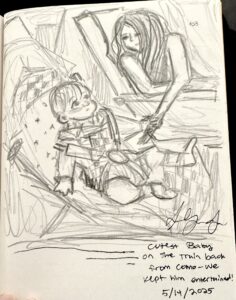
This little baby on our way back from Como:

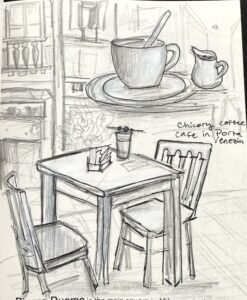
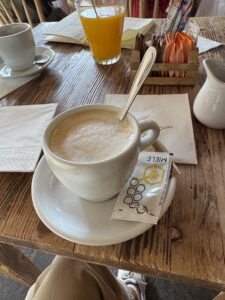
My favorite coffee so far at a spontaneous coffee stop on our Art Nouveau tour:

Here’s to more inspiring educational events this week as well as wonderful unplanned moments in between!

Swiss Alps and the Local Experience

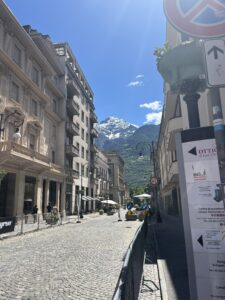
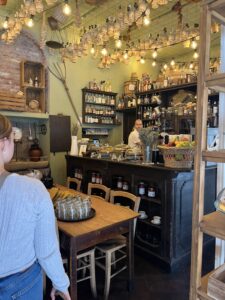
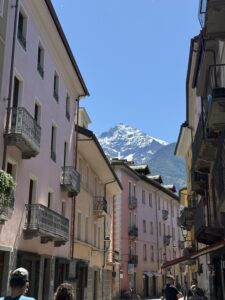
This week I experienced traveling by train in a foreign country! We went to the Swiss border town, Aosta, which enchanted us with its quaint streets and quiet restaurants. The Alps directly peeked through the narrow streets, which was one of the most beautiful sights I’ve seen this trip. The food was uniquely comforting and warm to contrast the vast landscape, we had rich fondue and bouncy gnocchi. Before our weekend trip, a small group trip to a coffee shop stood out to me during the week. In the middle of our walking tour, the group decided to stop at a local coffee shop decorated as if it were from a storybook. It had exposed wooden tables and fruits and vegetables hanging throughout the small storefront, creating a rustic and elegant atmosphere. The coffee was a perfect pair to the people watching, and the feeling of community within our group reminded me of the kinships created thus far on this trip.
Week 2 Dominik Puente 2025

This was our first full week in Milan, and it’s already been one of my favorite weeks ever. The Italian classes were really helpful. I’ve slowly started to understand more and more, also I began ordering and trying to have conversations in Italian which has definitely added to the immersive atmosphere of the trip. 

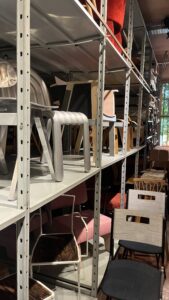
This week, I also spent a lot of time on my sketchbook and began paying extra attention to chairs. I think I’ve developed a new obsession. I’ve become more aware of my surroundings and started appreciating the little details. I began recognizing some chairs and noticed them being used in a different context.

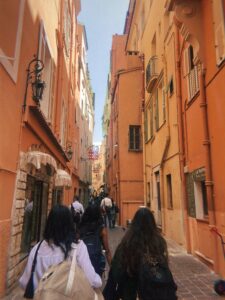
Over the weekend, we went to France. Although it was still very close to the border, hearing people speak French and navigating around a new country created a whole new experience.

I can’t wait to keep going to more studios and museums. This experimental, hands on way of learning has taught me a lot more and a lot faster than any full semester before.


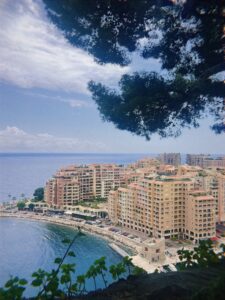
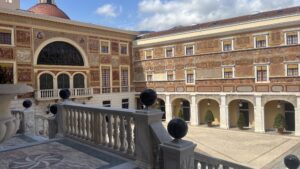
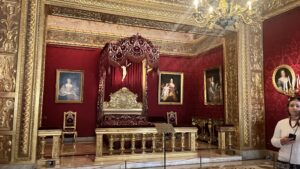
Pictures of Monaco inside the Castle for a tour!


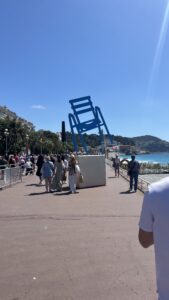
A blue chair as a symbol and part of the culture for Nice! Really interesting to see in person how much significance a chair had in a city’s traditions.


Lots of chairs. This is how my camera roll looks like now.

Week 2: Italy, Monaco, France, Oh My! (Angel)

My first full week in Milan has been better than I could’ve even imagined. From the studio visits to the random laughs with friends, I’ve loved every minute of my time here.

Over the weekend, a group of us went to Monaco and Nice, France. It was a chaotic weekend, but these were places I’d wanted to visit for years and they lived up to my expectations. Having taken French for 6 years, I was excited to actually use my French in the real world.

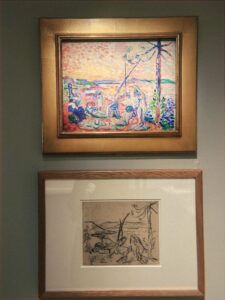
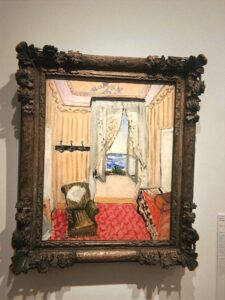
Before returning to Milan, we went to the Matisse Museum. It was such a cool experience because I got to see many of Matisse’s lesser known works and paintings that I would never have guessed were his. There were also many sketches alongside the accompanying paintings. It was encouraging to see these ordinary sketches that I could make transformed into something so beautiful. I don’t think I’m great at sketching or drawing, so it gave me more confidence in my own design process.

Overall, I’ve thoroughly enjoyed my time in Europe so far and am excited to see what the next few weeks has in store!

Samantha de Lemos~The Intricate Designs of the World

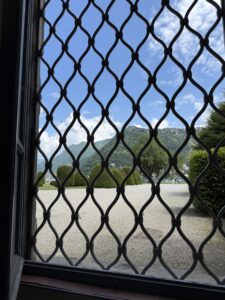
This week we have focused on 20th century design in a fascist regime in many tours of museums and real life examples of architecture hinting at its past. In Como, we examined two architectural examples of this time period and how they model a sort of new authority amongst their surroundings with straight lines and even placement of windows to create special effects with natural lighting. It is very interesting to see the intention behind seemingly innocent architectural pieces.

While we have been studying design, no matter the topic, I have found myself astonished by the beauty of the place that surrounds me. No matter whether I’m looking at a building marked by its time, or how the mountains of Northern Italy assert dominance in the sky, I can see the beauty and extreme detail in the creation of the world. The way the leafs face the sun to soak in the sunlight, causing vines to cascade over the edge of a building in search for the energy that feeds it. The way the water in Aosta is crystal blue green, rushing and slushing down such as a melted stream from a glacier atop a mountain would. The way there is a hushed chatter no matter the hour in downtown Milan, but it is never as loud as NYC. In all these ways and more I can see how the Lord has intricately designed this world.

The craftsmanship it takes to bring such ideas into reality is something that I find myself both humbled and impressed beyond belief by. I am so thankful for this week, for our presentations and learning about design from a new point of view, and for being able to learn from and among such brilliant, kind and talented individuals.

Week 2 (2025): Design is a Process – Danielle

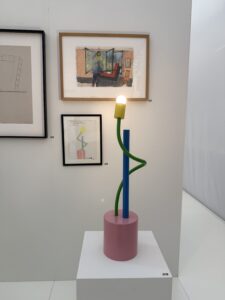
When I think of design, I usually think of a singular product. Design, to me, was the final poster, piece of furniture, or magazine layout. However, one lamp that I spotted at the ADI Design Museum last week began to change my mind.

Lamp and sketch at the ADI Design Museum

Hidden towards the back of an exhibit, there was a whimsical pink-green-blue lamp and an accompanying sketch, clearly depicting the original idea for the lamp. I loved the winding, colorful design of the lamp but disliked the sketch at first: compared with the final outcome, it looked rough and pretty unappealing. However, I came to realize that the sketch is part of the design. Design, in this case, is not only the final lamp but all of the ideas and iterations in between as well. I am excited to continue looking for that process of design in our future activities!

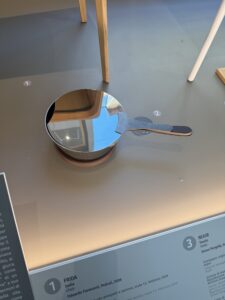
Plus, additional designs I found pretty or useful at the museum below!