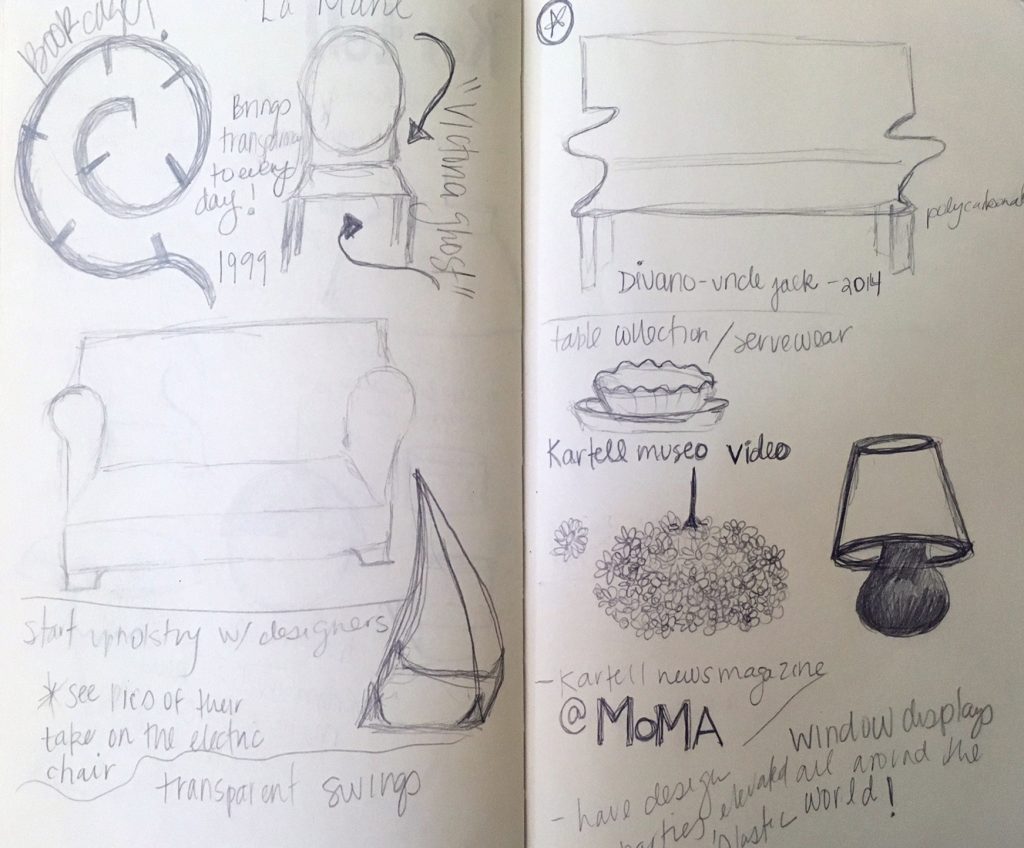
As a class, we got to see the the Museo Kartell. The space when you initially walk in is open and you are encompassed by clean and stunning exhibitions and window displays. Kartell was initially started by selling car equipment and lab materials, but as time progressed Kartell’s goal was to introduce plastics into people’s homes. This was at the same time as “the Beatles reached number one in the charts in 1963, so young consumers sought out design artifacts to express shared youth culture and identity.” With the emergence of this new type of interior furniture, I couldn’t help connect the new concepts to the rise in Popular culture. In one of the readings for class, they defined the shift in 1960s-70s, as “This appreciation of popular culture grew enormously in the 1960s, with the emergence of Pop Art, and the relationship between design and popular culture went from strength to strength. The motifs, forms, and cultural references of popular culture are now integrated into our understanding of contemporary fashion, graphics and advertising.” Kartell began to pick up speed in the 1960s and was a crucial part of Italian Interior Design. In the 1970s, there was a shift. Kartell was invited to be apart of an exhibition at the MOMA. The exhibition was called “Italy, the new domestic landscape” which was dedicated to Italian furnishing design. This exhibition at the MOMA resulted in Kartell gaining much more world wide publicity. This relationship of design and art is good example of the Modernist Movement and how popular culture as we know it, is defined by art and what encompasses us daily. Pop design “particularly in graphics, was also characterized by a revival of Victorian and Edwardian forms”, and the main staples that Kartell produce are a modernized version of these classical art time periods. For example, The Bougie lamp, designed by Laviani is a baroque-like styled mix of modernity, that has a classic appearance but is also ironic and funny. Similarly, the LaMarie chair by Phillipe Stark is timeless, but it was also the world’s first completely transparent chair, its a combination of robust exterior at the same time having a new kind of lightness that has never been made before in interior furniture. Kartell continues to create and be influenced by the ever-changing world around us. They continue to work with famous musicians, and designers to keep their name and quality high, as there is more competition with cheaper products that are less timeless. Kartell has also dabbled in place settings and fashion, and they are continuing to shift their brand as the popular culture is continuing to change.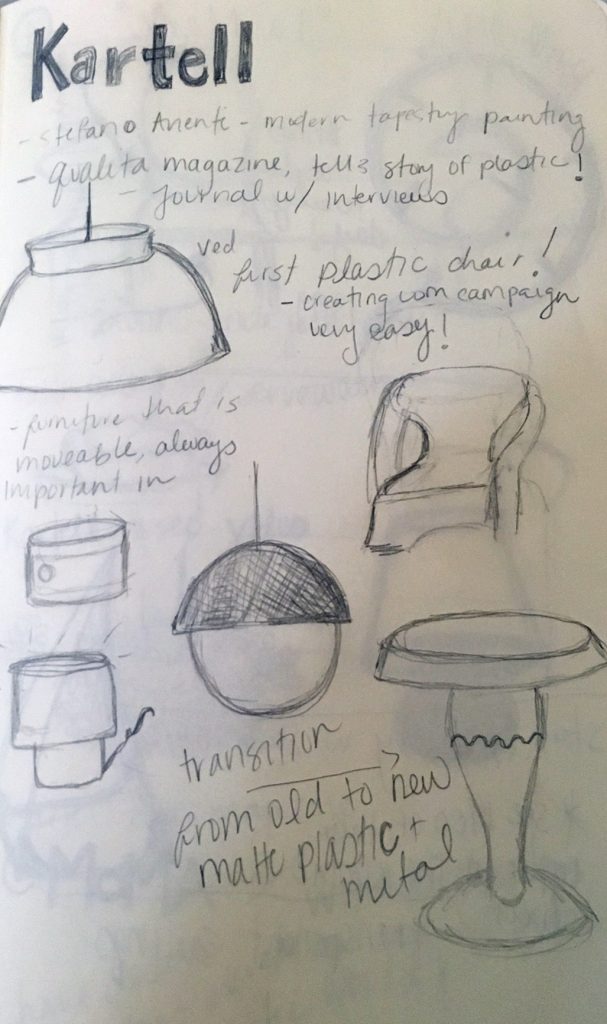
A Retrospective
This past month in Milan and traveling around Italy has been the best experience yet. Everything we visited for the class and during our weekend tours was a memorable time. The studio visits, museums, landmarks, walking tours, all taught me so much about Italian, design, and art history in general. Especially the fact that the world really has existed a long time. Sure we’ve been taught about centuries of history, but we don’t really get to see that here in Houston. I was able to see actual standing buildings and ruins that dated back to Before Central Era. Italy was evidence, real tangible evidence, that what we learnt in school really did lead up to where we are today, and that is just so mind-boggling.
The connotation of design in Italy versus the United States is also vastly different. This is a topic that was mentioned by Sam Baron, the head of the design department at Fabrica, on our last day in Italy. Design in Italy typically refers to furniture, chairs, lighting, architecture, and interior, whereas design in USA refers to graphic design or fashion.
Of course, Italy also has a huge, well known fashion industry too, but that falls under fashion, not design. Furthermore, Baron also mentioned how design is a highly coveted career in Europe in general, whereas in USA, at times designers are considered quirky and indie, not a mainstream or proper career choice.
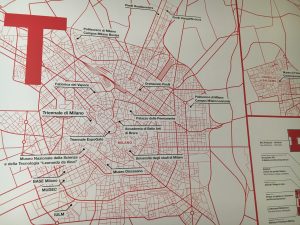
Italy puts forth its culture, its art, its history in every possible place. There are streets full of old buildings, turned modern restaurants, that still showcase antiquity. There’s the Triennale, that on every corner would have a little poster talking about another pop-up gallery showing off artwork from some new artist or another.
Some streets that I almost passed of as plain and residential housed the workshops of famous designers and artists known worldwide for their designs. Art and everyday blend together so seamlessly in Italy that even at the end of a month it was hard for me to tell one from the other. Here, there is such a clear demarcation between, commercial, residential, and recreational.
At least in Houston, history doesn’t bleed through the cracks in walls,or the cobbled streets. Every place we visited, Portaluppi, Alessi, Magistretti, Armani, Kartell, so on so forth, had a tale to tell of how the company started, how the designer began his career. There is an intimacy with history in Italy that I could feel with every word our tour guides spoke, almost like they had a personal connection with the people they spoke about.
Italy has taught me to take history along with me, to learn from, to reminisce in, to live with. It’s about improving on the past, correcting errors, not covering them up.
Oh, and chairs. Chairs are the epitome of progress in design.

The Italian Take Away
I call this the “Italian Take Away” because it is not the “Italian To Go” because each time I asked that in a restaurant I met a blank stare followed by a correction. To atone for my poor verbiage abroad the following is therefore the notions I Took Away from Milan (just like the pizza I wish I could have taken away).
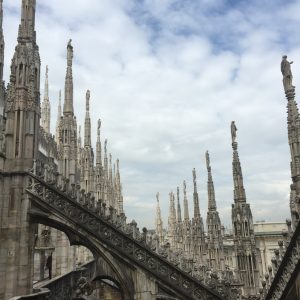
The morning after I arrived home from Italy, I sat on my couch at home and picked up a book. It was Fahrenheit 451, a popular book that most people have already read long ago. Stories of book burning, fast cars, and galleries of smashed windows were wrapped up in its pages. It struck me as a Futurist haven. This was the world they had envisioned, and it brought me back to talking about them on one of our first days atop the Duomo.
After reading the Futurist’s manifestos and ideals, I was simply struck by how naïve such educated men could be. Burn the books, throw away the classical paintings, tear down the architecture. Start new. Go fast. (Most people in Fahrenheit 451 end up committing suicide in such a world and I don’t blame them). My distaste for them has only grown over my month spent in Europe. They wanted to destroy everything that I now hold so dear and close to my heart. Italy has changed me for the best, because of the history and stories written in its art, architecture, and most importantly to me: its design.
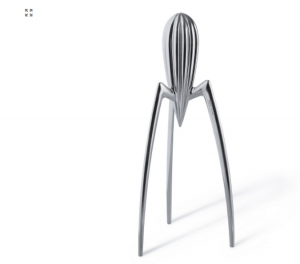
Italy is rich in Italian design history. When visiting Alessi we were greeted with story upon story of designers. The Bomb teapot, the alien lemon squeezer of Phillippe Starck, also combined with the new pop/affordable line. Absolutely everything has a story, as all designed objects do. The difference between American and Italy, is that Italy tries its best to archive and present this history.
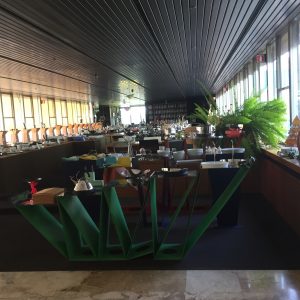
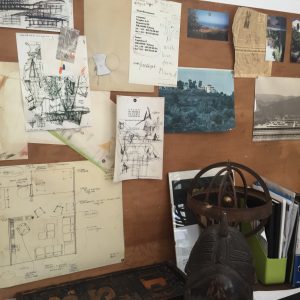
This was best demonstrated at the office of Vico Magistretti. His granddaughter is constantly archiving all of his works. It is a constant dedication to the works of the past, both his architectural and design ones. (Sidenote: The long work process also prompted me to be aware of my poor recording habits.) This was especially dicult as Vico shared most of his descriptions over the phone and often refused to draw.
Yet, Italian design showed more than just its history; it showed its future. FM studio was one of the most influential visits of the trip. They are a graphic design studio that focuses on identity, art direction, exhibit design, digital, editorial, and wayfinding. They showed what interesting and important work there still is to do. Transforming museums, way finding at extravagant hotels, and the future of food to name a few. Our speaker also gave good advice on the ‘follow your strengths’ tail, which I am always an advocate of. He was also very pleased with the all female turnout, claiming we are the future of design (an idea I love to indulge in).
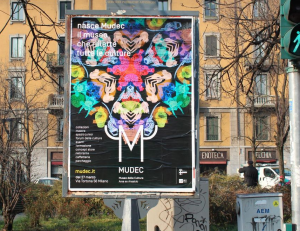
What struck me most about the design culture in Italy is that there was one. Museums (the Triennale) devoted just to the history and future of design. Expos that were proud of their design talent. When one says they are a designer they are asked what kind? This encourages to treat design just as importantly in America, not just a means to create a profit in the market place. Design is a way of thinking, and I am happy to bring home the all encompassing view Italy has now given me.

Dear Futurists, Thank you for failing. Love Bri
Week 5: Tipoteca
Tipoteca is an amazing type foundry tucked away in the heart of Treviso. They are dedicated to the preservation of the origins of type. Our guide showed us the history of linotype and monotype. We were even shown a video on the art of engraving music into sheets of metal. Each line was carved into the sheet, as each note and mark was stamped in. It seemed even more complex than setting type, as no mistake could be easily corrected.

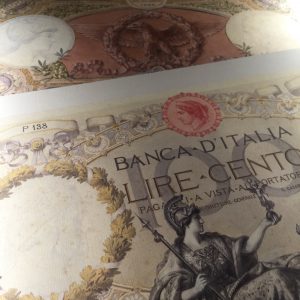
Upstairs there was a fantastic exhibit showing the complexities of printed items, namely money. All of the secret patterns and swirls were painstakingly done by hand. They were truly impossible to copy perfectly unless one were to have the original plate. Tiny stamps were also on display alongside beautiful flourishes and posters.
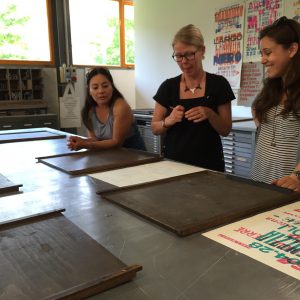
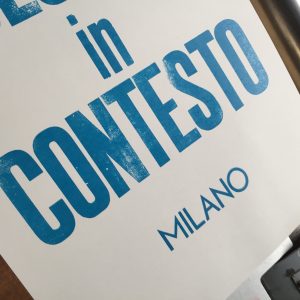
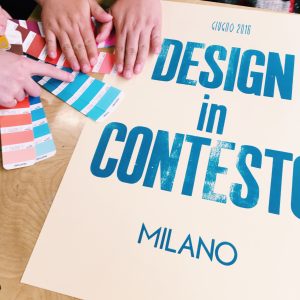
We then got to play with our own type. Our poster making process included first, of course, the idea. We decided upon a poster that highlighted the names of the greats we have learned about during this trip (Castiglioni, Starck, Magistretti, etc) with Design in Contesto in blue. We chose this dark blue in accordance with a lighter green that would hopefully ‘pop’ against the dark. I’m happy the poster was composed of all cool colors as they matched well with the warmness of the yellow paper. We were able to use a wide array of beautiful typefaces and allowed to turn the wheel as we spun our prints out. It was a lovely refresher into the world of typography.
milan : in review
Exploring Milan this past month has been exhausting and wonderful and eye-opening. Everyday was a struggle to get out of bed, but everyday was far more than worth it.
Something I really wanted by the end of this trip was to feel like I had truly immersed myself in the culture of Italy and more specifically Milan. Although this couldn’t completely happen because my Italian is limited to “ciao” and “non parlo italiano”, I feel like I got to know Milan in a way that I never could have just going on my own. Exploring so many parts and being asked to focus on the architecture and the food and the daily routines of the people forced me to learn so much about Italian culture and how it compares to that of Texas. I fell in love with the long meals and tiny espresso breaks. I was so proud of myself when I knew where I was going on the metro and didn’t have to double check every time (and could stand without holding on).
Seeing how design is woven into the everyday life of Milan was also unexpected. I knew Milan was popular for fashion, but I had no idea how focused and supportive and reliant it is on design in general. The Triennale exhibits scattered all throughout the city is one example of how every person in Milan is exposed to design without even seeking it out. There is such a difference in respect and acknowledgement of designers in this city than there really anywhere in the US.
More than anything, living in Italy for a month has changed the way I view myself as a designer. I have learned that design is so big and open. It is not something that has to be categorized and broken up, but can be free and explorative. I think it must be explored in order to find what you really love to do. I observed a passion amongst everyone we visited and studied for creating that I have only seen glimpses of in the past. I want to continue searching for something that I am that passionate about: something that gets me excited to create and solve problems for and not settle for anything else.
Lastly I want to end with this quote from Achille Castiglioni.
“There has to be irony, both in design and in the objects. I see around me a professional disease of taking everything too seriously. One of my secrets is to joke all the time.”
From all of the things I have learned from this trip, I think my favorite will always be to not take myself too seriously and to joke all the time.
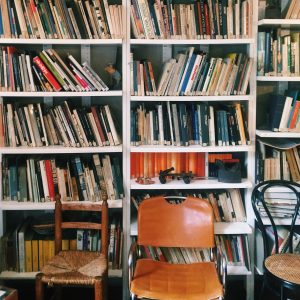
Castiglioni’s studio
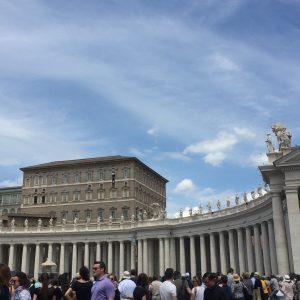
Seeing the pope in the tiny window at the Vatican
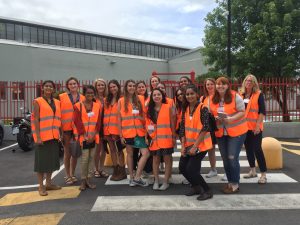
Group picture in cool vests at Artemide
Week 5: Fabrica
On our very last day, we visited a highly motivational space: Fabrica. Fabrica is a program/place founded in 1994 that offers a one-year scholarship for talented individuals (under 25) to enhance their design, visual communication, photography, interaction, video, music and journalism skills. It is a place that is midway between school and work.
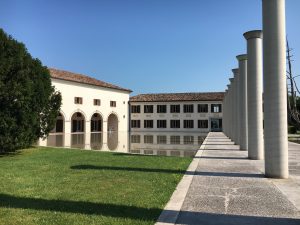
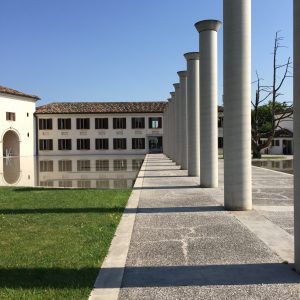
We began the tour by standing in the grounds with a reflection pool adorned with columns. Our guide talked of the reunion they just had which they were very proud of. 378 past students returned to Fabrica from all corners of the earth. Here she (the guide) got to meet their families and/or hear of their accomplishments and new standings in the world/business field.
Moving forward, we got to view the works of these talented students. We saw giant portraits of women who had once been disfigured by acid, not painted on acid on giant slabs of rusted metal. (Here is a link to the video showing the collaboration between Erik Ravel and Pakistani activist Iram Saaed: http://www.fabrica.it/facing/). We saw the sadly room where COLORS was once produced. Sadly it is not in print right now, yet their online presence is maintained. I am looking forward to finding/buying past copies of it.
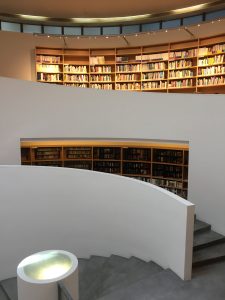
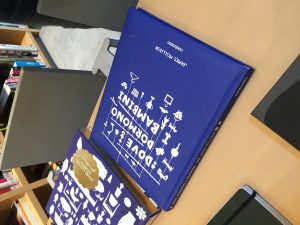
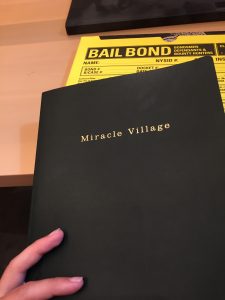
One of my favorite parts included the visit into the library. It was a giant swirling white staircase of design, art, history, and anything the students found interesting and wanted to order. Here I found my two favorite books, Miracle Village (about life during and after being convicted of molestation) and Where Children Sleep (an account of different childhoods over the world).
Most importantly, we got to speak to the director of design department, Sam Baron. He spoke of his path to Fabrica, namely an education in Paris and a later on interest in porcelain projects that were well received. He divulged his opinions of design and where it is headed. He stressed his disappointment that being a designer is becoming a ‘trendy thing’ i.e. posting a sketch on instagram and calling one’s self a designer. Being a designer, a good one, takes much more than instant gratification. “Stop the dreamy image” he says. He also explains that things are just tools, and one can’t just barf out images. One will always need the simple necessities of a pen, paper, and hand to create ideas. And this idea, this grandeur of thoughts, should be ablde to be explained within one sentence. “No bullshit, just practice”.
For me, Fabrica reminds me of this story in the bible: the Tower of Babel. This story was meant to explain the origins of different languages. In short, every man was trying to reach heaven without dying. They created a huge tower that spanned towards the heavens. God was angered by their efforts and zapped them, giving them different tongues/spoken languages. The men all fumbled around unable to create the tower because of the barrier. I see Fabrica as the conquerer of this challenge. They not only overcome distance barriers, but encourage them. The more collaboration and confusion the better. Different students merge not only their cultures, but also their past design educations, taking the good from each side and creating a new language of designs.
the floating piers : week 4
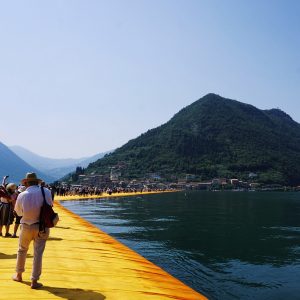
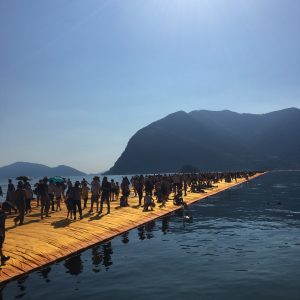
The day we visited Christo’s Floating Piers was one of the most rewarding days of the trip. As we boarded the train for Brescia, we were confronted with massive crowds that prevented us from actually getting on the train. This should have been the first warning sign of what was to come but most of us brushed it off as rush hour. We simply boarded the next train and all was well, until we got to the Brescia train station and faced the next phase of our journey which seemed to be an unending line to the only train that would take us to the Piers. We didn’t know how long the wait would be which was probably for the best. After another delay on the train and a line to get onto the Piers, 8 hours later, we finally took our first steps onto the floating orange pathway. The sweltering heat and test of our patience all receded into the background at this moment. Walking barefoot on the wobbly pier and absorbing the beauty of Lake Iseo was an unforgettable experience. Many of us wondered if something like this could even exist in the States without extensive barriers and extensive peddling of Christo merchandise. Experiencing this ephemeral installation in a place as beautiful as Italy was truly a memory I will keep forever.
A New Perspective
I knew it would be hard to come back to the states after living what seemed to be a different life for the last month. Traveling has been a part of the daily life over the last month, within Milan and Italy as a whole. Metro trips, buses, and trains have just been second nature, but upon arrival in Houston it was back to the American mode of transport- private vehicles. Don’t get me wrong, I am excited to be back in a place of familiarity, Mexican food, and sweet tea; however, my eyes have also been opened to a new lifestyle that makes me question the way in which our country currently functions.

Granted, not all states and towns are the same across the United States or even Europe. However, I find it noteworthy that the U.S. has not taken further note from the urban infrastructure of European cities. My original culture shock upon arrival in Milan, followed by my awe of their intensive recycling system, has now turned into lingering questions of how far off the urban environments in the United States are. Austin is one of the most ‘tree-hugging’ communities in the United States, yet the enforcement of recycling and strong encouragement of public transport seems far lacking in comparison to that of not only Milano, but other European cities that I visited along the way over this last month.

On top of eye opening moments in regards to urban development and design, I have also gained a new sense of awareness overall. While everyone has been questioning the difficulty of a month in a country with an unknown language, I have been wondering why the language barrier was not more of hindrance in reality. And that also made me aware of the importance of design elements such as iconography throughout cities. While it is true that English can be found in many places throughout Europe, there are also more remote areas in each community that are not as emerged in English basics. This could have been daunting if it were not for familiar pictorial images, icons, and symbols that created a universal language to lead me through wherever I was at the time. It was not until this point that I realized the importance and necessity of urban graphic design elements for not only visitors with language barriers, but also the local community who may lack the capability to comprehend more the simplistic images.
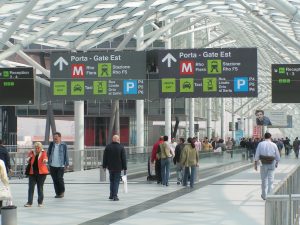
These small pieces of the puzzle that I observed over my time in Milano have made me more aware of my surroundings not only in the more urban environments of Austin and Houston, but also more rural environments such as my home of San Angelo. With my main academic focus being of urban developments, city infrastructure, and relational planning, this trip awarded me a new perspective on the city and urban lifestyles. Although I have read and studied various European planning and architectural developments, none could have provided me the information that I was able to experience first hand. Not just seeing, but actually living in Milano for a month as well as my new gained knowledge about various basic aspects of design will definitely be something that will forever be apart of my thought processes throughout my life and future professional career.
Tipoteca and Treviso
Our final days of our trip were not spent crying in our rooms or walking the streets of Milan with melancholy; instead we boarded a bus bright and early on Tuesday morning at promptly 6:30am.
Our first stop of the day was a 3 hour drive to a letter press factory, “Tipoteca”. We were given a tour of the museum and factory, where our guide told us about the history and importance of letter pressing.
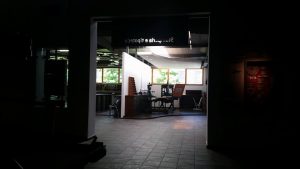
Then we were given the chance to make our own poster; we collaborated to create a single poster we’d all get a copy of. We finally agreed on the poster pictured below:
Afterwards, we had lunch just across the street where they served us so much food. We were served about 2-3 different appetizers, a first and second course, and finally dessert with coffee.
Then we boarded the bus yet again for our last stop of the day: Scarpa’s cemetery.
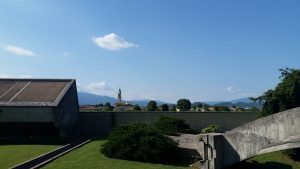
We saw beautiful pieces of architectural beauty, and the quiet solace that is a cemetery. We didn’t stay very long, but it was pleasant to just wander through the graves, read the names, and imagine the lives of the people who had once been.
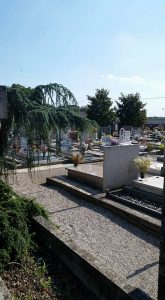
Some graves were of children, many of old couples, and families comprised the lot of Scarpa’s cemetery. The beautiful layout made it less creepy and more poetic; it didn’t feel like a cemetery where loved ones were simply laid to rest, this was a place to honour those who had so grievously passed.
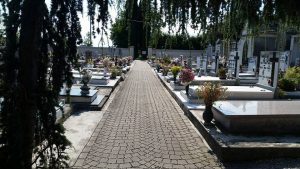
After we wandered for a little while, we boarded the bus for the last time that day to head to the hotel. Broken into rooms of two people each, we had a chance to freshen up before attempting to find our way around Treviso.
A small group of us ate dinner in an alley at a quaint pizzeria before wandering off to find gelato – one of the last times we would be able to eat gelato in Italy, actually.
As we walked and talked, we were all acutely aware that our time was running out fast, but no one wanted to acknowledge it. Instead we focused on each other and the few things we had left to do.
The next morning we rose early to eat breakfast downstairs before heading out to our last stop of our trip: Fabrica.
Fabrica is a communication research centre based in Treviso, Italy. It is an integral part of the Benetton Group established in 1994 from a vision of Luciano Benetton; Fabrica offers young people from around the world a one-year scholarship, accommodation, and a round-trip ticket to Italy for aspiring students under the age of 25.
We were given a detailed tour of the studios and all of the works they have produced recently. As we neared the end of our tour, we thanked our guide, leaving once again to head home to Milan.
The two day trip was exhilarating and exhausting both mentally and physically, but it was a terrific way to end our visit.
In Reflection
Spending a month in Milan, Italy gave me a new perspective on my life, especially my life here in the States.
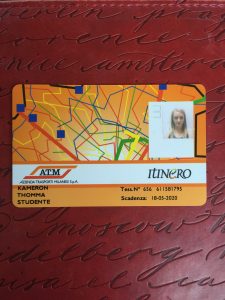
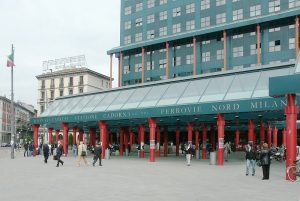
Transportation was a large portion of the culture, since it got you to work or to the grocery store, many Milanese (including ourselves) relied heavily on properly working transportation systems. After only living in Italy for a week, the metro quickly become one of our favorite modes of transport. It was easy to use thanks to our metro cards, convenient due to the many stops and stations, and fast moving. Not to mention, it is a fairly inexpensive way to travel the city much like the bus and tram.
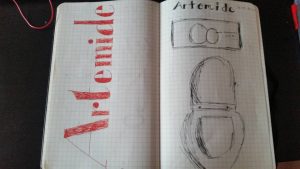
Not only was the transportation a major part of this trip, but our restroom experience was important to note since they varied so frequently from location to location. My focus for my journaling, for instance, was the toilet handles, because they were all so drastically different in Italy, and they were even more unique than the ones we see in the States. In Italy, there are button flushers both on the toilet itself or on the wall above it, handles that you manually turn in order to start and stop a flush, and floor flushing mechanisms just to name a few.
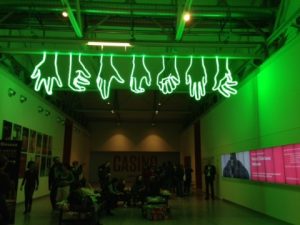
We went to a few Triennale events, which allowed us to experience the works of Italian artists up close and personal.
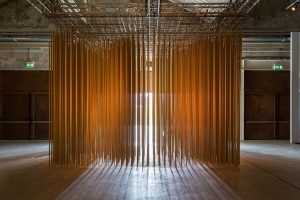
Each event was a different expression, a different voice of Italy. It was incredible being able to experience such impressive works, while also being able to live in the city these artists were describing or at least attempting to convey through their works.
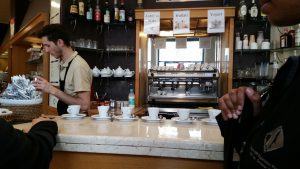
Also, their coffee (caffé) is, simply put, espresso and it cost a mere 1 euro, whereas in the States, we pay $5 for a cup of watered down coffee. Not only was their food and coffee better, fresher, and more rich, but it was cheaper. Albeit not everyone, especially in areas of high tourist traffic, but the wholesome foods we ate were usually cheaper than their American counterparts.
During the week, we would visit a multitude of studios, museums, and exhibitions; throughout our time in Milan, we saw dozens of them, and a few of my favorites consisted of those that portrayed the mood and culture of Italy such as the fashion and appliance museums/studios/factories.
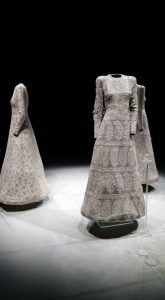
For instance, one of the best exhibits we visited was the Armani/Silos museum about 15-20 minutes away from our apartments.

The works we saw there were delicate, intricate, and stunning; we were able to walk through the progression of works from the birth of Armani to his most recent works. The character of each style was absolutely unique and told the story of Italians and their worldly counterparts (including but not limited to Asian and Indian influenced pieces).
Although our time in Milan has come to an end, I will always carry the things I have learned with me. Not only has it given me a new perspective on life in general, but it has made me acutely aware of my surroundings and home culture; Italy, however, will always be considered my second home.