Coming into UT, I was amazed by the sheer amount of research going on in the university. So many of my professors, TA’s and even some friends had conducted some fascinating research. Yet, despite being amazing, it was also daunting. I had no idea how to conduct research. But I was determined to learn and to push myself, so when the FRI stream sort came up, I visited as many of the labs as I could. But, how did I go from making ice cream in high school chemistry to conducting clinical trials to create a computer-based diagnostic for Parkinson’s? The answer is simple: DIY Diagnostics. Through all of the labs it was the one that let me pursue both research and my interest in the medical field.
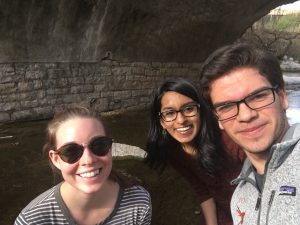
Getting to that point wasn’t as simple as just showing up though. I remember, after our first group meeting, I was ready to hit the lab and start my cutting edge research, only to realize I had no idea what I was doing. I must have stood in that lab for about 30 minutes, staring blankly at the assortment of pipettes, tubes, and other science stuff scattered around, not sure how to even start my first Skill Development task. At that point, I was too proud to ask for help, thinking that research was a one-man job. Soon enough though, I realized that standing around staring wasn’t getting me anywhere, so I turned to other students who had joined DIY with me. And that’s when I started to realize, none of us were experts. We are all just about as new to this world as the next. And so, many of us started working together. Not through direct instructions from a mentor or anything, we just naturally did it. This has become something I find incredibly special about DIY Diagnostics. Even now, with everyone being off on their projects, we still find time to help each other out whenever possible. This teamwork soon evolved into friendship as well. The lab became a fun endeavor, not just because as we became more competent the science became exciting, but also because the other people in lab provided a great atmosphere.
The other part of DIY Diagnostics that helped me grow was its freedom. Dr. Riedel formed the lab so that we could follow our interests. The skill developments in the first semester exposed us to the possibilities, and then he pushed us to keep it going. At the beginning of my Sophomore year, after learning the basics of the many diagnostic tools we had at our disposal, I met with Dr. Riedel to discuss what I wanted to do with my next semester at DIY. I knew, by listening to Dr. Riedel talk about it, that I wanted to be a part of the Parkinson’s research team. Honestly, although interesting, I wasn’t the best at LAMP and PCR, and I thought my strengths could be applied much more to that field. And so, Tim gave me the tools and advice I needed to start up.
This second semester of DIY has easily been one of my favorite experiences because of it. I now spend a lot of my free time in lab by choice, just for a chance to work on my project. Additionally, I have found a great group of friends within the stream itself. These things helped me push myself on my research. DIY is truly a great team, which encourages individual ideas and provides some of the freedom to explore these ideas. Now, I plan to continue working in the lab even as a volunteer. I believe that it has been an incredible part of my first two years at UT, and hope for it to continue being a positive experience in the years to come. So if you do decide to join the DIY Diagnostics team, I wish you the best of luck, recommend that you be patient and work hard, and I hope to see you in lab!