As I entered my freshman year of college, I was absolutely overjoyed to be accepted into the Freshman Research Initiative program. I couldn’t believe that I had been granted the pleasure of working in an undergraduate research lab, which is a huge honor! After exploring several of the research streams on campus, I knew DIY Diagnostics was the perfect fit for me. DIY Diagnostics seemed to have such a relaxed environment, but it also appeared to have the perfect amount of intellectual challenge that would allow me to grow as both a student and an individual. This stream just seemed very relevant to me in particular, as I hope to attend medical school. I loved the idea of getting to create my own diagnostic that could potentially impact the health and safety of others! I don’t think any other lab could have put up with my countless questions as well as the mentors and Dr. Riedel did. Researching in the DIY lab taught me so many things, perhaps the most important ones being to have faith in my abilities and to always ask questions when assistance is needed. This lab also gave me some of my closest friends in college, and I have such fond memories of singing (loudly) along to the radio with them during early-morning lab sessions.
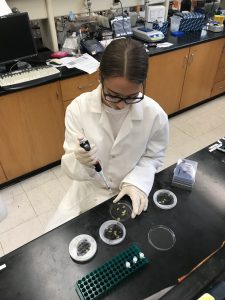
It was so exciting learning how to code by myself for the first time, and I could not believe I was actually going to be creating an app that others could use on their mobile devices. I sent my first few coding projects to almost all of my family members and friends out of excitement, and they could not believe that I knew how to manipulate seemingly gibberish words and symbols into functional interfaces and webpages. Though the coding projects were fun, I was initially very intimidated to develop my own research project, as I do not find myself to be a very creative person. I was lucky in that I had the opportunity to work with one of my good friends on a project she passionately spent all of summer break fine-tuning. We have spent this past semester attempting to create a diagnostic that can detect the presence of a disease-causing fungus on Hops plants. My partner and I have learned that much of research is characterized by initial failure and frustration, but we have discovered so much about ourselves in the process. I would not change a thing about the research journey I have been so lucky to embark on, and DIY Diagnostics has provided me with the best experience possible.
Leave a Reply