Category: 2017

  • Parkinson’s Keylogging Study

                 I began working in the lab during the summer after my sophomore year. Up till that point, I’ve never been involved in research, but I signed up for the Accelerated Research Initiative, and I had the option to pick from several labs. I picked the DIY Diagnostics stream because I wanted to avoid wet lab work, and I wanted to get better at data analytics and coding. I was a little overwhelmed by all the separate projects going on simultaneously in the lab over summer, but I was given an option to pick from several existing projects or come up with my own diagnostic. I decided to join the Parkinson’s keylogging study.

                 Over summer, I worked with a small group of friends to start a clinical research trial to determine the differences in how those diagnosed with Parkinson’s Disease typed compared to a control group. We would collect the data by visiting an exercise group for Parkinson’s patients and asking them to type on a laptop which has InputLog, a keylogging software. Afterwards, we would analyze the collected data using R and Python to look for patterns.

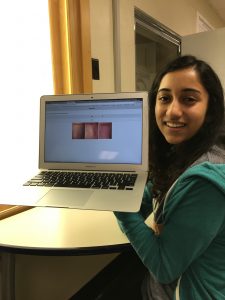
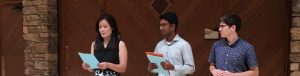
                 I initially thought that I would spend most of my time coding, but I spent most of the time working with others to set up other aspects of the study. This involved figuring out how to get a new phone number to call the patients, completing IRB training, announcing our study to participants (pictured), and preparing the folders we would hand out to participants. I had a great experience seeing all the work involved in getting a research trial up and running, and when we actually collected data for the first trial from our first participant, I felt a huge sense of accomplishment.

                 This experience still helped improve my coding skills, as I’d hoped. InputLog provided the action time (time from key up to key up) and pause time (time from key down to key down) for all the letters typed and presented the data in a CSV file. I used Python to create a script to remove unnecessary columns and count the total number of backspaces pressed in a typing session, and another script to measure overall accuracy. It was difficult at first because I wasn’t used to this level of autonomy, and I would sometimes spend hours stuck on the same problem. But over time, I got more used to working with data frames and navigating Stack Overflow for quick answers.

                 I initially wanted to join DIY diagnostics because I was interested in computer science, but I wasn’t sure if I wanted to pursue a career in the field. But due to my experiences in the stream, I’m confident that I picked the right career path, and I was able to spend my time helping with research that could one day lead to earlier diagnoses of Parkinson’s Disease.
  • Lab Partner has no “End”!

    Personally, I chose DIY Diagnostics as my number one choice stream because I loved the variety of experiments that I would get to perform. Other labs have ongoing research during the Spring semester, but DIY dives into different projects (from sampling Waller Creek, to extracting DNA from your own saliva, to coding) and you truly get to choose what you are passionate about, and continue it into the Fall semester. The Freshman Research Initiative is 100 percent one of the best ways to find out if you want to pursue research as a career, because you get to work on your own project starting when you’re only 18 years old! You get to see the hardships, the successful moments, the various interesting experiments that other people are working on, and more through FRI.

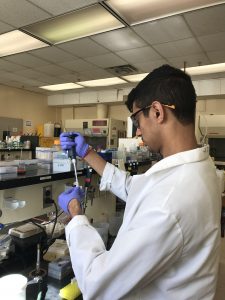
    When I first joined the lab, I didn’t know many people there and didn’t know what to expect for that semester. That quickly turned around when Dr. Riedel provided such a team-building environment to work in. For all the skills developments you can work in teams, which not only aids in facilitation of getting results, but also fosters friendships. Like they say, girlfriends/boyfriends can end, friends can end, but lab partner has no end! 😉

    One of my favorite parts of DIY is having a completely diverse group of people that have creative solutions to many problems. Currently, my lab partner and I are working on a project that investigates exosomes and MicroRNA in saliva as a potential diagnostic tool for various diseases. For sample collection, we have to get people to spit approximately 3 mL into a collection tube for us. One of the funniest things is watching people reach that 3 mL volume (which is actually quite a lot!) and complain the entire time that they don’t have enough saliva in their mouth. Something that I love about the people in my lab is that they decided to get creative with producing more saliva, and came up with various theories. One group of people searched up photos of hamburgers and other fast food in order to stimulate saliva production in their mouth, while another person (whose mother is a dentist) said that licking the sides of your cheeks will help produce more saliva. This is a simple example, but it is extremely incredible being in an environment with people that think differently from you. Whenever you have a question or are stuck on a step for your project, it is easy to ask the group of researchers nearby, and someone is bound to think of an original solution.

  • Platform to Dive into Research

    Entering UT Austin, I had no research lab experience and did not know what to expect as I received notice of acceptance into the Freshman Research Initiative program. During open-houses, I came across the DIY Diagnostics stream. I was intrigued by the innovative projects that were being conducted in the stream, including the Waller Creek Diagnostics and the FRIome Project. I was thrilled to find a stream that allows you to pursue app development even though I had no computer science experience. Even though this stream excited me, I was hesitant in choosing DIY because I had no creative, thoughtful ideas I thought I could contribute to lab. I was definitely afraid I would be lost and would be able to be successful in stream. I took the chance though and became part of the DIY Diagnostics 2016-2017 cohort. Looking back since then, I have had no regrets for choosing this stream. I was able to adjust to the lab work with the help of mentors. Although in the spring, we were focused on learning basic wet lab technique and Javascript coding, Dr. Riedel really encouraged us to think of how we can apply these techniques into the development of a diagnostic.

    When Fall semester came around, I again had no clue what I wanted to do for a project. With Dr. Riedel’s assistance, I choose to conduct a LAMP diagnostic for the detection of a specific gene in the gram-negative bacteria, Porphyromonas gingivalis, that has been a strong risk factor for periodontal disease and aspiration pneumonia. This project excited me because I was going to be developing a LAMP test, which uses isothermal conditions and fluorescence for the detection of target nucleic acids. As LAMP (Loop-Mediated Isothermal Amplification Process) has not been the go-to diagnostic for detection of nucleic acids like PCR has been, running LAMP had its challenges. Other students who used LAMP (for a cancer diagnostic and a diagnostic for Aspergillus fumigatus, a dangerous fungus found in cannabis or medical marijuana) had issues with having negative controls for their test amplifying and showing results expected of a target DNA sample (positive control). Although data was collected independently, all students running LAMP worked collaboratively to refine the protocol and to limit contamination of DNA samples. By being involved in this collaborative setting, I felt like was I was a researcher trying to troubleshoot where issues are arising that are negatively influencing the performance of our diagnostic. With hard-work, we have been able to find solutions to issues with LAMP and I am excited where LAMP is heading as a high specific and effective diagnostic test for detection of specific bacterial genes and markers for disease.

    Being part of DIY has been by far one of the best experiences I have had since entering UT Austin. The DIY Diagnostic offers a platform for you to really dive into research and design a project ground-up that could offer numerous benefits to the scientific community. Although I worked with LAMP, I was also able to exchange ideas and assist students doing other projects such as the Parkinson’s Keystroke Analytics Project, DIY Electroencephalogram and Pill Identification App. With all students conducting varying projects, I have been able to acquire so much technical knowledge. One of my favorite moments in this stream was when we had a speaker talk about machine learning and predictive analytics. Although my project did not essentially require predictive analytics, I found a new arena of data analytics I would be interested in pursuing. Lastly, I have made many friends, who I share similar goals and interests with. With the DIY Diagnostics family, I have been able to find resources and assistance to succeed overall in all my other coursework. I really believe my experience with DIY has given me the confidence and necessary skills required if I choose to pursue other research and join another lab.

  • Anyone Can Be a Researcher

    I’m Madison Scott, a Neuroscience major from Cypress, Texas! For my research project I’m developing a diagnostic for fungal contaminants of medical marijuana. A tool for quick and simple testing of marijuana will allow growers, dispensaries, and immunocompromised patients to prevent illness and death that can come from the use of contaminated marijuana.

    DIY Diagnostics was my first-choice stream because I was fascinated by the idea of being able to invent my very own diagnostic. And after two semesters in this stream, I’m still just as excited about my project. Before beginning my FRI experience, I was very intimidated by the idea of research. I thought of it as something only expert scientists with PhDs did, and that I was completely unprepared to take on the challenge. But once I entered DIY, I realized that anyone can be a researcher and even the experts had to start somewhere. Being in DIY’s community of passionate student researchers has provided me with an amazing system of support and motivation. Through my work I’ve gained an immense respect for researchers, experienced the excitement of performing tests that had never been done before, solidified my scientific knowledge through application, and transformed my fear of research into a love for it!

  • Failure is Okay!

    Looking around all the posters at the FRI picnic my freshman year, I remember feeling excited and overwhelmed -excited because I would be able to join labs that specialize in anything from Astronomy to Computer Science and overwhelmed because I honestly had no clue which stream to choose. What finally pushed me to pick DIY Diagnostics was the breadth of knowledge I could gain: coding skills, microbio techniques, field sampling, 3D printing etc. At the core of how I have structured my own major/certificate pathway is the idea that I want an interdisciplinary education. DIY fit perfectly into my plan.

    This semester I got the opportunity to design and build an app to diagnosis and differentiate measles, rubella, and roseola, three common pediatric rashes, from each other. My spring semester mostly consisted of learning wet-lab techniques/field sampling, but with my fall semester research project, I got the opportunity to build on the programming skills which I learned in the spring. Other interesting projects in our lab include the Parkinson’s keystroke project, one of the only FRI projects that let you work with actual patients, and a UV wearable project! The DIY Diagnostics stream gives its students a lot of freedom to pick a project that they are curious about and as long as it has relevance as a diagnostic tool, you can investigate it. This was definitely a unique quality about our lab.

    As someone with prior experience working in a lab, the first few skill development assignments were familiar and dare I say easy. But, don’t worry if that is you, skill developments get more complex and challenging fast and that makes it even more fun. Through it all, one of the biggest takeaways I got –beside that awesome skillset! – is that in DIY, failure is okay, failure is encouraged, and failure is celebrated. I wouldn’t call myself a perfectionist, but making mistakes is never fun, especially when society has taught us that making mistakes in an educational setting equates to a penalty. Research is tough, mind-bending, and yes filled with failure, but working in this lab gave me a community to support me through it all. During the roughly six-seven hours you spend in lab spring semester, and eight to nine in the fall, there is definitely a camaraderie formed between all students working in the lab. These are people you will want to joke around with, laugh with, and go grab Burrito Factory with!


  • Home Away From Home

         When I first had learned about my acceptance into the Freshman Research Initiative I was quite surprised and ecstatic. I did not know what stream I was going to join at the time but regardless of my choice I knew that I would be involved in something meaningful. To believe that I would be both a scientist and researcher so early on in my college career was quite overwhelming. I would often explain to my relatives and friends back home of how FRI is jump starting our careers within the world of research by providing us with hands on experience. Despite my excitement, I was still at a loss as to what stream I would have the pleasure of joining. There were various streams that were centered around my Computer Science major that I was becoming quite indecisive and unsure of what stream to choose. That was until my close friend, Javier Sigala, recommended that I join the same stream as him which was the DIY Diagnostics steam. Before accepting his proposal, I did some research into the DIY Diagnostics stream and discovered that it was a mixture of biology, chemistry, and computer science which I thought was pretty cool and unique. Upon further research, I learned that this was the same stream that was awarded funding for their famous Zika detection project. Believing that I could also revolutionize the world with my research, I joined the DIY Diagnostics stream in hopes of realizing my dream. It is a decision that I have yet to regret and am actually quite content with. Being a computer science major, I had no clue as to how to properly use a micropipette, perform LAMP reactions, collect and grow bacteria, and various other things. However, Dr. Riedel, the research educator and head of the DIY Diagnostics stream, provided us with ways of learning how to perform all of these skills in the form of skill developments. Over the course of the Spring 2017 semester, I learned a handful of important skills that made me feel as though I was an actual researcher and scientist. We even learned how to develop mobile web applications which was pretty neat since I did not possess that skill beforehand.

         These skills were vital for following next semester since we were allowed to pursue our own independent diagnostic projects alone or in groups. Sadly, my major required me to pursue a computer science related project which meant that all the skills I learned would be rarely used. However, that did not mean that I did not get to use them since we were allowed to help our fellow peers with their own projects. It’s refreshing to dive into something completely new and unrelated to computers after a while of staring at a computer screen writing code. Being a part of the research community altered my perception of what it means to do research. It’s not simply messing around in a lab or looking at archives of old scientific journals and the such. Rather, it is a community that strives to advance human knowledge and technology by turning ideas into reality. It is a community where you are free to push the boundaries of your imagination in order to come up with unique and revolutionary results. That is what I felt when I was in the DIY Diagnostics stream. I began with a simple project which started with the simple question of whether it was possible to predict if Waller Creek was going to flood in the near future. A simple question turned into a proposal of utilizing machine learning based on a linear regression model in order to make stage (in feet), a.k.a. height of the river, predictions. Beforehand, I had no clue how to work in Python or how machine learning worked but the DIY Diagnostics stream allowed me the freedom to learn and explore what my project entailed. Now I leave the stream with new skills that I never knew I would have acquired and feel as though my time there was both meaningful and unforgettable.

         I made new friends and had great times during my time at the DIY Diagnostics stream. I met people of various backgrounds and majors and basked in the joy that is camaraderie. I remember bursting out laughing when I saw a cat chasing a squirrel while my group and I were collecting Waller Creek water samples. There were good times and there were difficult times but, nonetheless, I do not regret in the slightest every joining the DIY Diagnostics stream. The stream feels like a home away from home.

  • Taught Me to have Faith in My Abilities

    As I entered my freshman year of college, I was absolutely overjoyed to be accepted into the Freshman Research Initiative program. I couldn’t believe that I had been granted the pleasure of working in an undergraduate research lab, which is a huge honor! After exploring several of the research streams on campus, I knew DIY Diagnostics was the perfect fit for me. DIY Diagnostics seemed to have such a relaxed environment, but it also appeared to have the perfect amount of intellectual challenge that would allow me to grow as both a student and an individual. This stream just seemed very relevant to me in particular, as I hope to attend medical school. I loved the idea of getting to create my own diagnostic that could potentially impact the health and safety of others! I don’t think any other lab could have put up with my countless questions as well as the mentors and Dr. Riedel did. Researching in the DIY lab taught me so many things, perhaps the most important ones being to have faith in my abilities and to always ask questions when assistance is needed. This lab also gave me some of my closest friends in college, and I have such fond memories of singing (loudly) along to the radio with them during early-morning lab sessions.

    It was so exciting learning how to code by myself for the first time, and I could not believe I was actually going to be creating an app that others could use on their mobile devices. I sent my first few coding projects to almost all of my family members and friends out of excitement, and they could not believe that I knew how to manipulate seemingly gibberish words and symbols into functional interfaces and webpages. Though the coding projects were fun, I was initially very intimidated to develop my own research project, as I do not find myself to be a very creative person. I was lucky in that I had the opportunity to work with one of my good friends on a project she passionately spent all of summer break fine-tuning. We have spent this past semester attempting to create a diagnostic that can detect the presence of a disease-causing fungus on Hops plants. My partner and I have learned that much of research is characterized by initial failure and frustration, but we have discovered so much about ourselves in the process. I would not change a thing about the research journey I have been so lucky to embark on, and DIY Diagnostics has provided me with the best experience possible.

  • DIY Experience: Easily One of My Favorites

    Coming into UT, I was amazed by the sheer amount of research going on in the university. So many of my professors, TA’s and even some friends had conducted some fascinating research. Yet, despite being amazing, it was also daunting. I had no idea how to conduct research. But I was determined to learn and to push myself, so when the FRI stream sort came up, I visited as many of the labs as I could. But, how did I go from making ice cream in high school chemistry to conducting clinical trials to create a computer-based diagnostic for Parkinson’s? The answer is simple: DIY Diagnostics. Through all of the labs it was the one that let me pursue both research and my interest in the medical field.

    Getting to that point wasn’t as simple as just showing up though. I remember, after our first group meeting, I was ready to hit the lab and start my cutting edge research, only to realize I had no idea what I was doing. I must have stood in that lab for about 30 minutes, staring blankly at the assortment of pipettes, tubes, and other science stuff scattered around, not sure how to even start my first Skill Development task. At that point, I was too proud to ask for help, thinking that research was a one-man job. Soon enough though, I realized that standing around staring wasn’t getting me anywhere, so I turned to other students who had joined DIY with me. And that’s when I started to realize, none of us were experts. We are all just about as new to this world as the next. And so, many of us started working together. Not through direct instructions from a mentor or anything, we just naturally did it. This has become something I find incredibly special about DIY Diagnostics. Even now, with everyone being off on their projects, we still find time to help each other out whenever possible. This teamwork soon evolved into friendship as well. The lab became a fun endeavor, not just because as we became more competent the science became exciting, but also because the other people in lab provided a great atmosphere.

    The other part of DIY Diagnostics that helped me grow was its freedom. Dr. Riedel formed the lab so that we could follow our interests. The skill developments in the first semester exposed us to the possibilities, and then he pushed us to keep it going. At the beginning of my Sophomore year, after learning the basics of the many diagnostic tools we had at our disposal, I met with Dr. Riedel to discuss what I wanted to do with my next semester at DIY. I knew, by listening to Dr. Riedel talk about it, that I wanted to be a part of the Parkinson’s research team. Honestly, although interesting, I wasn’t the best at LAMP and PCR, and I thought my strengths could be applied much more to that field. And so, Tim gave me the tools and advice I needed to start up.


    This second semester of DIY has easily been one of my favorite experiences because of it. I now spend a lot of my free time in lab by choice, just for a chance to work on my project. Additionally, I have found a great group of friends within the stream itself. These things helped me push myself on my research. DIY is truly a great team, which encourages individual ideas and provides some of the freedom to explore these ideas. Now, I plan to continue working in the lab even as a volunteer. I believe that it has been an incredible part of my first two years at UT, and hope for it to continue being a positive experience in the years to come. So if you do decide to join the DIY Diagnostics team, I wish you the best of luck, recommend that you be patient and work hard, and I hope to see you in lab!

  • Sense of Community!

    When I was choosing between streams last year I didn’t know what exactly I wanted to do. I have worked in a lab before, but I wanted to try something different from what I have previously worked with, which was pulmonary research on mice. Compared to all other streams DIY seemed like the most open-minded lab where I could really choose to work on anything that interests me. That was very appealing and knowing that DIY is one of the most popular streams at UT, I was very excited to hear that I got in.

    Even though I have worked in a research lab before, the basic experiments that we were assigned to do during the spring semester helped refresh my memory of all the basic techniques, as well as taught me some new ones. One unusual, but very interesting experience for me was coding. I have never had any experience with computer science before and was pretty scared the first time we had a coding assignment. It was challenging, but the mentors were really open to helping and answering any questions which turned out to be huge help for the coding assignments. And as we did more and more coding, it became and easier and I slowly began to understand it. Even though I didn’t pursue a project involving coding during the fall semester, I am very grateful to have had experience with some coding and I am sure it will be useful to me someday.

    Moving on to the fall semester, as DIY students, we were pushed to choose a project of our own. Many ongoing projects that we could join were available including the Waller Creek project, Parkinson’s project and many more. My partner and I really wanted to choose something new that nobody at DIY has done before and we decided to investigate exosomal microRNA in saliva. Probably the most challenging thing was actually starting the project. It took a while to get the qPCR to work, but I think it was one of my most amazing experiences in lab when after one of the qPCR runs we actually got meaningful results. It is this feeling of satisfaction you get from something that you have worked on for several weeks and then one day it just finally works! I consider myself and all my fellow lab mates researchers because no matter what it is that each one of us is working on, we’re all trying to achieve a common goal – answer a scientific question that hasn’t been answered before. And for me personally, it is an amazing thing to see myself and my friends in lab be able to answer complex scientific questions that we once thought were unachievable.

    The thing that I enjoy most working at DIY is the sense of community. There are only about 30 students working in our lab and many of them I’m friends with. It is hard to find where you belong since UT is enormous and for me, DIY is one of those places. Our RE Dr. Riedel definitely places a lot of emphasis on helping each other out in lab. Since the first day of spring semester we have been allowed to work in groups on our assignments, and moving onto the fall semester, Dr. Riedel encouraged all of us to team up and work on projects together, whether we’re joining an existing project or creating our own. DIY has had a huge impact on my experiences at UT and I am very excited and looking forward to whatever else is ahead.

  • More Than I Expected, but in a Good Way

    fWhen I first started college, I didn’t expect to start independent research this early, but I’m glad it was through FRI. After completing UGS 303: Scientific Inquiry, I faced the daunting task of choosing a stream. The DIY stream stood out because it seemed to involve a little bit of everything ranging from 3-D printing to qPCR and making mobile apps. It simply seemed like an interesting stream to join.

    After being accepted into the stream, it was more than I expected, but in a good way. The course is structured like a walk-through tutorial with protocols given to us for us to complete the task at hand. It started by introducing proper lab techniques and continue to cover a vast amount of material most of it which I found quite interesting. My favorite one was the 3-D printing skill development where we got the chance to create anything we wanted. The toughest assignment for me was the coding aspect, but once I got it to work, it was the most satisfying feeling. The labs overall are demanding, but definitely doable. Though it is mostly self-taught, any questions could be directed at a mentor or any of your fellow classmates in lab. Though it does take a sizable chunk of time out of your week and sometimes if may feel like you live at lab, it is worth the investment. I can consider myself a scientist well versed in basic techniques with some knowledge in other fields.

    My current project involves analyzing the historical data of Waller Creek, a creek that DIY has been monitoring over the years. I also continue to gather data from the creek though my weekly samplings. The goal of this is to understand factors affecting the creek and understand the trends of the bacterial levels over time. It’s interesting to see change, or in this case, the lack of change of Waller Creek over time and why it is this way. It’s a creek that runs right through UT and faces the problem of having high E.coli and enterococcus bacterium levels. The City of Austin has attempted to fix this problem by fixing the wastewater infrastructure and educating the public, but the effects are yet to be shown. It is found that faulty infrastructure such as with storm drains is the main cause of the high levels of bacteria. I hope that if any researcher in future generations of DIY take on this project, a more solid trend concerning Waller Creek can be found.

    The DIY research stream is definitely one I would recommend to others. I have learned many valuable lab skills which can be put to use in many other lab settings. Not only that, the RE in charge of this stream, Tim Riedel, refreshing person to work with. He will give out advice on the lab if we need it, give us different viewpoints of where our project can go, and also life advice if we need it. On top of that, I’ve also gotten quite close to several of the other researchers in the stream, whom I now consider to be my comrade-in-arms after a solid year in DIY research stream.