Category: 2017

  • “The Research Conducted in this Lab is so Exciting”

    The DIY Diagnostics stream had a very appealing curriculum and hands-on interaction aspect. It was my second choice, but after having two semesters of experience under my belt, I can honestly say that it would hands down be my first choice if I had to do the selection over again. The friends you make, the amazing lab experiments that are preformed, and the knowledge that is gained from the experiences of this stream are truly one-of-a-kind. I remember coming into this stream feeling extremely nervous. I was incapable of doing a chemistry lab properly in high school and was constantly making my anatomy teacher ornery during dissections. Once I went through the PAI 2.10 doors, I knew it was a place for me to learn and where my mistakes would be accepted no matter how dim-witted they may have been. It was a feeling of comfort that only grew as the first semester progressed. One does a lot of growing up their first year of college and with a 6 hour a week lab requirement, I did a lot of mine in lab or outside on those half-doughnut tables learning how to log data and write stellar lab reports.

    In the second semester of DIY Diagnostics, projects were selected to work on, mine was a UV diagnostic. There were so many brilliant ideas floating around the DIY lab like a diagnostic for Rocky Mountain Fever, an app that could tell you what pill you have, a diagnostic for cancer, and so many more. The research conducted in this lab is so exciting and if I wasn’t a CNS major I would conclude basically impossible for any undergraduate, let alone any freshman could accomplish. The ideas concocted and pursued in this lab are truly inspiring. The coding people are capable of doing for apps, jaw-dropping, I could barely accomplish one line of code on my own during the coding assignments assigned last year. I was part of a group diagnostic, that was working on creating a component that could measure the total amount of UV radiation an individual was exposed to. I was constantly asking for help, but the great thing is, no matter how basic the question my classmates and mentors were there to help me and didn’t judge even a little bit, they may have been slightly annoyed by me at some points throughout the semester. I did deserve it though, one time we were staring at the computer screen for what felt like hours searching for what was wrong with my code and it turned out that I had omitted a coma from one of the sequences. DIY Diagnostics was the perfect stream for me and I could not have learned more about communication, thriving from your mistakes, and how-to perfectly aliquot from anywhere else other than this stream.

    Image 1:
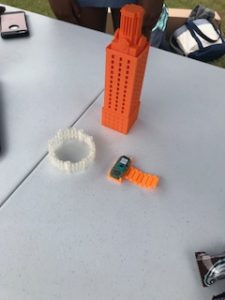
    Fishing For Shade Project: Event where we promoted our diagnostic and were able to get valuable feedback.


  • Combined Two of my Passions

    I chose DIY Diagnostics because it combined two of my passions: medicine and innovation. The idea of creating a tool to improve the quality of life for people attracted me to the stream. Hearing about the various projects that ranged from corporate-funded initiatives to student-developed products and apps displayed a variety that made this stream standout from the rest. I’m a very hands-on person; I love building and designing different things with practical functions. DIY Diagnostics offered avenues for diagnostics from physical products to web and application development. When my friends or parents ask what I do in the lab, I simply say that I’m working on the cutting edge of public health technologies to increase healthcare accessibility, utility, and efficiency. Sometimes, I say that I just try a bunch of ideas until something works. Both things are true. Although I was a freshman, I was learning techniques and lessons to help me in research for professional, reputable laboratories.
    I would consider myself a scientist and researcher. I conduct experiments and record data to find the answer to a question which makes me a scientist. And I search for the answer over and over again which puts the “re” in “research.” Being a part of this research community has taught me to try new things and approach problems from different perspectives. It has also linked me to supportive peers, mentors, and faculty that are willing to help with matters concerning not only research but everyday occurrences and academics.
    To be honest, I was completely at a loss when I first began. I had never taken a computer science course and I knew almost nothing about code. However, the modules and instructions were so clearly delineated that it became easy to create functional apps and experiment with different combinations of code to create different applications. My success with the coding assignments has made me realize that I actually like coding and I am now pursuing a transcript minor in the Elements of Computing.
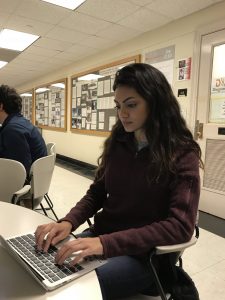
    Some exciting diagnostics being worked on right now are the Parkinson’s project and the UV wearable. The Parkinson’s project focuses on using keystroke analysis on patients with Parkinson’s to develop a diagnostic that uses an ordinary keyboard to aid in early detection of Parkinson’s. If proven to work, it could open up a realm of possible diagnostics that are rooted right through laptops and could be potentially extrapolated to cellphones.
    One of the big “aha” moments I had in this stream is that just because you don’t know what you’re doing, doesn’t mean you’re alone. My first semester in the lab was confusing. It was my first time in a research lab and although the protocols were written well, as a freshman, everything just seemed way over my head. Luckily, I was not alone. I’ve made some good friends in this stream; strong bonds of friendship that could have only been forged in the heart of confusion and the feeling of being completely lost. I learned that it’s okay to make mistakes and that the mentors are super helpful.
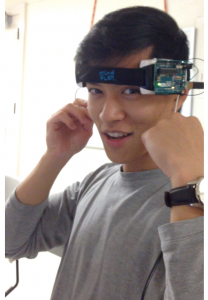
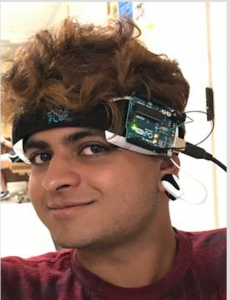
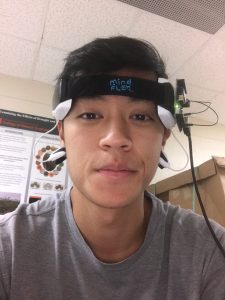
    Almost every day is fun in DIY, however, two things stand out in my memory. One was the first semester: my friend and I would go to the lab in the morning when the lab was mostly empty and we would work with the radio on, sometimes singing aloud. We were used to having the lab to ourselves and sometimes forgot that other people come to the lab. Needless to say, we sometimes caught a few people staring at us until we realized our music was on or we were humming aloud. Another thing happened recently. I had to record my brainwaves while walking; thus, I have the Mindflex strapped to my forehead, and I walked up and down the hallway while cradling my computer in my hands to collect data. I caught a few snickers and weird looks, but it was all in the name of science.

  • Different than the Typical Research Stream

    When I first applied to join the Freshman Research Initiative, the DIY Diagnostics stream stuck out to me as the most interesting stream, because it was different than the typical research stream that concentrated on specific biological or chemical characteristics. I love science, but sitting at a lab bench and running the same reactions and protocols for hours was not that appealing. So, I chose the DIY Diagnostics stream because it was an interdisciplinary stream. It not only promoted working in the typical biology/chemistry laboratory, but also had aspects of computer science, engineering, and marketing. I was interested in all of these fields, so DIY Diagnostics seemed like the perfect stream.

    All the experiences I hoped to get from DIY Diagnostics, I got and more. Throughout the first semester, I developed skills that ranged from micropipetting to creating 3D printer models. And, through it all, I was able to learn where my interests lie. Going into the semester I thought coding was going to be my favorite part of the stream, but that quickly changed after the first coding assignment. Experiences like these shape my research interest and helped me figure out what it was that I truly enjoyed. And, that is what makes the DIY Diagnostics stream unique from the other streams. The nature of this stream allows for freedom in your research and promotes creative learning outside of a set experimental procedure. As a freshman student, I was able to see research as a learning opportunity to pursue my interests.

    Furthermore, DIY taught me how to be a better student at UT. Through the mandatory lab hours, outside assignments, and skill development modules Dr. Riedel was able to teach us to not only manage our time well but learn through experience and collaboration. Going into the second year I was not only able to use the first semester’s lessons to guide my research project, but I was prepared for my sophomore year at UT. Even though I added more hours to my schedule and the FRI lab required more hours, I was able to coordinate it all through the experience from the semester I had in DIY.

    Overall, DIY Diagnostics is a great stream that introduces you to research in an easy manner. And, with the help of the RE, Dr. Timothy Riedel, you can really grow as a student in research and in school.


  • “Really Might Change the World”

    College can be quite the tumultuous experience. Organizations coming at you from every square inch of Speedway, parties every night of the week, and homework galore. It’s important that in the middle of such an exciting and hectic time, we find a place that we feel like we really belong. With new experiences left and right, we all really need to find a community that we can root ourselves in and call a home of sorts. For the past year, that home has, for me, been DIY.

    FRI started out sort of funnily for me. I walked into my first day of college, not having known a thing about FRI. I stepped into my UGS303 class, and immediately all around me, people were bursting in conversation about FRI. “What stream do you want to join?”, “Which one’s the coolest?”, and all the like. And then there was me, asking, “What’s FRI?” Apparently, the program I was enrolled in automatically enlisted me into the FRI program. And quite honestly, that was one of the luckiest things that has yet to happen to me in college.

    To be quite honest, I didn’t expect much from FRI and DIY Diagnostics at first. I picked the stream almost on a whim, having taken only cursory glances at the brief stream descriptions and choosing whichever one I thought was most interesting. Coming into DIY, I treated it as just another class. I thought that FRI would just be some more work to do in the homework- filled bowl of college. I have never been so glad to have been proven so wrong.

    As the first semester in DIY progressed, the seemingly random and endless plethora of Skill Developments really start to come together as a whole, and you’ll be glad you did them. Unlike a lot of other labs, DIY Diagnostics is far from single-minded in its focus. The stream is extremely diverse, learning a multitude of skills and applicable research techniques, and even figuring out a thing or two about coding! The curriculum is amazingly expansive, working on a qPCR reaction one day, and working on creating your very own app the next. As cool as the work is, though, it still is quite difficult. You struggle and toil with the people around you, and everyone in the stream really starts to bond. So much time is spent with these people that you are really given the opportunity to get to know everyone, as daunting as that may sound at first. The second semester is even better, as the curriculum becomes a lot more freeform. Come second semester, you have the freedom to choose and start your own project. While we are all part of DIY, we also get the chance to become more like individual researchers, and I think that is a breathtaking opportunity all on its own. DIY really gives you the possibility to bring your ideas to life, and the chance to turn your science into reality. DIY is not just another school chore, not just another obligation that you have to take on. It is a truly worthwhile experience, and the year you spend with it really does just fly by. By the end of it all, a few dozen strangers come together to form a little community all their own, and you really get out of DIY and FRI what you put into it. Looking around at everyone and everything coming together, I felt that for the first time while I’ve been at UT, I really started to believe that, yeah, what starts here really might change the world.

  • One of My Best Academic Experiences

    The initial reason I was intrigued by the DIY Diagnostic team was because of the new and innovative ideas that I had heard about when researching different FRI streams. It wasn’t until after I joined the lab that I realized just how incredible this lab and all of the people working in the lab are. The DIY Diagnostic Lab is responsible for thinking up and creating new, useable, at home diagnosing tools. We strive to make products that are lacking in various industries ranging from the medical field to the environment. In this lab, I learned a variety of skills such as micro pipetting and even learning how to code and make apps. In this lab, I also met so many new people who I now call my friends. This lab is like a family and we are always working together, bouncing ideas off of each other, and collaborating whenever possible. I had a chance to work on a number of awesome projects and had great input from others when working on my own.

    When I started school, I had no intentions of doing research as a freshman, or ever really. However, this lab has opened my eyes to the world of research and I have actually grown to really enjoy it. In the first semester of this lab we learned the basics and then in the second semester we got to design our own project. My project was the Pill Diagnostic App which used the image analysis software of Google’s Vision API to identify pills using just your smartphones camera. In doing this project I really feel like I learned a lot about what it means to be a researcher in the sense that whenever there are hardships or even failures, it is OK. Not everything always goes according to plan but that should not stop you from pursing your ideas, it just makes you think a little harder and try something new. I think that is what my biggest take away from this lab is; failure does not mean that it is the end, it’s just the opposite.

    If I could go back I wouldn’t change a thing. I have learned so much in this lab and made a bunch of amazing friends along the way. This has been one of the best academic experiences in college for me and I am extremely thankful to everyone in DIY Diagnostics.


  • Collecting Poopy Water

    Never have I thought that I would be working on research, let alone an independent project. This was the first opportunity I have ever gotten to apply knowledge I have learned from the classroom to get real world data. FRI gives students opportunities to do independent research, but you are limited to whatever your stream specializes in. So you are stuck with bacteria, fungi, plants, coding, etc. and will only see that around you for the rest of your time in the stream. The DIY Diagnostics stream appealed to me because it is unique in that it hosts a variety of project types including electronics, web lab, and coding where in a typical lab day, you can see people working on soldering, 3D printing, coding algorithms, web apps, and PCR.

    In my first semester, I was given the opportunity to learn a variety of unique skills that cover a range of topics including 3D printing, coding, and bacterial plating, and water sampling on top of basic laboratory skills. Sounds good right? Sure, but like every first experience, you have no idea what you’re doing (or maybe that’s just me). At first it was hectic as 30 or so students come in and out trying to complete the first assignment and everyone is convinced that the pH probe is broken. You don’t know anyone and sometimes think a student in another stream is in your stream (we shared labspace with another stream). The lab seems like a mess and everything is not where they should be. But as the weeks go on, you start to meet people and set up times to go into lab together so you are not the only one who is clueless. A week or two later, you are suddenly in Waller Creek collecting water samples. Next thing you know, you are 3D printing and coding web apps. At this point, you know pretty much know everyone in your stream and know your way around lab.

    I was fortunate enough to receive a fellowship  to work over the summer and start my project early. I decided to work on the Waller Creek project to develop an HF183 LAMP assay. It was a wonderful experience and it even opened up more opportunities for me to work in other labs. Due to the nature of my project, I was able to “explore” Austin, and by explore I mean walk in the summer heat in jeans to collect poopy water in muddy and dirty places. It may sound bad, but working on your own project makes you want to do whatever it takes to obtain data. I don’t think I have once regretted choosing Waller Creek and thought I should I have done something else. I even got the chance to go kayaking to collect data and do a 6 am to 8 pm sampling shift. LAMP ended up not working so I moved on to develop an HF183 qPCR test.

    In the second semester, everyone else started their own projects. It was great to see a variety of projects from working with arduino circuit boards to swabbing credit cards. What you learn in this semester that everyone has expertise in some fields here and there. Someone working on a completely unrelated project could help you solder or help you with calculation for DNA primer resuspension. Everyone in the stream was willing to help one another because Dr. Riedel did not really have any deadlines set in stone. And since there were a variety of projects, there really wasn’t any race to completing a project. After hearing experiences from some friends in another un-named stream where people only cared about their project and had to fight for materials since all the projects were similar, I can tell you that I have made the right choice with DIY.


    oo


    Not the cleanest project


  • We are the Future of Research

    Honestly, FRI was part of the reason I chose to come to UT, but I had no idea what to expect. Getting the opportunity to work in a lab, especially as an undergraduate, is an amazing opportunity that not everyone can say they’ve gotten to experience. I chose DIY Diagnostics specifically because it’s so up and coming. We are the future of research. First semester was an introduction into many different avenues, from PCR to coding to 3-D printing, there’s something for everyone. Second semester lets you take what you learned first semester, and what you enjoyed about first semester, and make it bigger and better. Being able to say I am working on my own research project, and knowing all the ins and outs about it, is such a satisfying feeling.

    I never thought I would ever call research fun, or exciting – the first things that came to mind were boring and lonely, but DIY changed my mind completely. Plus, I’ve made some great friends through the stream, and many of us taking future classes together too. Being part of something bigger than yourself, part of a community like this, makes being at UT less overwhelming and I feel like I have found my place.

  • Plenty of Fun Moments

    I originally picked D.I.Y because of my curiosity surrounding the development and mechanics concerning the way diagnostics work. When I began in the lab I thought I was going to be drawn to the wet-lab projects like Waller Creek project or the LAMP based projects but now I am most excited about all the computer-based projects like the Parkinson’s project because of my long-standing interest in the early detection of Parkinson’s through non-intensive means.

    It was an interesting experience explaining what FRI and specifically DIY were to my parents as my dad is a physician and familiar with many different diagnostics, so he was excited to see what I would be working on. My mother is not very versed in science so she thought what I was doing seemed like magic! I really feel like a scientist whenever I explain my project to other people because they always wonder how it is possible to create mobile apps that can be used on any device with so much functionality.

    My interest in the creation of a mobile app was due to my positive experience when learning about programming in this stream. This was also the source of my greatest accomplishment in the lab, which was to set up a cloud development environment and create a functional cloud-based application.

    Of course, there are plenty of fun moments during research, including playing music in the hallway to instill holiday cheer and make the hours in the lab more lively. Overall, this stream has improved my outlook on research and has given me the confidence to pursue a project, even the chance of it working is uncertain.


  • Credit Card Bacteria

    As a freshman in FRI, I was very confused about which streams to put down for my application. There were almost 40 streams to choose from, and I had no idea what to look for in a stream. However, I had a friend who used to be in DIY Diagnostics who told me all about the stream. After talking to her, I applied for the stream, and I’m so glad I did!

    Initially, I was very intimidated by the lab because I had no research experience coming into FRI. However, the environment in the stream was super welcoming and I always felt like I could ask my peers and lab mentors for help. I learned a lot of basic lab skills during my first semester in FRI that helped me with my project in the fall. In addition to doing wet lab tasks, we also spent some time learning how to code. This was one of my favorite parts of DIY – we developed a variety of skills that we could apply to many different aspects of our projects. It’s also really cool to see people apply those skills in different ways – for example, there are currently two groups using image recognition apps, one for rashes in pediatric patients and the other for pills.

    Currently, for the project I’m working on, we are trying to see if there’s a difference in the amount and species of bacteria found on plastic credit cards versus metal credit cards. We were approached by creditcards.com to do this project, which is an independent comparison service for credit card companies. We are planning on sending them 40 sampling kits, and each kit will have the materials to sample one plastic credit card and one metal credit card. They will then send the samples back to us for DNA sequencing and analysis to see what kinds of bacteria were on the credit cards.

    One of the biggest reasons being in DIY Diagnostics is great is because there are so many different ways to make a diagnostic. You can be as creative as you want with your project – there are students working with Waller Creek as well as students making an at-home ECG. I’m so glad I chose this stream because I have lots of peers I can depend on and a project I really enjoy working on.

  • Constant Support from your Peers

    DIY Diagnostics is a stream filled with constant support from your peers, mentors, and educators. It is a place where you can make mistakes and be able to learn and grow from them, all while teaching you the essential skills you need to become a successful scientist and researcher. Personally, I chose DIY Diagnostics because of the diagnostic potential each of the ongoing projects held. The ability to be able to put your research toward helping design and create a diagnostic tool that is simple enough to use and that is able to improve lives is an incredible experience in itself. Additionally, I joined DIY due to the sheer variety of research fields I was going to be exposed to. I was beyond excited to refine my knowledge of biology and chemistry by applying it to ongoing research projects such as analyzing the contamination in Waller Creek, and using LAMP reactions to detect certain sequences within the DNA of our saliva.

    Honestly, being thrown into a working research laboratory without prior knowledge or experience can be intimidating and scary. But the unique thing about this whole experience of FRI and being in DIY Diagnostics is that you and everyone else are all on the same page. The opportunity to be able to grow and learn together, as a team throughout the entire semester, is something that you won’t get too often.

    Being a part of the DIY Diagnostics research community has been such a rewarding experience, giving me necessary skills that I can not only apply to my future scientific research, but also skills that I can use in life outside of college. Specifically, I have learned and mastered skills in many aspects of chemistry, biology, computational biology, and computer science. More generally, it has given me given me the skill sets to be able to actively and effectively work in teams, how to critically think, and how to overcome problems in an efficient manner.