Category: 2017

  • Wide Array of Projects

    I originally picked the DIY Diagnostics stream because it seemed exceptionally broad in terms of the projects I could work on. I felt like exposing myself to all kinds of subject material could maybe help me figure out what I wanted to work on for the rest of my career as a researcher. The work I ended up doing ranged from practicing basic scientific methods, programming, genetic identification, and even 3D printing. I cannot stress enough how thoroughly I enjoyed such a wide array of projects. I definitely consider myself a researcher at this point after two semesters working in the DIY Diagnostics stream. Not only have I contributed to some of the larger projects that are in the works in the lab, but I have also led and developed my own research project of my choice. So long as their project has merit, DIY students are given an initially startling amount of freedom to pursue their goals with the full support of Dr. Riedel.

    Working in the DIY stream has definitely helped me get a foot in the door in regards to future research. Dr. Riedel is very forward about wanting to help his students move on to bigger and better labs in the future. I’ll be coming back to the DIY Diagnostics lab next semester, this time as a mentor, in order to help others along in likely their first real research experience. DIY has been an invaluable learning experience for me in that it helped me decide that I was more interested in pure research than I was in pursuing a career in the medical field. Possibly even more important, I learned how the frustrations of a project seemingly refusing to cooperate eventually make its success all the more satisfying.
  • Development of Problem Solving Skills

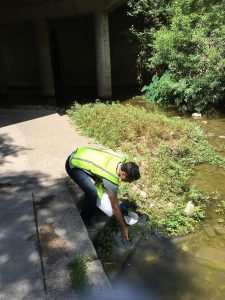
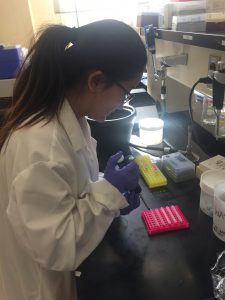
    This past fall semester with the DIY Diagnostics stream not only helped me to grow as a researcher, it facilitated the development of problem solving skills I would never have encountered. I was drawn to DIY Diagnostics because of its flexibility and potential for developing personal research ideas. This stream really focuses on learning important lab skills and promotes striving for scientific creativity. Some my best memories of DIY come from working on skill developments in the first semester. We were encouraged to work in groups while performing various lab assignment and it allowed us to branch out and meet other students. Between failed LAMP tests and DNA extractions, not only did those skill developments teach us valuable laboratory skills, it gave us a sense of comradery through all the groans and grumbles.

    With the skills that I have learned in DIY Diagnostics, one that has proved interesting and valuable was learning the basics of coding. I am a Human Development and Family Sciences major and I was never exposed to Java script or HTML. At the beginning, I found coding to be confusing and tedious but as time went on, I came to really appreciate the complexity and method of coding apps. The exposure to coding inspired me to go out and try to figure out more about java script with peers.

    Applying for FRI and DIY Diagnostics was something that I did on a whim. Before coming to college, I always told myself that I would not be interested being in a laboratory setting. I decided to apply to get an idea of what research was about and I am so thankful that I did. I connected with many peers to cultivate relationships that allowed for personal and academic growth. Because I was able to create/choose a project to research, I pursued a topic that I was passionate and interested about. One of the most inspiring takeaway points that I have learned thus far, was the idea of not letting my experimental failures define the extent of my project’s success. Over the last semester, there have been many experimental mistakes and failures, but I was able to learn and improve my techniques/protocols to refine my experiment.

    Linda Bui