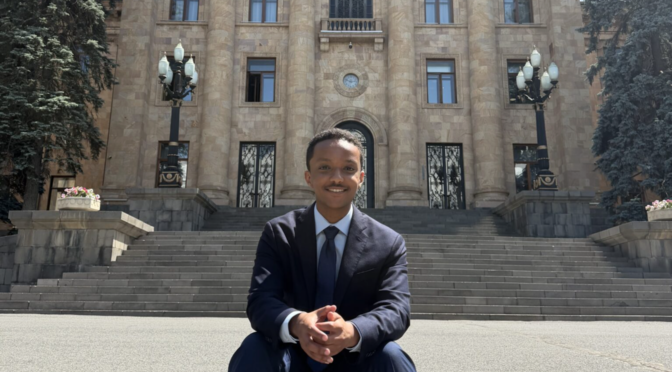
By Caleb Mulugeta, Undergraduate student in the UT Government Department and Economics Department
If I had to use one word to describe my time in Armenia, it would be resilience. I do not mean resilience on my part, but rather the resilience of the Armenian people. Armenians have repeatedly been dealt a difficult hand by history, enduring systematic attacks on their culture and attempts to eradicate their presence from portions of their ancestral homeland. For centuries, Armenians have faced invasion, foreign domination, and political upheaval while nevertheless preserving a distinct language, faith, and cultural heritage. My work with the NDI Armenia placed that resilience on full display by allowing me to engage with different parts of Armenian society through election observation, public opinion research, discussions with parliamentary staff and civil society representatives, and my own research into parliamentary oversight of the executive.
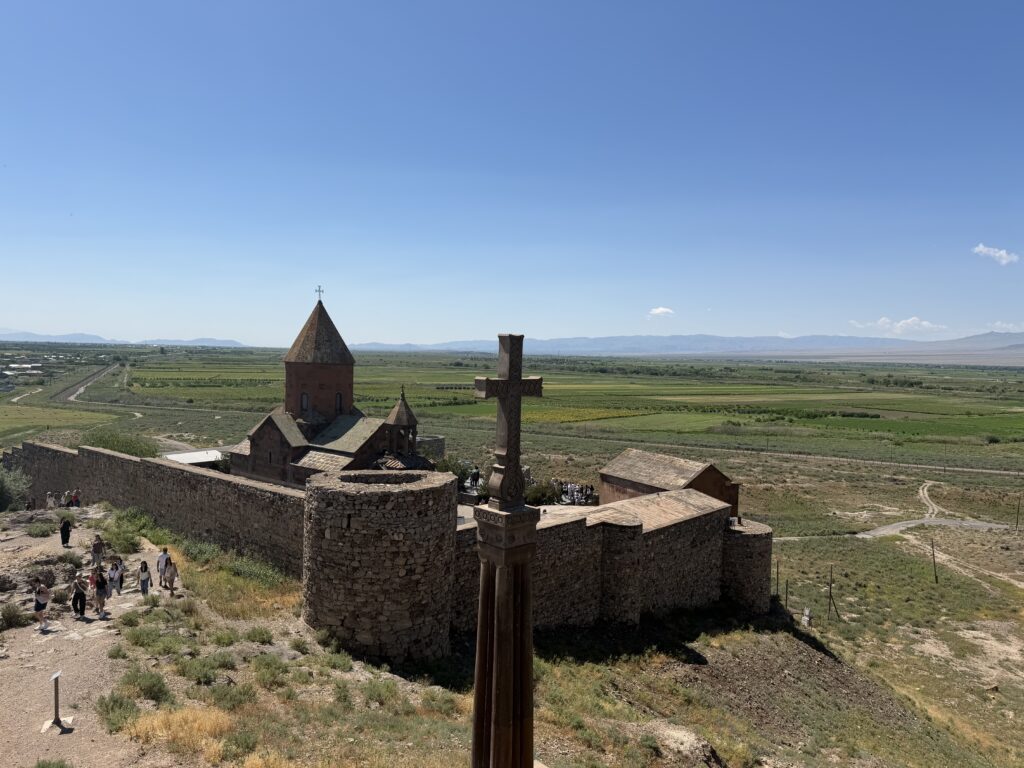
Armenia’s challenges are not confined to the past. The country continues to confront an uncertain security environment, strained relationships with its neighbors, economic and demographic pressures, and the displacement of Armenians from Artsakh—a formerly autonomous state with a majority of ethnic Armenians who were forced to flee after a military offensive from neighboring state Azerbaijan in 2023. Despite these difficulties, the Armenian people consistently displayed extraordinary warmth, generosity, and hospitality throughout my time in the country.
Election Day provided an unprecedented opportunity for me to see Armenia’s democratic institutions operating at the local level. Alongside an Armenian co-observer, I traveled among rural polling stations in Aragatsotn Province and followed the process from the opening of the polls through the counting of ballots. At one polling station, I attempted to start a conversation with one of the people working there. He extended his hand and said, “Barev,” the Armenian word for “hello.” Believing that he was introducing himself, I shook his hand and replied, “Caleb.” My Armenian has improved slightly since then. The conversation proceeded more smoothly once my co-observer began translating, and afterward I returned to my seat.
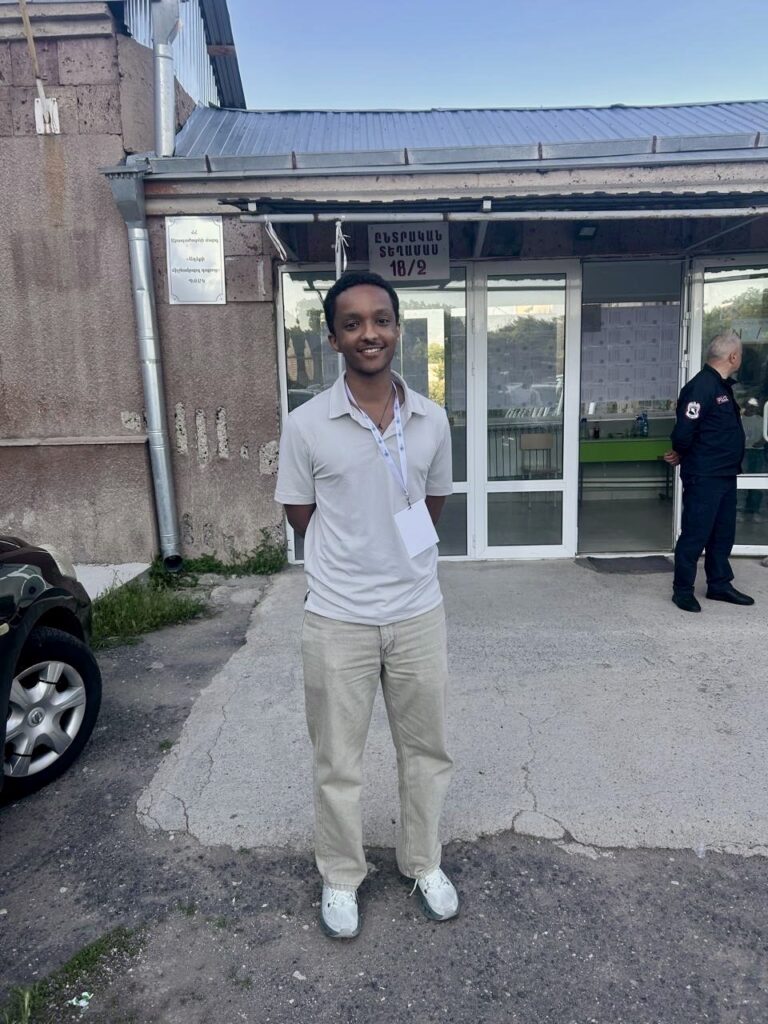
A short time later, an older gentleman working at the station stood up and began speaking animatedly to my co-observer. He gestured widely, his voice grew louder, and at one point he motioned toward me and said one word I understood, American. Unable to understand the rest of the conversation, I briefly wondered whether he had a problem with an American observing the election. Had we violated some rule? Did he believe a foreign observer should not be present? Before my thoughts traveled too far down that rabbit hole, my co-observer explained that the man was insisting that we partake in the polling station’s food and drinks. Election observation rules required us to decline, but this offer was far from unusual. At nearly every precinct we visited, election workers tried to offer us coffee, food, or refreshments. Their hospitality was especially striking because we were strangers performing a formal oversight role during a closely contested election that could significantly affect the country’s political future.
We remained at the final polling station through the counting process and did not leave until approximately five the next morning. By that point, many of those administering the election had been working for almost an entire day. Election Day allowed me to observe Armenian democracy at its most local level, but my other work with NDI helped me understand the broader political and historical pressures under which that democracy operates.
Through outings with the Armenian American Council, discussions organized by NDI, and meetings with people working in government and civil society, I began to better understand the crossroads at which Armenia now finds itself. Conversations concerning Artsakh, human rights, regional security, and the possibility of a lasting peace revealed a country caught between the desire to avoid another devastating conflict and deep skepticism about the intentions of its neighbors. A documentary, I Remember Your Voice, examining the humanitarian crisis in Artsakh made these issues especially immediate by showing the experiences of Armenians who had lost their homes and communities.
Some people we encountered believed that painful compromises were necessary to secure peace, reduce Armenia’s isolation, and create opportunities for economic development. Others regarded further concessions as both morally unacceptable and strategically dangerous, particularly after the displacement of a population that had been overwhelmingly Armenian. These disagreements were shaped by a broader fear that peace might be pursued without adequate guarantees for Armenia’s sovereignty, security, cultural heritage, or historical memory. What struck me was not that Armenian society had reached a consensus, but that people were openly debating these questions within a competitive political environment. The intensity of those disagreements reflected the gravity of the choices facing the country, but the willingness to argue about them publicly also reflected the democratic progress Armenia has made.
My work analyzing Armenian public opinion research gave me another perspective on these tensions. As part of an internal NDI project, I examined surveys conducted across several years to identify how public attitudes toward democracy, governance, political representation, security, and Armenia’s future had changed. The research showed a notable distinction between how Armenians viewed their immediate circumstances and how they viewed their country’s long-term prospects. Respondents frequently expressed frustration with economic conditions, political institutions, and the responsiveness of elected officials. Security concerns understandably weighed heavily on public opinion, and many people were dissatisfied with the country’s current direction.
Yet the surveys also showed continued optimism that Armenia would eventually overcome its challenges, alongside recognition that elections, political competition, and democratic governance had improved over the previous decade. That combination of dissatisfaction and hope became one of the clearest expressions of resilience that I encountered. Armenian optimism was not based on an unwillingness to acknowledge the country’s problems. Rather, it persisted alongside a clear understanding of Armenia’s vulnerabilities and of the work still required to build a more responsive political system.
One of the remaining imperfections in Armenia’s democratic system became the focus of my principle research project: parliamentary oversight of the executive. Competitive elections are essential to democracy, but elections alone cannot guarantee accountable government. Parliament must also be capable of requesting information, questioning officials, reviewing the implementation of laws, examining public spending, and investigating whether government agencies are fulfilling their responsibilities. To study the development of these functions, I reviewed thousands of agenda items from several parliamentary committees over more than a decade.
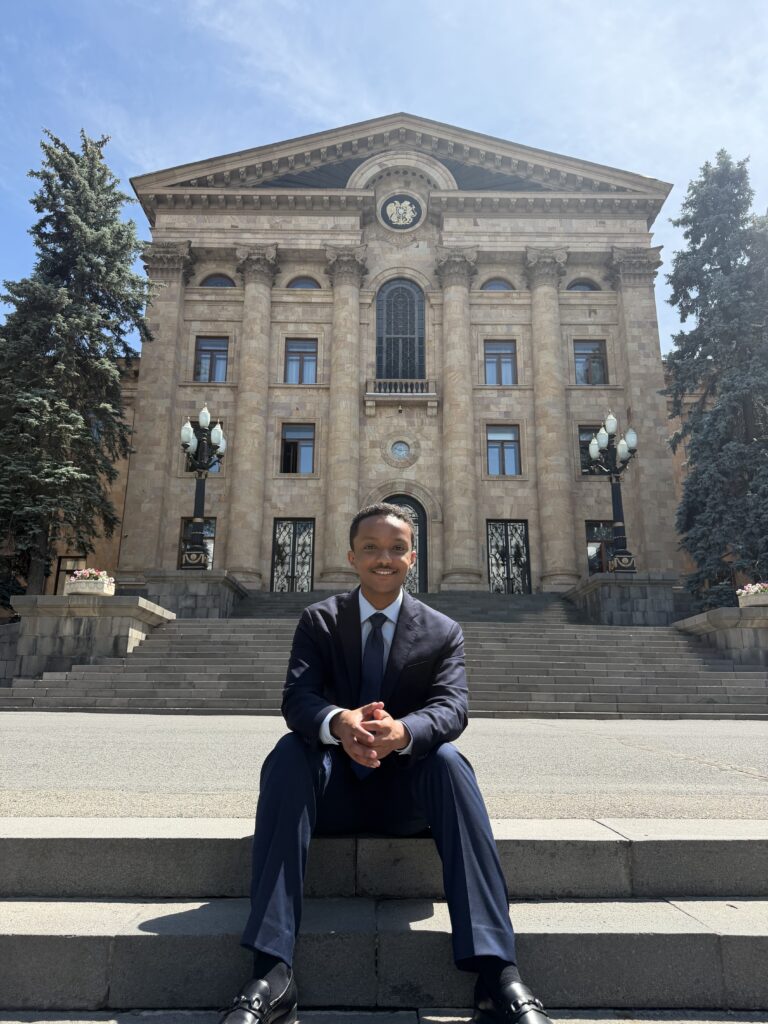
I developed a method for distinguishing ordinary legislative business from activities that constituted meaningful oversight, including hearings, government reports, budget-execution reviews, questioning of officials, and examinations of administrative performance. I then analyzed how the frequency and character of oversight changed across different political periods. The project required more than simply searching agendas for particular words. A meeting could formally include a government report without producing meaningful scrutiny, while an apparently routine agenda item could provide legislators with an opportunity to challenge executive action. Discussions with parliamentary staff helped me understand the practical obstacles behind these patterns.
Effective oversight requires professional expertise, access to reliable information, institutional independence, and legislators who are willing to scrutinize the executive even when the government is controlled by their own party. This work demonstrated why democracy assistance often involves slow and technical institutional development. Democratic progress does not occur only through elections, mass protests, or constitutional reforms. It also depends on committee procedures, trained staff, research capacity, access to public information, and institutional practices that rarely attract widespread attention. By studying these processes, I gained a deeper appreciation for the work NDI and its Armenian partners undertake to make political institutions more transparent, representative, and accountable.
In spite of its democratic imperfections, economic difficulties, demographic pressures, and uncertain security environment, Armenia and its people have remained steadfast. I saw that steadfastness among election workers who stayed at their stations into the early morning, among researchers and parliamentary staff working to improve public institutions, and among citizens who remained hopeful about their country while speaking candidly about its failures. Most of all, I experienced it through the generosity of people who welcomed me into their country, patiently helped me understand their society, and attempted to feed me at nearly every opportunity.
Armenia faces challenges for which there are no simple solutions, and resilience alone cannot guarantee a particular outcome. Nevertheless, my experience gave me confidence in the Armenian people’s capacity to confront those challenges. They have preserved their identity through centuries of upheaval while continuing to debate, build, and imagine a better future. My summer with NDI Armenia allowed me to witness that resilience not merely as an element of Armenian history, but as a living force shaping the country’s democracy today.