By Trinity Elkins, Graduate student at the UT LBJ School of Public Affairs
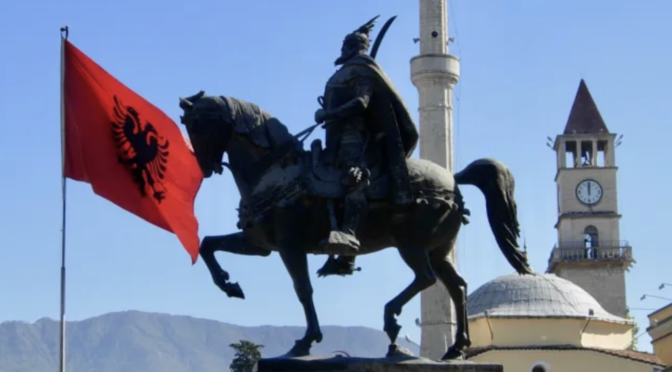
Përshëndetje! This summer I had the incredible privilege of working with the National Democratic Institute in Tirana, Albania, a country with a deeply complex political history. Between 1944 and 1985, the reigning dictator, Enver Hoxha, completely closed Albania off to the rest of the world. Citizens were not allowed to cross the border (in or out), own property, practice religion, or express any sort of individualism. Given his isolationist agenda, Hoxha was immensely paranoid that Albania was on the brink of a foreign invasion, so he ordered the construction of 173,000 bunkers to be built over the 10,500 square miles within the country. He idealized and aligned himself with Albania’s 15th century national hero, Gjergj Kastrioti (Skanderbeg), in order to legitimize his rule.
When Hoxha died in April of 1985, his successor slowly started to become more lenient and reignited relationships with the West. In the spring of 1991, tens of thousands of Albanians protested the use of Hoxha’s name at a local university and ultimately ended up toppling the commemorative statue of him in Skanderbeg Square. This symbolized the start of the collapse of communism in Albania and the rise of democracy.
This dark period for Albania was merely 34 years ago, so the remnants of this era are present everywhere you look. In the coffee shop I go to with my colleagues every morning, there are couches and electronics from this time period. Walking around the city or driving through the mountains, I frequently passed bunkers along the way. Even the neighborhood I lived in, Blloku, was once a heavily guarded, cordoned-off area that once housed communist elites, including Hoxha himself. It has truly been an eye-opening experience to not only witness this beautiful country with such an incredibly complex history, but also to immerse myself in the local culture and see how it has transformed since the fall of communism.
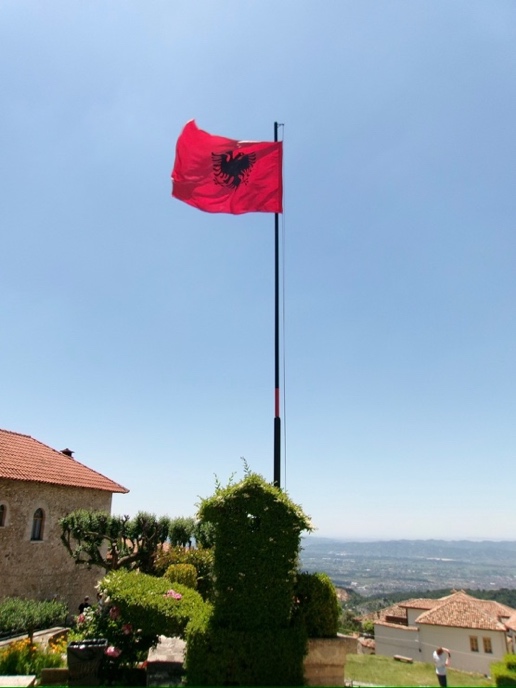
Today, Tirana is home to nearly one million Albanians, almost half of the country’s population. It is a bustling, chaotic city, yet one of the most authentic places I’ve ever visited. Despite it being busy nearly all the time, the way of life is slower here. At any point during the day, you will find people meeting friends at coffee shops to talk for hours, families taking a walk together around the lake, or people sitting outside reading a book. There is a focus on enjoying life and creating community that is visible just walking down the street.
I came to Albania at a very interesting time, where concerns about corruption are highly visible in public discourse. Beginning in early June, thousands of Albanians once again began protesting in the city center every night against the current administration’s decision to sell a piece of protected land off the coast of Vlorë, Albania. It has been incredible to witness the Albanian people’s dedication to fighting corruption first-hand and to hear the perspectives of my colleagues on the issue.
During my time with NDI, I had the opportunity to work on multiple projects related to transparency and anti-corruption initiatives. I have done research on state capture and the use of audit reports and their implementation in public sector finance. The main project I worked on involved comparing Albania’s public financial oversight system to Texas’ public financial oversight system to identify best practices for strengthening parliamentary oversight and improving the implementation of audit recommendations.
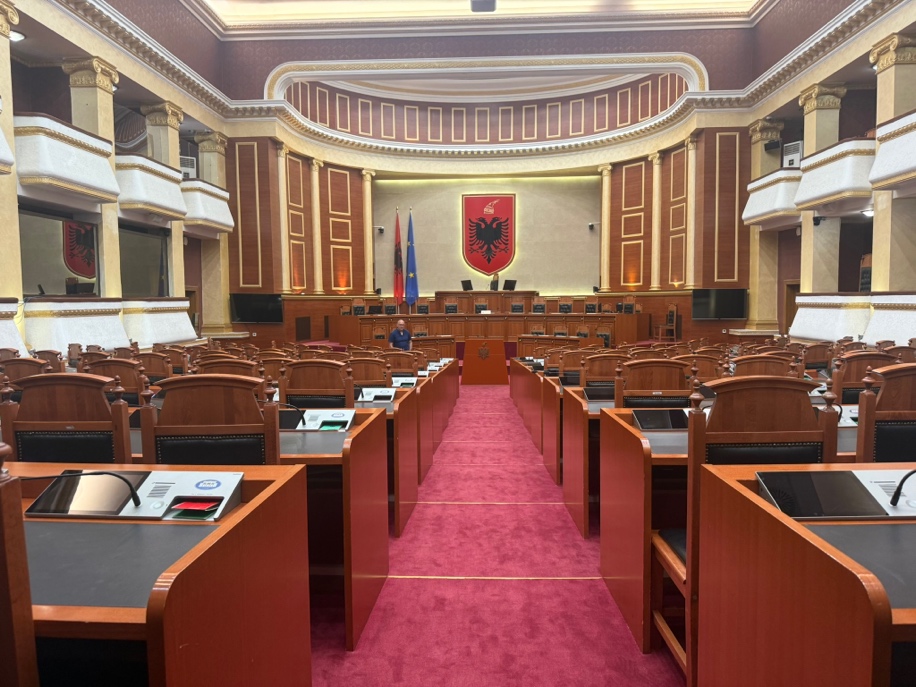
Through this research, I examined how legislatures use audit findings to hold the executive accountable and explored ways oversight institutions can more effectively translate recommendations into meaningful reforms. I sat in on meetings with municipal council members, the Albanian Parliament subcommittee on public sector finance, the Albanian Ministry of Finance and Economy, representatives from the European Parliament, the Albanian Supreme Audit Institution, and SIGMA.
Through these meetings, I gained a much deeper understanding of how parliamentary oversight functions in practice and the challenges institutions face when implementing audit recommendations. One key takeaway throughout my internship was that strong oversight institutions alone are not enough to combat corruption. Audit reports only have value if governments are willing to implement the recommendations, making political will and institutional cooperation just as important as the oversight process itself.
I have been welcomed onto the team, and it has been especially rewarding to draw on my experience at the Texas Comptroller of Public Accounts to contribute to discussions on transparency and fiscal oversight. Having the opportunity to compare Albania’s public financial oversight systems to those used in Texas has been one of the most interesting parts of this internship. Although Albania and Texas operate within very different political systems, I was surprised by how many of the underlying governance challenges were similar. This reinforced the importance of transparency and accountability for effective oversight regardless of political context. Ultimately, effective oversight depends on institutions having both the capacity and political will to implement recommendations.
Although my role has primarily been associated with the public sector finance projects, I have also gotten to learn about NDI’s civic education initiatives. This fall, the Parliamentary Visitor’s Center that the office has been working on for over a year will have its grand opening. This serves as a place where citizens can come to learn about Parliament’s role and interact with members of Parliament to help bridge the disconnect between government officials and the public. In a country where the public trust in Parliament is generally low, initiatives like these are extremely important to engage the youth population and hold government officials accountable in the face of European Union accession.
Seeing both NDI’s anti-corruption work and its civic education initiatives has reinforced the idea that strengthening democracy requires more than holding institutions accountable. It also requires building public trust and encouraging citizens to actively participate in the democratic process. The team has worked hard on this project, and it was thrilling to see it all come together in the name of democracy and good governance. Overall, this experience has allowed me to move beyond studying governance in the classroom and observe firsthand how government organizations, NGOs, and civil society groups work together to support democratic development.
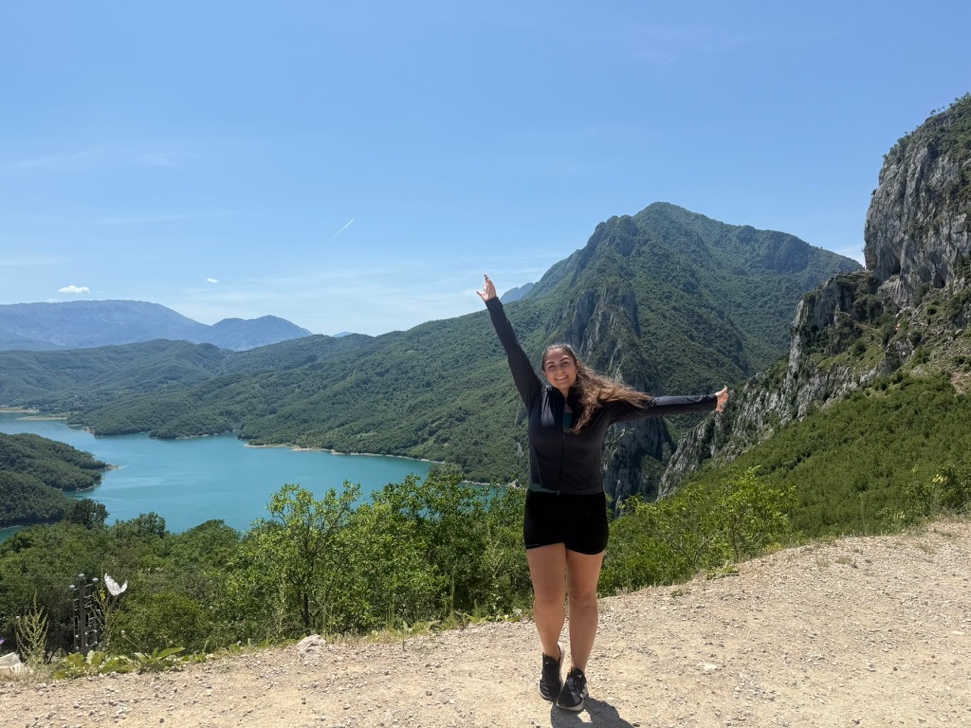
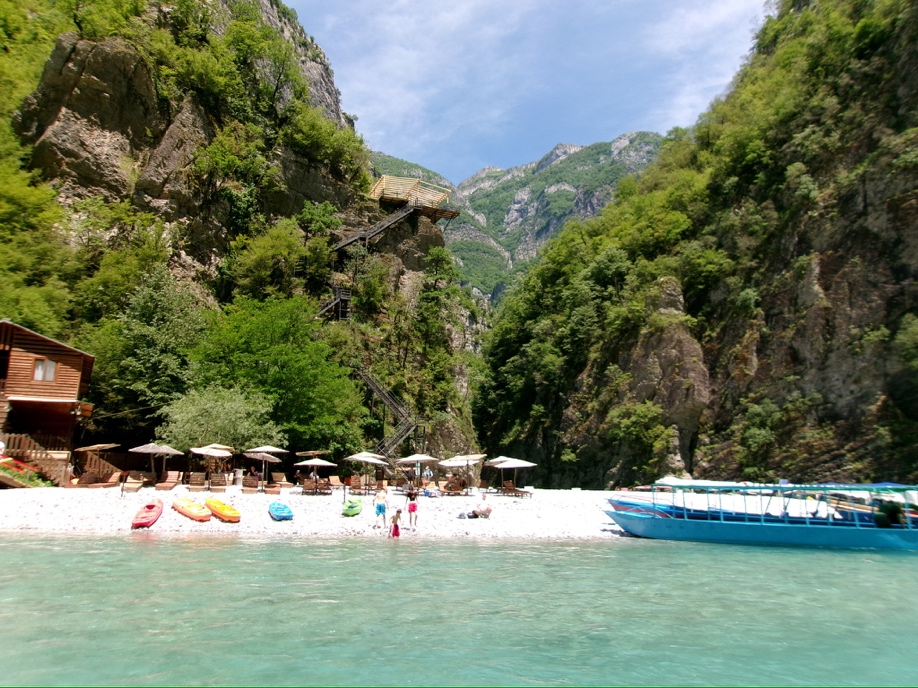
Outside of work, I have absolutely loved getting to explore this beautiful country. I took part in day trips to Krujë, Berat, Shala River, and Lake Bovilla and spent weekends in Sarandë, Ksamil, and Himarë. My favorite of these tours was the day trip to Shala River, where the tour guide took us to Lake Koman before embarking on an hour-long boat ride to Shala River, a tiny town accessible only by boat with one restaurant situated in the Albanian Alps.
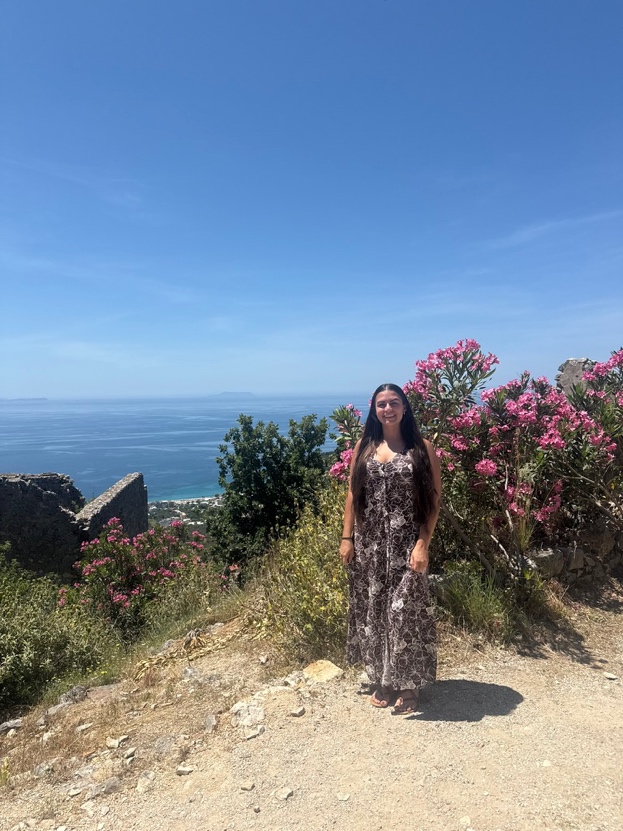
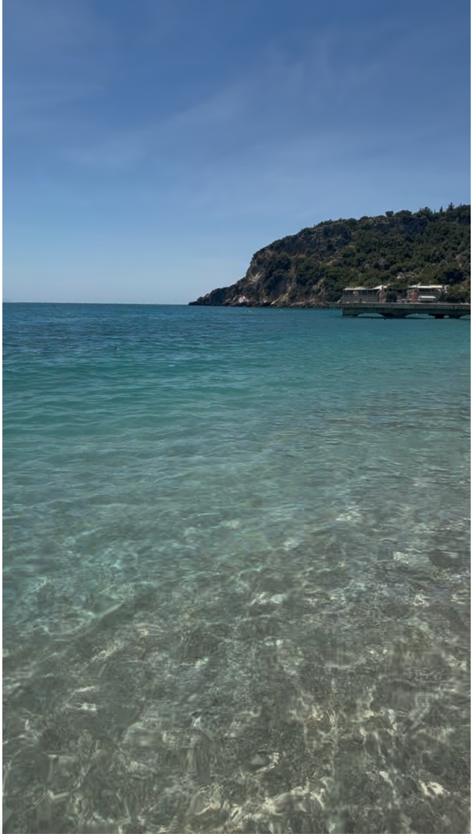
Albania is home to some of the most beautiful beaches I’ve ever experienced. My favorite has been Livadhi Beach in Himarë, which served as a great escape from the chaos of Sarandë where we enjoyed the gorgeous mountains and warm weather. It is a pebble beach with crystal clear water and is situated away from the city center, so it is less crowded. It is also close to Himarë Castle, which is one of my favorite sites that I explored!
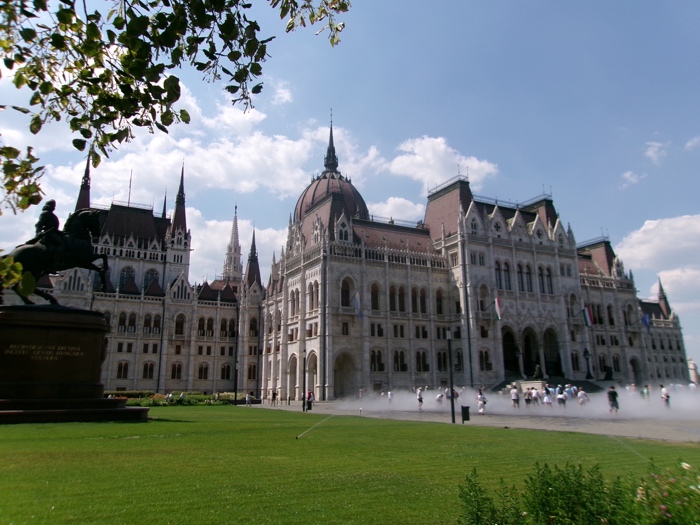
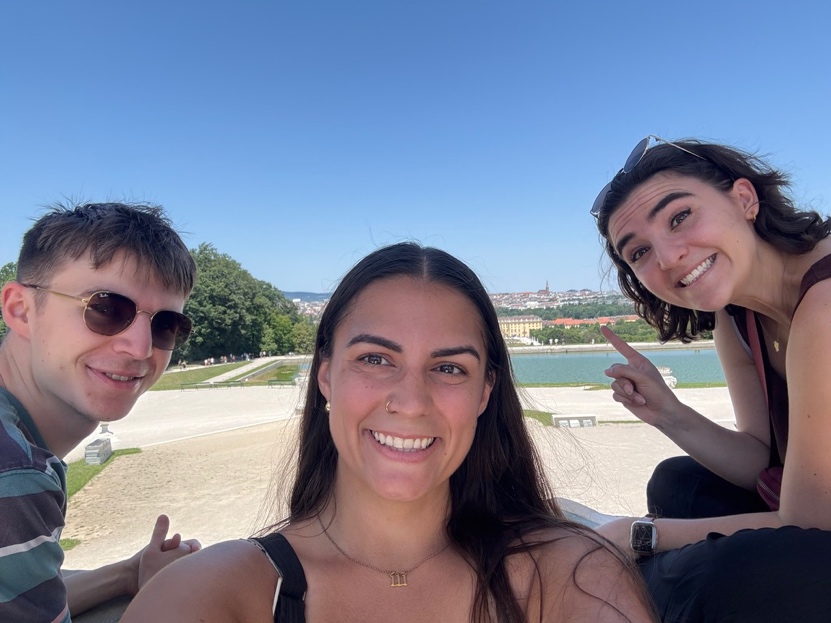
I also had the chance to explore Austria and Hungary with my fellow Embedded Scholars placed in Kosovo, as well as Italy and Greece on my free weekends!
I have learned so much about not only Albania and democracy over the course of this summer, but I’ve also learned so much about myself, professionally and personally, for which I will be forever grateful that I had the opportunity. Seeing how Albania continues to strengthen democratic institutions only a generation after the fall of communism has fundamentally changed the way I think about governance and public service. I have truly fallen in love with this country, and I am so excited to return!