Work in the Gore Laboratory focuses on effects of endocrine-disrupting chemicals (EDCs) on the neuroendocrine control of reproduction and behavior.
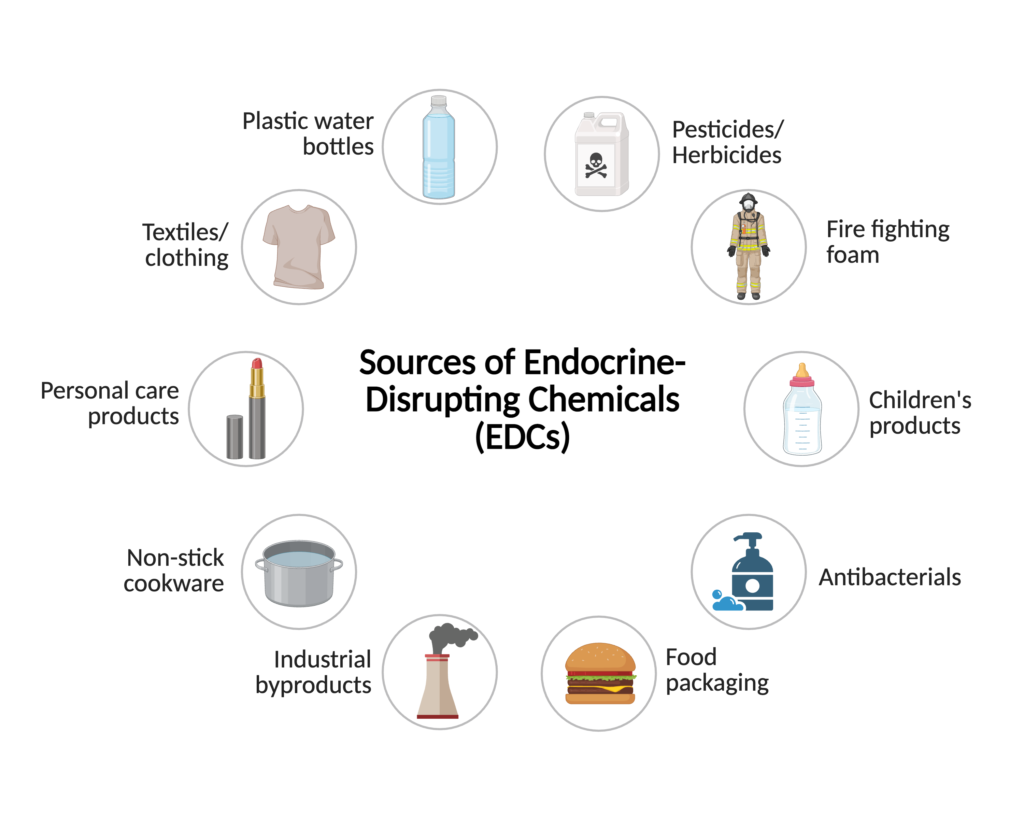
Our initial work was conducted on polychlorinated biphenyls (PCBs), a family of industrial chemicals that have contaminated the environment worldwide. Humans and wildlife are ubiquitously exposed to PCBs despite their ban decades ago, due to persistence and magnification up the food chain. Studies from the Gore Lab showed that PCBs have widespread effects on the developing hypothalamus through actions on neural development, gene and protein expression, and anatomical organization. Behavioral changes due to developmental PCB exposure were observed in the domains of reproductive, social, maternal, and anxiety behaviors.
Because we are all exposed to hundreds, possibly thousands, of chemicals through our lives, we developed an environmentally-relevant endocrine disruptor mixture, termed NeuroMix, to mimic this exposure. NeuroMix includes PCBs as well as common chemicals in plastics (bisphenols and phthalates), ‘forever chemicals’ (PFAS), flame retardants (PBDE), and a fungicide (vinclozolin). We found that NeuroMix changes the developing brain and reproductive system through actions on neuroendcorine pathways and induces behavioral changes. Ongoing work is focusing on additional brain circuits and more complex behaviors, as well as effects of NeuroMix on reproductive organs, and we are determining underlying molecular and epigenetic mechanisms.
Beyond work on direct effects of EDCs on developing individuals, we seek to understand how EDC exposures can lead to multigenerational behavioral changes through epigenetic actions on the germline and gametes, which become the next generation.
| Chemical in NeuroMix | 1X Dose | Main Known Hormone Action |
| A1221 | 100 µg/kg | Estrogenic |
| BPA | 2.5 µg/kg | Estrogenic |
| BPS | 2.5 µg/kg | Estrogenic |
| DEHP | 20 µg/kg | Anti-androgenic |
| DBP | 20 µg/kg | Anti-androgenic |
| PFOS | 20 ug/kg | Multiple |
| PBDE-47 | 100 µg/kg | Multiple |
| PCB-153 | 100 µg/kg | Multiple |
| Vinclozolin | 100 µg/kg | Anti-Androgenic |
Our team uses a variety of techniques, including behavioral, neuroanatomical, immunohistochemical, and molecular approaches such as gene expression, transcriptomics and next-generation sequencing, epigenetic profiling, DNA methylation, RNAscope, and hormone assays.
Recent Photos

(June 2026)