Cultural Heritage Risk Dashboard

As environmental disasters become more prevalent, they pose increasing risk to cultural heritage collections.  And because disaster response is so time- and resource-intensive, cultural heritage caretakers are seeking new ways to stay ahead of the curve. 

This semester, my students test-drove the Cultural Heritage Risk Dashboard, a tool under development that centers risk to heritage collections within regional risks of flood and fire.  In their work, students took on various emergency-response roles, like being representatives from the State Historical Commission, a regional response team, and a specific collecting institution.  Students then explored a version of the dashboard keyed to Travis County, and evaluated how they might make use of it in a disaster.  They highlighted benefits and challenges, and provided the development team with institutions not yet represented in the tool.
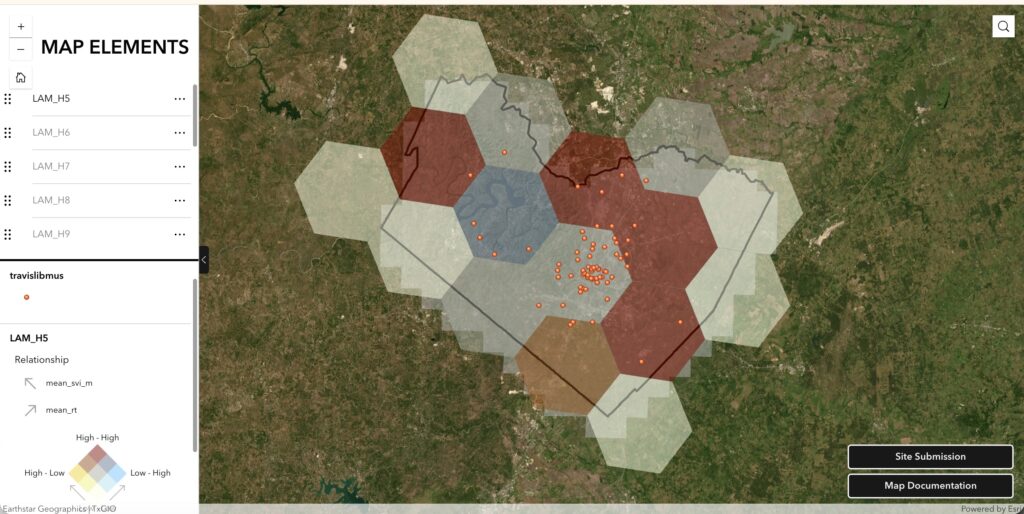
Cultural Heritage Risk Dashboard
The Cultural Heritage Risk Dashboard runs in ArcGIS mapping software.

It’s so exciting to have iSchool students involved in early testing of this new mapping tool.  Many thanks to Dr. Adam Rabinowitz and Connor Ogilvie for making the dashboard available to my class! 
UT SAA/ALA Resurgent

This semester has witnessed a resurgence of library and archives community here at the iSchool through our unified student chapter of the Society of American Archivists and the American Library Association!

Student groups like SAA/ALA are an essential component of graduate training programs.  Through these groups, students can practice leadership, establish connections with our local professional community, gain awareness of national issues in the field, and build camaraderie with their colleagues as they move into their careers.  Student group involvement also distinguishes candidate resumes in competitive job application pools.

This semester, students have elected a new slate of officers, reinvigorated social media, taken guided tours of the Texas Archive of the Moving Image and UT Collections Preservation and Research Center, and established new communications platforms to discuss course availability.  Student advocacy for library and archives education has spurred renewed iSchool attention to future hiring and course planning.  That’s a lot to achieve in one semester!

Many UT student organizations have struggled and even dissolved post-COVID with membership and University financial policy issues.   Co-adviser Andrea Baer and I are so proud to see our iSchool SAA/ALA buck the trend.  This vibrant student community bodes well for library and archives training as we look to next steps for the iSchool.

A Season for Preservation Storage

Students in my Preservation Science and Practice course are finding that their final paper is unusually timely this year.  Their assignment is to write a Request for Proposals (RFP) for a preservation storage facility.  An RFP describes the details of a project for an audience of prospective vendors or contractors.  Here, the students describe their imagined ideal preservation storage space for architecture and engineering firms that might wish to bid on the work.  Students get to show off everything they’ve learned throughout the semester while they practice a skill they’ll need in the field: introducing preservation concepts to a non-specialist audience.

Collections Preservation and Research Facility

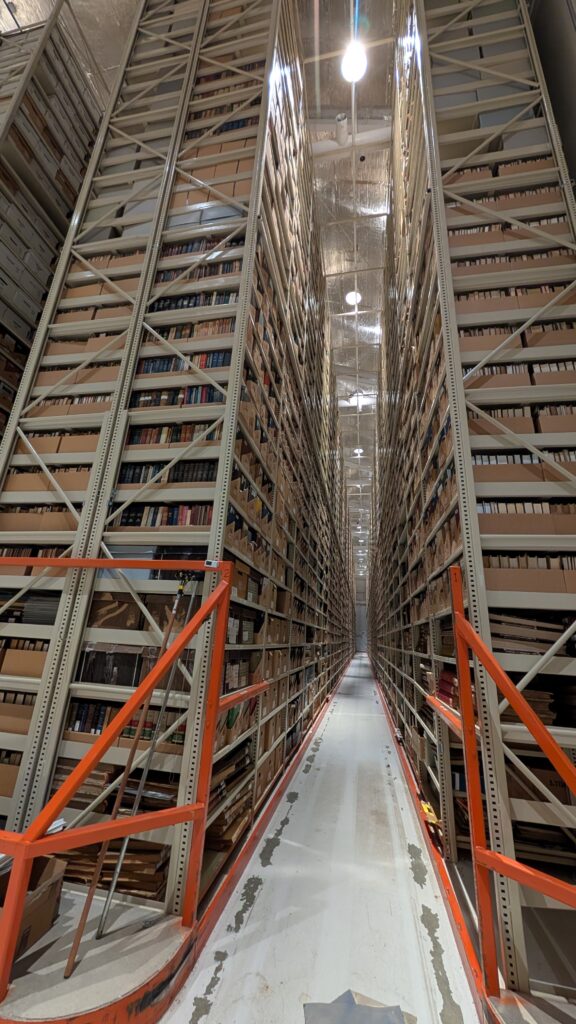
High-bay storage at UT’s Collections Preservation and Research Complex is accessed with a cherry-picker when books are requested on campus.

Meanwhile, students don’t need to look far to find two new preservation storage facilities nearby!  UT Libraries has recently completed construction of the Collections Preservation and Research Complex, a cold, high-density storage addition to the previous Library Storage Facilities.  Here, high-bay storage maximizes capacity, while cool and dry conditions maintain preservation standards for various campus materials.

State Archival and Records Storage Facility

Architectural rendering of the Texas State Library and Archives Commission’s Archival and Records Storage Facility

And at the Texas State Library and Archives Commission, ground has been broken for a new State Archival and Records Storage Facility north of Austin.  This facility promises at least 25 years of collections growth capacity, with preservation storage conditions, a conservation lab, and digitization services.

Congratulations to our local institutions for their planning and investment in the future of their collections.  At the iSchool, we’re preparing our students to manage projects like these as they enter their careers.

Life, Labor, and Legacy: The Austin State Hospital

Three cheers to students in my Planning and Understanding Exhibits course for successfully launching their class exhibit, Life, Labor, and Legacy: The Austin State Hospital. Students in this course create a museum-quality exhibit from beginning to end, including building narrative from artifacts, writing interpretive text, creating interactive museum education elements, conducting audience development and promotion, and creating an online exhibit.  It’s an impressive effort that many institutions manage over months or years; these students do it in a semester!

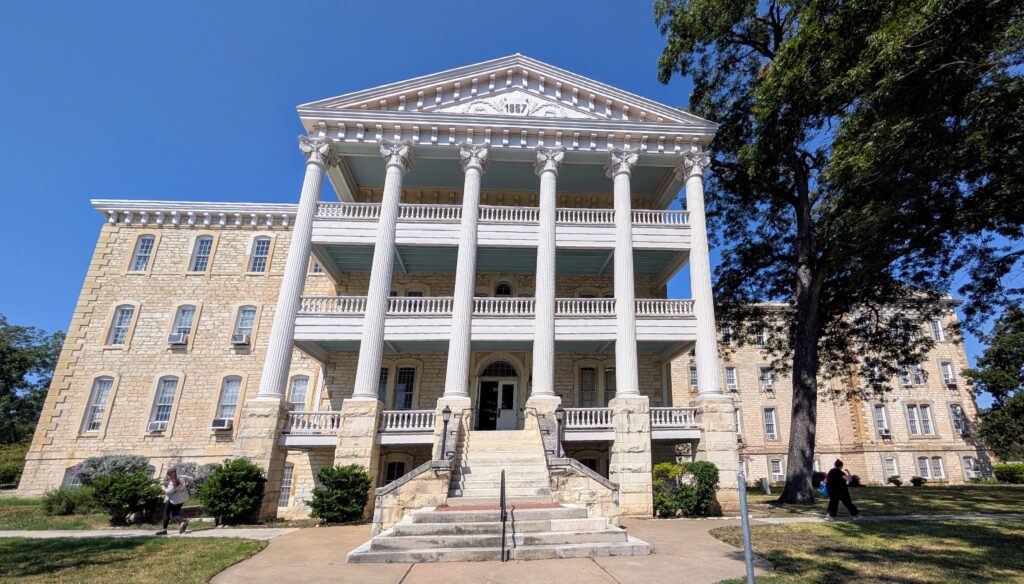
Austin State Hospital building

Students toured the Austin State Hospital’s historic original building, which served as inspiration for their exhibit logo.

This fall, we’re so pleased to collaborate with the Austin State Hospital (ASH) to show a collection of artifacts that highlight their history.  Established in 1856, ASH followed the Kirkbride model of patient support, creating a wide-ranging and self-sustaining community with its own dairy farm, ice factory, sewing and tailor shop, artesian wells, and gardens.  Students worked to incorporate both institutional and patient perspectives into the exhibit, conducting research at the Austin History Center, Briscoe Center for American History, Texas Archival Resources Online, and others.

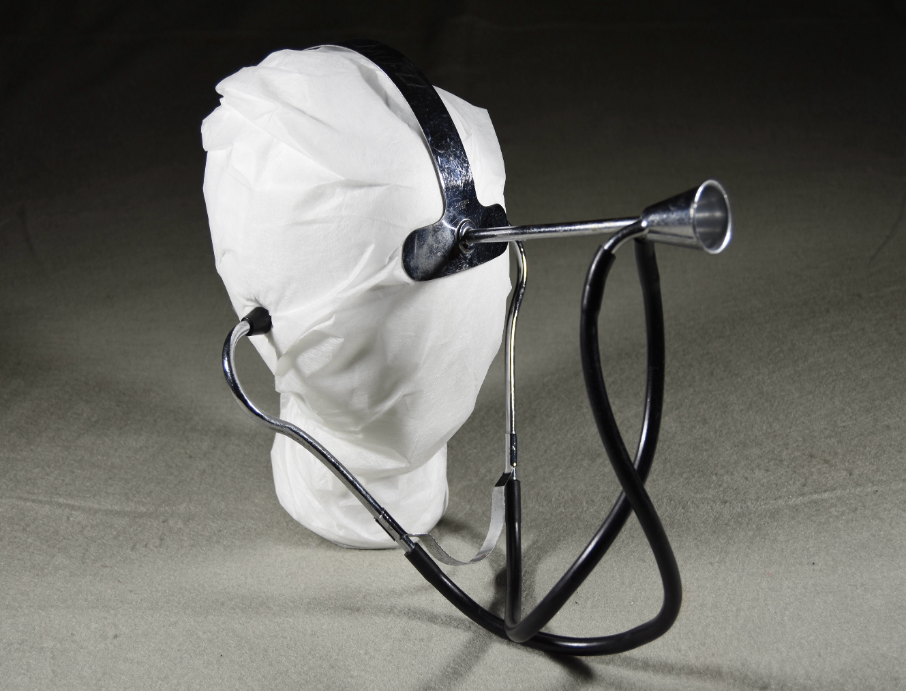
DeLee-Hillis Obstetric Stethoscope

This DeLee-Hillis Obstetric Stethoscope was used to monitor pregnant residents at ASH.

Big thanks to D.D. Clark and John Villareal at the Austin State Hospital for facilitating our work with these historical artifacts, and to Sonja and Andre Burns for sharing insight into modern-day patient experiences and advocacy.  The exhibit is on view on the first floor of the UTA building through 11/20, and online at https://lifelaborlegacy.utcreates.org/

Learn more on our Instagram.

Listen to music of the Austin State Hospital on Spotify.

Risk Assessment at the Flower Hill Center

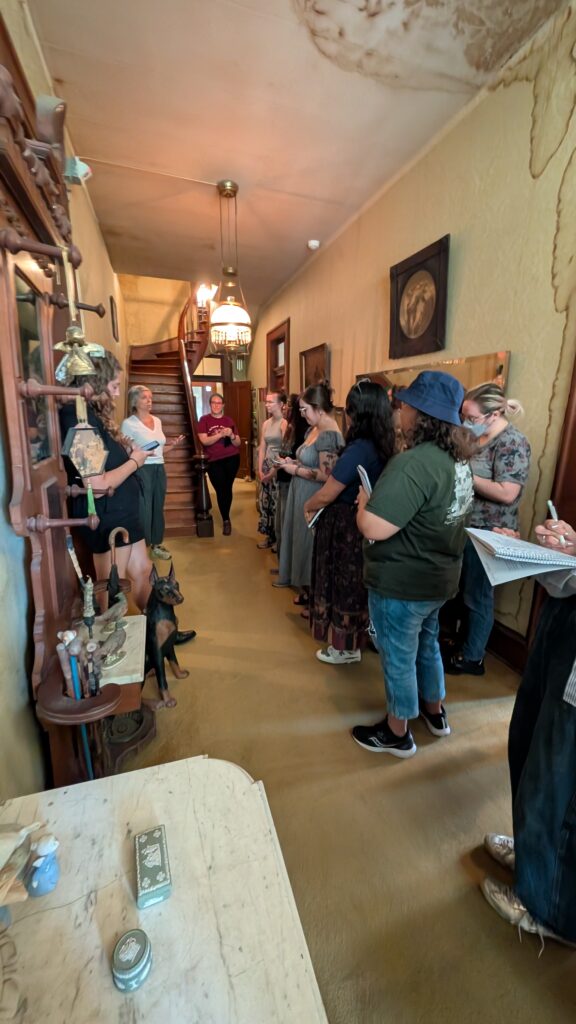
Students in my Disaster Planning and Response class paid a visit to the Flower Hill Center this semester to conduct a risk assessment.  Tucked away on wooded grounds on W 6th St., Flower Hill is the longtime home of the Smoot family in Austin, TX.  The home was built in the 1870s, and family lived there through 2013.  Today, Flower Hill is a museum and historical center hidden in plain sight in central Austin!

Flower Hill Center

The Flower Hill Center

My students focused their work on the home’s library, home of the fore-runner institution to the Austin Presbyterian Theological Seminary.  A risk assessment is a preservation report that identifies and prioritizes threats to the longevity of a collection or site, and then recommends preventive actions to manage those threats.  A variety of risk assessment models are used in the field; our class focuses on the ABC Method published by the Canadian Conservation Institute (CCI) and the International Centre for the Study of the Preservation and Restoration of Cultural Property (ICCROM).

Flower Hill Center tou

Michele Stewart and Natalie George give students a tour inside the Flower Hill Center.

Working in groups, students identified and proposed action for risks in temperature, relative humidity, water incursion, and dissociation.  Through this exercise, they learned about preservation challenges for books, photographs, ceramics, wooden objects, and metals.  Big thanks to Michele Stewart and Natalie George for hosting our students to work onsite at Flower Hill and to gain hands-on experience!