Cultural Heritage Risk Dashboard

As environmental disasters become more prevalent, they pose increasing risk to cultural heritage collections.  And because disaster response is so time- and resource-intensive, cultural heritage caretakers are seeking new ways to stay ahead of the curve. 

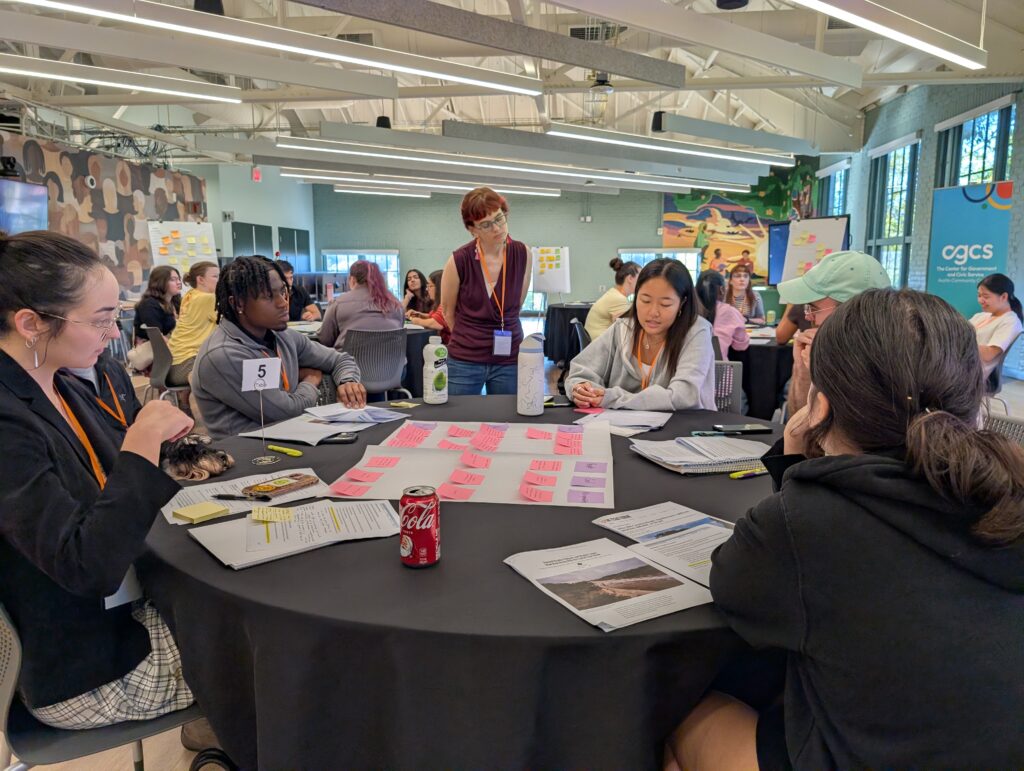
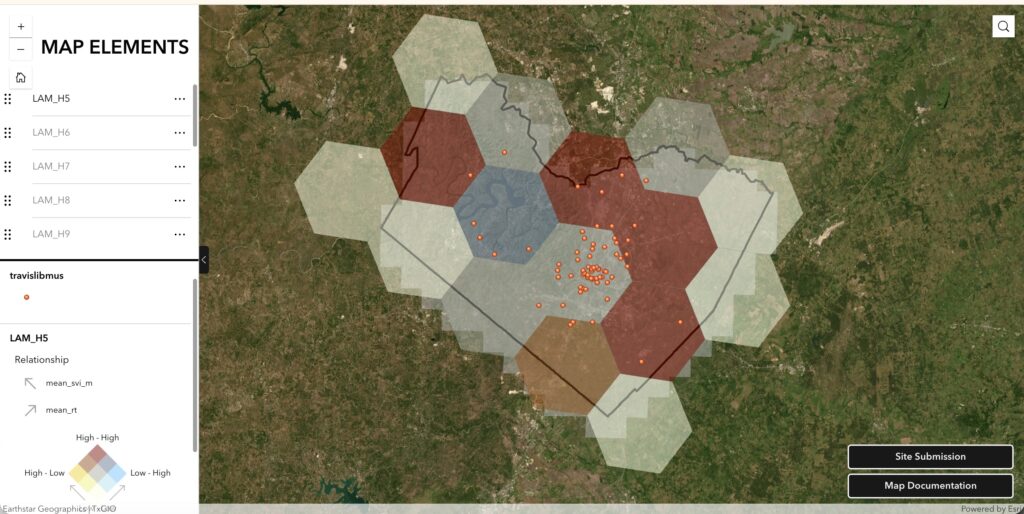
This semester, my students test-drove the Cultural Heritage Risk Dashboard, a tool under development that centers risk to heritage collections within regional risks of flood and fire.  In their work, students took on various emergency-response roles, like being representatives from the State Historical Commission, a regional response team, and a specific collecting institution.  Students then explored a version of the dashboard keyed to Travis County, and evaluated how they might make use of it in a disaster.  They highlighted benefits and challenges, and provided the development team with institutions not yet represented in the tool.

Cultural Heritage Risk Dashboard
The Cultural Heritage Risk Dashboard runs in ArcGIS mapping software.

It’s so exciting to have iSchool students involved in early testing of this new mapping tool.  Many thanks to Dr. Adam Rabinowitz and Connor Ogilvie for making the dashboard available to my class! 

Risk Assessment at the Flower Hill Center

Students in my Disaster Planning and Response class paid a visit to the Flower Hill Center this semester to conduct a risk assessment.  Tucked away on wooded grounds on W 6th St., Flower Hill is the longtime home of the Smoot family in Austin, TX.  The home was built in the 1870s, and family lived there through 2013.  Today, Flower Hill is a museum and historical center hidden in plain sight in central Austin!

Flower Hill Center

The Flower Hill Center

My students focused their work on the home’s library, home of the fore-runner institution to the Austin Presbyterian Theological Seminary.  A risk assessment is a preservation report that identifies and prioritizes threats to the longevity of a collection or site, and then recommends preventive actions to manage those threats.  A variety of risk assessment models are used in the field; our class focuses on the ABC Method published by the Canadian Conservation Institute (CCI) and the International Centre for the Study of the Preservation and Restoration of Cultural Property (ICCROM).

Flower Hill Center tou

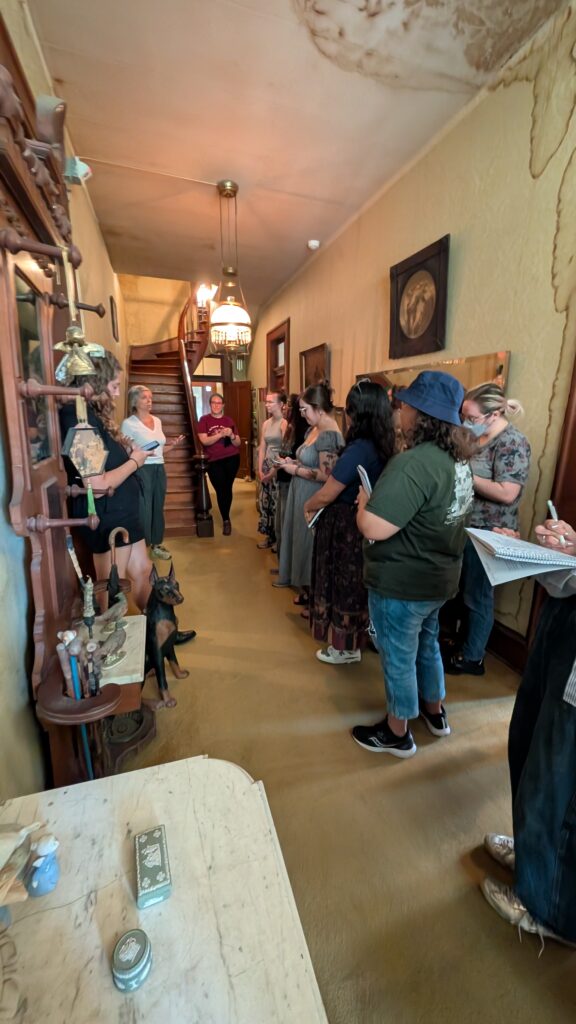
Michele Stewart and Natalie George give students a tour inside the Flower Hill Center.

Working in groups, students identified and proposed action for risks in temperature, relative humidity, water incursion, and dissociation.  Through this exercise, they learned about preservation challenges for books, photographs, ceramics, wooden objects, and metals.  Big thanks to Michele Stewart and Natalie George for hosting our students to work onsite at Flower Hill and to gain hands-on experience!

Risk Assessment: Space Center Houston

This fall, I’m so excited to collaborate on a disaster preparedness project with Space Center Houston!  Master’s students in my course, Disaster Planning and Response, are creating risk assessment reports for the artifacts displayed in Space Center Houston’s Starship Gallery. We are grateful to Collections Manager Carmina Mortillaro for her work on this project!

Dr. George Carruthers (right) and his UV light camera, approximately 1972. See: https://spacecenter.org/remembering-dr-george-carruthers/

Risk assessment is a process of quantifying and prioritizing the dangers posed to cultural heritage collections.  For example, collections managers might assess the likely impact of flood, fire, mold, or earthquake on irreplaceable books, manuscripts, or artworks.  A risk assessment is a critical first step in taking preventive action, and in ensuring historical artifacts are available to future generations.

My students are applying the ABC Model of risk assessment, as described in A Guide to Risk Management of Cultural Heritage (2016), by Stefan Michalski and Jose Luiz Pedersoli. Based on a remote gallery tour and Q&A session with Ms. Mortillaro, the students are scoring preservation challenges and formulating proactive solutions to stop problems before they start.  We hope our reports can help Ms. Mortillaro to safeguard treasures like the first UV light camera, invented by African-American NASA scientist Dr. George Carruthers.  Though these objects were designed to go into space, they need special help to withstand the challenges of time here on Earth.

Many thanks to Carmina Mortillaro and her team at Space Center Houston for generously assisting us with this project!