UT-ACC Civic Deliberation Simulation

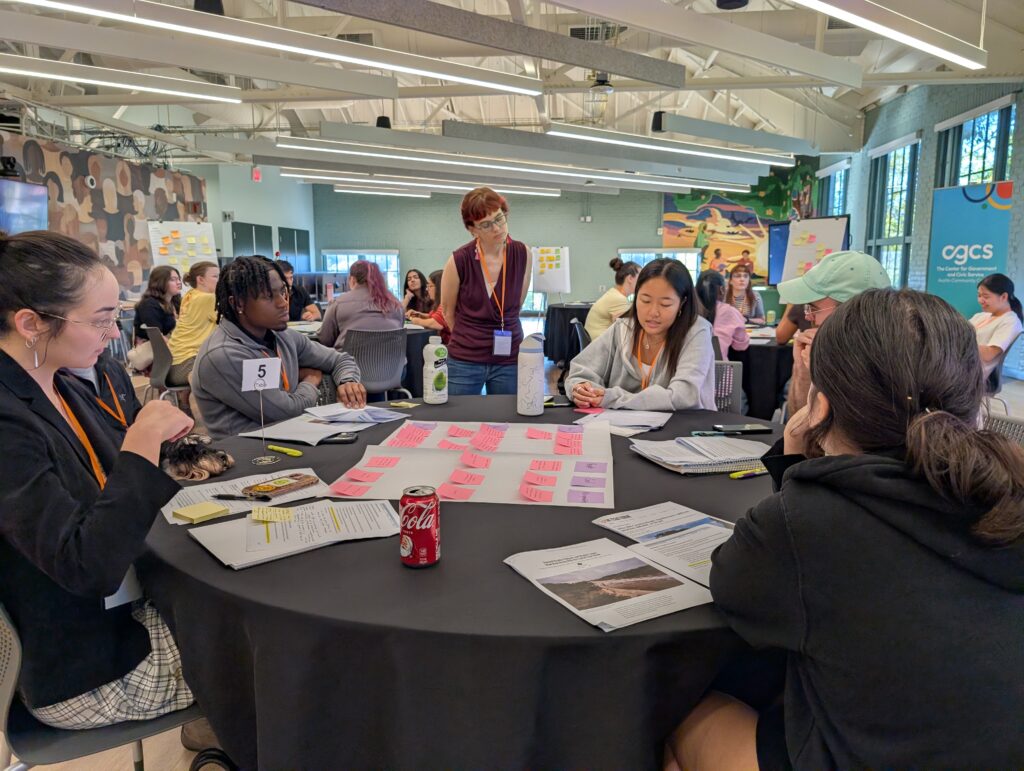
On November 8, School of Information and Austin Community College students undertook a discussion that can stand as a model for challenging times. Over four hours of structured dialogue, students considered the devastating flood in the Texas Hill Country in the summer of 2025. Students worked in small groups to discuss disaster warning systems, risk data mapping protocols, and transparency in community decision-making. After extensive preparation in Dr. Brian McInnis’ course, Civic Engagement and Technology, students collaborated in seeking proactive solutions to better prepare communities to anticipate and respond to life-threatening flood events.
civic deliberation simulation

Professor Sarah Norris (that’s me!) looks on while students evaluate news coverage of the Summer 2025 Texas Hill Country floods.

I was so excited to sit in on this exercise to represent perspectives in cultural heritage disaster preparedness. Joining me were three students from my Disaster Planning and Response course, Sydney Leibfritz, Kylie Burnham, and Hannah Smith, who helped us consider how human safety and cultural heritage preservation can go hand in hand. Juliana Martinez also represented our class by compiling resources on community assistance organizations. It was inspiring to see our students engage in such broad-ranging, interdisciplinary discussion. Their deliberative practice offers an example of how constructive human engagement can move our communities toward brighter futures.

Big thanks to Dr. Brian McInnis for connecting our respective fields of study in this inspiring exercise. I look forward to future engagement in the growing domain of disaster preparedness.
Cultural Heritage Risk Dashboard

As environmental disasters become more prevalent, they pose increasing risk to cultural heritage collections.  And because disaster response is so time- and resource-intensive, cultural heritage caretakers are seeking new ways to stay ahead of the curve. 

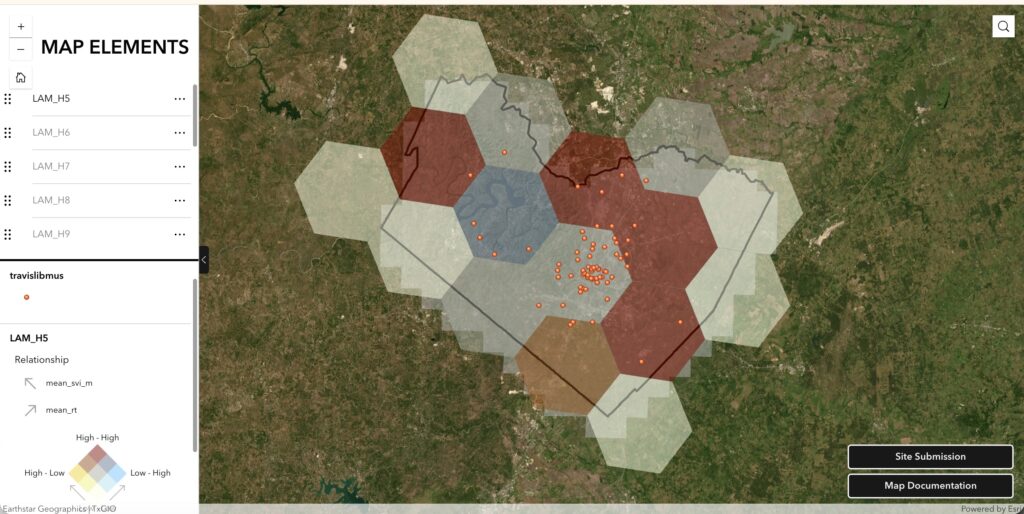
This semester, my students test-drove the Cultural Heritage Risk Dashboard, a tool under development that centers risk to heritage collections within regional risks of flood and fire.  In their work, students took on various emergency-response roles, like being representatives from the State Historical Commission, a regional response team, and a specific collecting institution.  Students then explored a version of the dashboard keyed to Travis County, and evaluated how they might make use of it in a disaster.  They highlighted benefits and challenges, and provided the development team with institutions not yet represented in the tool.

Cultural Heritage Risk Dashboard
The Cultural Heritage Risk Dashboard runs in ArcGIS mapping software.

It’s so exciting to have iSchool students involved in early testing of this new mapping tool.  Many thanks to Dr. Adam Rabinowitz and Connor Ogilvie for making the dashboard available to my class! 

Disasters Students Visit Austin Fire Department

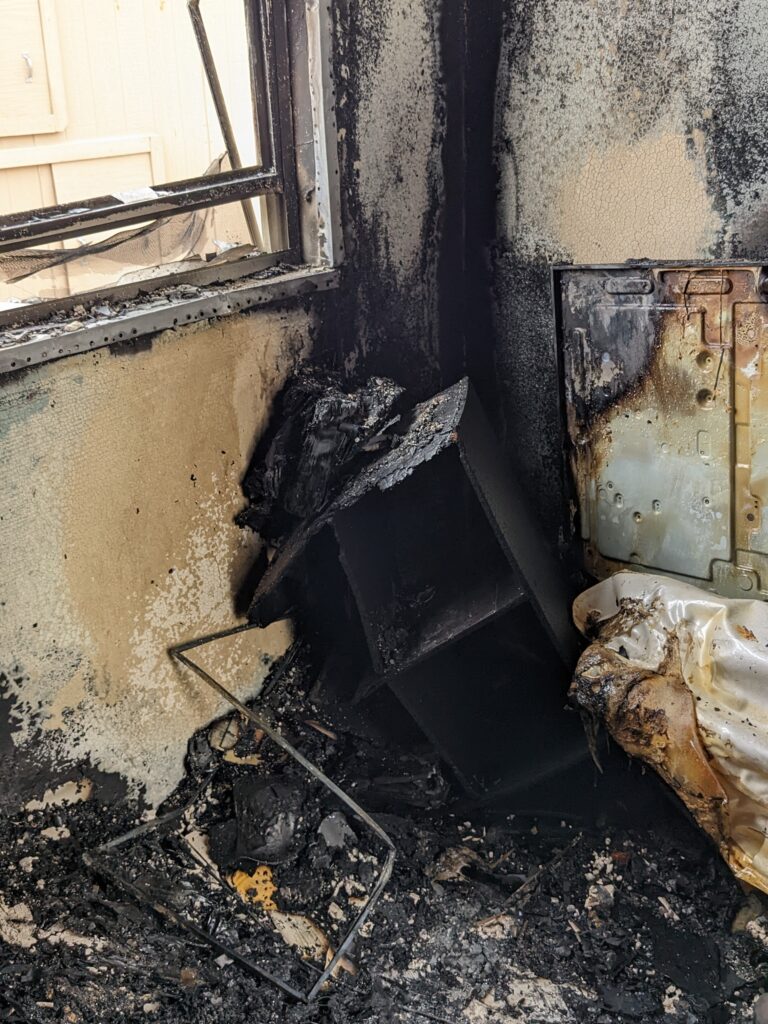
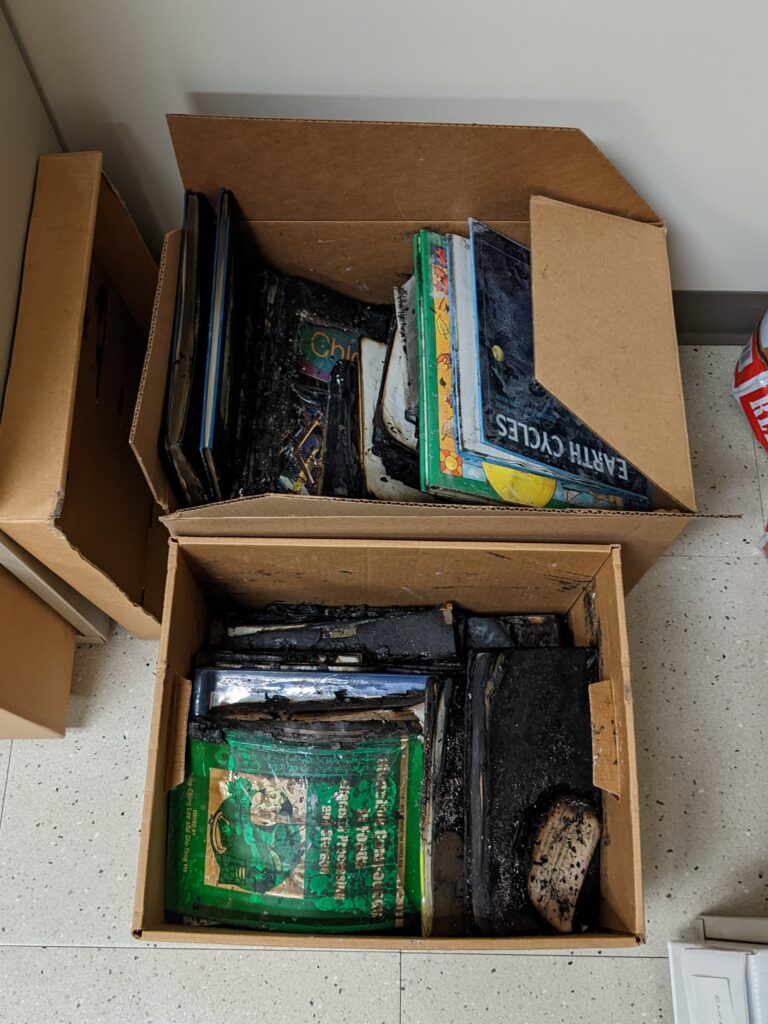
This week, students in my Disaster Planning and Response course kicked off our fire unit with a visit to the Austin Fire Department training facility. Arson investigator Nick Ganci and firefighters set up a burn cell modeled after a small apartment, complete with drywall and furniture. Students then placed deaccessioned library books in various locations around the room. The fire began with a candle placed too close to a curtain. As the fire grew, we learned about the ways heat, air flow, construction techniques, and materials impacted its course. Once the fire was extinguished and the site was safe, we collected the books to bring back to the lab.

The Austin Fire Department hosted a burn cell for iSchool students.

During our visit, Ganci introduced us to the fundamentals of firefighter training. He also discussed how his team uses physical evidence to evaluate likely scenarios about a fire’s origin and progression. This was a great opportunity for students to learn about communicating with first-responders and protecting cultural heritage collections.

Before fire
Before fire: placing books in the burn cell.
After fire
After fire: the same corner.

Next week, the students will practice removing soot and ash from burned volumes by using a HEPA vacuum and soot sponges. With the context this hands-on experience provides, we’ll then practice making judgment calls about when to salvage and when to replace materials. This exercise underscores the importance of planning and prevention in managing fire risk.

Salvaged books waiting for cleaning.

Many thanks to Nick Ganci and the Austin Fire Department crew who so generously gave their time and good-naturedly answered our many questions! Also thanks to our book donors: Kate Slaten and Erin Tigelaar (who joined us for the event!) from the Brentwood Elementary School Library and Jeff Newberry from UT’s Collections Deposit Library.

Planet Texas 2050 Resilience Symposium

I was pleased to participate this week in the Planet Texas 2050 Resilience Research Symposium.  At this multi-disciplinary event, I shared our preservation students’ work in climate risk mapping for Texas archives.  We revisit this project with a new climate focus each semester in my Disaster Planning and Response class.

At the event, an engaging array of scholars approached climate research from broadly varied perspectives.  Focuses included community resilience planning; regional shifts in communicable diseases; and current and historical impacts on plant and animal life.   Most attendees were new to the preservation of cultural collections, so this was a great opportunity to build new connections.

Many thanks to Jonathan Lowell, Heidi Schmalbach, and the Planet Texas team for organizing this event.

Texas archives institutions mapped with 2-foot, 4-foot, and 6-foot sea level rise.

Getting Ready for Fall 2021

Mold remediation is a common preservation challenge, and students in my INF 385T Disaster Planning and Response class get to practice their mold response skills. Here’s a peek behind the scenes as we prepare for our Fall 2021 students. This mold chamber allows test samples of archival materials to grow mold in a high-relative-humidity environment. After several weeks, these materials will be dried in a silica gel enclosure to ensure the mold is inactive for use in class. Students will also practice working with the right PPE, or personal protective equipment, to do the job safely.

I look forward to welcoming our fall students soon!

Mold chamber
This mold chamber shows the less-than-glamorous side of course preparation.

Earthquake!

In INF 385T, Disaster Planning and Response, we explore disaster preparedness and recovery for cultural heritage collections impacted by flood, fire, mold, and more. Here, we use a shake table to simulate two earthquake storage strategies for artworks of varying shapes. The artworks featured here are played by a set of Duplo blocks.

An introduction to our earthquake demo in INF 385T, Disaster Planning and Response.

Read more about the earthquake storage strategies highlighted in this video:

Agbabian, M.S., Ginell, W.S., Masri. S.F. and Nigbor. R.L. “Evaluation of earthquake damage mitigation method for museum objects.” Studies in Conservation 36 (1991) 111-120. 

Preparing for Spring

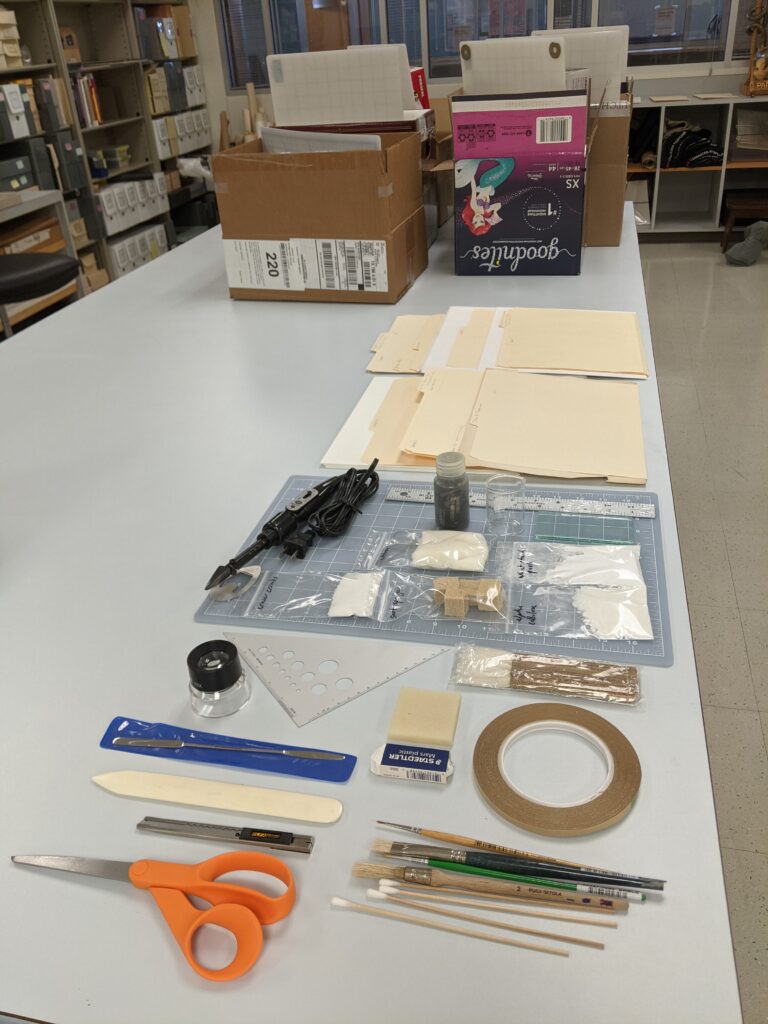
As the fall semester draws to a close, I’m in the lab today packing supply kits for my upcoming spring classes: Introduction to Paper Conservation and Disaster Planning and Response. Here’s a peek behind the scenes of remote learning. Looking forward to seeing you all in January!

spring supply kit
Packing supply kits for spring. Those folders are full of pre-cuts and practice materials, organized by week.