Category Archives: All

The Future of Our Social Lives

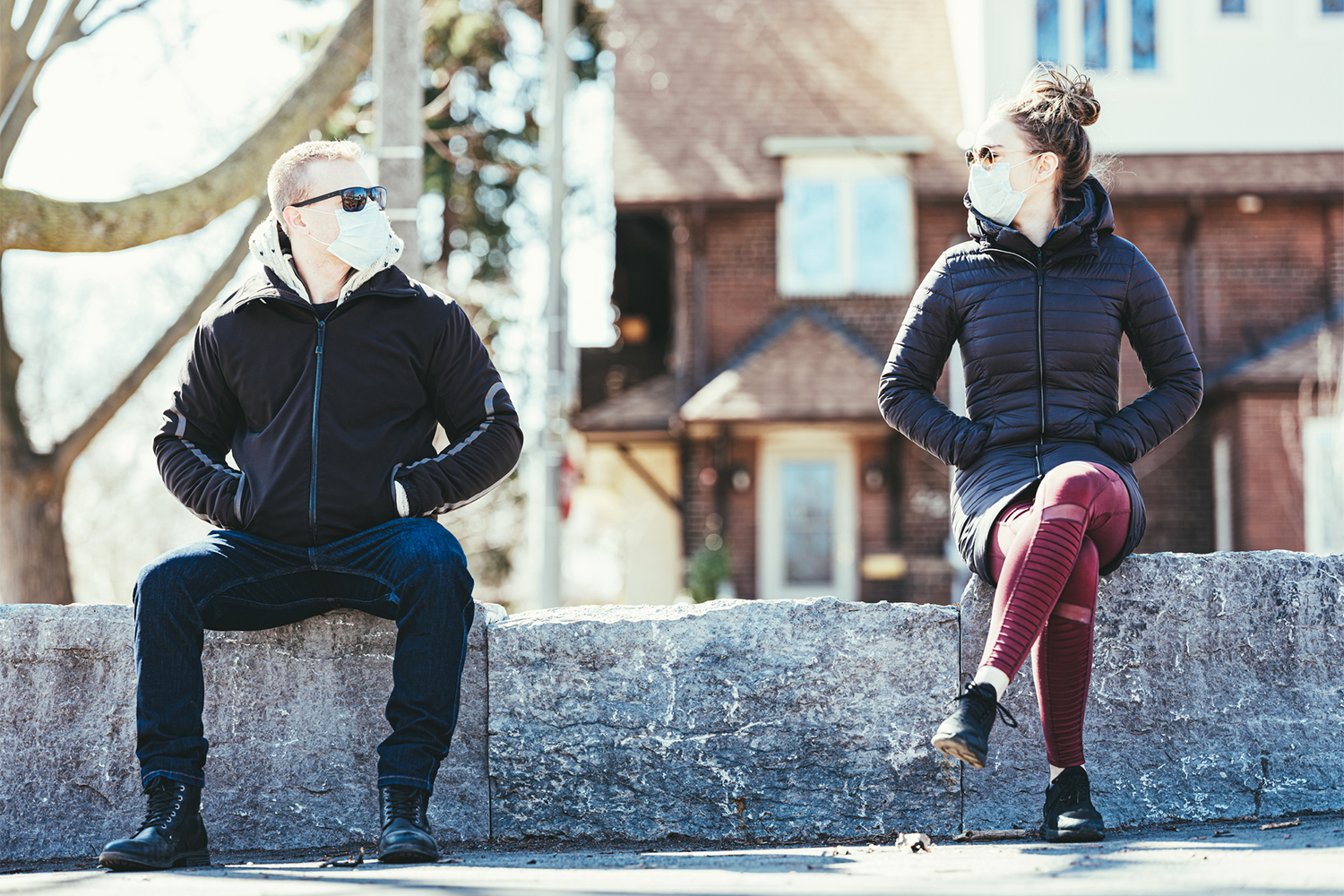
Why people didn't social distance | Stanford News

Image from news.stanford.edu

Emily Samson

Many of us are over a month into quarantine, and we’re getting used to the lifestyle changes caused by the coronavirus. At the same time, we’re starting to think about the end of the pandemic and how our “normal” might change because of it.

 There are two main factors that will determine what our future will look like in regard to the virus 1) how the changing seasons will affect the virus’ spread and 2) the duration of immunity in those who have already contracted and recovered from the virus. Unfortunately, at this time, we do know a lot about either of these factors, making it difficult to determine exactly what our post-quarantine lives will look like.  However, researchers have put together models to predict some possibilities.

 Most models suggest that social distancing will need to last around 18 months to prevent another sudden rise in coronavirus cases. Eighteen months is the amount of time that it is predicted will be needed for a vaccine against coronavirus to be readily available to the public. While this sounds like a long time, social distancing for 18 months does not necessarily mean we will be stuck in our homes the entire time.

 Under this model, It is likely that the restrictions we are facing now will ease. Researchers define social distancing as reducing contact outside the household, school, or workplace by 75%. This means that everyone should do as much as they can to reduce social contacts by 75%. While our social lives will change, we might get some degree of normalcy in our lives.

 This could look like restaurants opening in the future but taking out half their seats. Classrooms might have desks spaced six feet apart and will mix online learning with in-person learning. People will refrain from hugging or shaking hands when greeting each other. Perhaps we will get more personal space in airplanes rather than the cramped seats we are used to.

 As we get more information about the virus, our ideas of what the future looks like will evolve. While we are uncertain of the future, we should all be ready to adapt to changes in the way we live, work, and socialize.

https://www.technologyreview.com/2020/03/17/905264/coronavirus-pandemic-social-distancing-18-months/

https://science.sciencemag.org/content/early/2020/04/24/science.abb5793
Should Coronavirus (COVID-19) Be Called the “Chinese Virus?”

Coronavirus outbreak could spark five-year low in smartphone ...

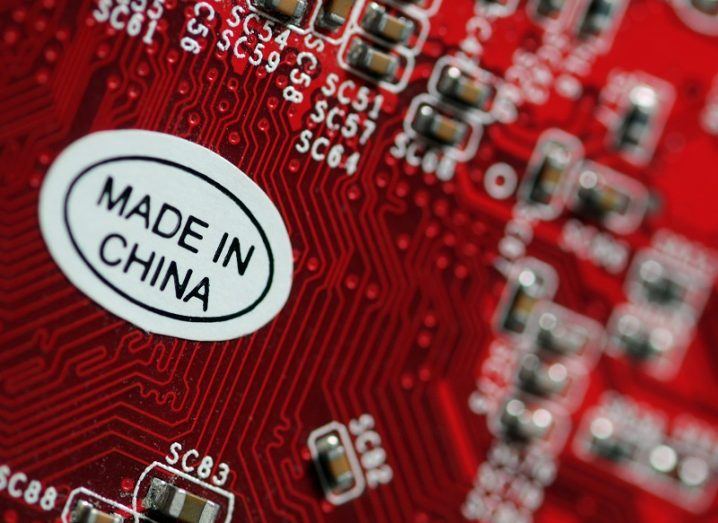
Image from siliconrepublic.com

Megan Barker

The novel coronavirus (COVID-19) was first documented in Wuhan, China in December 2019.  People of Asian descent have experienced social stigma and blame during this pandemic. Asian businesses and overseas shipments are regarded with unwarranted suspicion. The Center for Disease Control (CDC) states that “fear and anxiety surrounding the spread of this virus has led to the development of this social stigma” against people of Asian descent. 

According to the World Health Organization (WHO), “the first cases of COVID-19 in the US had traveled internationally” or had “been in close contact” with someone who had been in China recently. International travel that could have spread COVID-19 is not exclusive to any ethnicity. 

Additionally, the CDC states that the virus has not yet been shown to survive on packages from China, as these take days or weeks to travel to the US. Therefore shipments from China or any other country should not be seen as a risk for contagion at this time.

As more information about COVID-19 emerges, avoiding hurtful or discriminatory language is important for keeping our community safe. Placing blame on people of Asian descent does little to slow the spread of disease. By following local orders and precautionary measures such as social distancing, COVID-19 can be better contained.The virus has become a pandemic, and in order to recover not only as a nation but on a global scale cooperation is required across borders and nationalities. 

https://www.cdc.gov/coronavirus/2019-ncov/daily-life-coping/reducing-stigma.html

https://www.who.int/emergencies/diseases/novel-coronavirus-2019

https://emergency.cdc.gov/cerc/cerccorner/article_123016.asp


How is COVID-19 Spread?

How long does the coronavirus live on surfaces? Does bleach clean ...

Image from theglobeandmail.com

Prachi Shah

The respiratory illness caused by novel coronavirus (COVID-19) has swept through the world in a whirlwind and caused major disruptions in almost every aspect of society. It’s made particularly dangerous because of how rapidly it spreads and by the fact that individuals can transmit the virus even without displaying any outward symptoms. In order to mitigate these effects, communities and institutions across the world have taken to drastic changes in social norms in an effort to curb the spread of the virus.

But how exactly is COVID-19 spread? There are a few main ways that this virus actually spreads and a few misconceptions that have spread in the media.

1. Inhalation:

Although the virus is zoonotic (can be spread between animals and humans), the most common way that it spreads is through person-to-person contact when someone is in close proximity to an infected individual. When someone who has already contracted the virus coughs or sneezes, someone nearby could inhale micro-sized respiratory droplets that contain the virus.

2. Direct contact:

The virus could also be spread through direct contact with an individual who has already been infected. If contact with the infected individual is followed by touching one’s hand to their own eyes, nose, ears, or other mucous membranes, the virus might be transmitted. This risk can be mitigated by practicing “social distancing”– keeping 1-2 m between yourself and others whenever possible.

3. Contaminated surfaces:

If someone has already contracted the virus, and then they cough or sneeze onto a surface, the virus could persist on that surface and be picked up by another person who touches that surface and then their own face. This risk can be mitigated by avoiding using objects that are shared by large groups of people and by regularly cleaning surfaces with alcohol based-cleaners. For more information about cleaning, visit this website.

How is the virus NOT spread?

1. Through mosquitos:

Although there are a number of diseases can be spread by insects such as mosquitos, current evidence does not support that mosquitos are a primary factor in transmitting the virus.

2. Through goods manufactured in China or other heavily affected areas:

The virus can live on surfaces for a short period of time, but it is highly unlikely that the virus would remain on an object manufactured in an affected area and shipped to the United States.

3. Through your pet:

Although the virus is zoonotic, there is no current evidence that it can be spread from your pet to you.

https://www.cdc.gov/coronavirus/2019-ncov/prepare/transmission.html?CDC_AA_refVal=https%3A%2F%2Fwww.cdc.gov%2Fcoronavirus%2F2019-ncov%2Fabout%2Ftransmission.html

https://www.healthline.com/health/coronavirus-transmission#symptoms

https://www.cdc.gov/coronavirus/2019-ncov/prepare/cleaning-
disinfection.html?CDC_AA_refVal=https%3A%2F%2Fwww.cdc.gov%2Fcoronavirus%2F2019-ncov%2Fcommunity%2Fhome%2Fcleaning-disinfection.html