Finding Myself in a Cemetery

13549120_10155042789634126_300651086_o

Friday we had the chance to walk the famous cemetery known as Cimitero Monumentale di Staglieno. This cemetery was a great experience and really allowed me to get to know Milan in a way that most Milanese get to know and incorporate into their life. Religion is a large part of the culture of the Italian people and is primarily Catholic. This inspires the idea that death isn’t just an ending for the Italian people, but a new beginning with God. For this reason, the burial grounds of the deceased are built in an extravegant way to commemorate their ascent into heaven. As I walked through the grounds it was clear that there was much sadness and grief from those still living, but a type of happiness that they are with God. This was shown with sculptures and huge buildings to commemorate their passing. One amazing part of watching the graves as I was passing is seeing how brightly the flowers still bloomed in this famous cemetery and how those ancestors that are still present never forget those long past. Also seeing how well kept and organized each of the graves were and how intricate the sculptures were made me wish that I was loved in the same way as these individuals and remembered like they were. To have that kind of impact on the earth would be a great blessing.

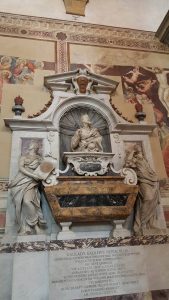
After seeing these amazing graves I felt inspired to go to Florence for the day and see the grave of Galileo Galilei. I had heard great things about how intricate his grave was and others like it inside the Basilica. I wanted to see firsthand how this famous individual’s grave was and how he was remembered after his death even though the church didn’t entirely believe him until recently. However, once stepping inside the basilica I was blown away by the intricate tombs, but even more blown away by how on the ground were tombs themselves. Everywhere there was marble and letters of those that were placed and constantly remembered. There were even areas that had been blocked off with rope in order to preserve certain graves. These had intricate carvings into the marble in the ground and had clear lettering on each grave. It was a beautiful site and even the amazing grave of Galileo was something that took my breath away. It was set in marble and matched with two amazing statues that clearly showed how scholarly and amazing he was as an individual in his life. I loved the gold add-ons and loved how he was clearly shown as he used to look. It was a great experience and one I will highly recommend to everyone I meet in the future when going to Florence.
Week 4: Vico Magistretti

June 24, 2016
We took a visit to the old studio of Vico, the architect + designer. The studio was modest, but the beauty was in the details. The front space had been set as a welcome + learning space for visitors, showcasing some of Vico’s work (which is still being continually documented by his granddaughter).

Then, one travels into his office. Apparently he didn’t allow a computer into this room until 2003, and even at this, Vico never touched it. The most he would allow before that time was a phone and a fax machine. He kept a mirror by his window, so that from his desk he could look out and see the reflection of a building his father (or possibly grandfather, my notes got smeared at this part) had built. Milan was indeed his city.

He also allowed a small radio in his office
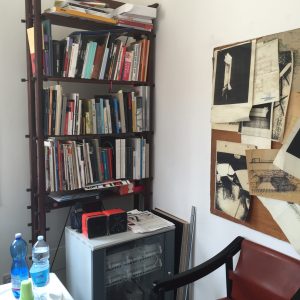
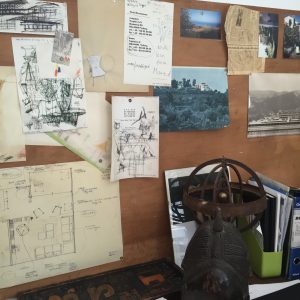
A collection of Vico's notes still on the wall
A collection of Vico’s notes still on the wall

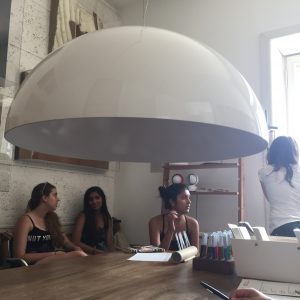
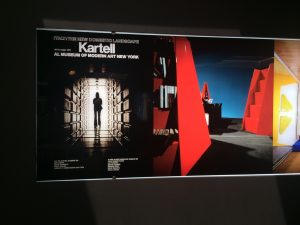
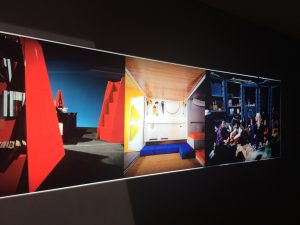
In his meeting room, a table with a large white light hanging above it and his seats (along with some of Kartell’s) encompassing it, we learned of his life. His granddaughter sat at the head of the table and recalled his projects, mainly held over the phone, relaying his ‘simple’ ideas to manufactures. The statement, “That’s so stupid I could do it myself,” was indeed his favorite compliment.

His own lighting creation

The simple yet genius (and what he definitely considered genius) nature of his thought shows in the simple yet beautiful + functional designs of his lamps and chairs.


“Look at usual things with unusual eyes” – Vico Magistretti

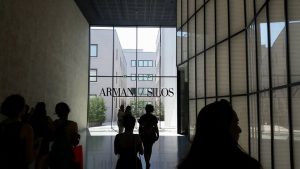
Armani/Silos

13507195_1719306864989112_4212759126717370576_n


When you hear of Armani, one pictures a powerhouse of fashion and design; walking in though, you can feel the power and energy of the company within the first few seconds of being there. Founded by Giorgio Armani, the company designs, manufactures, distributes and retails haute couture, ready-to-wear, leather goods, shoes, watches, jewelry, accessories, eyewear, cosmetics and home interiors.

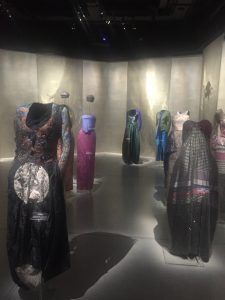
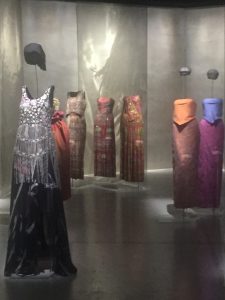
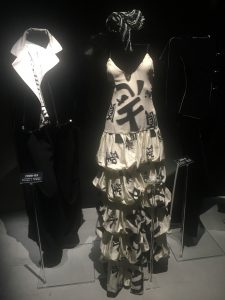
We were given a tour around the building, and we were shown all of the works throughout the seasons that the company has gone through. Intricate and innovative patterns and styles greeted you at every turn, and you never knew what to expect next. It created this illusion of mystery of pieces that have long since been tucked away, only accessible through the archives or your grandmother’s closet.

My favorite pieces were the ones that were influenced from various areas around the globe; I also really enjoyed talking with the girls as we imagined the models who had the honor of wearing such pieces.

IMG_8838

Each piece more unique than the last.

IMG_8845

The way Armani designs pushes the envelope. He doesn’t like the social constraints or the unspoken rules of fashion; he enjoys making his own rules or simply not listening to the ones in place. It’s quite possibly the main reason he rose so quickly in the industry.

IMG_8871

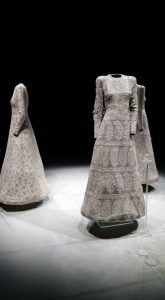
Pictured below is one of my favorite layouts. The three gorgeous, white dresses with a spotlight that illuminated the intricate details of each one individually was an awe-inspiring moment.

13508965_1719306788322453_4420639995760769416_n

As we turned the corner, we were provided with a new take or new season or new color scheme, and each piece was better than the last, and I look forward to seeing what Armani does next.

Week 4: FM Studio

A Project of FM Studio
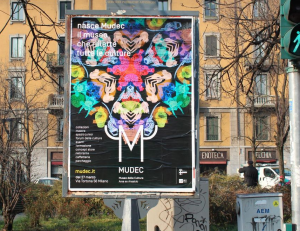
Mudec: Brand Identity/Advertising 2015

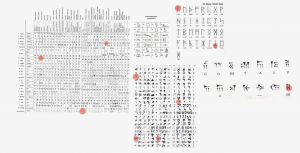
FM studio was challenged with creating a new fun/playful identity for the museum of culture, Mudec. It had to be playful to invite people in to see such a seemingly scattered collection of artifacts. To entice people they had several campaigns. Firstly, they created the identity + logo. FM studied the history of written language, and created a logo that contained interesting marks used in the past. Their logo can change with time and can be mixed/matched many different ways. They also studied the history of horns to create the winged marks on the edged of the ‘M’. This playful logo was a call to younger guests/viewers.

Study of writing + language

Their second campaign utilized images of the pieces actually within the museum, all colored brightly and arranged in a kaleidoscope pattern. They wanted colors that clashed, loud colors.

Kaleidoscope patterning

For the third visualization, FM decided to show off the beauty of the museum’s architecture. They placed the logo on top of images of the space, edited in bright colors.

Architeture + Identity
Architecture + Identity

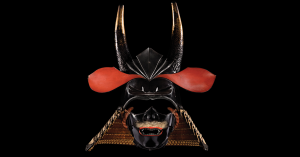
The fourth campaign, they decided it was time to ‘take off the mask’ and show people what was inside the exhibit. In this way they decided to photograph the visually interesting pieces and place them on a black background. The background gave the pieces mystery, a kind of creepy call for viewers to look closer.

FM's favorite museum piece
FM’s favorite museum piece

This project was a great insight into all the different ways a studio can explain the launch + emotion of a place. It included their initial research of the client + audience + application.


Giovanni Lauda

photo

Our visit with Giovanni Lauda was incredible enlightening. His journey to and through Rotaliana helped demystify a little portion of design for me. Per usual, it also made me question, or at least put into perspective my journey. Although I knew for a fact he works for a company, but something about him felt independent. A type of freedom I think all designers hope to be trusted with. Besides working at a company, he also teaches at a university. His talk about going to architecture school for six years got me thinking about the “path.” The one I thought I needed to follow. Then I got to thinking that I am going to be a junior next semester. And then I got to thinking of all the topics and fields I would like to learn about since being on this study abroad. I think, as a year of new beginnings (or at least a semester of new beginnings) I would really like to get more involved with the Austin scene of all types of design, and maybe make it a class thing that all design majors could be a part of.

food-for-thought exercise

photo 1 (1) photo 2 (2)After visiting enough design oriented companies, it was fully apparent that the companies put a substantial focus on research. Especially when one of your biggest competitors is within driving distance of your main headquarters, research is one of the definite ways of having a unique product. Maybe I am naive but I think one of the most untapped markets I’ve seen this week is the need based one. I don’t want to sound unimpressed, the strides Artemide and Kartell have made to move towards the future is nothing but impressive, but I think this trip has made me aware of what type of design I would like to be a part of. I think an interesting project for both companies could be how to use their platforms to solve some of the problems of the average Italian. With most of the material research already done, I can’t image there would be a big jump from applying that information to the problems that the average italian faces. Kartell began their company trying to attack these issues but has changed its focus in its most recent years. I thought this could be a good food-for-thought exercise to see if I could find a connection between the work that companies like Kartell and Artemide are doing and problems that have not been fully addressed as expressed by the Italian people. This also makes me think about my personal projects I have either already done or are planning to do and reevaluate how much of an impact it is making on its target audience. I think this is something I will think about for a project after this study abroad is over.
 

week three : monica castiglioni

IMG_8033 

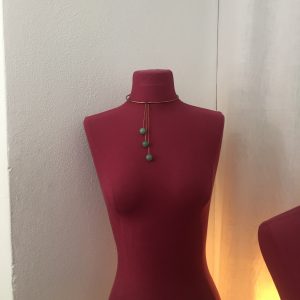
Visiting the shop of Monica Castiglioni was a real crowd pleaser. Not only was I eager because her father’s studio was so great, but we had seen one of her rings on our guide the week before and it was really something special. Walking in, I knew this was not like any other jewelry store I had ever been inside. The designer and the little girl in me were both in awe as I looked into case after case of rings, earrings and necklaces. Each piece was funky yet stunning and possessed a whole lot of character.  

One aspect I love about her work is the artistry. Something we talked about the first week in Milan was that Italian designers love combining design with other things, such as art or architecture: making it so they are not mutually exclusive. Monica’s jewelry is art and design in one. Every necklace, every ring is tended to carefully as if it were its own little sculpture. She is also very conscious of the materials she uses. The jewelry we saw were made of either bronze, felt or were 3D printed. She is very particular about her materials and that’s what makes her body of work so cohesive and so compelling.

IMG_8031

IMG_8035

week three : mapping the city

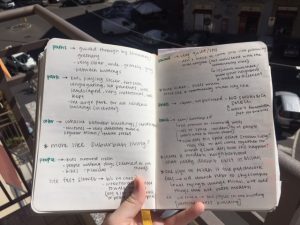
sketch book

IMG_8977

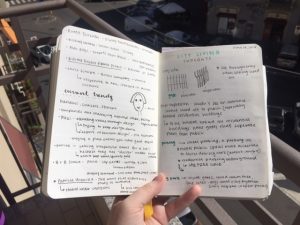
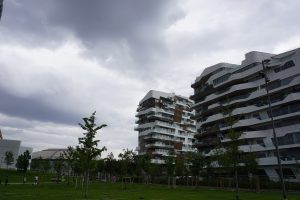
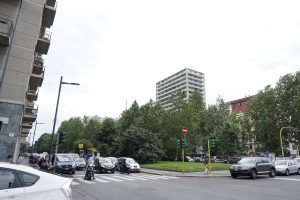
Like many other groups, our initial plans for the mapping walk were altered by the actual experience of the walk. Our first focas was accessibility. When we realized we were given a route where the two endpoints were residential areas, we know this was not a coincidence. We were all in agreement from the start that we wanted to focus on the human interaction with the places we came across since these places are where people live. So in the most basic form, we chose accessibility with a focus on safety. Who and how people would enter the area, move around within the area, and then exit the area. Our reasoning behind this choice was that we were given a mini community, the CityLife area, that without knowledge of the buildings, looks and feels vastly different than the surrounding area. With anything intended for longevity, especially buildings, there has to be a purpose or a reasoning behind basically every aspect of the construction. We decided to focus on accessibility as a way to understand the difference in intention.

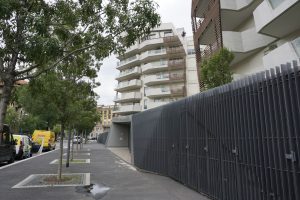
Upon entering the gates, we immediately noticed the sense of order in City Life. The area seemed quiet and composed, which is something we had not yet experienced in Milan. There were not many people on the perimeter of the street, and those who were there were moving a lot slower than the average Milanese person outside of the CityLife area. Besides that, the area had clear and visible ramps for sidewalks and parking garage areas, clearly marked crosswalks and bike lanes, and well-lit streets. The next thing we took note of was the perimeter gate around the CityLife property. Typically, this would not be something special since almost every other apartment building is gated. But this gate was different. It looked almost as to be for aesthetic. The gate wasn’t very high or made out of material deemed threatening. It may have been built as a formality or subliminal message of consciousness. The gate function, or lack of, reminded us of suburban living. This is where our focus shifted from accessibility to urban vs. suburban planning. The conversation of what separates a suburban neighborhood and an urban area came up. We talked about how urban development is shaped by the area of land whereas a suburban area shapes the land. We were almost fully committed to this idea until we talked to one of the CAs, Ilenia Costa. She mentioned how Milan was constantly changing (always trying to stay up to date) but the new construction is never meant to change to area absolutely but to be another addition to what Milan is (less of a melting pot and more of a curio stand).

This is where our final plan came together. We realized that CityLife is reimagining what it means to live in the city incorporating modern styles. Similar to the Rustic House during its creation. This is when we decided to focus on the new or shift in modern and it’s meaning in context.

_DSC2391

_DSC2407

_DSC2436

Flos and Fontana Art

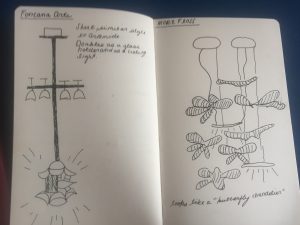
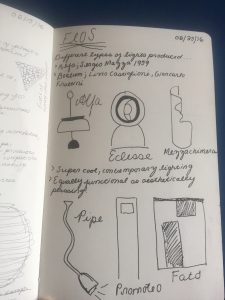
What I love about Milan is the seemingly endless number of light shops sprinkled throughout the city. This past week we had the opportunity to visit both Flos and Fontana Art, which both had a wonderful display of lamps that featured some work from Artemide. As soon as we entered Flos, I recognized the amazing display of lights from Artemide, which in essence was this beautiful chandelier structure featuring what appears to be butterflies cascading down and emitting light.

IMG_9075 IMG_9076

In Flos, we saw a multitude of very modern and contemporary light fixtures. One of my favorite pieces was one lamp which not only functioned as a lamp but as an iPhone charger as well. However, personally I must say I definitely preferred the pieces in Fontana Art, seeing as they were less contemporary and played an interesting twist on antique styles of chandeliers. Another piece that stood out to me was this ceiling light which doubled as a way to hold glasses – this I did a rough sketch of in my notebook as you can see from the above photo. Overall, I really enjoyed getting to visit and see many of the Artemide lamps in reality through the stores that sell them.

Laggo Maggiore: Anna Style

Here we have CAs that are native to Italy, speak the language, and are here to help us with any questions or needs we may have. Anna is my CA, and she is only a year older than me, at 19 that makes her one of the youngest among us. It’s been great having someone closer to my age always around to talk to and to ask questions, since everyone else here is already about 20 and older, and they all know what they’re doing.

This last weekend, I decided to stay home and enjoy Milan. I went out for drinks with some friends, met some new people, and simply enjoyed sleeping in and catching up on OITNB (amirite, ladies?).

Now Anna had to go home to visit a doctor on Monday, but she wanted to invite some of us to go with her to meet her family and get a chance to experience a bit of her hometown. Sadly, I was one of the only ones who answered her, but Noor was home with nothing better to do so she tagged along as well. It was refreshing to have such a small, intimate group. We joked, talked about music, and enjoyed each others company without the stress of school or worrying about 15+ other people.

When we arrived, her younger sister and father were waiting outside the station, and they walked us over to their home – a mere 5 minute walk. Her parents were lovely, and despite not speaking any English, they were so warm and welcoming.

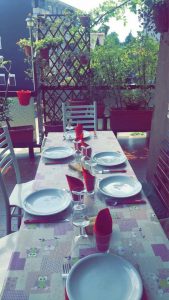
As her father poured us some wine, Anna’s mother began setting the table. Now, her mother made us all homemade recipes using ingredients fresh from Anna’s grandfather’s garden.

13528834_1719915604928238_4251941257535372177_n

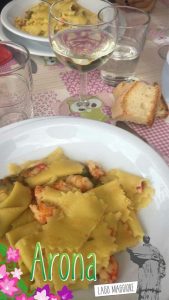
She made a pasta recipe with fish and zucchini and handmade pasta that Anna’s father and sister had made.

13537558_1719915624928236_5577161423276670505_n

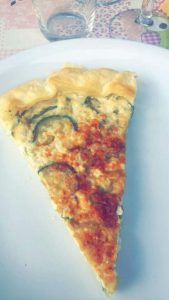
Then we had a zucchini and ricotta cheese “pie” with pan-seared eggplant (all of the vegetables were fresh from the garden).

13516467_1719915588261573_1301092101632392685_n

Then they brought out a simple salad: just some lettuce and olive oil and vinegar; a nice reprieve after the delicious pasta and pie.

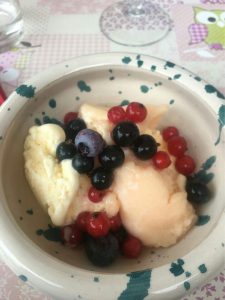
Lastly, they served us homemade melon and yogurt gelato with fresh berries picked from – you guessed it – the magical garden. It was hands down the best Italian food I’ve had this entire trip, and I think it was due to the fact that you could taste all of the love used to make it.

13557959_1719915641594901_6741358700099781529_n

**Food pictures courtesy of Noor.

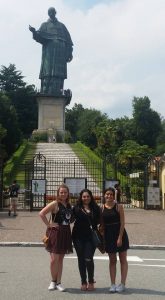
After lunch, we cleaned up and headed out to the second tallest statue in the world (only second to our Statue of Liberty back home), the San Carlone:


13524358_1719912018261930_5658267568562123230_n

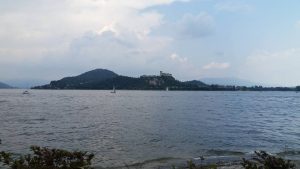
Her father bought us tickets to be able to climb atop the terrace part for a better view and some photos. (Side note: Anna is terrified of heights, so we didn’t want to go much further.) The view was spectacular, you could see Laggo Maggiore in full view even the castle across the water was clearly visible.

13567110_1719911951595270_325892660786333075_n

Once we got down, her father drove us down to the lake and dropped us off where we said our goodbyes. Anna stayed with us since we still had a few hours left; she took us down to the water then around the shops.

13524501_1719911994928599_5475948017416808060_n


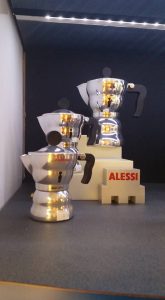
Inside one of the shops, they had an Alessi display. Moka machines, wine bottle openers, even the little knick knacks they had at the Alessi Factory, so I bought an Alessi Moka coffee maker for back home pictured below.

Alessi Moka
Alessi Moka

We didn’t spend very long there since our train left at 5:30, but it was such a wonderful time. Meeting Anna’s family and getting to spend quality time with her and Noor while seeing such a beautiful city was a nice, relaxing way to spend my last Sunday in Italy.

For now, Ciao bellas!