week three : sketchbook

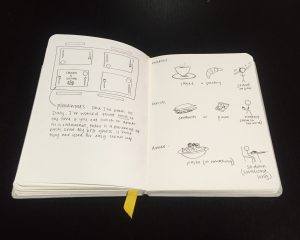
As I have moved along through Milan and through my sketchbook, I have continued to observe the table and patterns that occur during mealtimes. One thing I have enjoyed noticing is the relationship Italians have with each mealtime. I have been able to see options for food for each meal and different behaviors regarding how and when they are eaten. 

Breakfast for instance is not typically as big of a meal as it can be in the US. The people I have observed in the morning either do a grab and go with a pastry or stand at the coffee bar as they throw back their tiny coffees. This might have something to do with the fact that most of my observations are taken on business days, but I think it is true that traditionally, breakfast consists of coffee and something small in Italy. Now of course under the same circumstances in the US I would argue there is a large number of people who stop for coffee and a pastry in the morning before work. But even on the weekends, it seems that breakfast is not a leisurely event.

Another difference that I’m sure everyone notices right away in Italy is that there is no coffee to go. Yesterday I did see a to go cup in a coffee bar in the train station, but that was quite a rare siting. Like I said, most people who order coffee here stand at the bar as they order it, the barista makes it, they drink it: all in under 5 minutes.
IMG_8535

IMG_8534

week 4- textures, patterns and activity

Since, I began my journey in Milan, I started recording and documenting a variety of sounds, patterns, and textures of the city and beyond. I’ve drawn, watched, experienced, but mostly listened. Listened to birds chirping, people conversing, and performers performing … it all adds to the fabric of a city. Most sounds blend into each other, but at times, you will hear something that captures your attention. Here is a rough sampling of sounds, not yet a choreographed compilation, but rather a taste of what has captured my attention and expanded my experience in Milan and other cities abroad.


Roman Holiday

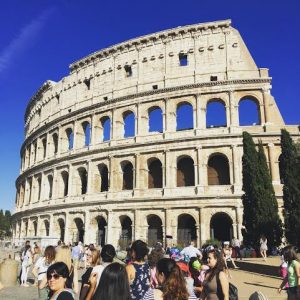
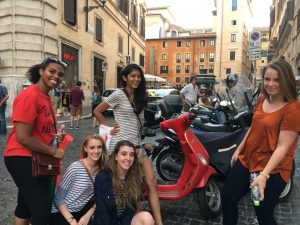
This weekend I was lucky enough to have the chance to travel to Rome with my classmates! I felt apprehensive about travelling to Rome because I knew the city is notorious for pickpockets. Thankfully, my trip was nothing but pleasant. The first stop on our agenda was the Coliseum. We were granted entrance fairly quickly and spent a couple hours walking around the inside as well as making a stop by the columns right next to us. We briefly ran home to freshen up before heading back out for dinner. On the way to dinner we ran into the Trevi Fountain, which was one of the biggest attractions in Rome that I wanted to visit. The girls and I took turns taking pictures and throwing coins in the fountain and then went to dinner. The next morning we had a late start because we were up fairly late watching the Lizzie Mcguire movie together. Our next conqest was Vatican City! I cried a bit inside St. Peter’s Basilica. It was a beaitiful and spiritual experience that I will never forget, I only wish my parents had been with me. After the Vatican we walked around the shops and went to the Pantheon. Rome was absolutely magical and I’m so happy that I was able to spend a weekend there.

The Coliseum
The Coliseum

image

Perceptions

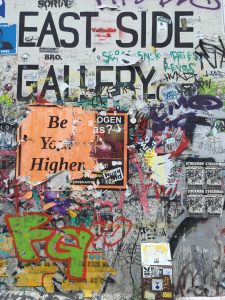
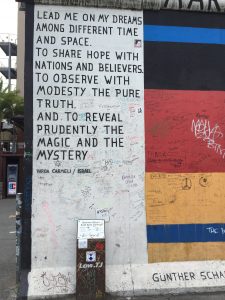
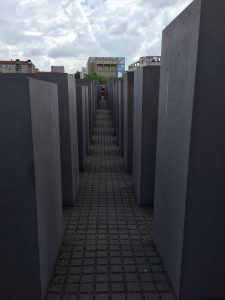
Traveling to other countries has definitely been a great experience—from sounds and smells to actions and sentiments—not only have the people been friendly, they have also been welcoming and easy to converse with (in a limited sense of the word). Every encounter has been helpful. If Milan made great progress due to its struggles, so have the German citizens. Not only did the Jewish people suffer during the Natzi Reich, but so did the German population. And at times, it was felt … every memorial, every wall, every step, every remembrance. I can’t even begin to comprehend or imagine how it must’ve during that time. Yes, communities did get destroyed and many, many (millions and millions) of people lost their lives, but communities were built. Support systems did rise, and many did try to overthrow the Reich—both within and out. But Many, many lives were lost during the process.

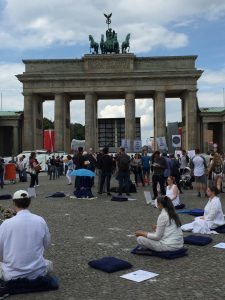
Now, they have overcome and thrived. The energy, the passion and the eagerness is visible through the community. There was music at every other corner, couples dancing on the streets, couples being affectionate towards each other and many just enjoying life at the park. There were also people meditating at the gate, others protesting next to the meditators, and others performing on the streets to entertain. All respecting each others’ space. And the food, the food was … delicious! From Currywurst to Vietnamese to Indian to middle-eastern food, everything was different, but sensational. If diversity manifests itself through the food then, Germany is gleaming with it. I heard Spanish, Dutch and I don’t know how many more different languages in the city. The people have definitely embraced diversity. If the structure for diversity in a city is based on its food then, the German people have spoken and have embraced a new era. Needless to say, my opinion is based on first impressions, I truly don’t know the true structure of the city, or if all people embrace this new form of living. But, I do hope many people have welcomed and embraced each other. The sense for life and love has truly become the fabric of the city, in my opinion. Of course, there is still poverty, homelessness and struggles, but everyone has an energy that can only be experienced and not explained or written about.

IMG_0002 IMG_0008 IMG_9950 IMG_0095


Mapping the City

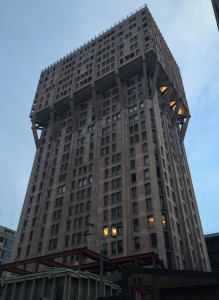
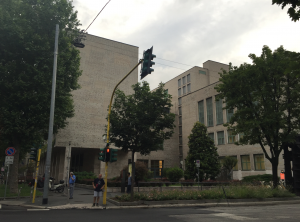
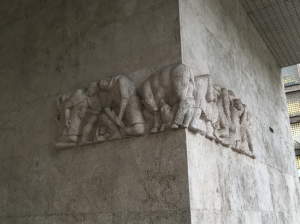
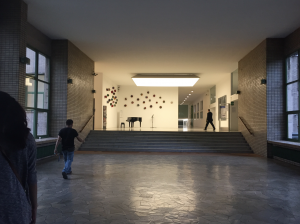
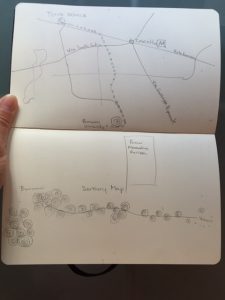
This past week, we started our mapping the city project. We did our first walk on Tuesday afternoon, we discussed our experience on Wednesday afternoon and did our second walk on Thursday afternoon. The first walk was exhilarating, new streets, new finds, and new experiences. We had two quite different buildings and although one was finished much later and was built during the modernist era, it felt much older than the other. We had the Bocconi University (economics) and the Torre Velasca Tower. We started with the oldest section of the Bocconi building and walked our way to the newer portion of the University and onto the Velasca Tower. The most noticeable part of the entire experience was the energy and activity level of the walk. We went from an over hyper area where there was excitement, life and lots of energy to an almost non-existent lifestyle. The tower’s energy was completely draining. We originally thought that it was due to the time we arrive to the area, but we encounter the same energy during rush hour on Thursday afternoon. Granted the building is under construction, but the energy of the building was felt onto the community. It seems that the Velasca tower although, a modernist designed had too many fascist memories embedded onto it. The medieval inspired design only added to the tension and it weighed on the community.

Screen Shot 2016-06-21 at 1.47.14 AM

Torre Velasca

Screen Shot 2016-06-21 at 1.46.25 AM

Bocconi University – outside view

Screen Shot 2016-06-21 at 1.46.40 AM

Bocconi University – close up

Screen Shot 2016-06-21 at 1.46.50 AM

Bocconi University – inside view

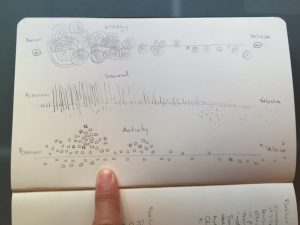
We decided to focus on the sensory aspect of our walk—not only ours, but the community’s, as well. We noticed the the energy and the sound levels varied from one point to the next. The University lifestyle definitely added to the heighten activity levels. The energy was positive and it vibrated through the students around the building. We, the four of us, wanted to become part of it. The varying textures of students added to the neighborhood. Below is a sample of the sounds, movements and energy I felt as I was walking in the area. You will notice that my energy levels went down as we reached our final destination point. The Velasca building definitely had some remnants of the fascist movement, although not intentional, it was felt … by me.

IMG_0323

IMG_0324

Kartell: An Important Name

13499564_10155019723424126_394869395_o

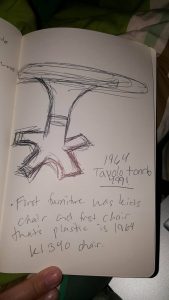
For this week, my favorite experience was the Kartell museum. This was filled with plastic in beautiful shapes and sizes that I’d never seen before. I really enjoyed getting a chance to see plastic in this way and shaped in a way that heavily influenced to Italian people. It allowed for the simple production of buckets and even something as simple as a chair. In one instance, the guide told of how a child’s chair was created. This was done at first because of the molding that required a certain amount of plastic; however, it was actually a great creation because it allowed parents to give this chair to their children and no longer worry about getting stains or other substances on the chair that would ruin it in the long run since it could easily be washed off. This was an important piece and eventually paved the way to my above sketch of tables with unique and interesting designs created by the husband and wife duo that had an interesting background in chemistry and architecture. These two were design geniuses and paved the way for plastics to be seen as not a cheap solution, but a creative one that would allow Italians to do the jobs they needed and not worry about decaying material or even fragile material with the use of combining plastic and other materials.

Mapping and Me

13442311_10155008185699126_31935901009279619_n

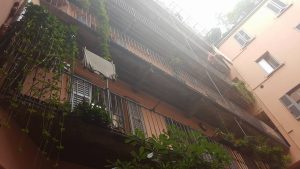
So, this week we began really delving into the mapping project we were given. It was an interesting experience and a great way to discover Milan in our own way and give our own perspective on this magnificent place. An interesting part of the adventure was finding a woman that actually allowed us to venture into her apartment complex. It seemed odd at first as we were talking about the architecture in the surrounding area and how it would influence our project, but the woman approached us stating she had a design of the apartment she lives in that is interesting and would help us. Inside we were amazed to find a courtyard in what seemed to be a motel sort of set up. She stated that this type of building was meant to be a sort of village that would allow people to easily communicate with each other and share resources and stories. It was an important part of Italian culture as it was attempted to be the standard. However, it’s not as widely known and because of this, the woman wanted us to experience this small taste of Italy’s past in terms of architecture. This was only a small piece of our project, but to have such important information early on was truly a blessing and made our outlook of our map all the different by the wonderful community that seemed to live in the area.

cinque terre : week 3

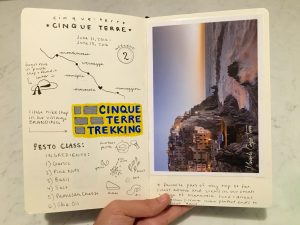
This past weekend I was able to travel to the Cinque Terre with a few friends. This was hands down the most gorgeous place I have ever visited and a surprisingly relaxing destination given the huge tourist population. We stayed in an Airbnb in the small town of Manarola which was perfectly picturesque. As a visual person, I think places like these are some of the most inspiring because I can feel myself appreciating the colors, shapes, and compositions of every sight I see. Taking photos is always a joy rather than routine documentation as it sometimes is, unfortunately. Thinking of my sketchbook, I decided to pay close attention to the branding of the tourist shops here because it was surprisingly good. I enjoyed meandering the tiny shops and observing their layout and overall aesthetic. On our last morning, we headed out to take a pesto-making class in Levanto. This was another visual experience that I won’t ever forget. Not only did the pesto taste amazing but was also the most radiant green color I had ever seen. The combination of the smashed basil, the light yellow olive oil, and the marble mortar was truly a sensory experience. I will be back someday!

FullSizeRender

future of design : week 3

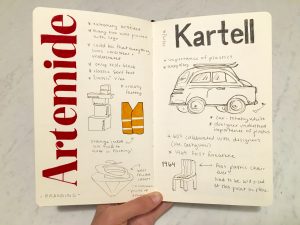
This week we visited several spots that had clear connections to each other. The first was Artemide, an Italian lighting design company and manufacturer. The initial presentation was so put together and overwhelmingly fascinating. The concept of “Li-Fi” (data transmitted through light photons) was completely illuminating, no pun intended. Reading design blogs and online news sources I feel like I am exposed to new and futuristic concepts pretty regularly but this I had never heard of and had a hard time wrapping my mind around. By the end of the presentation, Artemide made it clear that research was their game.

Heading over to Kartell, a giant global plastic design manufacturing company, they also recognized the importance of innovation. Their plastic designs enjoyed their peak success in the 60’s but they had to quickly reevaluate their brand due to environmental concerns and the growing popularity of cheap plastic.

In class, we questioned whether design was moving forward and I have a few thoughts on that subject. At Giovanni Lauda’s studio, we learned that he thinks design is at a bit of a standstill and that everyone is playing it safe. However, I think it is evident from our visit to Kartell and particularly Artemide, that new design spectacles are on the horizon and companies like theirs value research and new ways of thinking.

FullSizeRenderg

mapping : week 3

This week, Kameron, Zalak, and I made tremendous headway on our mapping project. We took our first walk on Thursday morning with a few inklings of ideas that we could try out for our final project. We made a few connections but overall our ideas didn’t have a strong enough concept.

The next day we headed to the Trienalle to see an exhibit designed by Andrea Branzi and Kenya Hara called “Neo-Preistoria”. Having no prior knowlegde as to what to expect from this exhibit, we entered the dark corridor where we found a series of mirrors, rock formations, and glass cases with artifacts. In the background there was a soundtrack of heartbeats and jungle noises which enhanced the primordial feeling of the exhibit. As we meandered through, we realized that each artifact was labeled with a verb and a poetic definition of the verb. The word and image correlations were so striking at times that I got chills.

As we moved through the exhibit, the artifacts got younger and younger in age. At the beginning, I thought I would be seeing ancient artifacts all the way through but as it turns out, the artifacts were dated more recently the farther along we made it through the exhibit. It was so interesting to make the journey through man’s inventions. It really drew attention to the great strides and downfalls of humanity.

Something interesting I noticed about the exhibit design was the walking pattern. As long as I followed the numbers, it really felt like a trip through time where I was aware of my progression.

Later that day, something clicked. I thought, what if we compared our journey through the city of Milan to the journey of man’s objects through time? Conceptually, it was sound. Our first building is a fascist icon and our end building is a pillar of modernism. Our walk through Milan was a clear evolution that could be represented through found objects.

So, Friday afternoon we set out to walk our path one last time. This time, we paid attention to the mood of our every surrounding and collected items that captured the essence of our locations. Some of these items included flowers, tickets, stones, and perfume samples.

When we went home to work, we had fun figuring out the best way to display our “artifacts”. We decided to use some granola bar boxes and some white paper to create a museum display effect. I had a lot of fun coming up with the words and definitions for our exhibit. It made me realize how much I enjoy language and writing economically. It’s a different kind of artistic challenge. I have included some of my sketches for the project below!

FullSizeRenderfFullSizeRendesr