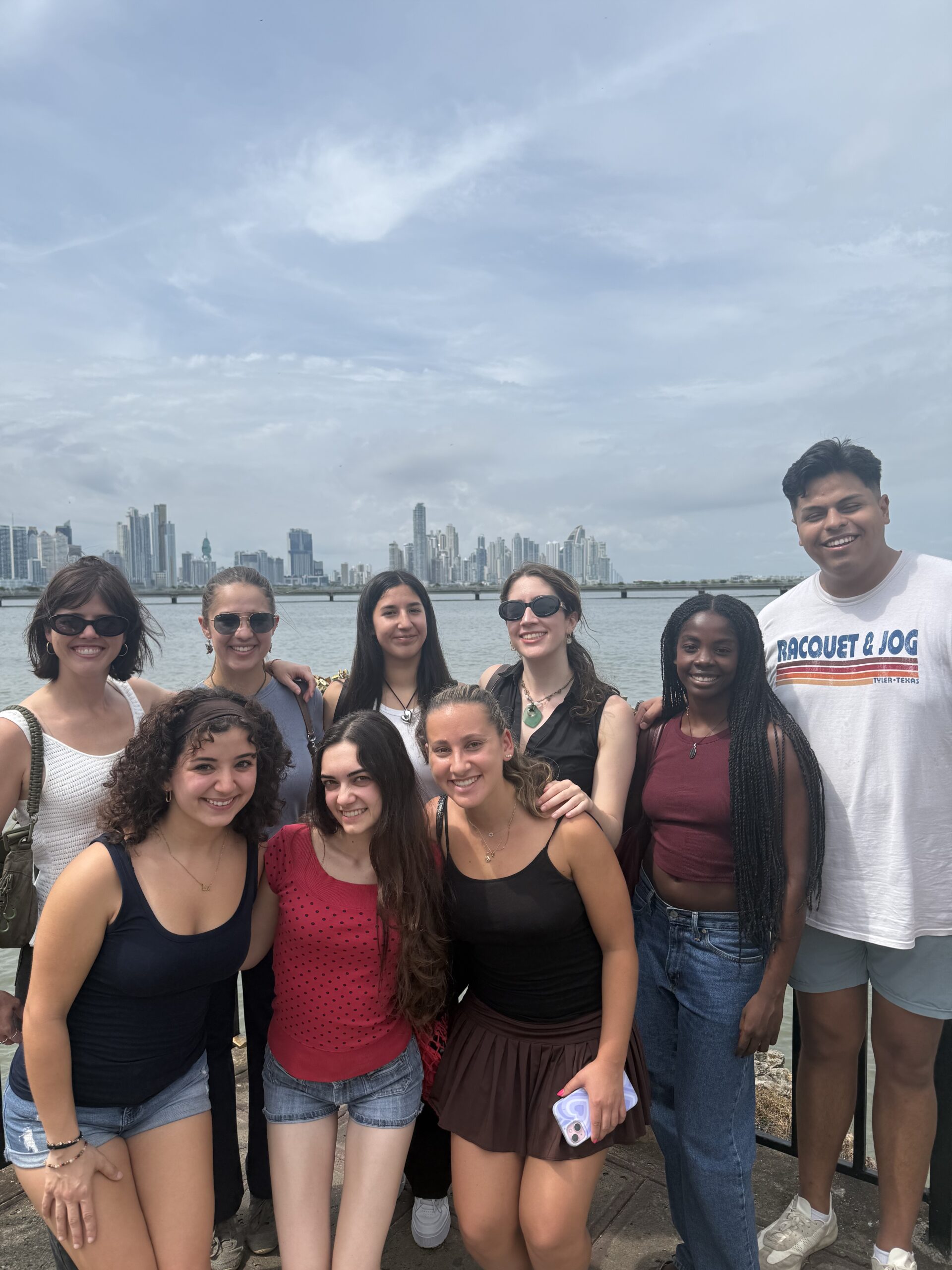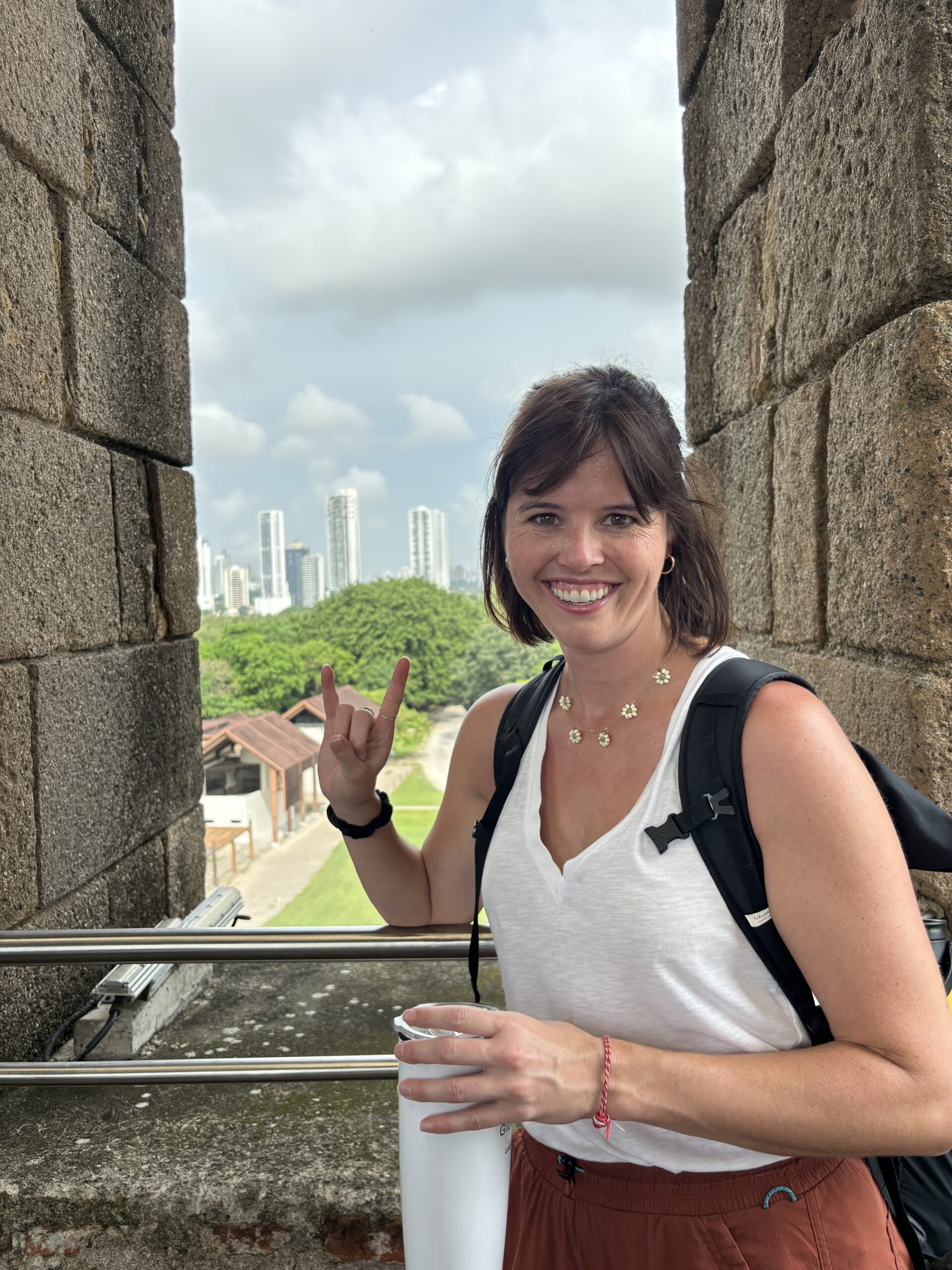
By Brittni Palkert, Graduate student at the UT LBJ School of Public Affairs
I spent the summer in Panama City, Panama, interning with CID Gallup, a leader in public opinion, social, market, and political surveys. This internship provided our intern team with the opportunity to both design our own research project and participate in ongoing research studies, while learning from experts in the field. My group’s research project centered on women in Latin America that are being “sandwiched” between caring for children and elderly parents which limits them from participating in the workforce, civic life, and elsewhere. It also impacts general well-being, including levels of happiness, stress, and burnout.
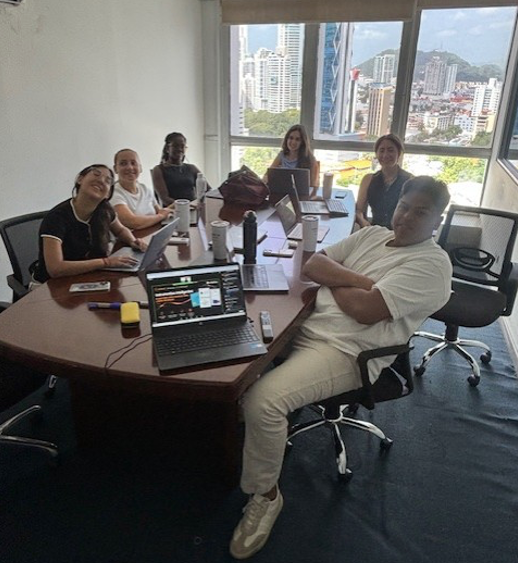
In the design of this research project, we applied skills we learned from workshops with CID Gallup, conducting a literature review on the topic, identifying the theoretical survey population, and designing the research methodology. The literature review for this project gave me a deeper understanding for the concerns of women in Latin America today and the impact of changing demographics and societal pressures.
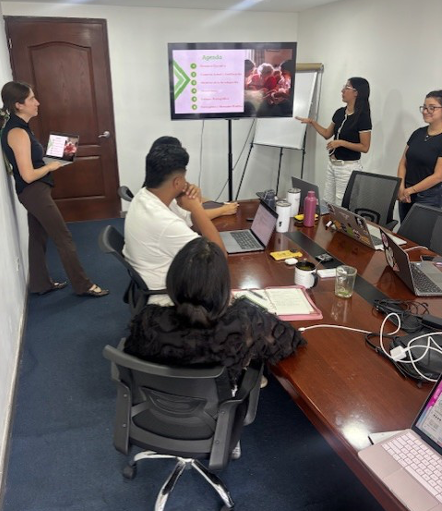
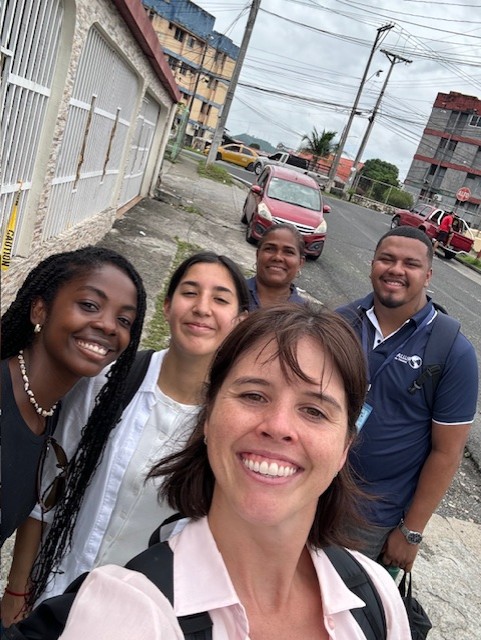
In addition to designing our own research study, we participated in ongoing studies with CID Gallup, first reading the results of public opinion surveys they conducted in Panama, Costa Rica, and Honduras. Reading the results of these public opinion surveys helped us understand the historical and recent opinions of the population on a host of issues: political, societal, economic, and more. These studies ask for opinions on everything from the state of democracy, political leaders, AI, and the biggest challenges the country is facing. After reading and editing the reports from last quarter’s study, it was time for us to participate in the current quarter’s study! We shadowed experienced surveyors who conducted the same public opinion survey in neighborhoods around Panama City. Being out in the field and hearing from a diverse range of Panamanians – different ages, genders, races, and socioeconomic statuses – helped me get a better sense for the culture of the city.
After shadowing in-person surveys, we had the opportunity to conduct surveys on our own focused on the Panama Canal. While Panama Canal is an economic focal point in the country and a huge point of pride for many Panamanians, its expansion and water shortage concerns lead to a hotbed of opinions. I was in awe of how the experienced surveyors were able to maneuver different personalities, background noises, and other distractions to complete high-quality surveys. It was intimidating to complete a survey on my own, but thankfully I was accompanied by experts who could summarize long free responses and help further explain the questions when respondents didn’t quite understand. I also conducted one telephone survey independently, which was a little terrifying considering the length of the survey (50+ questions) and all the things that can go wrong during a phone call in my second language (static, difficulty hearing, etc.), but the experience gave me confidence that my language skills could be relied upon!
In the coming weeks, we will learn more about the data analysis side of CID Gallup’s business. It’s been interesting to learn about the methodology in detail – how they determine sample size, how they sample in the community (e.g. every third house in a specific zip code), and how they ensure quality responses (by recording and validating the responses after the survey is completed). While we know that survey results cannot be 100% relied upon – just look at recent political polling in the U.S. compared to election outcomes – it is cool to see the process unfold and see the efforts taken to ensure reliable and representative data is captured.
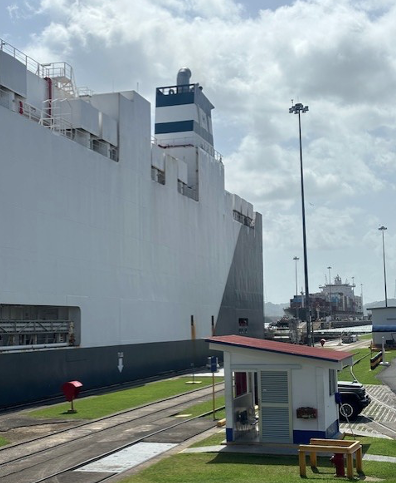
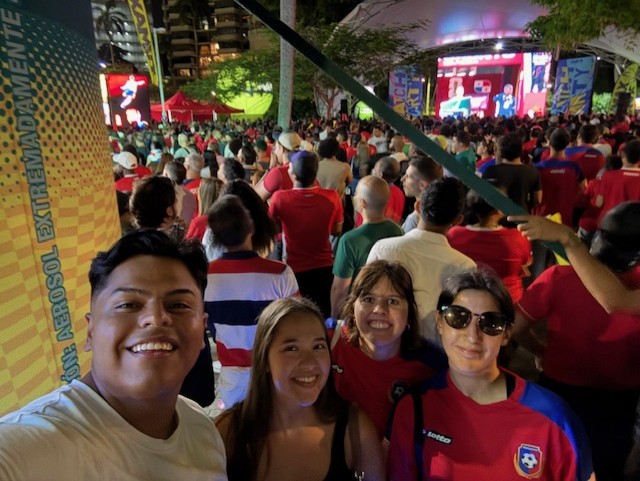
Outside of the office, it’s been fun to integrate into life in Panama – whether it’s travels to other towns on the weekends, going to the nearby grocery store, or walking the “Cinta” path that traces the ocean. Every daily interaction is a chance to learn a bit more about the local culture and beautiful diversity that exists in Panama. A highlight for me was the Panama Canal museum and checking out the Panama Canal this past weekend. Learning about the U.S.’s role in the building of the Canal and the eventual handover to Panama helped expand my knowledge of US-Panama relations. Learning about the Canal’s expansions over the years and then getting to actually hear Panamanians’ opinions on the topic while conducting surveys was an exciting professional experience. I also recently began volunteering with a local nonprofit, Fundacion Iguales, which has given me another window into the diversity of Panama City and some of the political and human rights topics that are important to the populous today. I am looking forward to connecting further with locals over the coming four weeks and building my knowledge of Panamanian history and culture.
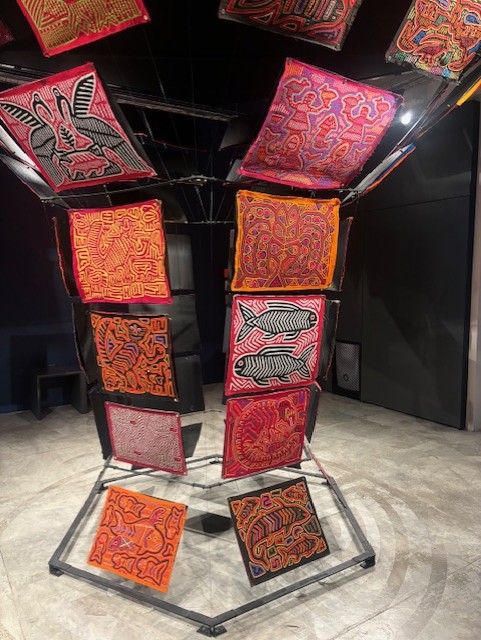
One area where I’d like to grow my knowledge is on the local indigenous tribes. There are seven groups located in Panama. Within Panama City, and from our travels to the San Blas islands located off the Atlantic coast, we’ve met members of the Emberá and Guna tribes. Molas – colorful textile art primary from the Guna tribe – can be seen for sale in tourist stands throughout the country. The free Mola museum located in the UNESCO World Heritage neighborhood, Casco Viejo, was a highlight of my Panama City sightseeing. In the coming weekends, I am looking forward to exploring the Chagres National Park to learn more about the Emberá tribe and visiting historical Colon.
Overall, this summer has been unique both professionally and personally; gaining professional research and surveying experience while living in community with fellow UT-Austin students has been an absolute blast. As a Latin American Studies student, I am also thrilled to have been able to deeply learn about a Latin American culture and country I was unfamiliar with and get to know the diversity of the people who live in Panama. This country that contains the largest rainforest in the world outside of the Amazon, boasts the largest coastline by landmass in Latin America, is the wealthiest country in Central America – in large part because of the wonderous Panama Canal – and is home to seven indigenous tribes has also been my home for a month now, and I am looking forward to another month here of learning, exploring, and expanding my worldview.