By Ellie Alford, Undergraduate student in the UT Government Department
I’ve never liked tomatoes. I tried them a few times when I was little, hated the taste, and have adamantly avoided them ever since. I could not envision myself eating one willingly, much less enjoying it. But, life has a funny way of surprising you.
Right after setting down my suitcases in the Skopje apartment I’d call home for 8 weeks, I walked to a restaurant nearby and, at the assurance of the waiter that Macedonian fruits and vegetables are “different” from those in the U.S., cautiously ate a bowl of tomatoes. I loved them and have eaten one almost daily since! I could have never imagined this happening—but it did, and my life has changed.
The very best things in life happen unexpectedly, and my experience living in North Macedonia and interning with the National Democratic Institute has been no exception. My freshman year self, who had never left the country and didn’t know anything about the Badinter Principle or closed list PR systems, would not have believed she’d one day be spending a summer in the Balkans researching democracy, supporting democratic institutions, working alongside some of the most committed and inspiring people, and diving deep into the politics, culture, history (and tomatoes!) of such a complex and wonderful country. But, here she is! And she wants to tell you all about it!
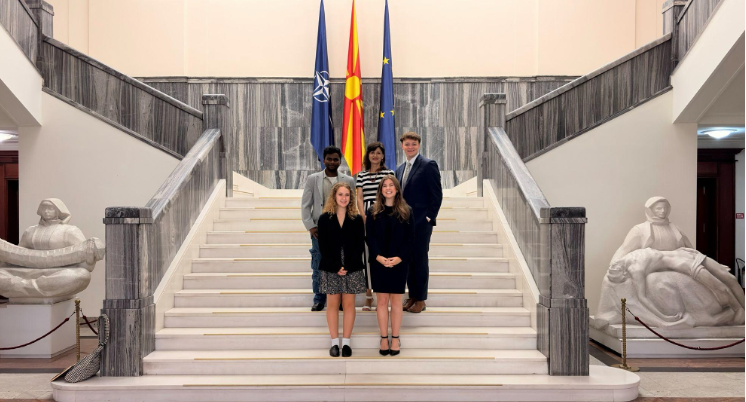
At NDI North Macedonia, the team is ever-intent on living out the slogan found by the office door: “working for democracy and making democracy work.” My first week there, I was struck by just how much work was going on. Everyone I met was involved in interesting and impactful projects: heading to meetings with Members of Parliament, presenting research, writing reports, coordinating with international partners, running between Parliament and the office, or meeting with constituents from across the country. There was always something happening. And, in the midst of all the happening, the team made room for four interns from Texas. I cannot express how thankful I am for the people with whom I worked alongside and how much they inspire me, personally and professionally. From day one, my colleagues have been open, helpful, and supportive, answering every question and inviting me to join them at various events.
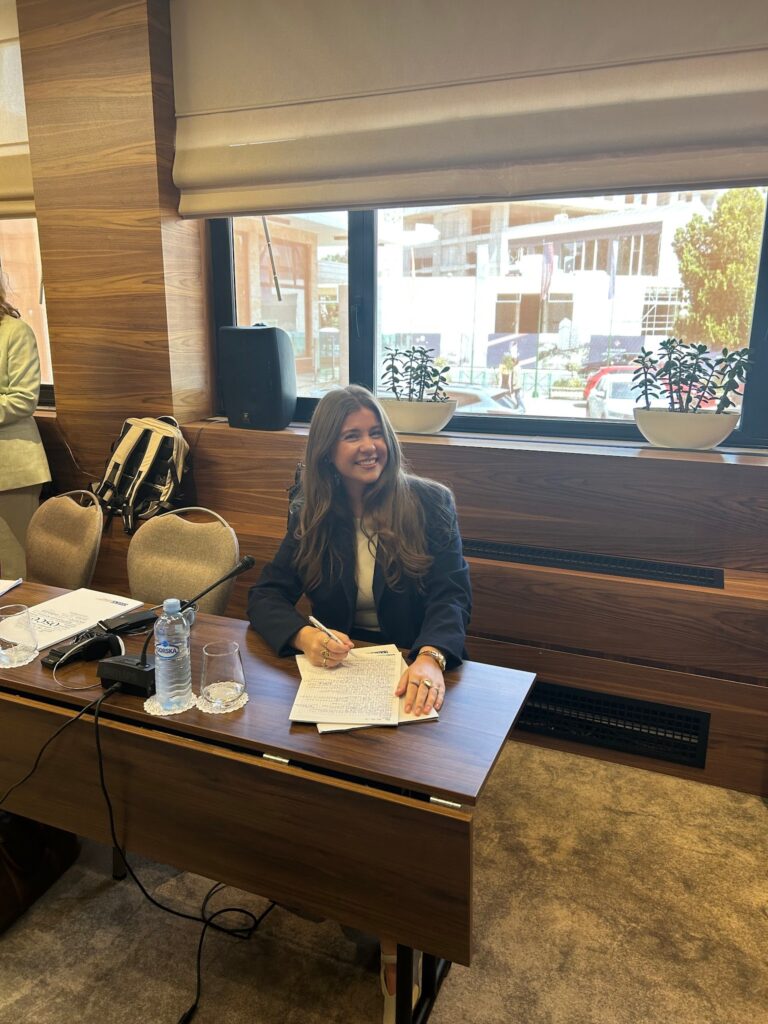
The first such event was a meeting hosted by the Organization for Security and Co-operation in Europe regarding the ongoing conversation about the Code of Ethics Guidelines. In preparation, I spent time learning about the Code and comparing it with similar ethics frameworks from around the world. At the meeting, attended by MPs, NGO representatives, and legal experts, I (thanks to a headset with a translator) listened in on a formative discussion about parliamentary ethics and accountability. Watching these conversations unfold in real time was fascinating, especially knowing the Code would pass in Parliament just a few days later.
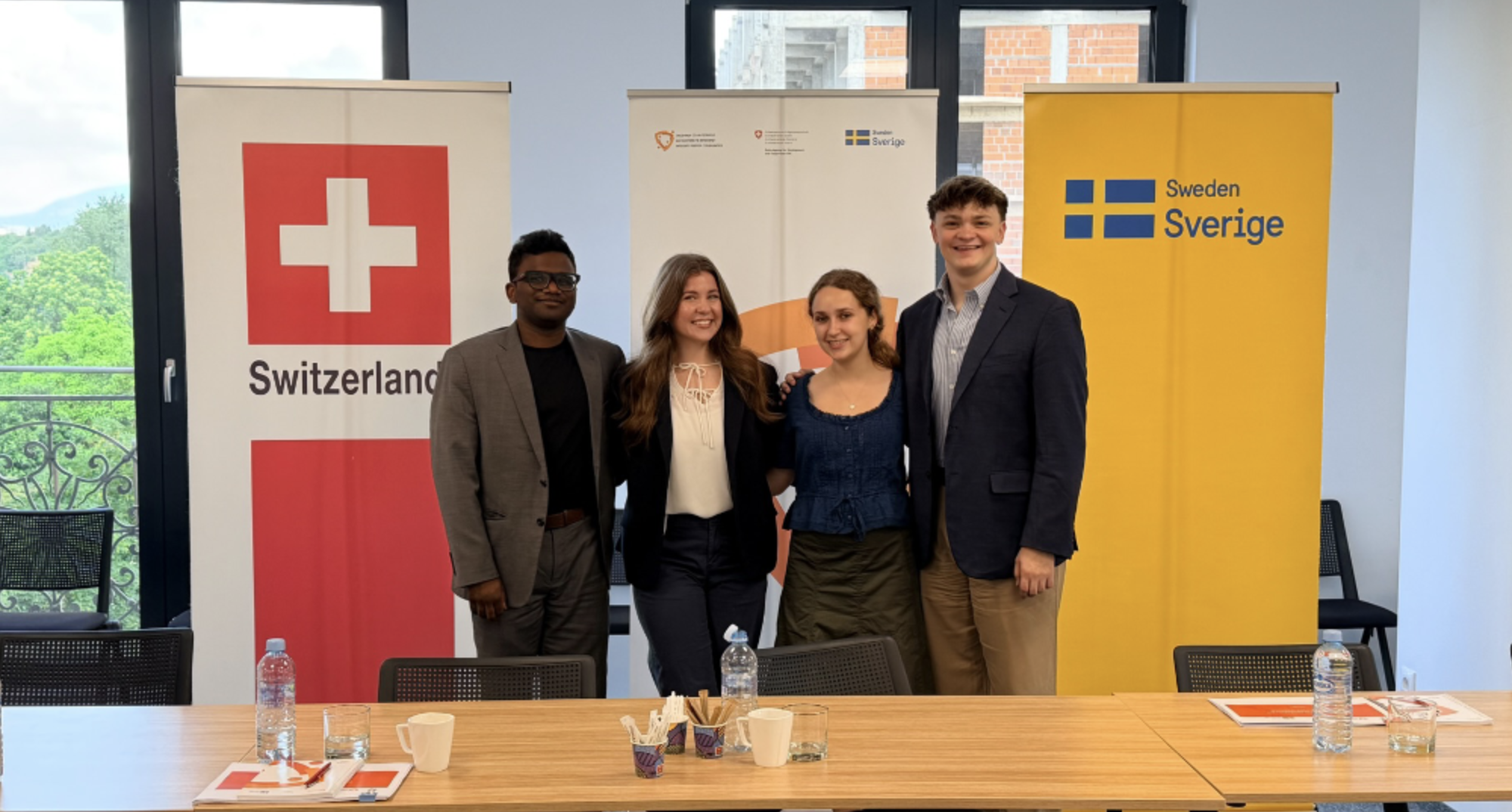
This was only the first of many events I had the opportunity to attend! Soon after, the other interns and I sat in on a meeting with NDI staff, one of their research partners, and the Swiss and Swedish ambassadors to North Macedonia. Researchers presented findings on public perceptions of municipal government performance, including trust, corruption, and access to digital services. We also joined the Parliamentary Support Program team for the final stop of the 2026 Youth Caravan, a series designed to facilitate direct conversations between Members of Parliament and university students from across the country. At the Skopje event, students raised thoughtful questions about emigration, opportunity, and youth involvement in political decision-making. As someone who studies politics and has worked in the Texas government, I felt it was incredibly rewarding to watch representatives and constituents engage in such an open, candid dialogue.
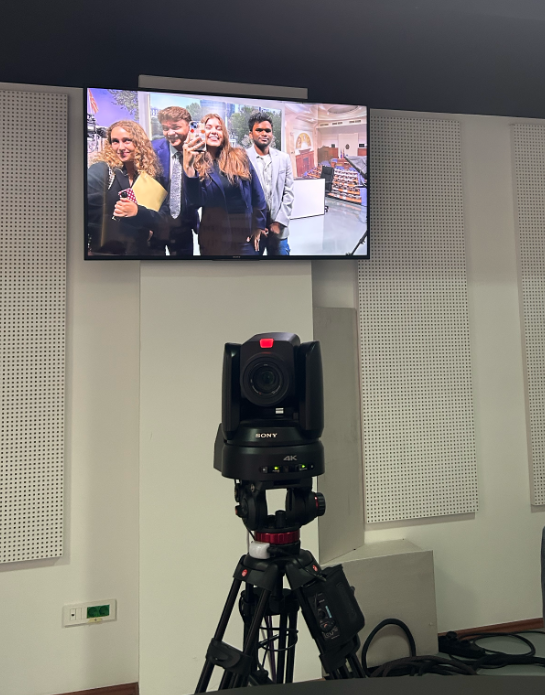
While at NDI, I was part of the Parliamentary Support Program, a program spanning a decade and focusing on transforming the Assembly into a transparent, accountable, and independent institution. Being involved in this project, I got to learn about all the work the PSP team had done over the past decade, what they’re doing now, and the impacts they have had on parliament and the country. I found the development of the parliament television studio and channel to be particularly neat! The channel produces 12 hours of programming daily with news briefs, interviews, and documentary segments along with providing access to live debates and committee meetings. This is all done in their TV studio, which I had the opportunity to tour. It was exciting to see where important parliamentary media is created and produced; ensuring transparency and providing citizens with accurate, unbiased, and accessible information is foundational to a well-functioning democracy!
In terms of my specific research project at NDI, I decided to stray from my long-time interest in European Union accession and anti-systemic actors in North Macedonia (sometimes it’s good to branch out!) and dive into the world of non-contestant campaigning. Although it was a bit removed from what I had expected to work on—which is in keeping with “the best things are unexpected” theme of the summer—it quickly proved to be one of the most fascinating, timely, and important topics I could have explored. It also tied in nicely with my interest in campaigns and elections. “Non-contestant campaigning” is a somewhat new term in the literature, so let me briefly explain: It refers to campaign spending made independently of a candidate or political party with the goal of supporting or opposing a candidate, party, or issue, either directly or indirectly. There is nothing inherently wrong with this. Many civil society organizations and advocacy groups play an important role in democratic societies. However, without appropriate transparency and safeguards, non-contestant campaigning can also be exploited by domestic or foreign actors seeking to influence elections in ways that are difficult for citizens and regulators to track.
North Macedonia currently has no substantive regulation governing this issue, making the research particularly relevant. The absence of a regulatory framework not only creates potential national security concerns, but it also opens a door around the already existing rules followed by candidates and political parties to potentially undermining transparency, accountability, and the fairness of the electoral playing field. My project focused on assessing the issue within the Macedonian context while conducting comparative research on how other democracies regulate non-contestant campaigning. The end-product of this work was a short comparative analysis paper, threat assessment briefing and chart, and a set of recommendations informed by international practice and adapted to North Macedonia’s specific political and legal landscape. I believe in democracy, I believe in free and fair elections, and I believe that non-contestant campaigning regulations have an important role to play in protecting both. While my contribution was only a small piece of a much larger effort, I hope the work I completed can help inform conversations on an issue that will become increasingly salient in North Macedonia and in democracies around the world.
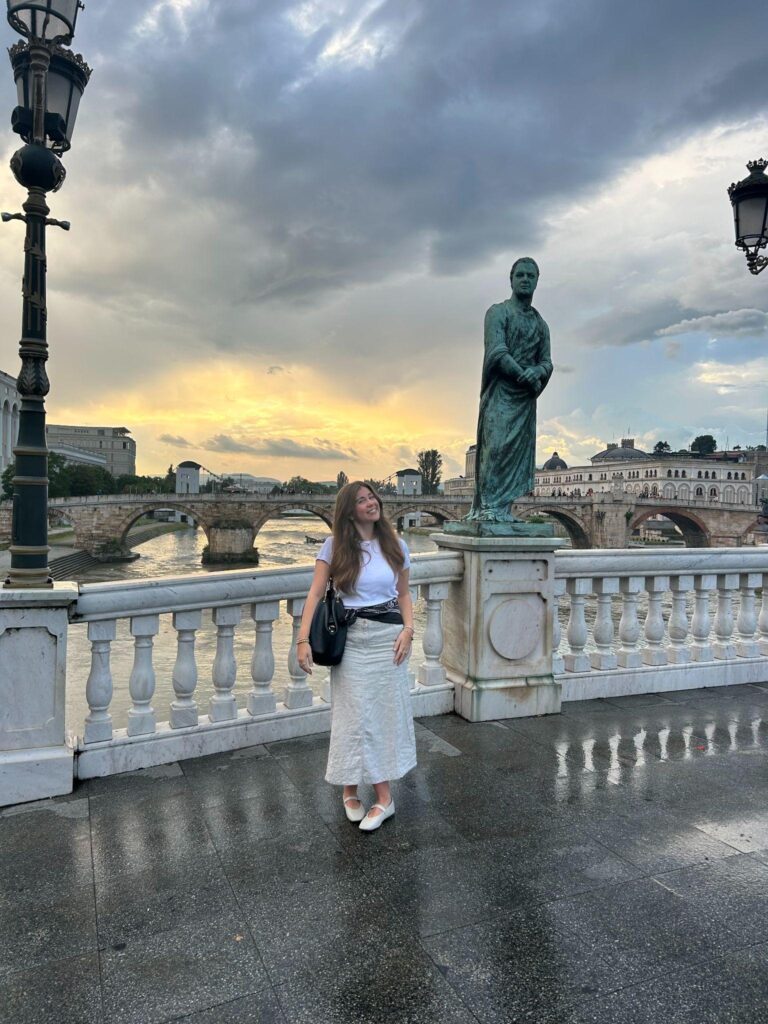
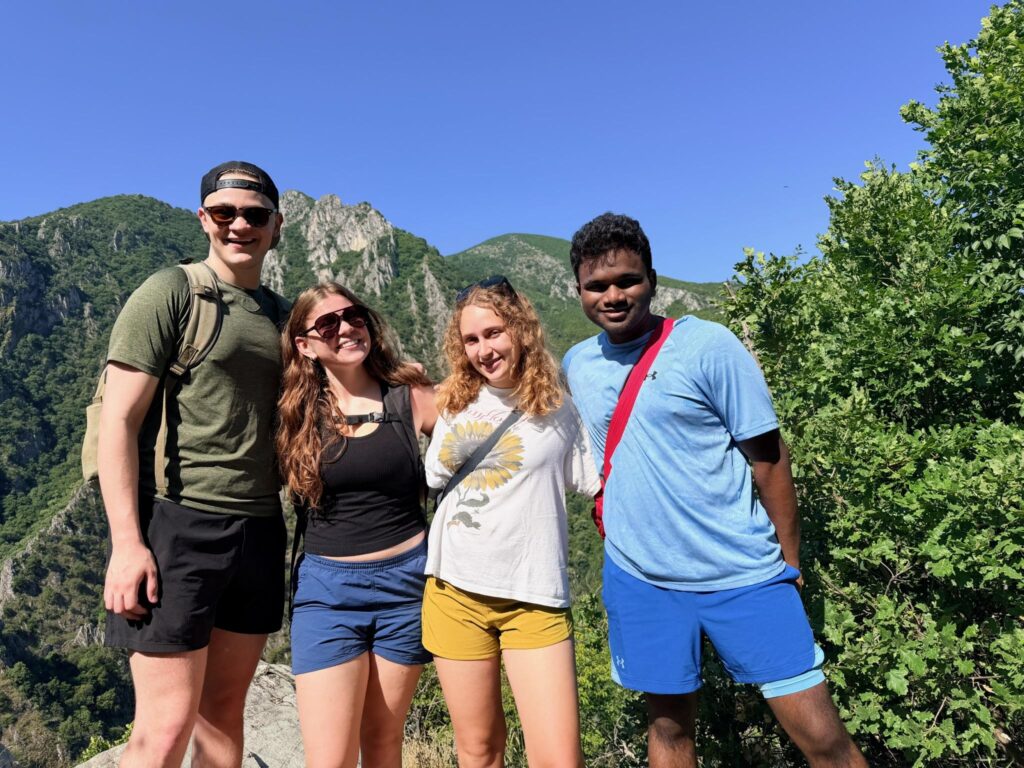
My time in North Macedonia was certainly not all work and no play! I felt it was incredibly important to get out and experience the country and meet the people I was reading about and hoping to impact in some small way. The other interns and I spent our weekends exploring, and every adventure deepened my appreciation for North Macedonia’s beauty, history, and culture.
One of our first weekends was spent hiking and kayaking at Matka Canyon, where the trail led to a peaceful fourteenth-century monastery overlooking the valley. We ended the day sharing a traditional meal with a coworker and a group of MPs, making the experience all the more memorable. The following weekend, we explored Ohrid, wandering its cobblestone streets, visiting Europe’s oldest lake, seeing an amphitheater dating back to 200 BC, and, of course, drinking plenty of coffee. Surrounded by ancient architecture, breathtaking scenery, and traditions preserved for centuries, I was struck by the town’s richness and almost tangible genius loci. We loved every minute (and every stray cat) there.
We also spent a weekend in Thessaloniki, Greece, soaking in the history, waterfront, and incredible food. Walking through the city meant passing between Roman ruins, Byzantine churches, bustling cafés, and the sea, all within a few minutes! A multi-hour visit to the archaeological museum gave me an even deeper appreciation for the history of the region and the people who have shaped it over thousands of years. There was a large collection of well-preserved jewelry, and it brought me such joy and a sense of connection to see the rings, earring, and necklaces other women loved centuries ago that look not too dissimilar from what I wear now!
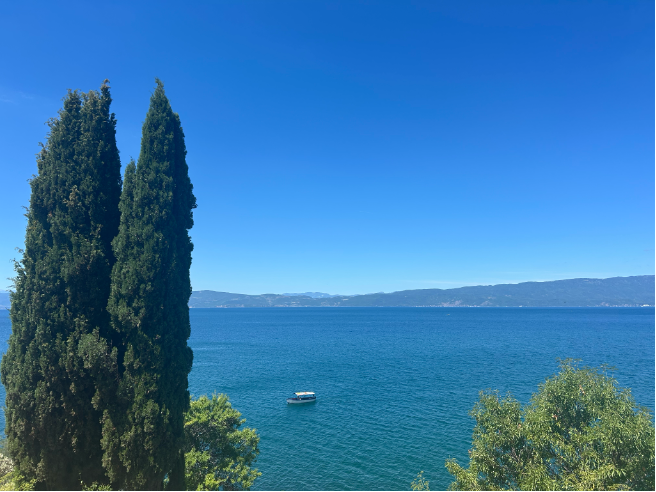
It was full of unexpected conversations, unexpected friendships, unexpected research, and an unexpected love for a country I had known so little about just a year ago. I leave with a deeper appreciation for the work organizations like NDI do, stronger confidence as a scholar and researcher, new friendships, countless memories, and appreciation abundant for the people, culture, and beauty of this remarkable country. I am grateful for the unplanned experiences in life that surprise us immensely and change us immeasurably. North Macedonia (and, against all odds, its tomatoes) will always hold a special piece of my heart! To whoever is reading this: eat the tomato!