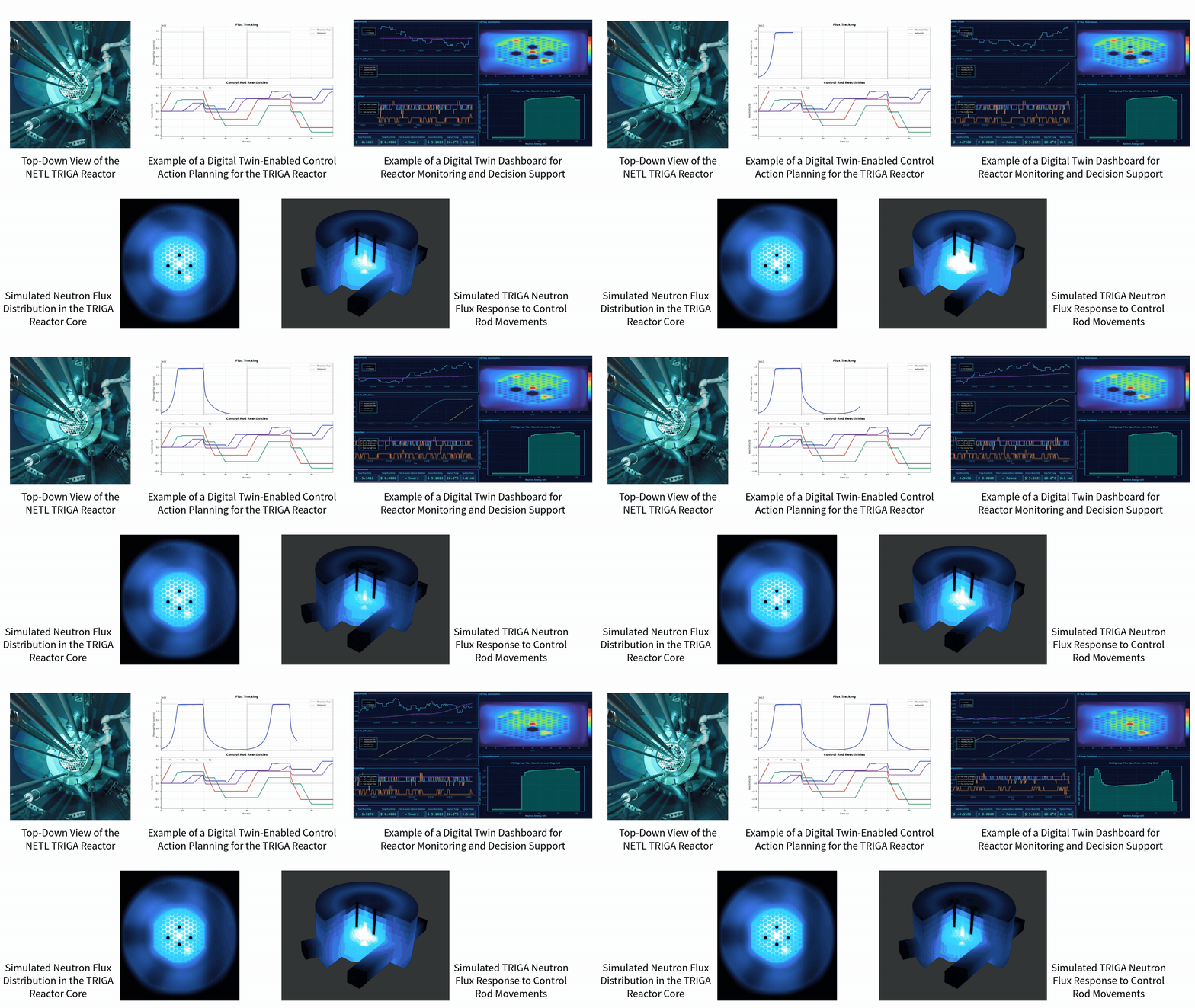
- The University of Texas is using its Nuclear Engineering Teaching Laboratory (NETL) TRIGA reactor as a real-world platform for developing and testing digital twins. Because the reactor can be operated more dynamically than a commercial reactor, it provides a unique opportunity to study a variety of operating conditions that are especially valuable for digital shadow and twin development. Daily startups, frequent power changes, and pulsing operations, together with the reactor’s inherent safety characteristics, make the NETL TRIGA an excellent environment for advancing these tools.
- Over time, these digital twin capabilities are expected to improve operational planning, reduce conservative full-power operating margins, and support real-time flux tuning for research missions and medical isotope production. Early comparisons with ex-core detector measurements and irradiated-foil experiments have already shown promising agreement, highlighting the potential of this effort and helping establish the NETL TRIGA as an important proving ground for nuclear digital twins.
- See https://nuclear-twins.tacc.utexas.edu/ for publicly available current operating data of the NETL TRIGA.