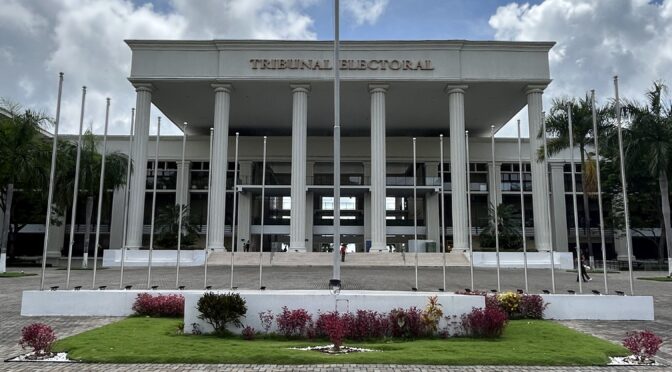
The 2024 Fellowship Application is now open for UT students to apply for the Summer 2024 fellowship focused on democratic institutional development in Panama. Applications are due by November 15, 2023.
Continue reading 2024 Fellowship Applications Due Nov. 15
AI, Social Media, and Democracy
By Tien Vo, Undergraduate student in the UT Government Department, Mathematics Department, and Polymathic Scholars Honors Program
I recently graduated from the University of Texas at Austin with degrees in government and math. This summer I got to work with International IDEA through an internship organized by the UT Government Department and two amazing professors, Ashley Moran and Zachary Elkins. It is a newly developed internship program to study democratic institutional development in Latin America, and it has been an honor being one of the students chosen to participate in this program.
Continue reading AI, Social Media, and Democracy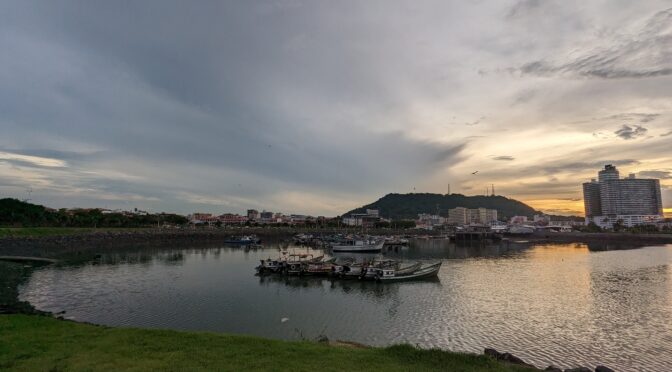
The State of Democracy in Latin America
By Francisco Alvarado-Quiroz, Graduate student at the UT LBJ School of Public Affairs
What we know collectively as “Latin America” contains, depending on whom you ask and how you count, some 21-plus countries. The landscapes contain high-altitude cities, untouched jungles, and beautiful beaches. While you could get away communicating in Spanish throughout most of the region, there are an uncountable number of languages and dialects.
Continue reading The State of Democracy in Latin America
Election Preparation in Panama
By Kaitlin Passafiume, PhD candidate in the UT Spanish and Portuguese Department
After my return from Panama, I am full of reflections about my time spent there working with International IDEA and its partners at the Institute for Democratic Studies (INED). My final month working in these capacities was different from the first, as it was more hands on and largely interactive. In the first portion of my internship, I worked in a largely independent way, developing memos that analyzed youth voting programs across Latin America. In the last half of my internship, I was very much part of a team.
Continue reading Election Preparation in Panama
Stunning Mountains, Long Bus Rides, and Lots of Milanesa
By Alejandra Jimenez, Undergraduate student in the UT Government Department
In my last week interning for International IDEA, I had the opportunity to meet with Dr. Fabricio Franco, a professor and director of the Chile office of the Latin American Faculty of Social Sciences. During this meeting, the other interns and I got to learn more about Chile’s current sociopolitical dynamics from a perspective I had not heard before. This made a fulfilling closing to my internship with IDEA that further motivated me to remain informed about Chile’s journey towards a potential new constitution.
Continue reading Stunning Mountains, Long Bus Rides, and Lots of Milanesa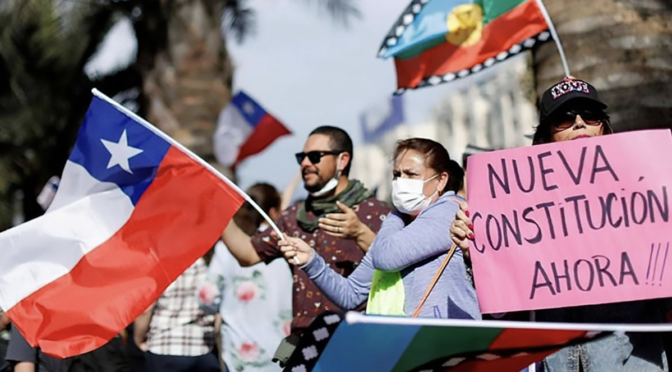
Supporting the Chilean Constituent Process
By Matt Martin, PhD student in the UT Government Department
After three weeks under the Panamanian sun, I headed to Santiago for a taste of the Chilean winter. There I spent the last three weeks of the Democratic Institutional Development internship working closely alongside the team at the International IDEA office in Chile. The second half of my experience was a perfect complement to the first, providing not only greater exposure to IDEA’s operations but also a chance to understand more deeply Chile’s constitutional moment, a topic of great personal interest.
Continue reading Supporting the Chilean Constituent Process
Learning across Cultures
By Alexys Aquino, Undergraduate student in the UT Government Department, International Relations and Global Studies Department, and Spanish and Portuguese Department
My last week in Panama went by so fast. All of a sudden, I was on a plane back to Texas and, just like that, my six weeks there were over. Now that I’m back in the U.S., I feel so aware of the things I learned in Panama and the aspects of life there that I really valued. Some of them I can implement in my life, and others I’ll just have to look upon fondly.
Continue reading Learning across Cultures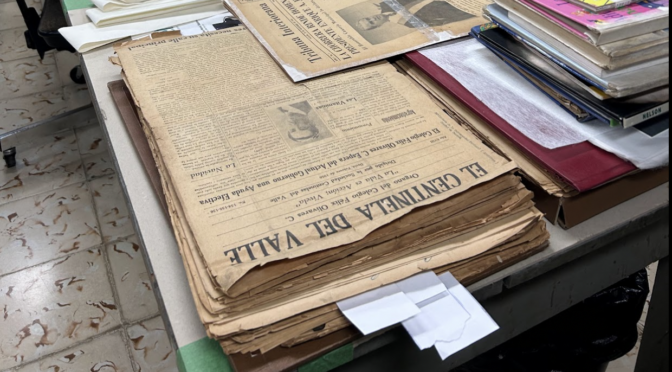
The Pull of History
By Francisco Alvarado-Quiroz, Graduate student at the UT LBJ School of Public Affairs
I knew very little about Panama before arriving in early June. From what I remembered from classrooms and books, there was a canal the French started, and the Americans finished. Carter gave it back. The United States invaded in 1989, and now the capital city is awash with investment money building a skyline akin to Miami or Hong Kong. There is, of course, a lot more to the story. And in my four weeks here the team at IDEA has shown us Panama’s long effort to form a durable democratic government, and the United States’ involvement.
Continue reading The Pull of History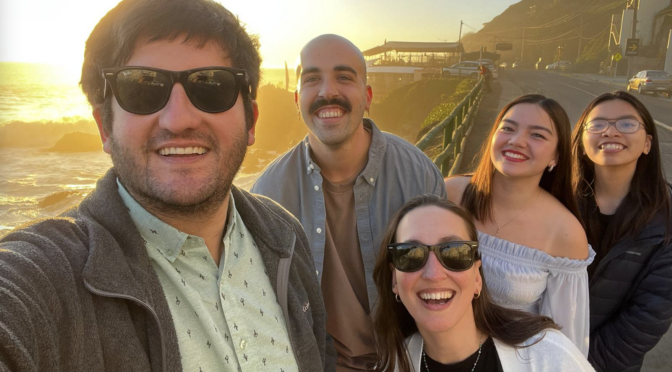
A Unique Adventure
By Guillermo Perez, PhD student in the UT Government Department
Throughout my life, I have had the privilege of living in many places, including Spain, Mexico, and the United States. I have remembered and missed my country of birth, Chile, in each of these places. However, this was the first time in recent years when I had the chance to mix the world of Chile with that of the country where I live. This internship allowed me to combine my North American world with my Chilean world, and it was a truly extraordinary experience.
Continue reading A Unique Adventure
Foreign Policy by Day, Culture by Night
By Frances Parra, Undergraduate student at the UT McCombs School of Business
As an International Business student, I have eagerly awaited the chance to study and work abroad in a meaningful way. I realized that such work would take me out of my comfort zone and test my professional and language skills. It is with those feelings that I approached my position at International IDEA’s offices in Panama.
Continue reading Foreign Policy by Day, Culture by Night
New Threats to Democracy
By Tien Vo, Undergraduate student in the UT Government Department, Mathematics Department, and Polymathic Scholars Honors Program
When I arrived in Santiago, Chile early this summer, I was a little nervous and very excited about what was awaiting me in a new city, a new country. Through my four years at UT, I explored a wide range of topics in politics, ranging from the productive political conversations taking place on social media platforms to affective polarization. And this research has always been U.S.-focused. But I had never thought about participating in an internship about constitutional reforms in a different country. Yet there I was applying for an internship on democratic assistance programs in Latin America, working with International IDEA.
Continue reading New Threats to Democracy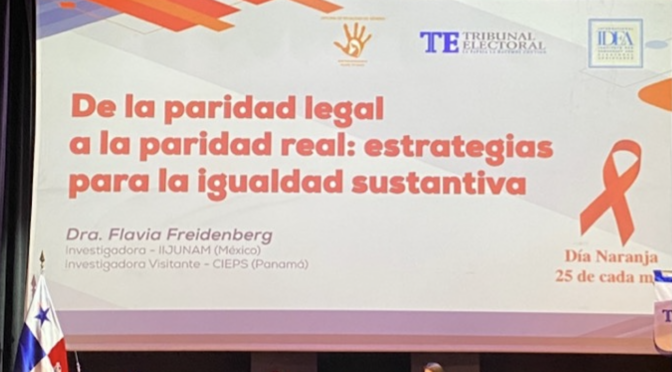
Women’s Political Participation in Panama
By Alexys Aquino, Undergraduate student in the UT Government Department, International Relations and Global Studies Department, and Spanish and Portuguese Department
I’m happy to report that humidity is universal, although sometimes it seems Texas has a monopoly on it! Along with the humidity, Panama has no shortage of lush greenery, kind strangers, and strong coffee. I had never been to Central America before this internship with International IDEA and UT Austin, so I wasn’t sure what to expect. Now that I’ve been in Panama for over a month, I’ve started to get the hang of it all, from using the metro to navigating the temperamental elevators at the Electoral Tribunal. Despite all that I have learned, I’ve found that working in a multinational environment on topics as important as gender parity in Panamanian politics teaches you something new constantly.
Continue reading Women’s Political Participation in Panama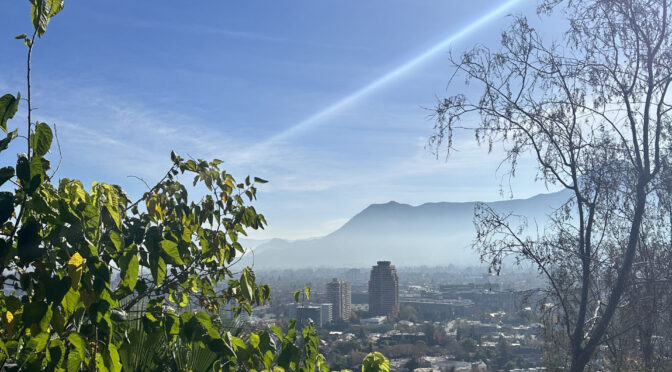
Chile Surrealista
By Alejandra Jimenez, Undergraduate student in the UT Government Department
Surrealism refers to a form of visual art that produces incongruous imagery by means of irrational juxtapositions. Some argue that surrealism revolutionizes the human experience, as magic and beauty can be found in the unexpected and uncanny. In a similar way, my time in Chile has been just that—pleasantly unexpected.
Continue reading Chile Surrealista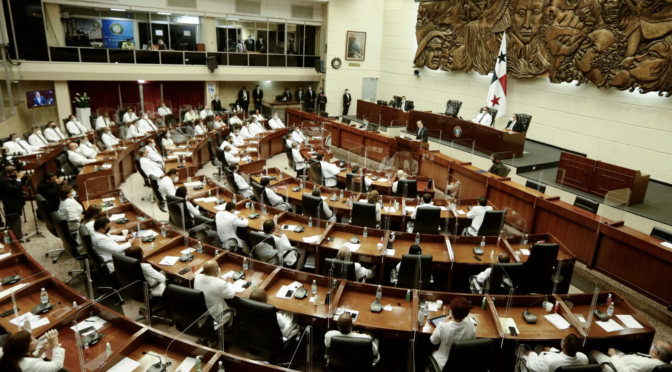
Constitutional Performance in Panama
By Matt Martin, PhD student in the UT Government Department
The time I’ve spent in Panama has been nothing short of a privilege. To work alongside International IDEA and have a peek into the world of democratic and electoral assistance was invaluable, both on a professional and personal level. Most of my time was spent at the Tribunal Electoral (“Electoral Tribunal,” or TE), where International IDEA-Panama is located. The TE houses not only the country’s civil registry, national ID directorate, and specialized electoral body but also the Instituto de Estudios Democráticos (“Institute of Democratic Studies,” or INED). I worked alongside the director of INED, Salvador Sánchez, and several other researchers on his talented team. Their kindheartedness made me feel more than welcome as an intern.
Continue reading Constitutional Performance in Panama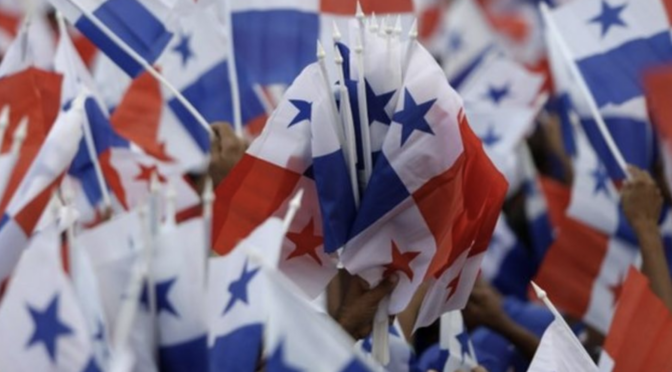
First-Ever Symbolic Youth Voting Campaign in Panama
By Kaitlin Passafiume, PhD candidate in the UT Spanish and Portuguese Department
As I wrap up the initial month of working with International IDEA at the Electoral Tribunal in Panama, I reflect on the diverse experiences that I have enjoyed in a short period of time. My completion of this internship signals an ability to successfully pivot from an academic background, using my critical humanities formation for public-facing work going forward. I remain convinced that cultural considerations have their place in governmental and extra-governmental projects, and I am heartened to find that the public arena in Panama considers and even encourages diverse perspectives.
Continue reading First-Ever Symbolic Youth Voting Campaign in Panama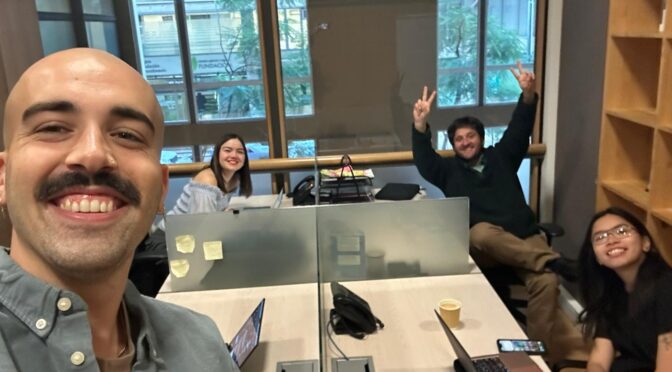
Fellows Team Grows in Chile!
Four graduate and undergraduate UT students are conducting their Summer 2023 work in Chile at the International Institute for Democracy and Electoral Assistance (International IDEA).
Alejandra Jimenez, Guillermo Pérez, and Tien Vo started their work at the IDEA Chile Office on June 1, and they’re joined this week by Matt Martin, fresh in from IDEA’s Panama Office. The fellows are supporting a range of legal and constitutional reform projects in Chile, with Chile’s current constitutional reform process underway.
Continue reading Fellows Team Grows in Chile!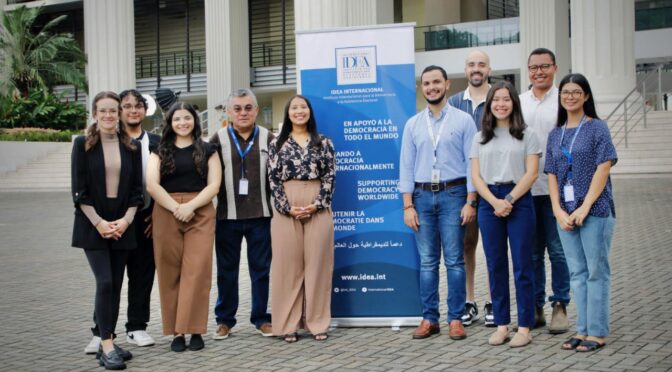
Fellows Arrive in Panama!
Six graduate and undergraduate UT students started their Summer 2023 work today in Panama at the International Institute for Democracy and Electoral Assistance (International IDEA).
Francisco Alvarado-Quiroz, Alexys Aquino, Matt Martin, and Kaitlin Passafiume are working at the IDEA Panama Office, supporting a range of democracy assistance projects including evaluations of the constitution’s performance, women’s participation in elections, and the first-ever Panamanian youth voting campaign.
Continue reading Fellows Arrive in Panama!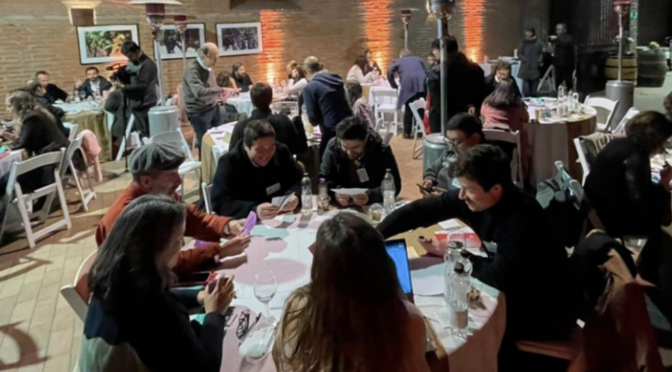
2023 Fellows Develop New Public Consultation
The 2023 Embedded Scholars have been preparing for their summer work abroad through a new government course created for the program — Research in Democratic and Constitutional Development — taught by Ashley Moran. The course delves into issues in democratization, constitutional design, and democracy assistance, engaging students in research in these areas. This semester, the students worked with Professor Moran and the Comparative Constitutions Project to design a new deliberative consultation framework to research public views on constitutional issues.
Continue reading 2023 Fellows Develop New Public Consultation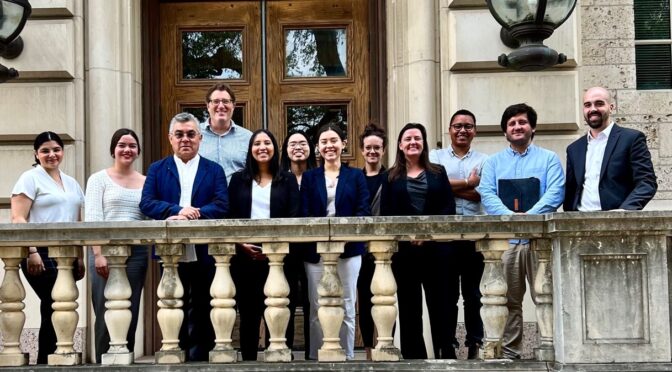
UT, IDEA, and CCP Partner to Engage Students in Democracy Aid
This story originally appeared on the UT College of Liberal Arts website. A version of this story also appeared later on the UT Texas Global website.
Students from The University of Texas at Austin will spend the summer in Central and South America working on democracy and election assistance through a new partnership between UT’s Department of Government and the International Institute for Democracy and Electoral Assistance (International IDEA).
Continue reading UT, IDEA, and CCP Partner to Engage Students in Democracy Aid
UT GOV Hosts Partners from International IDEA
This story originally appeared on the UT Government Department website.
The UT Government Department hosted partners from the International Institute for Democracy and Electoral Assistance (International IDEA), kicking off a new collaboration that will send UT graduate and undergraduate students to work with IDEA on democracy and election assistance in the field.
Continue reading UT GOV Hosts Partners from International IDEA