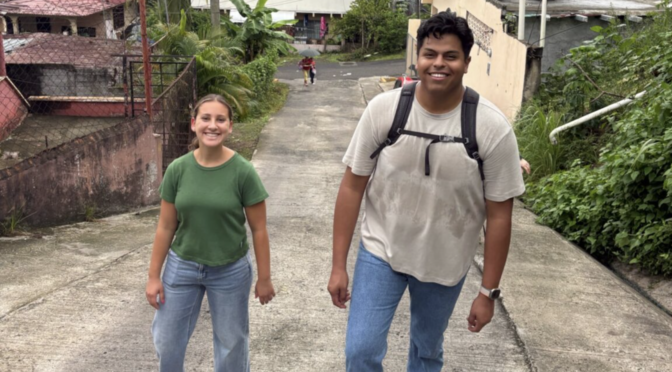
By Juan Romero, Undergraduate student in the UT Government Department and Philosophy Department
One of my first observations on this adventure was that Panama City’s metro system does not cover the whole metropolitan area — something I initially saw as inconvenient. However, Panama’s metro reaches further into the periphery than any system I had seen before. Interestingly, these are not the corridors only for the upscale Bella Vista or the banking quarter; these are the places where daily commuters wake before sunrise, hauling produce onto buses and up and down escalators. I hadn’t expected this observation to become as significant over the next two months as it did. Every bit we learned helped form an understanding of how the system was built and what it is: a materialization of the very democratic values we were here to study.
I arrived in Panama City in late May with eight other UT students through the Embedded Scholars Program. The opportunity placed us at CID Gallup, the largest public opinion research firm in Latin America. Our work, broadly, was to learn and contribute to the machinery that produces the data Latin American governments, international organizations, and private entities rely on when they make decisions about the lives of millions.
The first weeks were humbling in a way I hadn’t anticipated. We spent days reviewing and copyediting national survey reports, tracing the full lifecycle of a study: from the moment a project is commissioned, through the design of the instrument, the training of encuestadores (surveyors), the deployment of field teams in call centers and on the ground, and in our case, the interns tasked with evaluating the study’s conclusions prior to delivery. However, the humbling part comes at my realization that being Hispanic, and even knowing Spanish reasonably well, does not prepare you for the experience of reading a seventy-page confidential report on public opinion in Honduras or Costa Rica.
But the lessons were far from limited to the practical knowledge of everyday life in the office, or the methods by which research is achieved. Even in those initial reports, certain patterns surfaced. Trust in institutions was uneven. Generational divides were sharp. And across countries with very different political histories, there was a recurring appetite, sometimes desperate, for reform.
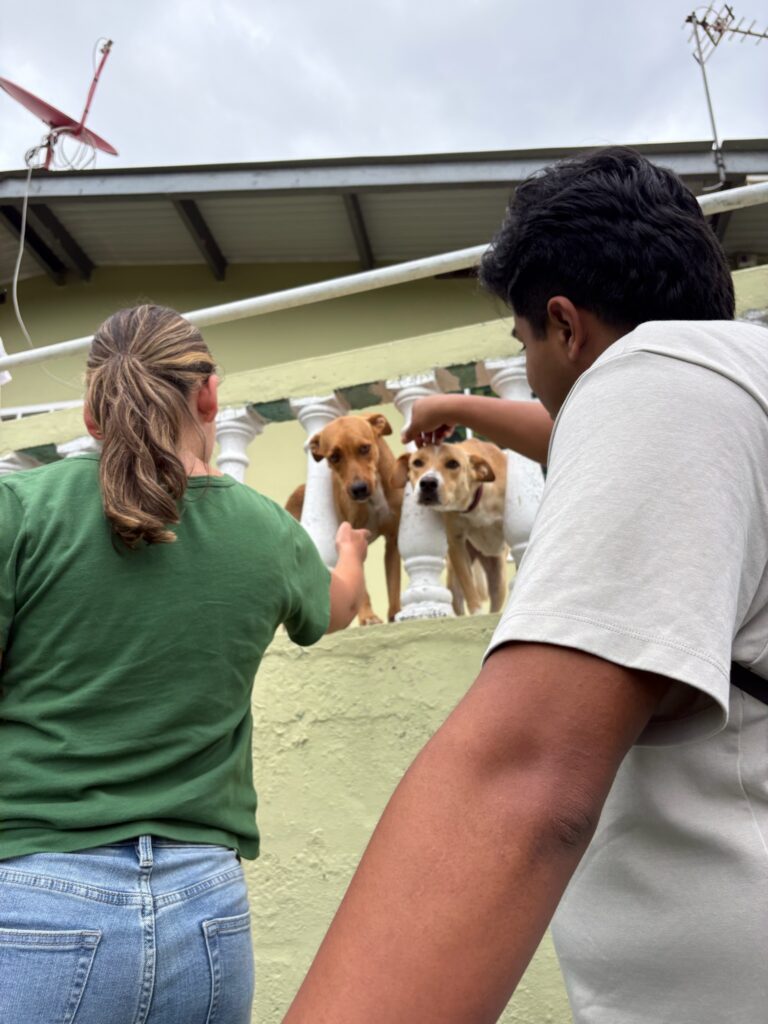
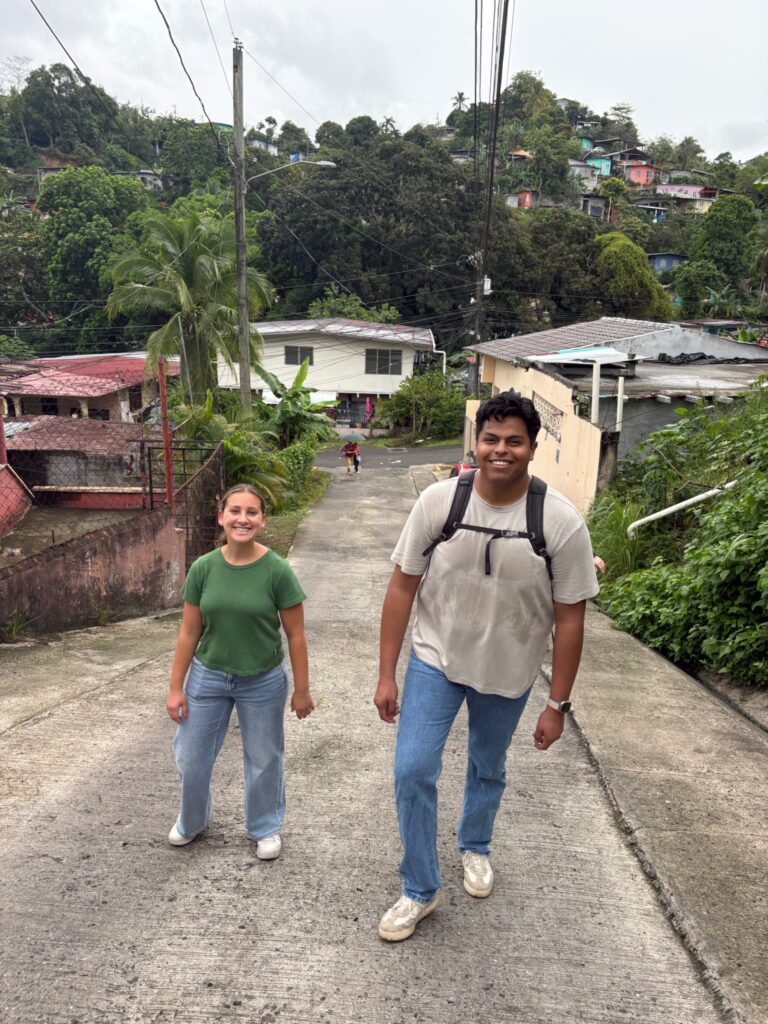
This became all the more clear in our third week. The team was given the opportunity to shadow CID Gallup’s field interviewers as they administered surveys for the Gallup World Poll across Panama. Fellow Embedded Scholars Josie and Bela, our interviewer Jacqueline, and I would approach a stranger’s door and open with a very loud “BUENAAAASS.” If someone came out, she would introduce herself with a certain patience and warmth, and then, amid ringing phones, crying babies, and a distant television, she would carry the interview to completion.
The most memorable part of that entire experience, however, was the survey administered to the last respondent on that particular day. An older man on the outskirts of the city who had recently had a heart attack. Understandably, he was the most skeptical person we approached — it took Jacqueline the better part of ten minutes to convince him to sit down with us; the World Cup was on the television in the corner of his living room, so I joked that if we opened the windows and curtains, we’d still be able to catch the game, and I think that made him feel a little at ease. Once he agreed, every answer he gave circled back to the same place. He was out of work, and although he was beyond retirement age, he didn’t qualify for a pension. He had worked his entire life, watched his savings drain towards something out of his control, and now, in what should have been his years of rest, he was preparing to go back to work. His disillusionment with the trajectory of his country was total, but what struck me most was not the severity of his case but how un-extraordinary it turned out to be. Panama is, by regional standards, a relatively wealthy country; but the sentiment that man expressed, I would encounter again and again in the data on our desks, in the fieldwork that followed, and eventually in the findings of a study my team designed ourselves.
Two weeks after the World Poll shadowing, several of us were deployed on a door-to-door study concerning the Panama Canal. This time, we administered the questions ourselves, recording the answers, standing on doorsteps in neighborhoods across the city and asking strangers to tell us what they thought. In doing this, you learn, very quickly, that how you greet them, the way you hold the device, how you stand — all of it shapes what you hear. Something we grew accustomed to hearing at the office was that a question is not neutral, it’s an instrument; and the way you ask it determines what you are able to learn.
Between the World Poll and the Canal study, and running in parallel with both, my research group was building something larger. Our project focused on demographic aging and pension systems across Latin America, and the scope of it grew beyond anything I had imagined an undergraduate team would be trusted with. We began with a literature review that stretched across six countries, conducted a profound analysis of macro-data sets, and reached out to professors at UT for guidance. And then, remarkably, CID Gallup gave us a chance that almost no undergraduate research team expects: they piloted a version of our study in Costa Rica, deploying questions we had written ourselves, and returned the answers to us for analysis. The experience of watching a question you drafted in a Google Doc come back as a response from a real Costa Rican citizen is difficult to describe. It teaches you that behind every number in every report you will ever read, there was a person who thought it worthwhile to know, one who opened a door, and another person who asked.
What we found was a consistency that grew concerning. There is a willingness to change across Latin America, a political appetite, embedded within the broader population, for reform — for pensions that function, for institutions that deliver, for governments that treat a lifetime of labor as something worthy of dignity in old age. That appetite, in itself, is a sign of democratic health; citizens who demand better of their institutions are citizens participating in the process. But appetite for reform, unmet, does not stay patient forever. And in a region that is, according to the demographic data, on track to become one of the oldest in the world over the next fifty years — before it has grown wealthy enough to absorb the cost, envejecer antes de enriquecer — unmet appetite becomes something else entirely. It becomes the conditions under which a population accepts President Nayib Bukele’s permanent state of exception in El Salvador, or trusts President Javier Milei’s chainsaw economics in Argentina, or watches President Daniel Ortega dismantle an opposition and imprison its leaders in Nicaragua.
It’s easy, from the vantage of an American undergraduate — fully aware that I’m implicating myself — to treat democracy as a background condition. We spend our public energy arguing about the price of eggs as though it were a moral crisis, debating which restroom a person should use as though the republic depended on it, evaluating politicians by whether they’re vegan. I won’t say these conversations are meaningless, though I’m not, not saying it. But they are conversations that presuppose a political floor stable enough to hold them. They presuppose that the institutions that allow us the comfort to fixate on these will be there tomorrow. But in many of the countries whose data I read this summer, that presumption is unavailable. The arguments those populations are having are of an entirely different order.
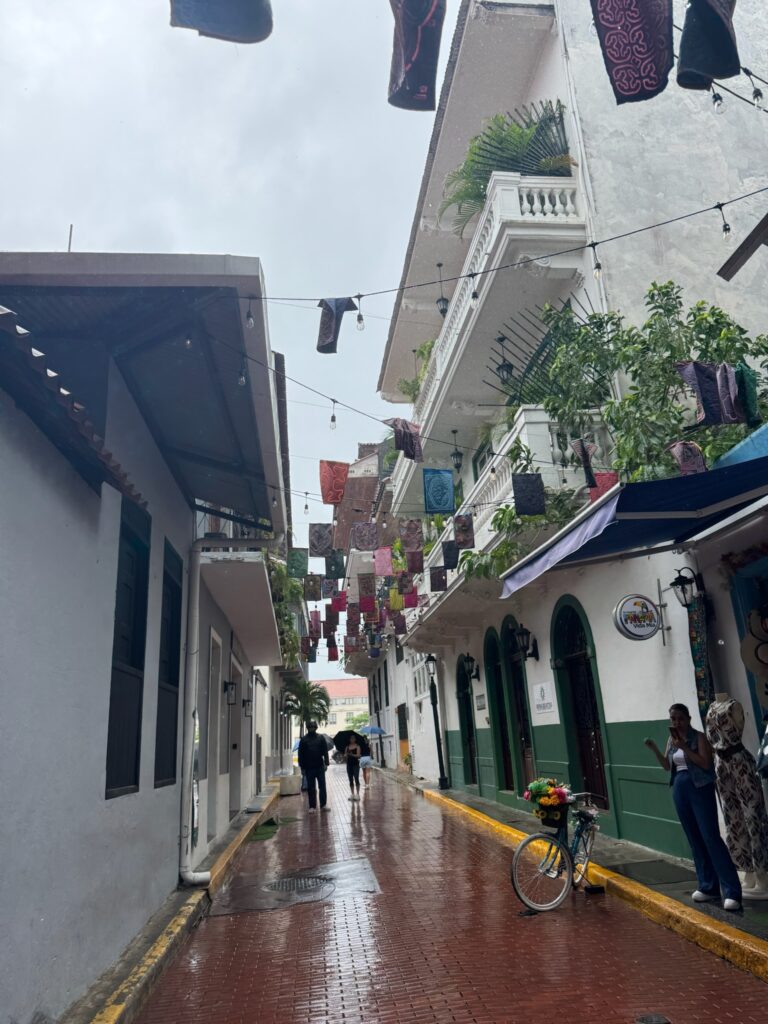
And what I expected least to find, but what I believe matters most: democracy is present in a metro timetable. It’s in the decision to extend Line 2 past the banking district and into Nuevo Tocumen. It’s in the ports, in the roads, in the marketing campaigns the government commissions to explain its initiatives. It’s in every study CID Gallup conducts and every report a ministry reads before deciding where to build, whom to serve, how to allocate. I had never stopped to think about it profoundly before this summer, as I suspect most people, and justifiably so, have not.
I came to Panama expecting to learn the mechanics of survey research: how a question is phrased, how a sample is drawn, how a finding is validated, how a report is written and distributed. And I did learn all of those things, more deeply than I could have hoped. But the piece that won’t leave me alone — is what those methods reveal. They reveal the man on the outskirts who worked his whole life and yet, as I write this, is preparing to work until he dies. They reveal that the numbers we cite in papers and policy briefs are answers that come from real people.
However inconvenient it was for this 23 year old American that the metro in Panama City goes to the outskirts, I’m proud that it does. That decision to extend a rigid system of public transportation beyond the norms allows that old man to conveniently seek medical attention and expand his employment opportunities. And it’s people like him that allow us into their homes, that also allow us to understand a society better.
That’s where the numbers come from. And it’s worth understanding — it’s worth going there, if you can — to see what those numbers look like before they become statistics, while they’re still people sitting in living rooms, answering questions from strangers, hoping that someone, somewhere, will read the report and decide that the metro should come to them.