By Josie Mandrea, Undergraduate student in the UT School of Civic Leadership
I started work at CID Gallup in Panama City right at the beginning of June. Their office sits on the 18th floor of a massive building right in the center of the city. On day one, the staff welcomed us with a wonderful orientation where they explained the value of public opinion research and survey design. In the first few days, we acclimated to the office, getting to know the other employees and the beloved office cats, Simba and Estrellita.
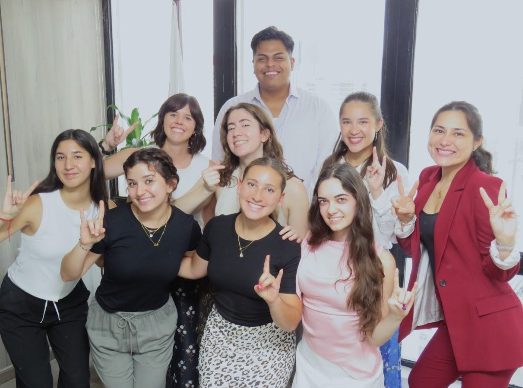
The group of Embedded Scholars and I were split into two separate research groups. My group’s job was to research the Panamanian retirement system to better understand its shortcomings and to put together a methodology geared towards finding actionable solutions. We learned Panama was in the midst of reforming its retirement system after falling into a major deficit in 2025, with the goal of moving from a completely public pension system into a mixed system that would incorporate both public pensions and private savings. However, issues regarding the retirement system go well beyond the institutional design.
We discovered that the three main challenges affecting retirement in Panama are primarily demographic and employment-related. Firstly, people are living longer while the birth rate continues to decrease. As a result, there are not enough young workers to support the growing number of retirees. Second, many young people find themselves having to put their money towards caring for their parents or grandparents who do not have savings. This creates poverty cycles within families as money goes toward immediate care rather than long-term savings through the pension system. Lastly, the informal work sector in Panama is quite large, housing nearly half of Panamanian workers.
Upon further research, we learned that these three issues are causing problems all across Latin America and the Caribbean. We compiled our research into a slide deck and presented it to the director of CID Gallup Panama, Señora Ana Patricia. It was a bit intimidating but overall a very rewarding experience. Señora Ana told my group that the next step was to come up with a list of questions related to our research that could be used in actual encuestas (surveys) about the different factors affecting retirement. After some brainstorming and editing, the questions we came up with are now being used in a retirement survey being conducted in Costa Rica!
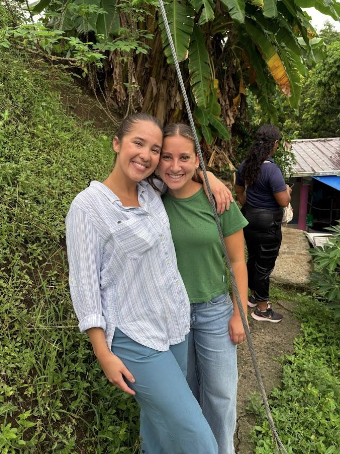
In addition to research, we have also spent time doing encuestas of our own in different neighborhoods and editing completed reports. Going into el campo (the field) to conduct interviews is difficult work but it is absolutely vital. Many Gallup employees spend all day everyday walking through neighborhoods in heat, humidity, and rain, knocking on doors or calling “Buenas!” to see if someone is home and willing to give some of their time for an encuesta. Surprisingly, many people agree to give 15 to 45 minutes of their time to these encuestas for no reason other than pure curiosity and wanting to have a bit more of a voice regarding their country’s direction.
Observing and conducting these interviews has been incredible. While the day can be exhausting, the work is what allows for completed reports and further analysis which direct policymakers in their decisions. It is the first, most necessary step towards action, and getting to be a small part of that effort has been an immense privilege.
Editing completed reports was a real group effort. Our nine-person cohort would sit in the conference room reading through every page of a completed report, pointing out potential grammatical errors, statistical inconsistencies, and design flaws. It was very technical, detail-oriented work, but I learned a lot about what the end product of research looks like. It was also amazing Spanish practice to read through 70 odd pages of work looking for any grammatical errors before publication.
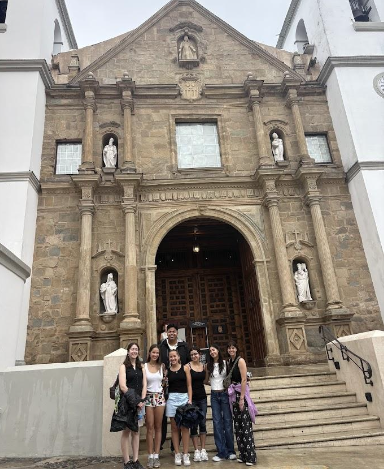
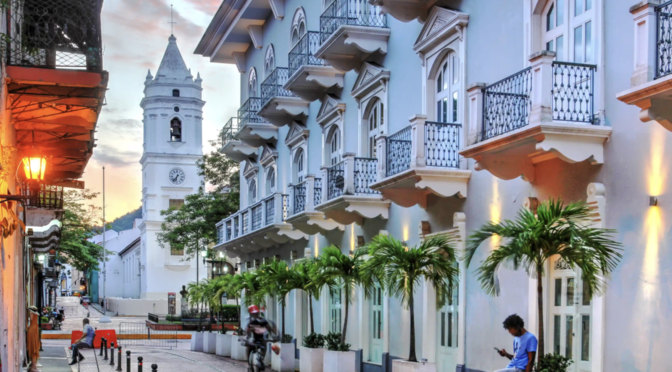
Beyond all of the work, I have had an awesome experience getting to explore Panama. The city itself has a ton to offer. One of my favorite parts is Casco Viejo, a sort of old downtown with amazing coffee shops, shopping, gelato, and restaurants. I love spending free afternoons trying the different coffee spots and looking for souvenirs or cute outfits. There are also great walking and biking tours that are based in Casco Viejo, which have been great ways to learn more about the history and architecture of the city. Fun fact: Casco Viejo’s architecture is a mix of Colombian, French, Spanish, and American styles!
The rest of the city also has a lot of activities. You can go for a walk on La Cinta Costera, visit the Panama Canal, or tour Panama Viejo! Additionally, I have been attending Shabbat at the Panama City Chabad every Friday night. It has been a great way to get to know the Jewish community here and have a sense of home even while I am away from family.
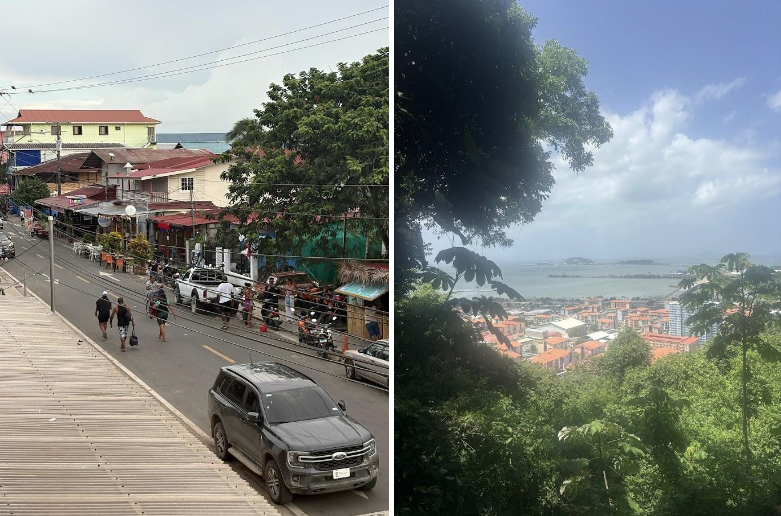
We have also done lots of activities outside of Panama City. Among others, we did a day trip to an island called Taboga, spent a weekend in Bocas del Toro, and travelled to San Blas. I got to try surfing for the first time (emphasis on try), swim in a sandbar surrounded by starfish, and learn about the different Indigenous communities that have history in each of these places.
I have loved all the adventures my group has been able to take. However, I have gained the most joy from the life and routine I have been able to build for myself alongside the rest of the Embedded Scholars cohort in Panama City. Lunches at Luna Cafe, group movie nights, and casual pasta making on Friday afternoons have turned our cohort into a family and I wouldn’t trade my experience with them for the world.
A big thank you to the Embedded Scholars program and CID Gallup for welcoming me with open arms. Getting to learn and then participate in the work that transforms research into meaningful change and applicable knowledge has given me a new appreciation for the world of easy access information in which we live. It is easy to glance at headlines or at glaring statistics without realizing where that information comes from and who it truly affects. As I finish my term working for CID Gallup, I will always keep in mind the incredible scope of work that is required for a single research study and the people who play a role in bringing those studies to fruition.