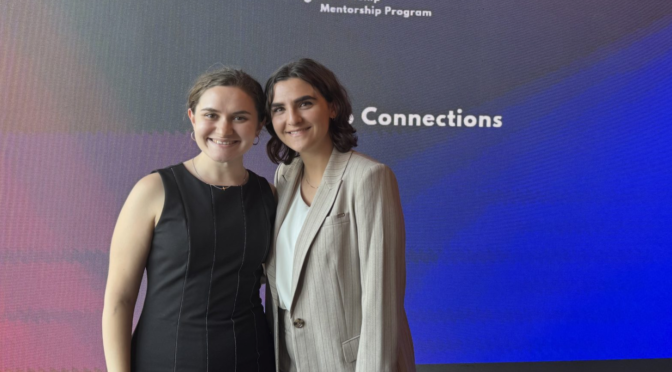
UT Government PhD student Angela Fraioli and LBJ School 2026 graduate Rendon Reinarz spent this summer in the Embedded Scholars Program, gaining experience in democracy building in Kosovo and Ukraine while garnering a deeper understanding of how conflicts shape political institutions and civic life during and after those conflicts.
Angela, who wrote about her experience on the Embedded Scholars’ blog, spent two months interning with NDI Kosovo in Pristina, where she contributed to the organization’s 2026 Election Report and worked on issues including women’s political participation, minority representation, and the effects of artificial intelligence on electoral disinformation. Her experience began just as Kosovo’s June 7 parliamentary election started, serving as an international election monitor in Pristina and surrounding municipalities on her first day of the job.
“Learning about the electoral system in such an interactive way made my second day in Kosovo incredibly special,” Fraioli wrote. “This initial experience set the tone for the rest of my time interning in Kosovo – unique, often spontaneous, and extremely rewarding.”
Fraioli also examined the barriers facing women from ethnic minority communities and the gendered effects of AI-driven misinformation. She attended an event examining LGBTQ+ representation in recent elections and participated in NDI Kosovo’s Women’s Leadership Mentorship Program, which connects younger women in politics with more experienced female leaders. The experience reinforced her academic interest in representation, identity and democratic norms.
Rendon Reinarz, on the other hand, interned for a region experiencing a current crisis. As an intern for NDI Ukraine, she was unable to live in Ukraine due to the war so was based in Kosovo while working remotely with colleagues supporting Ukrainian democratic institutions.
“War is a part of their daily lives,” Reinarz wrote of her Ukrainian colleagues. “Weekly meetings consist of missile updates and stories of sleepless nights huddled in shelters.”
Much of Reinarz’s work focused on developing a Training of Trainers program designed to help integrate Ukrainian veterans into political and civic life. She also contributed to research on Ukraine’s governance reforms as it pursues European Union accession, monitored political developments, worked on communications projects, and analyzed challenges facing the Ukrainian media environment.
Living in Kosovo added another dimension to her understanding of conflict and democratic resilience. Reinarz noted that, although the Kosovo War ended more than two decades ago, its effects remain visible. A conversation with a local taxi driver whose father was killed fighting for the Kosovo Liberation Army left a lasting impression. The driver told her, “The US is like my mother,” referencing the role the United States played in ending the conflict and supporting Kosovar independence.
“Coming from the United States,” writes Rendon in her blog post Reflections of War on Democracy in Ukraine and Kosovo, “I understand how truly privileged my life has been to be relatively untouched by war, and I have a newfound understanding for the ways that conflict leaves a lasting imprint on a country.”
Both fellows described their experiences as transformative, connecting classroom learning with the lived realities of people and institutions working to sustain democracy amid political division and the legacy of war.
“While my time has been split between two different cultures, both have taught me about conflict, resiliency, and the importance of democracy work,” Rendon reflected.
The Center for Law and Democracy’s Embedded Scholars program provides internships for graduate and undergraduate students from UT Austin to work in democratic and constitutional development abroad. Current opportunities allow students to work with CID Gallup and International IDEA in Latin America and with International IDEA, the National Democratic Institute, and Transparency International in Europe and Eurasia.
Applications for the 2027 summer cohort are open and will be accepted through October 15, 2026. To read more reflections from this year’s fellows interning in countries across Latin America and Europe, visit the Embedded Scholars blog.