
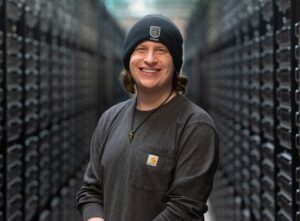
Clayton Hudson
Postdoctoral Fellow
clayton.hudson@austin.utexas.edu
Clayton Hudson is a postdoctoral fellow at UT Austin, currently working under Dr. Derek Haas and with Dr. Shayan Shahbazi on the Digital Twin project. His research is focused on the development of a closed molten salt loop for actinide irradiation using the UT TRIGA reactor at the Nuclear Engineering Teaching Lab. Clayton earned his B.S. in Radiation Physics from UT Austin in 2021, and earned his Ph.D. in Nuclear Engineering from UT Austin in 2025. His researched focused on using cryogenics to increase radioisotope production with UT’s TRIGA reactor.
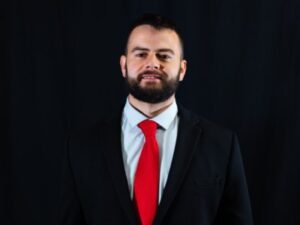
Branko Kovacevic
Postdoctoral Fellow
branko.kovacevic@austin.utexas.edu
Branko Kovacevic is a Postdoctoral Fellow at the University of Texas at Austin specializing in advanced nuclear reactor analysis, with research focused on molten salt reactors, molten salt irradiation loops, reactor neutronics, thermal-hydraulics, radiation detection, radionuclide transport, and multiphysics modeling. Prior to joining UT Austin, Dr. Kovacevic worked on developing nuclear reactor design optimization methodologies for identifying the global Pareto frontier of reactor design spaces.
Dr. Kovacevic earned a B.S. with Honors in Chemical Engineering from the United States Military Academy at West Point and a Ph.D. in Nuclear Engineering from The Pennsylvania State University in 2025. His doctoral research focused on radiation detection modeling and the development of machine learning–based nuclear safeguards methodologies for molten salt reactors.
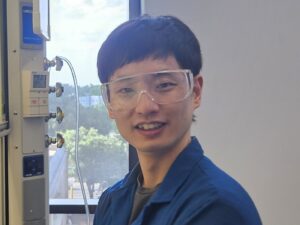
Jaeseong Lee
Postdoctoral Fellow
jaeseong.lee@austin.utexas.edu
Jaeseong Lee is a postdoctoral fellow at the University of Texas at Austin. His research focuses on predicting the properties of molten salt systems through atomistic-scale computations using ab initio methods and machine-learning-accelerated molecular dynamics simulations, as well as on integrating these atomistic predictions into the Molten Salt Thermal Properties Database (MSTDB) and developing machine learning models using the CALPHAD framework. He is currently working with Dr. Shahbazi as part of the Texas Nuclear Digital Twin Program. He earned a B.S. with honors in Chemical and Biological Engineering from Seoul National University and a Ph.D. in Chemical Engineering from the University of Texas at Austin. His doctoral research focused on investigating the feasibility of lanthanide separation using ionic liquids.
Zavier Ndum Ndum
Postdoctoral Fellow
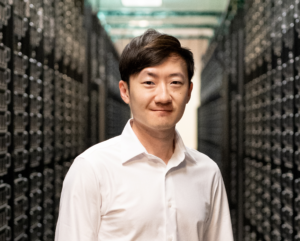
Sun Myung Park
Postdoctoral Fellow
sunmyung.park@austin.utexas.edu

Khiloni Shah
Postdoctoral Fellow
Khiloni.Shah@austin.utexas.edu
Khiloni Shah is a postdoctoral fellow at The University of Texas at Austin specializing in reactor experiment design and experiment validation for the digital twin. Khiloni earned her B.S. in Radiation Physics from UT Austin in 2020 and her PhD in Nuclear Engineering from UT Austin in 2025. Her research focused on fundamental nuclear data measurements, including neutron cross sections and fast fission product yields.
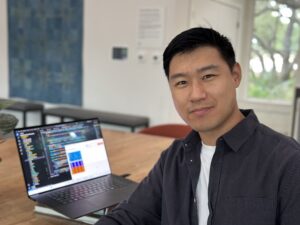
Jeongwon Seo
Affiliate Researcher
jeongwon.seo@austin.utexas.edu
Dr. Jeongwon Seo is an Affiliate Researcher in the Nuclear and Radiation Engineering program at UT Austin. His research spans both traditional nuclear engineering topics and advanced data-driven methods, with a particular focus on applying machine learning and digital twin technologies to reactor systems. He earned his M.S. in nuclear physics from Moscow in 2017 with a focus on micro-level radiation detection, followed by one year of hands-on experience in radiological monitoring in South Korea. Form 2019 to 2023, he completed his Ph.D. in Nuclear Engineering at Purdue University, where he worked on model validation, uncertainty quantification, sensitivity analysis, and criticality safety.
His current research interests include:
- Model calibration for reactor simulations
- Integration of digital twin technologies
- Machine learning and neural networks for nuclear systems
- Uncertainty sensitivity analysis in safety applications
- Improvement of traditional nuclear methodologies through data-driven tools