By Siddharth Dasari, Undergraduate student in the UT International Relations and Global Studies Department
I’m going where? That was my reaction this past January, when I found out that I had been placed with National Democratic Institute in North Macedonia through UT’s Embedded Scholars Program. Six months later, and I can confidently say that this has been the most rewarding experience of my life.
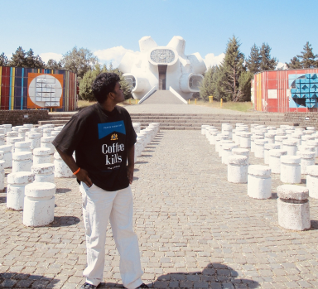
There’s so much to say, but there’s no better place to start than Kruševo. Our group had ventured to the small mountain town, situated approximately three hours from our base in the capital city of Skopje. While Kruševo may be small, we came to learn that its place in history is anything but. The town played a crucial role in the 1903 Illinden Uprising against the Ottoman Empire, where insurgents led by Nikola Karev established the short-lived Kruševo Republic. I was especially struck by the story of the Battle of Mečkin Kamen, where just 230 local fighters stood against the vastly larger Ottoman army. Although the battle was ultimately lost, I left Kruševo with a profound appreciation for the resilience that has shaped the Macedonian people.
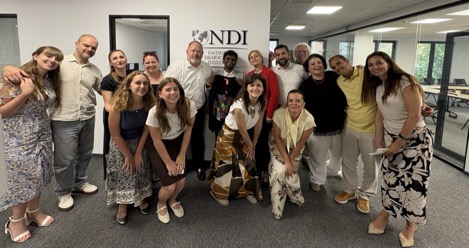
As the weeks passed, I realized that resilience was not simply part of North Macedonia’s history. It is very much a part of its present. I saw it every day at NDI, where I had the privilege of working alongside colleagues whose dedication to strengthening democratic institutions inspires me daily.
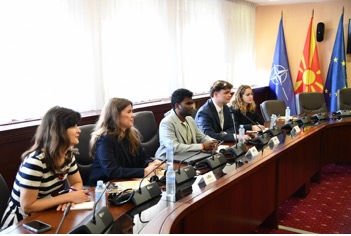
NDI works across a broad range of initiatives, from promoting good governance to strengthening government institutions and supporting local communities. I was assigned to the Integrity Driven Communities Project, which partners with municipalities to improve transparency, combat corruption, and strengthen citizen participation in local governance. I had the opportunity to collaborate on this project with fellow UT student and intern Rebekah Besserman.
As part of our work, we are currently researching North Macedonia’s Law on Youth Participation and Youth Policies, which stipulates that municipalities across the nation establish youth councils. While the law was intended to boost youth civic engagement, implementation has lagged, with many municipalities lacking the financial resources or political will to comply.
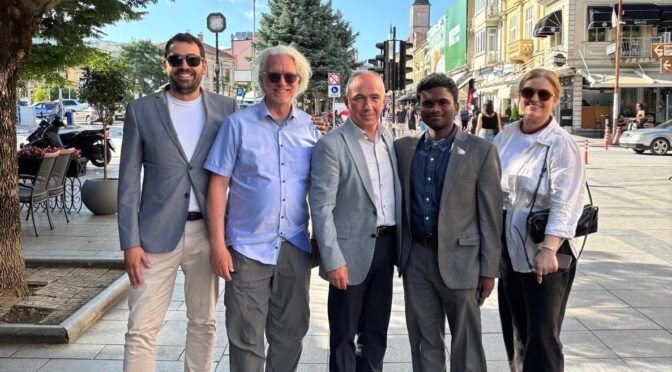
This is where NDI comes into the picture. In Bitola (a city in the southern part of the country near the Greek border), I had the chance to observe firsthand how the NDI team works with municipal governments. Our conversations underscored the entrenched corruption which affects nearly every facet of everyday life, from basic public services to public procurement. At the same time, I saw a mayor and a team committed to rooting out corruption, one step at a time.
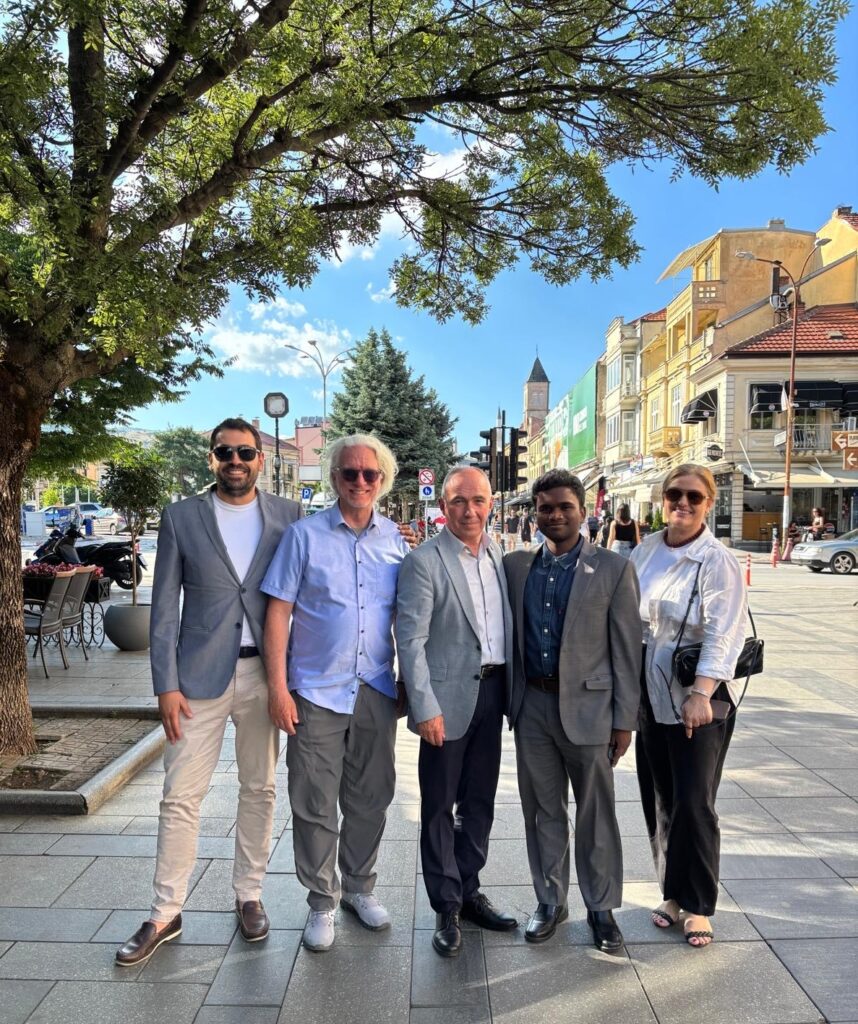
I also attended a presentation by NDI and MarketVision, a public opinion research firm, where survey findings helped city officials identify both their progress and the work that still lies ahead, particularly in infrastructure procurement and waste management. Over lunch with the mayor and the NDI team, I was reminded that behind every policy discussion is a simple purpose: improving people’s lives.
The insights that I gained from the visit were reinforced through conversations we had with NGOs across North Macedonia. At Metamorphosis, I saw how something as simple as a transparent and user-friendly government website can strengthen public trust. And at the Macedonian Center for International Cooperation (MCIC), I learned how educational exchange programs empower young people to become more informed and engaged citizens.
Perhaps my most informative meeting was with Professor Memet Memeti, who introduced me to a concept which I now nerd out about: participatory budgeting!
Participatory budgeting, or PB for short, gives residents a direct voice in deciding how a portion of public funds is spent. The idea rests on a simple principle: because taxpayers finance government, they should have an opportunity to help shape spending priorities. While I learned about participatory budgeting’s potential, the professor also explained its limitations. There is no binding law that mandates the practice, and there is little appetite amongst the political elite to involve citizens in decision-making. Furthermore, many municipalities face mounting public debt and persistent funding shortages. This is because political leaders often hesitate to raise taxes for fear of public backlash, while many citizens remain skeptical that additional revenue will be managed responsibly. As a result, many municipalities operate under tight budget constraints, leaving little funding available for citizens to allocate.
These experiences have shaped the direction of my research, which I hope will become a comparative policy analysis that NDI can use in its work. The report examines the challenges facing youth councils in North Macedonia while exploring recommendations, including participatory budgeting, drawn from case studies in Albania and Slovenia. We also hope to incorporate the perspectives of youth council members themselves, ensuring that our recommendations reflect the experiences of the communities they are intended to serve.
While the research has been deeply rewarding, the conversations I have had throughout this internship have been equally meaningful. Speaking with NDI staff gave me a deeper appreciation for North Macedonia’s long and often difficult path toward European Union membership, shaped by historical disputes with Greece and Bulgaria. In many conversations, I sensed the frustration of a country that often feels as though every step forward is encountered with new obstacles. Yet despite those challenges, my colleagues remain unwavering in their commitment to strengthening democratic institutions.
Of course, this internship was not all policy discussions.
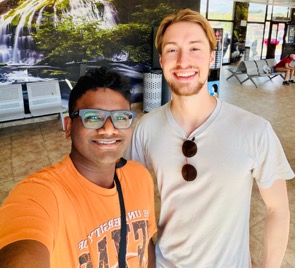
Coming from Texas, where a ten-hour drive can still leave you in the same state, one of the greatest joys of my summer has been exploring North Macedonia. In just three hours, you can reach almost anywhere in the country by bus. Beyond wandering through Skopje and revisiting Kruševo, I traveled to Kumanovo to reconnect with Augustine d’Eramo, a fellow Longhorn now serving as a Peace Corps volunteer. Longhorns really are everywhere!
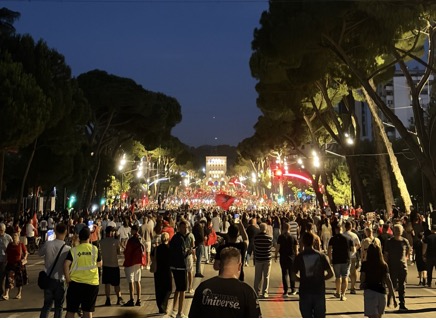
The Balkans also made international travel remarkably accessible, perfect for a geography geek like myself! One weekend I explored Albania, visiting the historic town of Krujë before unexpectedly finding myself in the middle of protests in Tirana. The following weekend, I traveled to Bulgaria to visit the breathtaking Rila Monastery, a UNESCO World Heritage Site that more than lived up to the hype. Throughout my travels, I’ve experienced the famous Balkan hospitality firsthand and lost track of the countless free coffees I’ve been offered.
This experience fundamentally reshaped the way I think about public service. Watching the people at NDI showed me that democracy is not sustained by sweeping reforms alone. It advances because ordinary people choose, day after day, to keep showing up. I arrived in North Macedonia eager to make an immediate impact. I leave with that same passion, but with a much deeper appreciation for how meaningful change actually happens. More often than not, progress is quiet, built through patience, trust, and countless small acts that rarely make headlines.
When I first learned I was coming to North Macedonia, my reaction was simple.
“I’m going where?”
Today, I cannot imagine a better place to have spent my summer.
I leave with far more than research experience. I leave with lifelong friendships and a deeper understanding of democracy. I now return home with a renewed sense of purpose and a stronger determination to make a difference in my own community. Most of all, I leave grateful. Grateful to Dr. Ashley Moran, the Embedded Scholars Program, the staff at NDI, and the people of North Macedonia, who welcomed me with extraordinary generosity and kindness.
Fala! (“Thank you” in Macedonian.) It is a word I learned to say often this summer, but one that has never meant more than it does now.