Women-led construction practices in the urban occupations of Brazil
By Elise Enthoven
Introduction
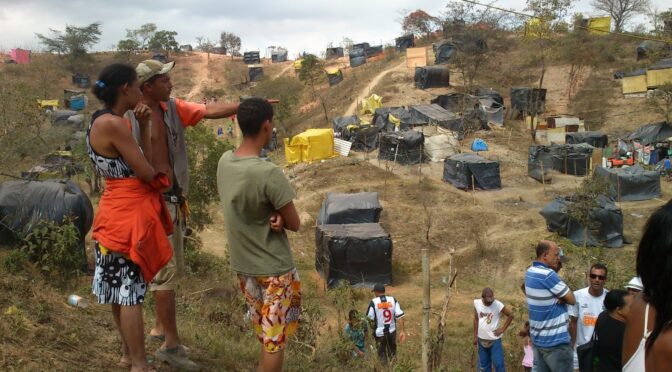
In recent decades, urban occupations have emerged as new terrains of livelihood and self-organization in Brazil. Established in response to the lack of urban infrastructure available for low-income populations, these occupations are characterized by an organized form of informal planning. Usually within a week of occupying the site, residents divide the land into plots, develop circulation routes, erect communal buildings such as kitchens, bathrooms, and daycare facilities, and organize strategic task groups for security, cooking, or negotiations. There are more than 25 housing occupations in the Metropolitan Region of Belo Horizonte (MRBH) alone. One of these is Rosa Leão in the region of Izadora, established in 2013 by approximately 1,000 families who occupied an urban latifundia. A pivotal development of Rosa Leão was the construction of a community center by a group of women consisting of students from the School of Architecture of the Federal University of Minas Gerais (UFMG), dwellers from occupations in MRBH and members of the social movement Brigadas Populares.
Analysis
In Latin America, intense urbanization since the mid-20th-century has exacerbated structural inequality and unequal access to education, health, transportation, and housing. Over the last decades, urban occupations have emerged in Brazil as forms of resistance, led by socially excluded families (Bizzotto et al., 2024), disrupting colonizing planning and architectural practices through alternative forms of urbanism (Farrés and Matarán, 2014).
The Rosa Leão occupation was established to address the neglect of people’s rights and the suffering of hundreds of families struggling to afford rent. In the hope of constructing their own homes, the community came together to occupy a large plot of land that had failed to fulfill its social function in the state capitol of Minas Gerais. The occupation was named after Rosa Leão, an important member of the Comissões do Movimento de Luta Pela Moradia (MLPM), who had fought to build housing, schools, public transportation, and health centers.
The construction of a community center played an important role for the organization. The men in the community had tried to start the project on several occasions, but for various reasons, failed to bring it to life. To provide women with the skills to lead projects on their own, a women-only self-construction workshop was held in 2017. Including students from the UFMG, residents of the occupations in the RMBH and members of the Brigadas Populares, the workshop performed a double role as women were taught (by another woman) how to construct the community center while fostering an exchange of knowledge between the residents and the architecture students.
Most of the occupation’s dwellers are Black women, who play a central role in the social mobilization of the community (de Moura Cruz and Alves da Silva, 2024). The organization of the self-construction workshop therefore highlights the intersection between coloniality and gender. Building on Patricia Hill Collins (2000) and Lélia Gonzalez (1984) Black feminist epistemologies illuminate urban space by centering lived experiences, storytelling, and collective memory as forms of knowledge production. Through the collective labor of building the community center, women exchanged practical and embodied knowledge which turned the site into a space of decolonial pedagogy and Black feminist planning.
The spatial conflicts in Izidora are shaped by the intersectionality of race, gender, and class (Silva, 2021). Through this lens, the occupation can be seen as a part of Black geography (McKittrick, 2006): a geography of resistance that emerges from the margins of urban modernity and that challenges the whitening of space and erasure of Black presence. In this sense, the occupation embodies Black feminist urbanism, not only symbolically by naming it after Rosa Leão, but also materially, by the women reconstructing their neighborhoods while reclaiming the authority to define what urban life means to them.
Implications
On a deeper level, the women-led self-construction of the community center in Rosa Leão promotes a sort of epistemic justice. The women of the occupation who are stepping up and taking matters into their own hands are rethinking knowledge production in the Global South. They do this by making their stories and territories visible, using urban occupations as spaces for new forms of knowledge and thus representing a form of “subaltern urbanism” (Roy, 2011).
Subaltern urbanism “seeks to confer recognition on spaces of poverty and forms of popular agency that often remain invisible and neglected in the archives and annals of urban theory.” (Roy, 2011: 224). Following Roy, the urban occupations in Brazil are tools for collective change that serve to decentralize urban analysis. The co-construction of the community center creates an environment of political transformation (de Moura Cruz and Alves da Silva, 2024), demonstrating that subaltern are not simple objects of planning, but the subjects of world-making: planning has emerged bottom-up, through women who claimed tools, labor and design as their own.
The women-led self-construction workshop reflects only a fraction of the disruption of the relations between coloniality and gender represented by the urban occupations in Brazil (de Moura Cruz and Alves da Silva, 2024). However, the occupations can be regarded as sites of epistemic justice (Farrés and Matarán, 2014), constitutive of new modes of space production (Roy, 2011). The case therefore invites us to focus on gendered epistemologies of building, care, and survival, illustrating how planning is ongoing, collective, situated, and embedded in everyday life.
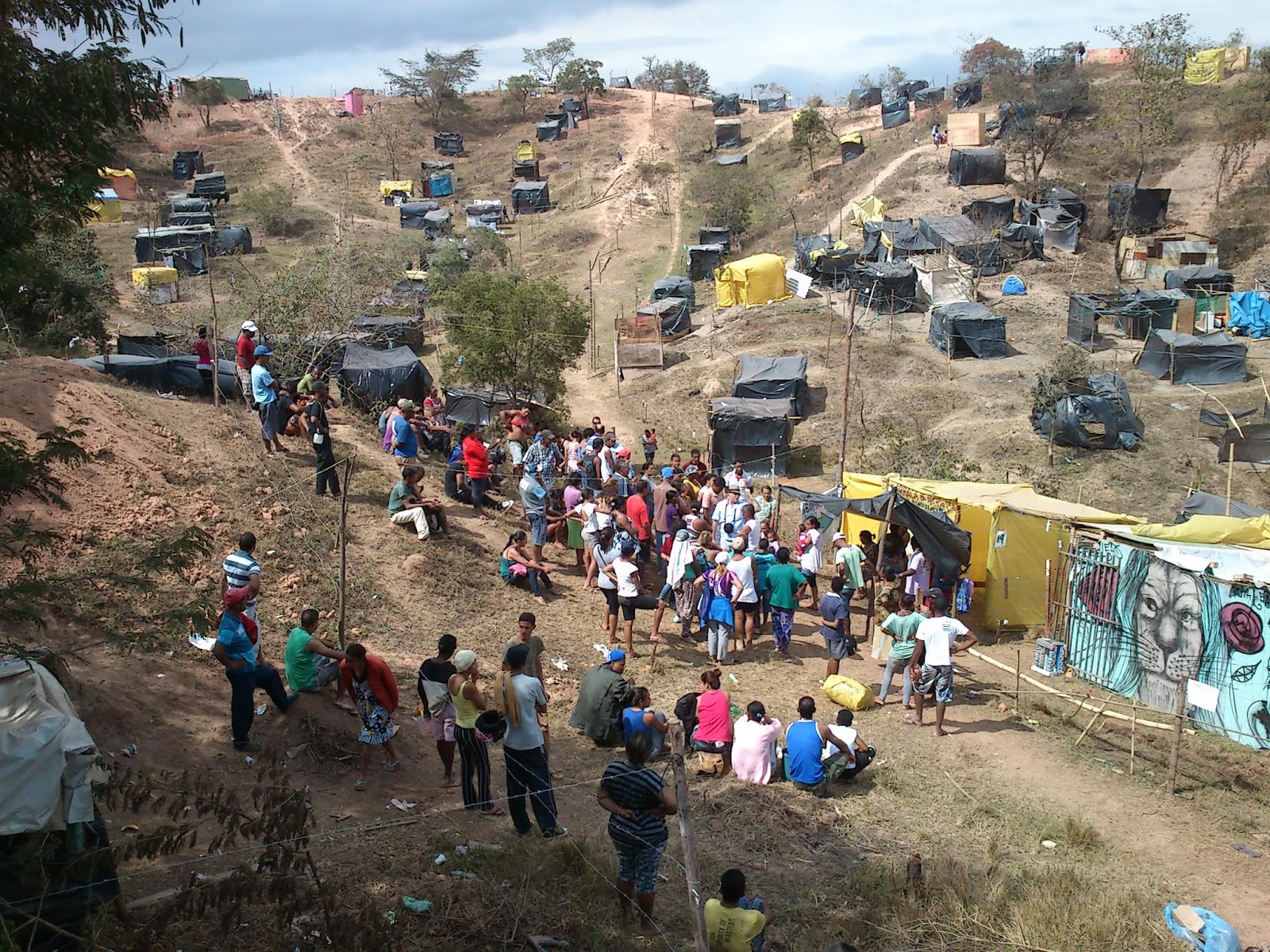
Source: Rosa Leão occupation on August 20, 2013. Photo credit: Friar Gilvander Moreira
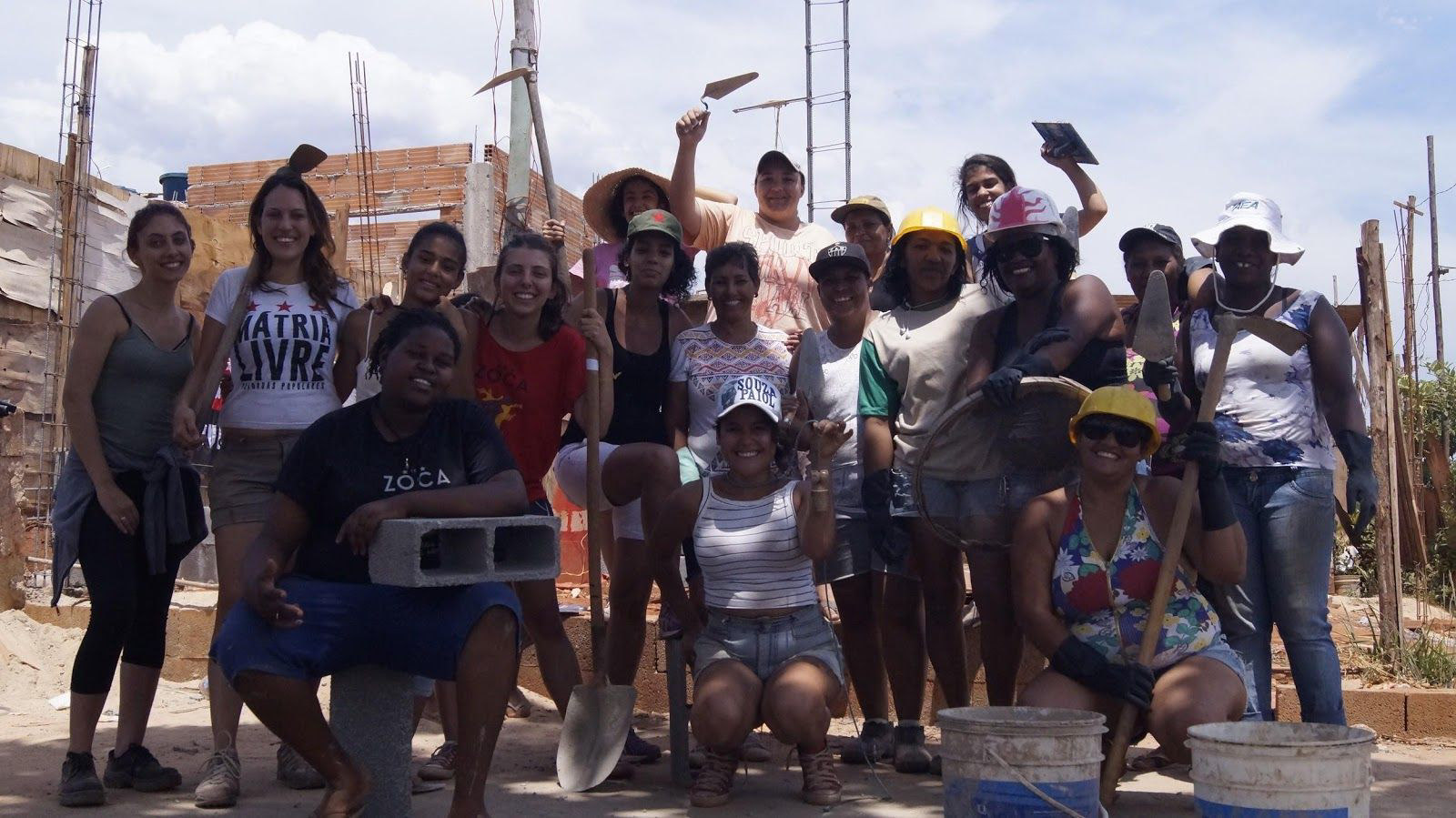
Women at the self-construction workshop, 2017. Photo credit: Carina Aparecida Santos
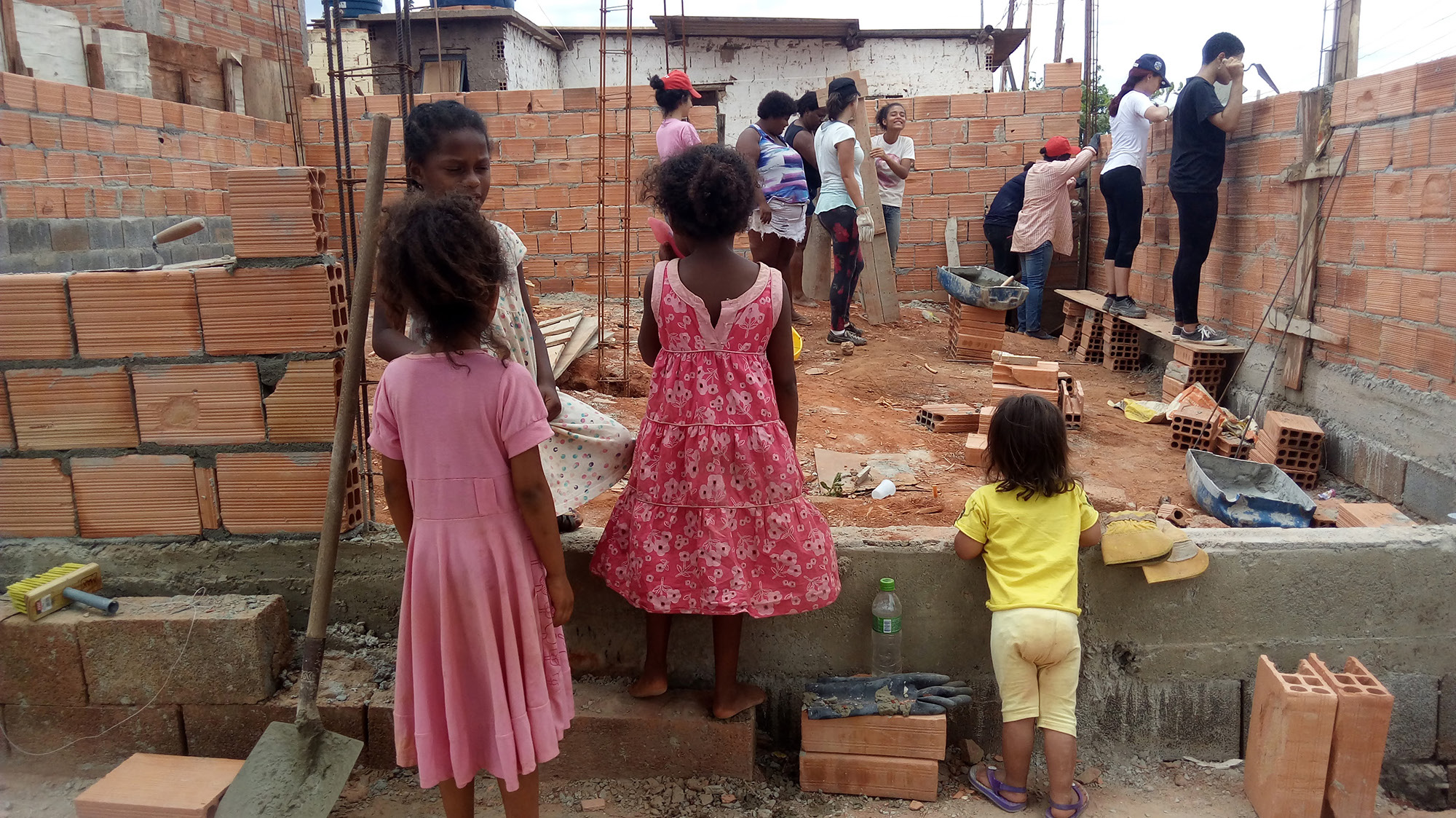
Construction workshop, 2017. Photo credit: Natália Alves da Silva