
By Veronica Martin, Graduate of the UT Government Department
My work at CID Gallup has been marked by a significant amount of creative autonomy, an abundance of meticulous political research, and an evolving adoration for democracy and national security. At once, we were split into two groups with the task of developing a research study on one of two topics: the aging Panamanian population or the “sandwich generation” of women caring for both children and aging parents. Given an impressive amount of autonomy with our studies, our group of four ventured out to crack open the pensions and retirement systems of Panama by analyzing demographic statistics, literature, and fiscal data. While the research was quite dense, I can now answer any question any skeptic may have about Panamanian retirement (when it comes up in normal everyday conversation, which is often).
At the same time, I was given sufficient freedom to pursue my own project as well. I endeavored to evaluate the way Panamanians balance political autonomy and the fight against the drug trade and cartel activity. That is, are Panamanians willing to accept U.S. aid for combatting contraband smuggling if it means a potential sacrifice of political autonomy? For weeks, I combed through press releases, parsed through federal drug confiscation data, and assessed timelines and policy changes to understand public sentiment and the true effects of U.S. involvement.
My favorite part was compiling a graph of drug confiscation data and plotting global legislative developments onto the line to map out what behavior was influenced by what policy. I also learned about the perpetual Whack-a-Mole of drug enforcement: when drug trafficking is plugged in one area, it will inevitably spring up in another. However, the best part came right as I began working on my project, when the United States loaned Panama what was essentially $6 million in massive contraband-detecting x-rays for the Panama Canal. Then, a few weeks later, they loaned Panama $5 million in cyber security infrastructure, meaning I was pretty much getting live updates on the research I was doing as I was doing it! All this to say, I became completely enraptured in studying political autonomy, drug trafficking, and technological aid over the course of the program. And to this day, I remain so.
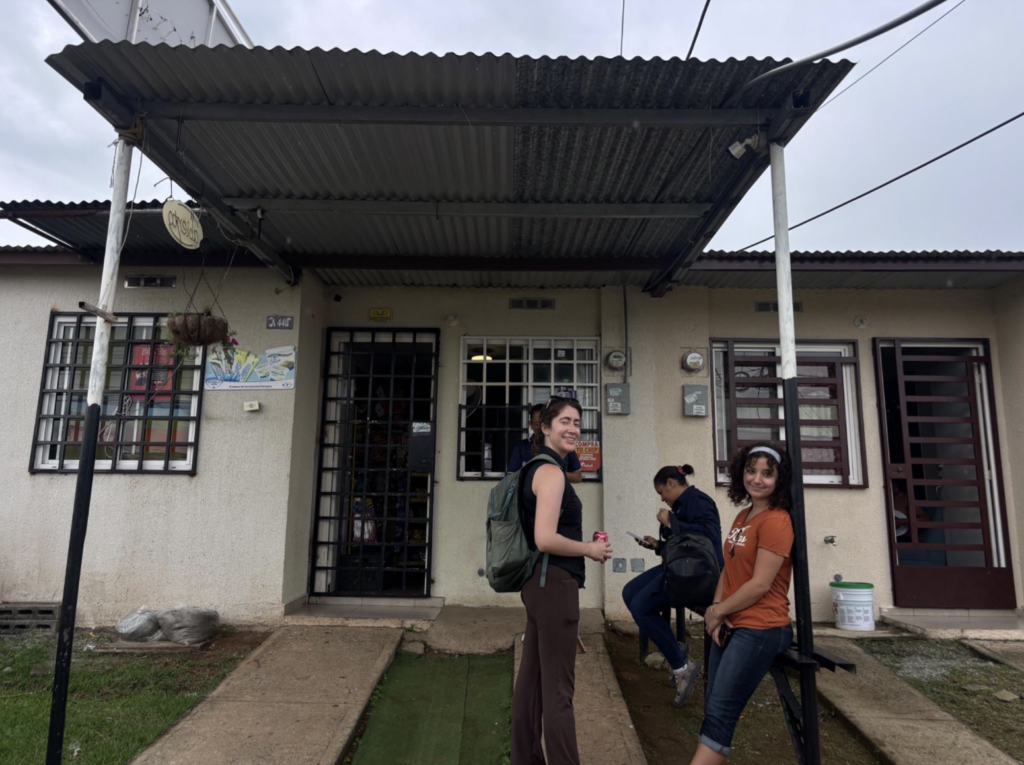
On a different day, other Embedded Scholars Hana, Darcy, and I sat at a bus station in a neighborhood an hour outside of the city. Rain poured down at a level only the rainforest could take credit for, and we had just completed our first day of survey research. Just twenty minutes earlier, the three of us had been watching vigilantly from a yard as the woman we were shadowing posed questions rapid-fire style to a lady leaning against the frame of her front door. That Thursday, I was inducted into the tedious world of on-the-ground survey research. Throughout the program, one thing that was consistently drilled into us was that the structure, nature, and configuration of questions make all the difference in how an interviewee responds. That is, questions’ order, style, and phrasing will significantly impact your findings every time. I got to see this first-hand out in el campo—the field.
Our mentor asked seemingly unrelated questions in direct succession, but I came to understand that, of course, there was a method to the madness. Coming into the program feeling indifferent towards public opinion data, I grew to love the process of creating, developing, and asking questions for a greater research purpose. I found myself getting excited to drive forward my research question with smaller inquiries, and I was only able to do so with the creative freedom given to me at CID Gallup.
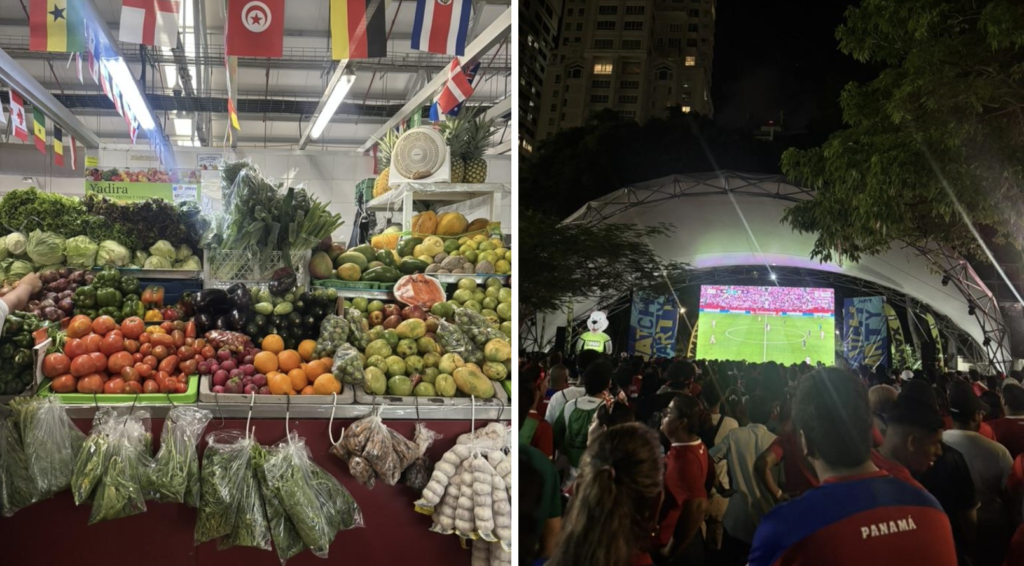
And of course, we had our fair share of out-of-office adventures. When we weren’t nose-deep in our projects, the group partook in various excursions within and out of the city. One of the first places on our bucket list in Panama was the San Felipe Neri fruit market, which boasts stalls upon stalls of fruits and vegetables sold by old ladies who will lure you into their booth by Sirenically calling you “princesa.” Once a week, Hana and I hauled our green totes to the market, where we stuffed our bags chock-full of oranges, leafy greens, and the like.
Most pleasantly, our time in Panama also coincided with the World Cup, meaning that for every Panama game we’d scour the city for someplace to watch. Once, an Uber driver recommended to us Parque Urraca; we trusted his wisdom and found ourselves inundated with a sea of red and blue jerseys and fans with blowhorns. Throughout the weeks, we’d put on games while we worked, occasionally peering above our laptop screens if Panamá or (in my case) Mexico scored.
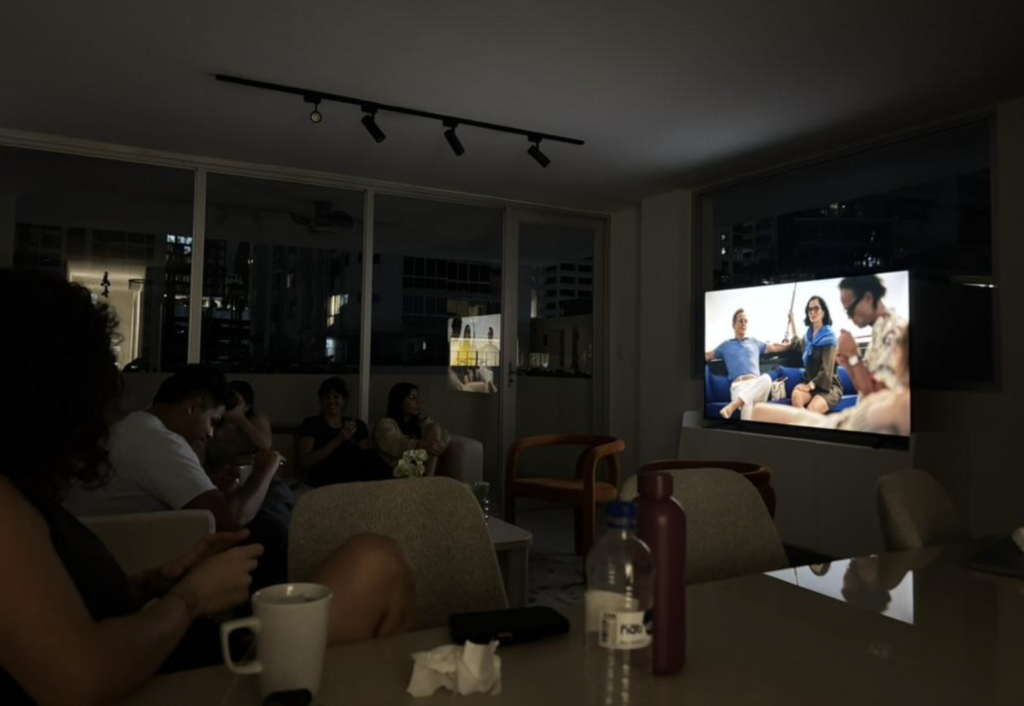
Since all of the fellows live together, we also indulge in binging White Lotus on the couch every evening. With four king-sized bags of Meneitos scattered around the coffee table, we watched the terrors of the series pan out in our living room. Developing our habits, sharing a thimble-sized fridge, and watching everyday life unfold on the streets below our apartment made the Panamá experience an unforgettable one that I was happy to share with this group of Embedded Scholars.
Of course, the projects undertaken during my time at CID Gallup were invaluable to my studies of democracy and national security. Researching the history of the US-Panama-China relationship allowed me to see Panama’s democracy as an eternal contingency. Plotting political happenings and counter-contraband activity required me to better observe the way Panamanian politics have been forged by external national security strategy and trading patterns, especially the United States’. I’m forever grateful for having been given the full reins and fuller support in pursuing a project that directly aligns with my career interests while still investigating the greater theme of democratic assistance.
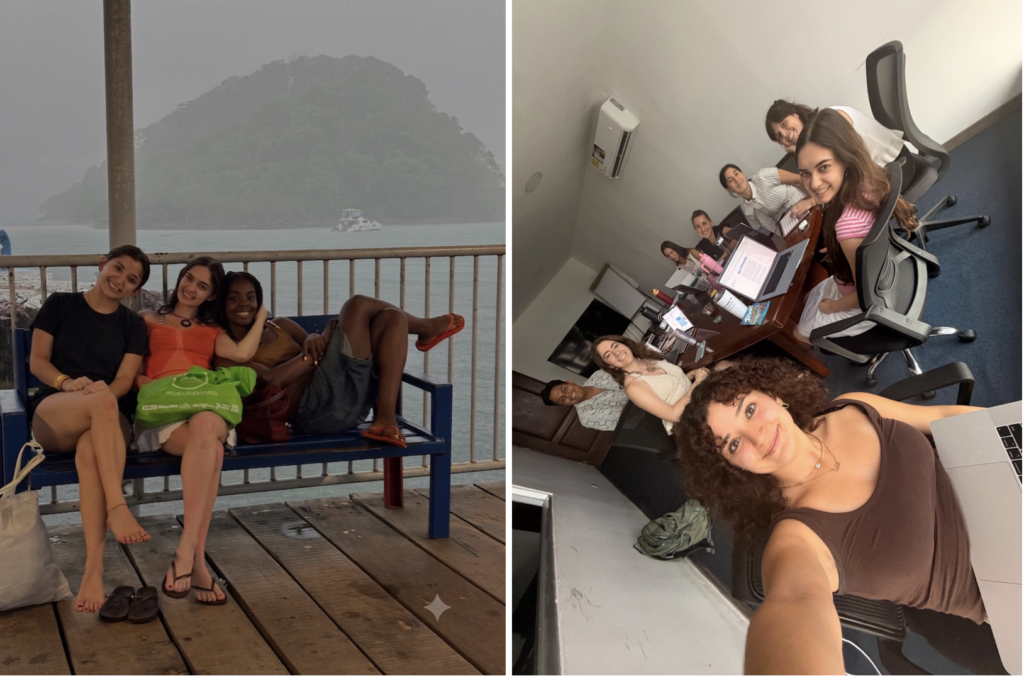
Though the relationship with democracy that I observed in Panama was complex, studying democracy is most important when it’s uncertain and unguaranteed. Not to mention, our cohort was supportive and infectiously intellectually curious, taking debates about our projects into the elevator, our kitchen, and wherever else we felt so inclined.
I’m forever indebted both to CID Gallup for their guidance and to the cohort for allowing me to bounce ideas off them, even when they were knee-deep in their own research. With no other group would I rather trudge through the humid Panama streets!