• Skip to primary navigation
  • Skip to main content
  • Skip to primary sidebar
UT Shield
The University of Texas at Austin
  • Research
  • People
  • Facilities
  • Publications
  • Our Github
  • Contact
  • Nuclear Robotics Group

    Our Group The Nuclear & Applied Robotics Group is an interdisciplinary research group whose goal is to develop and deploy remote systems in hazardous/challenging Read more 

    Nuclear Robotics Group

August 27, 2025, Filed Under: Top-Story

Research

Our Group

The Nuclear & Applied Robotics Group is an interdisciplinary research group whose goal is to develop and deploy remote systems in hazardous/challenging environments to minimize the risks undertaken by human personnel. ‘Interdisciplinary’ refers not just to the many facets of modern robotics (mechanical, electrical, controls, etc.) but developers also gather the necessary knowledge of the domains where they will be deployed (nuclear, energy, military, etc.).

Our Mission

We want to reduce the exposure of human operators to hazards while minimizing the overall costs (training, execution, time, and money) associated with the use of remote systems, and do so in a way that increases the number of engineering scientists in the world who can develop these systems at UT and beyond.

Our Vision

We aim to develop easy, hardware-agnostic interfaces that allow non-expert users to command mobile, ground, or aerial platforms, manipulators, and mobile manipulators with any level of autonomy and complete complex tasks in time periods comparable to a human.

December 2, 2025, Filed Under: Uncategorized

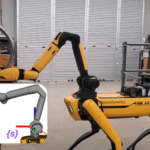
Affordance Templates for Complex DOE Robotics Tasks

A screw-based affordance template framework enables adaptive robotic execution of complex contact tasks (CCTs) in DOE decontamination and decommissioning (D&D) environments.

By modeling tasks with screw and wrench primitives, the approach supports real-time reconfiguration, force-adaptive control, and scalable task generalization. A Pre-Planner module refines motion plans by integrating collision constraints and dynamically adjusting trajectories based on real-time Force/Torque (F/T) feedback.

The framework has been validated at the NRG lab and the Hanford site, demonstrating scalability, robustness, and generalization across robotic platforms for challenging nuclear maintenance tasks.

Github: UTNuclearRobotics/robot_statics at noetic_anl_demo

December 2, 2025, Filed Under: Uncategorized

Satellite Servicing

This project explores how advanced robotic autonomy can enable future satellite maintenance, repair, and disassembly missions in space. Conducted in collaboration with PickNik Robotics, the work focuses on advancing autonomous robotic manipulation for in-space satellite servicing. Leveraging the MoveIt Pro platform, we developed and validated algorithms for perception, motion planning, and compliant control, allowing a robotic arm to perform complex servicing operations such as inspection, cutting, and component replacement.


To achieve precise and adaptive interactions in uncertain environments, the project integrates key methods including Next Best View (NBV) planning, AprilTag-based pose detection, and impedance force control.

Video Material (Kinova Gen3 Satellite Servicing Demo)

December 2, 2025, Filed Under: Uncategorized

TeMoto

TeMoto is a software framework, intended for facilitating the creation of human-robot collaboration and multi-robot applications. With regular ROS-based applications a change in mission specification, component failures, or energy conservation via powering down unused components would require a downtime for adaptation (redesign of mission logic, switching sensor data processing pipeline, etc). This may not be feasible in time-critical scenarios, i.e., firefighting, or in environments with restricted access, such as disaster areas. TeMoto adds functionality to dynamically control the components to start, stop, monitor and combine them, and define tasks which control the execution flow of the robot.

Tasks in TeMoto are described using UMRF markup language, which allows invoking actions via any command interface that outputs UMRF, thus leading to more streamlined design of human-robot interaction interfaces.

  • TeMoto-Framework (Home · temoto-framework/temoto Wiki)
  • Use Cases (Use cases · temoto-framework/temoto Wiki)

December 2, 2025, Filed Under: Uncategorized

Digital Twin Augmented Reality – Radiation in AR

This project extends the Alpha Radiation Survey demo by enabling 3D visualization of radiation.

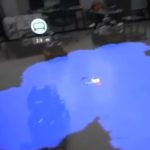
Using AugRE, we represent alpha, beta, and gamma particles through dynamic particle effects. The system incorporates spatial mapping for accurate placement in the environment and mesh generation that reacts dynamically to variations in radiation intensity.

Currently, the system uses simulated data, with ongoing work to integrate real sensor readings from devices such as Compton cameras and alpha flashlight sensors, enabling accurate, real-time 3D visualization of radiation levels.


December 2, 2025, Filed Under: Uncategorized

Drone Integration

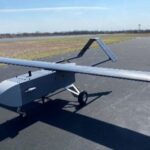
This project integrates our Augmented Reality app (AugRE) with a fixed-wing drone platform controlled via QGroundControl (QGC). A dedicated onboard computer performs real-time object detection (e.g., cars from the gimbal camera) and, using depth estimation, converts detections into GPS-based markers viewable on an ATAK tablet or a Virtual SandTable.

The system also supports voice and hand gesture control, allowing users to issue commands such as takeoff, land, and orbit through intuitive interactions.

Video Material: AugRE: Fixed Wing Drone Visualization on 3D Map and with Real World Overlay via HoloLens 2 Headsets

November 12, 2025, Filed Under: Uncategorized

Closed-Chain Affordance Planner

Robots operating in unpredictable environments require versatile, hardware-agnostic frameworks capable of adapting to various tasks. While a recent screw-based affordance approach shows promise, it faces challenges in avoiding undesirable configurations, singularity navigation, and task success prediction. To address these limitations, we propose the Closed-Chain Affordance (CCA) planner – a novel framework that incorporates explicit gripper orientation control and generates complete joint trajectories in real time for screw-based task affordance execution. Our method models the affordance and manipulator as a closed-chain mechanism, introducing an innovative approach to solving closed-chain inverse kinematics. It encapsulates task constraints and simplifies task definitions, while remaining hardware and robot agnostic, robust to errors, and invariant to the initial grasp. We validate our framework with simulations on a UR5 robot and real-world implementation on a Boston Dynamics Spot robot. Our experiments demonstrate rapid joint trajectory generation (0.0077–0.098 s) for various tasks, including a 420° valve turn with gripper orientation control. Comparison with state-of-the-art methods shows a 4x improvement in planning time, reduced joint movement, and achievement of greater task goals.

Demo Video:
https://www.youtube.com/watch?v=Ukv93hbNrOM

Open-source Code:
Standalone planner: 
https://github.com/UTNuclearRoboticsPublic/closed-chain-affordance
ROS2 interface: 
https://github.com/UTNuclearRoboticsPublic/closed-chain-affordance-ros

Publications:

  • Panthi, Janak, Farshid Alambeigi, and Mitch Pryor. “A Closed-Chain Approach to Generating Affordance Joint Trajectories for Robotic Manipulators.” IEEE Transactions on Robotics (2025). Link

A Closed-Chain Approach to Generating Affordance Joint Trajectories for Robotic Manipulators 

November 12, 2025, Filed Under: Uncategorized

Minibots

Multi-Robot Collaborative Mapping w/ Remote Mobile Agents:

Author: Daniel I. Meza

Funded By: Los Alamos National Laboratory

This project contributes to a broader initiative to develop a comprehensive hardware and software solution for routine radiation surveying in nuclear facilities.

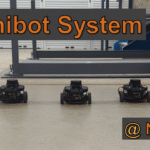
The Minibot system includes a central server computer that serves as the coordination and processing hub, and a team of compact, low-powered, cost-effective robot agents. Each agent features a differential drive platform and a small footprint, enabling navigation through confined and hazardous areas where other robots cannot safely operate, such as under furniture and along narrow corridors.

Coordinated by the server, the agents continuously offload environmental data from onboard 2D and 3D LiDAR sensors. The server then executes collaborative SLAM and 3D mapping algorithms to produce detailed maps of the environment, which other robots use for task planning and execution.

Thesis Publication: https://hdl.handle.net/2152/124970, https://doi.org/10.26153/tsw/51571

Youtube Video: https://www.youtube.com/watch?v=9eT9DMGf5lk

November 12, 2025, Filed Under: Uncategorized

AVES

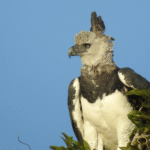
Project AVES is a multifunctional, autonomous device capable of monitoring environmental conditions and bird populations in a variety of ecosystems. The core functions of the device include recording and analyzing bird calls while simultaneously collecting local data such as soil moisture, and temperature, as well as air temperature, moisture, and humidity. The device will be placed in various environments for bird monitoring purposes. Through audio detection, the device will be able to identify what species of birds are in the area as well as localize the audio to determine the location of where the bird is calling from. This will allow for species monitoring, population monitoring, and migration tracking.

Project Website: https://nairarj000.github.io/paves.github.io/

November 12, 2025, Filed Under: Uncategorized

AugRE

AugRE (Augmented Robot Environment) is a scalable mixed reality-based human-robot teaming system that enables users to easily command, control, and supervise large multi-agent unmanned ground and aerial vehicles. The current system enables multiple users to collaborate with up to 50 robotic agents simultaneously in unknown indoor and outdoor environments. The system features real-time localization, an efficient by directional communication layer, and spatially aligned holographic representations that enable users to easily visualize and interact with real-time robot sensor data. Check out the AugRE project page to learn more: https://utnuclearroboticspublic.github.io/Augmented-Robot-Environment/

Publications:

AugRE: Augmented Robot Environment to Facilitate Human-Robot Teaming and Communication: https://ieeexplore.ieee.org/document/9900721

Augmented Reality User Interface for Command, Control, and Supervision of Large Multi-Agent Teams: https://arxiv.org/abs/2401.05665

AugRE Video AugRE: Augmented Robot Environment to Facilitate Human-Robot Teaming and Communication
 

September 17, 2025, Filed Under: Uncategorized

Condition Monitoring of Dry Storage Canisters

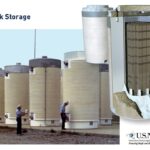
Dry Cask Storage

Summary: Over 90% of SNF dry cask storage systems in the United States use welded dry storage canisters (DSCs). Typically, these canisters represent the confinement barrier in the dry storage system preventing any release of SNF or radioactive noble gases to the environment. As the dry storage terms of SNF are extended, DSC monitoring issues become more important for safe operation of the dry cask storage systems. The objective of this research program is to develop a technology to enable the next generation of “intelligent spent nuclear fuel (SNF) dry storage canisters (DSCs),” that is, canisters with integrated sensing and processing capabilities to enable real-time state awareness of the DSC.

Collaborator: Dr. Salvatore Salamone (UT Austin), Orano TN, Idaho National Lab

Source: DOE NEUP

September 17, 2025, Filed Under: Uncategorized

Self Exploration and Mapping for Indoor Robotic Applications

Magni Robot

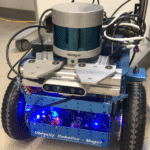
Summary: The purpose of this thesis is to develop a robotic system that is fully capable of autonomous survey tasks with little to no human interaction. The system uses a Veloydne VLP-32 LIDAR sensor and an Intel RealSense D435 camera to simultaneously map the environment and avoid all obstacles autonomously. Combination of these sensor to detect positive, negative, and overhead obstacles results in 3D object detection, which is then used to create a 2D map using SLAM mapping algorithms.

Primary Sidebar

Recent Posts

  • Affordance Templates for Complex DOE Robotics Tasks
  • Satellite Servicing
  • TeMoto
  • Digital Twin Augmented Reality – Radiation in AR
  • Drone Integration

UT Home | Emergency Information | Site Policies | Web Accessibility | Web Privacy | Adobe Reader

© The University of Texas at Austin 2026