
Deadline for Proposals: March 11, 2019
NAATPl 3rd Biennial Workshop for Polish Language Teachers
Standard-Based Approaches to Teaching Polish Language
May 11, 2019
Organized by: Northwestern University and the University of Illinois at Chicago
Location: Chicago, IL (Specific location, TBA)
This workshop will bring together instructors to share their practices and materials, as they relate to teaching Polish. The focus of this workshop will be on standard-based approaches to teaching language, especially alongside ACTFL (American Council of Teachers of Foreign Language, www.actfl.org) proficiency and world-readiness standards. This workshop will serve as a forum for exchange of the most successful topics, projects, and syllabi from the most recent years of teaching, across participants’ institutions.
The workshop will consist of individual or group presentations, 20 minutes in length.
There will be one panel dedicated especially to K-12 Polish language teaching, including Saturday Schools, and the committee asks that papers submitted for this panel be noted as such in their proposal.
We invite all Polish language instructors to apply to present at the workshop, however, presenting is not a requirement, as we also encourage attendance in order to learn from practices of other instructors. Continue reading “CFP: NAATPl 3rd Biennial Workshop for Polish Language Teachers (Chicago, IL)”
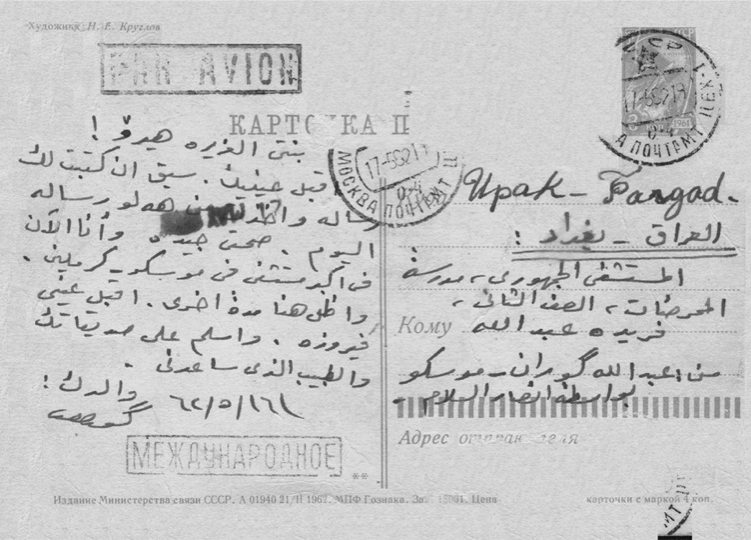 The involvement of Kurdish forces during the Crimean War inaugurated the political and military encounter of Russians and Kurds between Eastern Europe and the Middle East. Since then, these relations have formed an important and disputed aspect of Russian, and later Soviet, policies in the Middle East. Most significantly, these policies have extended well beyond the clash of the Tsarist and Ottoman Empires at the turn of the 20th century.While Russian and Soviet policies have included a sustained focus on the role of the Kurds, their political mobilization and activism in the 1920s-1930s and during the Cold War, the relationship has never been a simple one. It was deeply entangled in the nexus of regional politics and Russian/Soviet policies toward Turkey, Iran, Iraq and Syria, as well as in global dynamics. Conversely, mobilities and alliances with the ‘’East’’ have been important in shaping political identities, but remain a still understudied part of Kurdish political strategies on the international arena.