Deadline is March 12, 2018 for financial aid and April 16, 2018 for students not seeking financial aid
Continue reading “Language Training: Ukrainian Summer Institute 2018 (Harvard U.)”

Center for Russian, East European and Eurasian Studies at The University of Texas at Austin
Continue reading “Language Training: Ukrainian Summer Institute 2018 (Harvard U.)”
The Department of German, Russian, and East European Languages and Literatures and the Center for Global Education at Rutgers University, New Brunswick are pleased to announce their summer 2018 study abroad program—Rutgers in Russia: St. Petersburg.
Applications are due March 15. The eight-week language and culture program will begin on June 9 and end on August 4, 2018. The program includes intensive language courses taught by instructors of the Derzhavin Institute (http://www.derzhavin.com/en/), excursions to museum and cultural sites of St. Petersburg, home stays with Russian families, and peer tutors.
Students from all majors and universities are eligible and invited to apply. No knowledge of Russian is required for admission, although some university Russian is preferred. All New Jersey residents, regardless of college affiliation, are eligible for in-state tuition. The program fee is $6,490 for New Jersey residents, and $7,230 for all others. More information can be found at http://reell.rutgers.edu/study-abroad.
To apply, go to http://studyabroad.rutgers.edu/index.cfm?FuseAction=Programs.ViewProgram&Program_ID=10078. For any questions or concerns, please email Cori Anderson (Director, Rutgers in Russia): cori.anderson@rutgers.edu.
Priority Deadline: March 1, 2018
The University of Kansas invites applications to its summer programs in Ukrainian and Croatian language:
Ukrainian Language in L’viv, Ukraine
June 3 – July 17, 2018
Expand regional expertise and Ukrainian language skills during this 6 week program in medieval L’viv. The program is offered in conjunction with Ivan Franko National University; 6 credit hours are awarded by the University of Kansas. FLAS eligible. The on-site director, University of Kansas faculty member Dr. Oleksandra Wallo, is a L’viv native and alumna of Ivan Franko National University with more than ten years of experience teaching Ukrainian language and culture at U.S. universities. Program is open to undergraduate and graduate students. No previous knowledge of Ukrainian is necessary.
Language Institute in Zadar, Croatia
May 20 – June 30, 2018
During this 6 week summer program, students receive highly individualized Croatian language instruction while living in Zadar on the Adriatic coast. A program of lectures and cultural activities complement language instruction. Students study at LinguaCroatica, run by Prof. Mile Mamić of the University of Zadar. 6 credit hours are awarded by the University of Kansas. FLAS eligible. Program is open to undergraduate and graduate students. One year of college-level Croatian is necessary for participation.
For more information, visit the program websites linked above or www.studyabroad.ku.edu.
Application deadline: March 15, 2018 (priority deadline is March 1, 2018)
Questions can be directed to the faculty directors listed on the program websites or to jmhunter@ku.edu.
American Councils is currently accepting applications for its Fall and Academic Year 2018 Balkan Language Initiative (BLI). The application deadline is March 15; applications can be submitted here.
ABOUT THE PROGRAM
The American Councils Balkan Language Initiative provides graduate students, advanced undergraduates, working professionals, and scholars intensive individualized instruction in the languages of the Balkans. Participants may choose to study one of five regional languages:
Albanian in Tirana, Albania
Bosnian in Sarajevo, Bosnia-Herzegovina
Bulgarian in Sofia, Bulgaria
Macedonian in Skopje, Macedonia
Serbian in Belgrade, Serbia or Podgorica, Montenegro
PROGRAM DATES
Fall 2018: August 29 – December 20, 2018
AY 2018-19: August 29 – mid-May, 2019
KEY FEATURES
COST
Program cost includes tuition, room and board, cultural activities, visa support, comprehensive overseas insurance, 24/7 emergency support, pre-departure orientation, and academic credit through Bryn Mawr College.
FINANCIAL AID
Students admitted to American Councils programs are eligible to receive financial support from a wide range of sources, including the U.S. Department of State (Title VIII), Boren, Gilman, FLAS, and the American Councils Study Abroad Scholarship Fund. Please see the financial aid website for full details.
QUESTIONS?
For program applications and detailed information, please visit the website, or email.
American Councils staff can be reached at 202-833-7522.
Digital Scholarship Workshop for REEE Scholars
When: March 9, 2018, 10:00 am (Central Time)
Register: https://goo.gl/forms/cABfh9NqmBmu02sH2
Dr. John Randolph (University of Illinois at Urbana-Champaign)
Presentation title: What Would Digital Area Studies Look Like and How Could it Be Made: Reflexions from Teaching DH
Abstract:
In this presentation, John Randolph will discuss his attempts to bring REEES expertise and concerns into more general conversations within the Digital Humanities about the future of documentary publishing. Where and how can we combine the teaching of both area studies and DH skills? How do we manage the balance of needing to work on digital skills with the need to also build skills in the world’s languages and cultures? John is part of a larger, multi-university project called “The Classroom and the Future of the Historical Record,” combining historians and information scientists from the University of Illinois at Urbana-Champaign, University of Nebraska-Lincoln, and Michigan State University.
Dr. Inna Kizhner (European Association for Digital Humanities)
Presentation title: Digital Humanities in Russia
Abstract:
This presentation links the quantitative methods used in previous trends in scholarship, including mathematics, Russian editorial practices, and the development of museum computing in the country. By doing so we can consider the individual societal contexts which encourage a field to emerge, and although that field may look similar to outsiders, identify the lineage of intellectual approaches which still influence methods and cultures within the discipline. Moreover, this presentation will also outline the development of current DH projects and centers relating them to previous scholarship, including establishing the Russian Association for Digital Humanities, Associated Organization within the European Association for Digital Humanities.
Dr. Petr Plecháč (Institute of Czech Literature, the Academy of Sciences of the Czech Republic)
Presentation title: Corpus of Czech Verse and its online tools
Abstract:
The talk will present the Corpus of Czech Verse, which is a lemmatised, morphologically, metrically and strophically annotated corpus of Czech poetry containing ~75,000 poems. Dr. Plecháč will introduce several online tools that enable users to work with these data – this includes graphical interfaces for statistical analysis of rhymes, verse meters, keywords etc. Finally Dr. Plecháč will show how such statistical findings on versification may be used for the purpose of automatic recognition of authorship.

The CCWH Catherine Prelinger Award is a scholarship of $20,000 which will be awarded to a scholar of excellence. This award, named for Catherine Prelinger, a former CCWH president and nontraditional scholar, is intended to enhance the work of a contemporary scholar whose academic path has not followed the traditional path of uninterrupted study, moving from completed secondary, to undergraduate, then graduate degrees, followed by a tenure-track faculty position.
These funds were originally granted to CCWH by an anonymous donor in honor of the many years of work this organization has devoted to exploring women’s history, encouraging opportunities for women in the historical profession, and in educating young women to pursue careers in the historical profession. This award is intended to enhance the ability of the recipient to carry on these CCWH traditions through contributions to women in history, either through scholarly or professional activity.
Eligible applicants must be members of CCWH and must hold either A.B.D. status or the Ph.D. at the time of application. They shall be actively engaged in scholarship that is historical in nature, although the degree may be in related fields. Applicants will show evidence of a nontraditional professional career and describe a project that will further enhance women’s roles in history. The Prelinger Committee encourages applications from independent and non-academic scholars.
For more information, and to apply, click here.

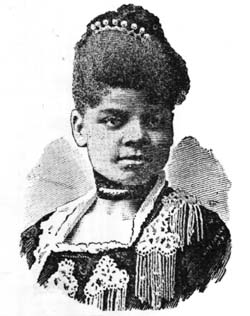
The CCWH Ida B. Wells Graduate Student Fellowship is an annual award of $1000 given to a graduate student working on a historical dissertation that interrogates race and gender, not necessarily in a history department. The award is intended to support either a crucial stage of research or the final year of writing.
The applicant must be a CCWH member; must be a graduate student in any department of a U.S. institution; must have passed to A.B.D. status by the time of application; may hold this award and others simultaneously; and need not attend the award ceremony to receive the award.
For more information, and to apply, click here.
The application deadline for the 2018-2019 Fellowship is April 20, 2018.
Lesbian, Gay, Bisexual, and Transgender Studies at Yale University is proud to announce the second annual Yale LGBT Studies Research Fellowship. The Fellowship is offered annually, and is designed to provide access to Yale resources in LGBT Studies for scholars who live outside the greater New Haven area.
Scholars from across the country and around the world are invited to apply for the Yale LGBT Studies Research Fellowship. This fellowship supports scholars from any field pursuing research in lesbian, gay, bisexual, transgender, and/or queer studies at Yale University, utilizing the vast faculty resources, manuscript archives, and library collections available at Yale. Graduate students conducting dissertation research, independent scholars, and all faculty are invited to apply. Scholars residing within 100 miles of New Haven are ineligible.
Continue reading “Funding: LGBT Studies Research Fellowship (Yale U.)”
Bogliasco Fellowships are awarded to gifted individuals working in all the disciplines of the Arts and Humanities without regard to nationality, age, race, religion or gender.
To be eligible for the award of a Fellowship, applicants should demonstrate significant achievement in their disciplines, commensurate with their age and experience. Please note that Bogliasco Fellowships are not awarded to students currently in a degree-granting program. The Foundation gives preference to those whose applications suggest that they would be comfortable working in an intimate, international, multilingual community of scholars and artists.
The Foundation only accepts applications submitted through the online application system. To access the system, you must first register for an account here, where you will also find a list of requirements that we strongly encourage you to read before beginning your application. Once registered, you may login as needed to work on your application by clicking on the “login” button indicated to the left.
For more information, and to apply, click here.
Awarded by the Einstein Forum and the Daimler and Benz Foundation
The Einstein Forum and the Daimler and Benz Foundation are offering a fellowship for outstanding young thinkers who wish to pursue a project in a different field from that of their previous research. The purpose of the fellowship is to support those who, in addition to producing superb work in their area of specialization, are also open to other, interdisciplinary approaches – following the example set by Albert Einstein.
The fellowship includes living accommodations for five to six months in the garden cottage of Einstein`s own summerhouse in Caputh, Brandenburg, only a short distance away from the universities and academic institutions of Potsdam and Berlin. The fellow will receive a stipend of EUR 10,000 and reimbursement of travel expenses.
Continue reading “Funding: Einstein Fellowship (Einstein Forum)”